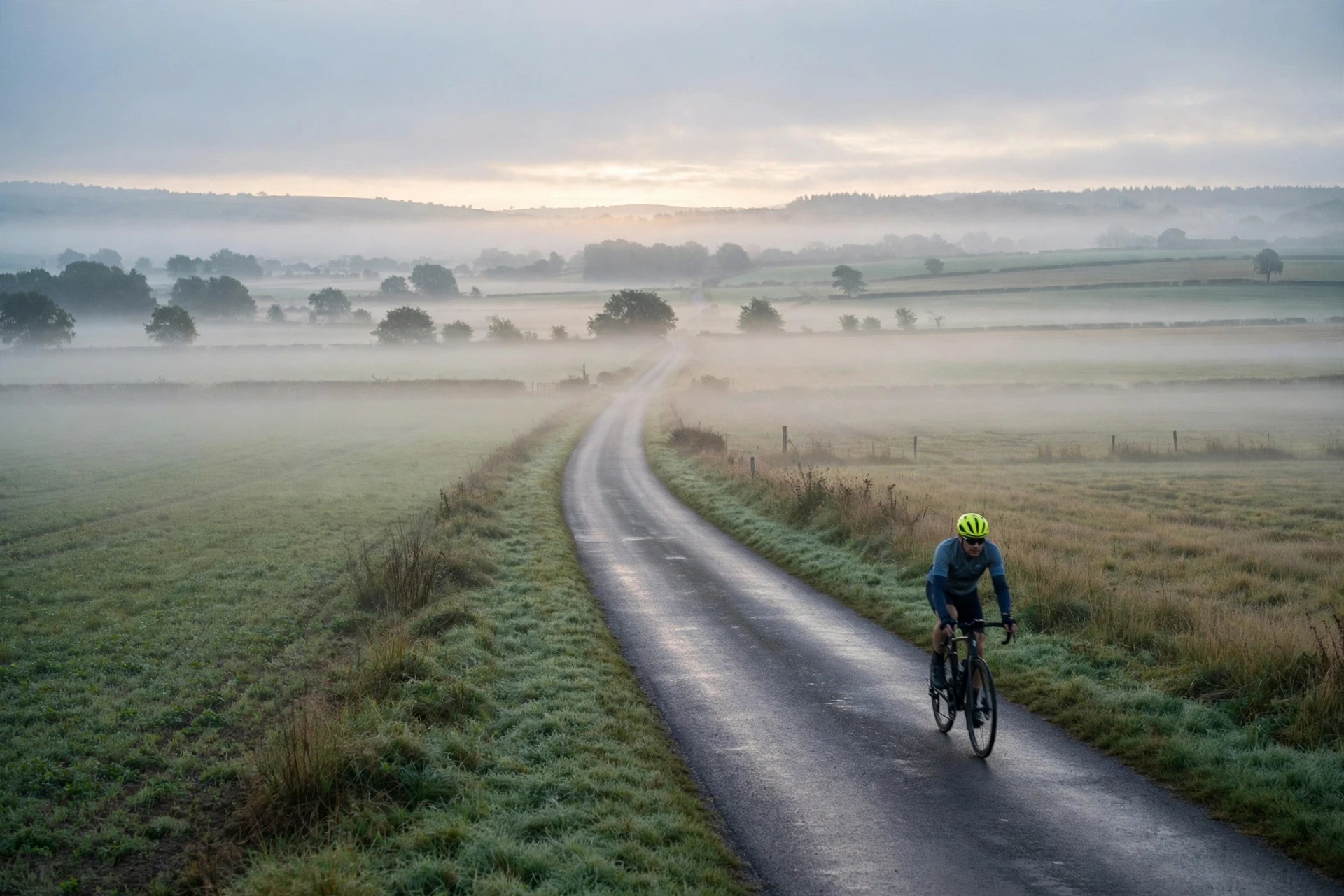
A bike helmet for early morning rides is a cycling helmet worn for rides that start before or just after sunrise, when the light is low, the air is cool, and drivers may not expect cyclists on the road. The main job of the helmet is the same as at any other time of day — protecting the head in a fall — but early morning riding adds extra needs around visibility, warmth, and dealing with damp, misty conditions.
Why Are Early Morning Rides Different?
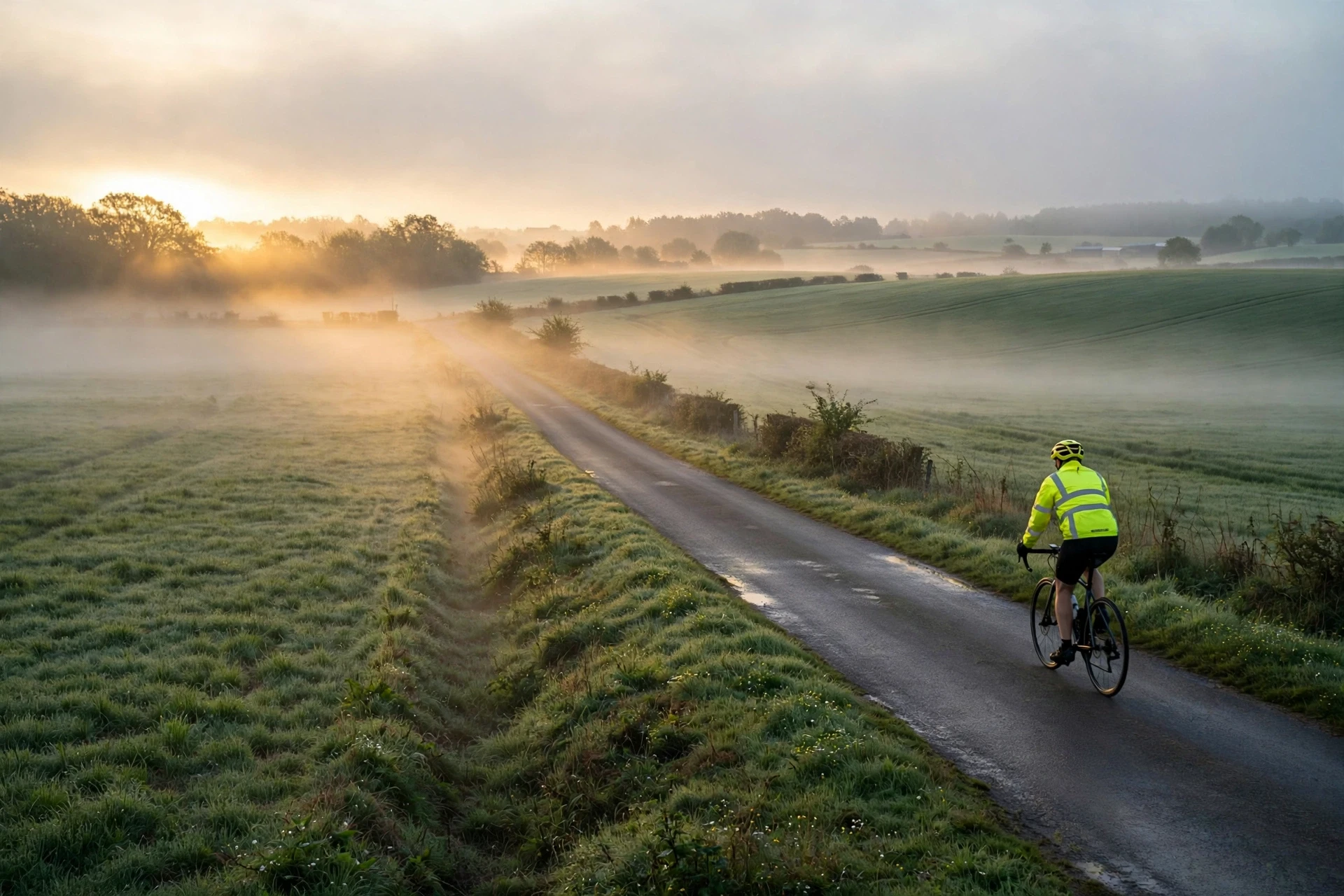
Early morning rides are popular because the roads are quiet, the air is fresh, and the ride is done before the day gets busy. But the conditions are different from a midday ride: the sun is low or not yet up, the temperature is at its coldest, and dew or mist can make the road surface slippery. Drivers may also be less alert in the early hours, and the low sun can make it hard for them to see a cyclist.
Because the light changes quickly in the early morning, a rider can set off in darkness and finish in full daylight, or ride straight into a low sun on an east-facing road. That means the helmet, and the rest of the kit, needs to work across a wide range of conditions in a single ride. In general terms, preparation matters more in the morning, because there is less room for error when visibility is poor.
What Should an Early Morning Helmet Do Differently?
An early morning helmet should make the rider easier to see. Bright colours such as neon yellow, orange, or white stand out in low light far better than black or dark grey, and reflective details on the helmet catch headlights from a long way off. Some helmets come with a rear light mount or a built-in light, which can be a useful addition for rides that start before dawn.
The helmet should also cope with cool, damp air. A helmet with a few vents is fine, but a heavily vented summer helmet can let cold air straight onto the head on a chilly morning, which is uncomfortable on a long ride. A thin skull cap under the helmet can help, and the helmet should have enough room for one without becoming tight. If you want to understand one of the safety technologies used in modern helmets, reading about what MIPS is for helmets is a good place to start, since it is offered in many road helmets today.
How Does Fit Matter on an Early Morning Ride?
Fit matters on an early morning ride for the same reasons it matters at any time: a helmet that sits level, covers the forehead, and stays put when the rider shakes their head will protect best in a fall. But the morning adds a wrinkle, because the rider may be wearing a cap or a headband underneath for warmth, and the fit needs to work with that layer in place.
It is worth adjusting the fit system and straps with the morning layers on, before setting off. The chin strap should be snug enough that the helmet does not rock forwards or backwards, and the helmet should not press on the forehead or ears. A helmet that is comfortable for an hour at dawn is one the rider will actually wear every morning, which is the point. In general terms, a small amount of time spent on fit before the ride saves a lot of discomfort during it.
What About Lights and Reflective Gear With a Helmet?
Lights are one of the most important parts of early morning riding, and the helmet can be part of that setup. A small light clipped to the helmet, or mounted on the back of it, puts the light at head height, where drivers can see it over cars and hedges. Some riders use a helmet light in addition to a bike light, which gives two points of light and makes the rider easier to spot.
Reflective details work best when they are on the helmet and on the rider’s clothing at the same time, since movement makes them easier to notice. A reflective jacket, gloves, or overshoes combined with a bright helmet gives a driver several things to see at once. In general terms, the goal is to be seen early and clearly, and a helmet with reflective panels is a simple way to add to that.
How Do You Deal With Mist, Dew, and Low Sun?
Mist and dew are common on early morning rides, and they can make the road slippery, especially on painted lines, metal covers, and leaves. The helmet does not change the grip of the tyres, but a clear view matters, and a helmet with a small visor can help keep dew and low sun out of the eyes. Some riders wear clear glasses or a cap under the helmet for the same reason.
Low sun is a particular problem on east-facing roads, where a driver behind the rider may be looking straight into the sun. In those conditions, bright clothing and lights matter even more, because the driver may only see a silhouette. Riding with a friend, or choosing a route that avoids riding directly into the sun, can help. In general terms, the early morning rewards riders who plan for poor visibility rather than hoping for good light.
When Should You Replace an Early Morning Riding Helmet?
An early morning riding helmet should be replaced after a crash or a hard impact, even if it looks fine from the outside. The liner inside a helmet can be damaged by a heavy knock without any visible sign on the shell, and a helmet that has already absorbed an impact may not protect as well the next time. For that reason, a helmet that has been in a crash should be retired rather than kept in use.
Age and wear matter as well. Daily use in damp morning conditions can wear down the straps and padding over time, and a helmet that has been used hard for several seasons may no longer fit as snugly as it once did. Checking the helmet regularly is a good habit: look for cracks, frayed straps, worn padding, or a shell that feels brittle. If anything seems wrong, or if the helmet no longer fits well, it is time to replace it before the next early ride.
Do I need a different helmet for early morning rides?
Not necessarily, but a bright helmet with reflective details and room for a thin cap underneath is a better choice for dawn rides than a dark, heavily vented summer helmet.
Should I use a light on my helmet for early morning rides?
Yes, in general terms a small helmet light is a useful addition to a bike light, since it puts a light at head height where drivers can see it more easily.
Can I wear a cap under my helmet on a cold morning?
Yes, a thin cycling cap or skull cap fits well under most helmets and keeps the head warm, as long as the helmet still sits level and snugly with it in place.

Olivia
Writer at Helmet Today, covering helmet reviews, fit and riding safety.