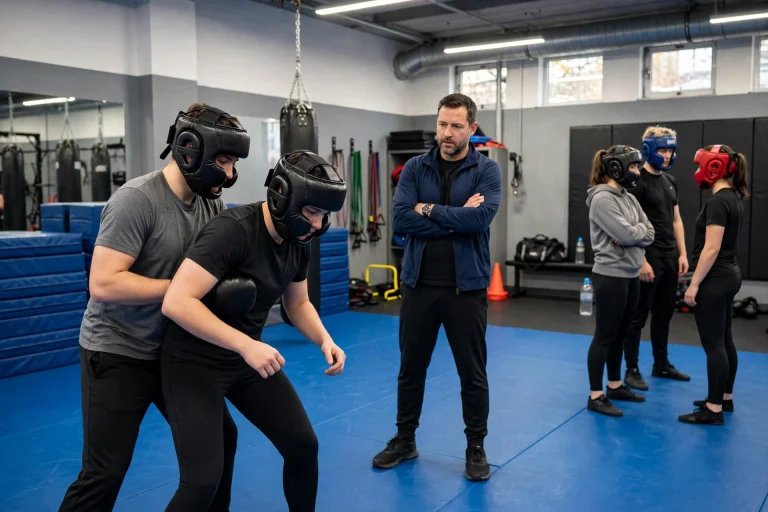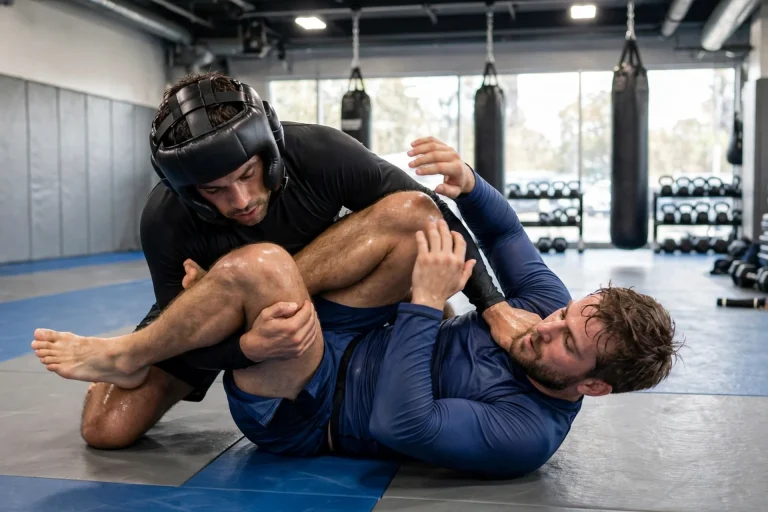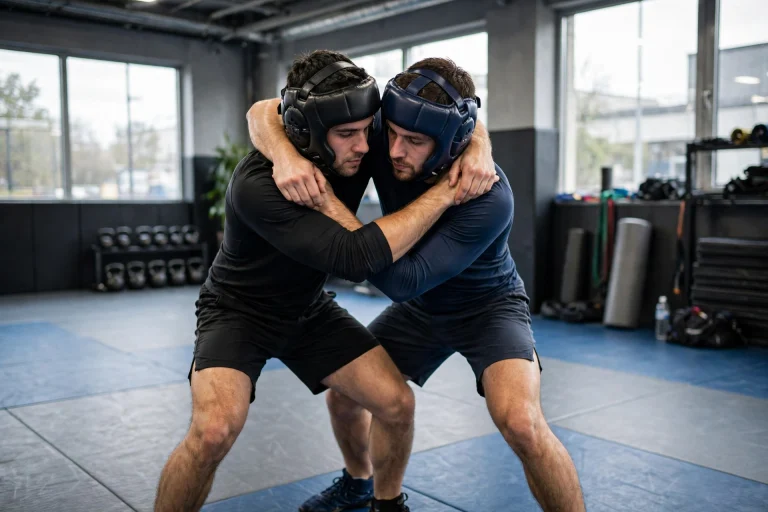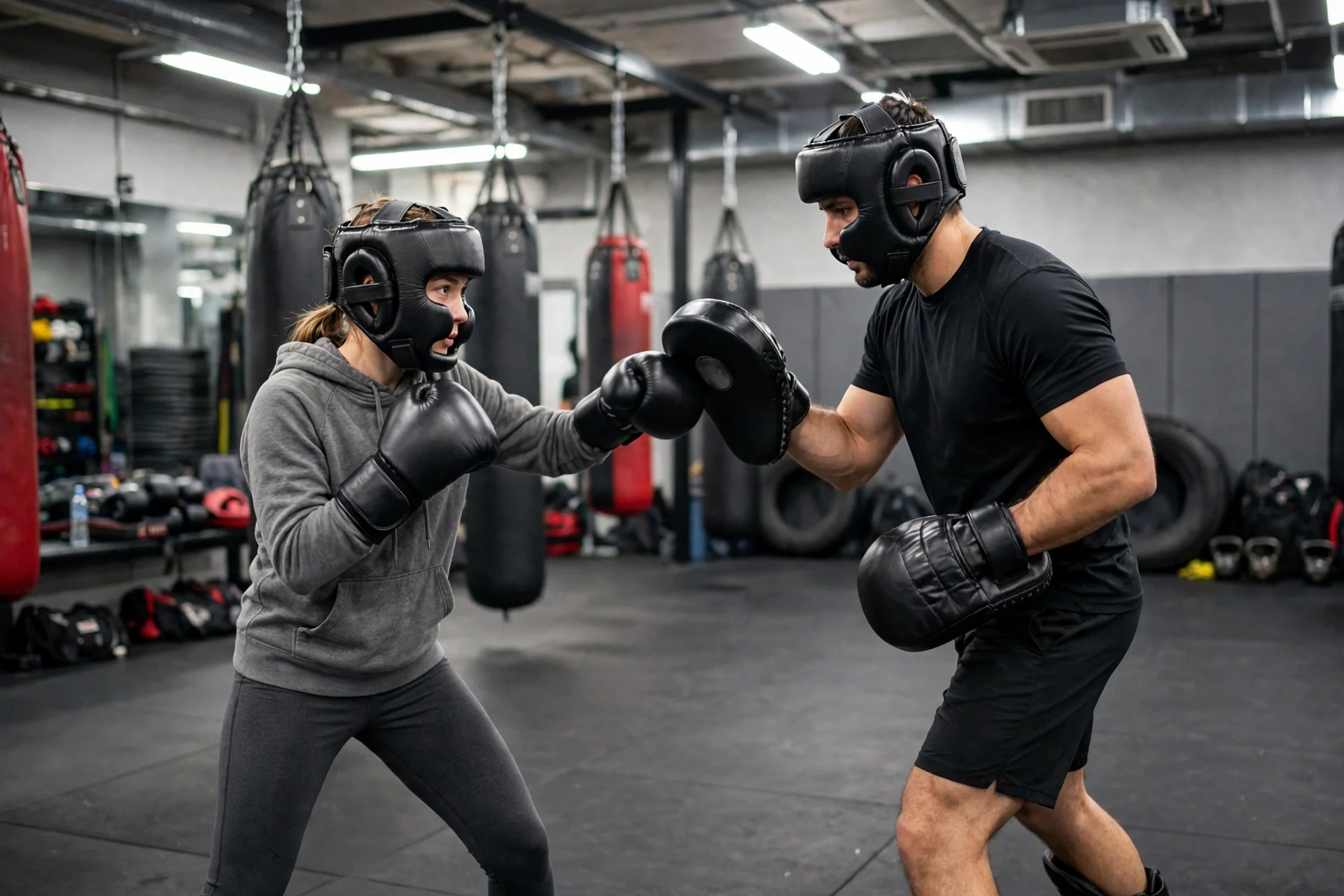
Headgear for combat sports beginners is padded headgear worn by someone who is new to a combat sport, such as boxing, kickboxing, MMA, or karate, during partner drills and light sparring. It protects the head from cuts and bruises while the beginner learns the basics of their sport. Every combat sport has its own techniques, but beginners in all of them share the same problem: defence is still being learned, and strikes will get through more often than they do for an experienced student. Headgear gives a new student a layer of protection while they build timing, movement, and confidence, and most gyms ask beginners to wear it.
What Are Combat Sports for Beginners?
Combat sports are sports where two people practise fighting skills against each other, and they include boxing, kickboxing, MMA, karate, taekwondo, and judo, among others. A beginner class usually starts with the basics of the chosen sport: a stance, basic strikes or throws, footwork, and how to move safely with a partner. Classes are often split into technique sessions and partner drills, so beginners can learn one skill at a time before putting them together in live practice.
Beginners spend a lot of time on pads, bags, and drilling with a partner at a slow pace, so the movements become natural before any sparring. Coaches usually keep new students away from hard sparring for weeks or months, because timing and defence take time to build. In general terms, the more time a beginner spends on the basics, the safer and more confident they will be when light sparring begins, whatever the sport.
How Is Beginner Combat Sports Headgear Different?
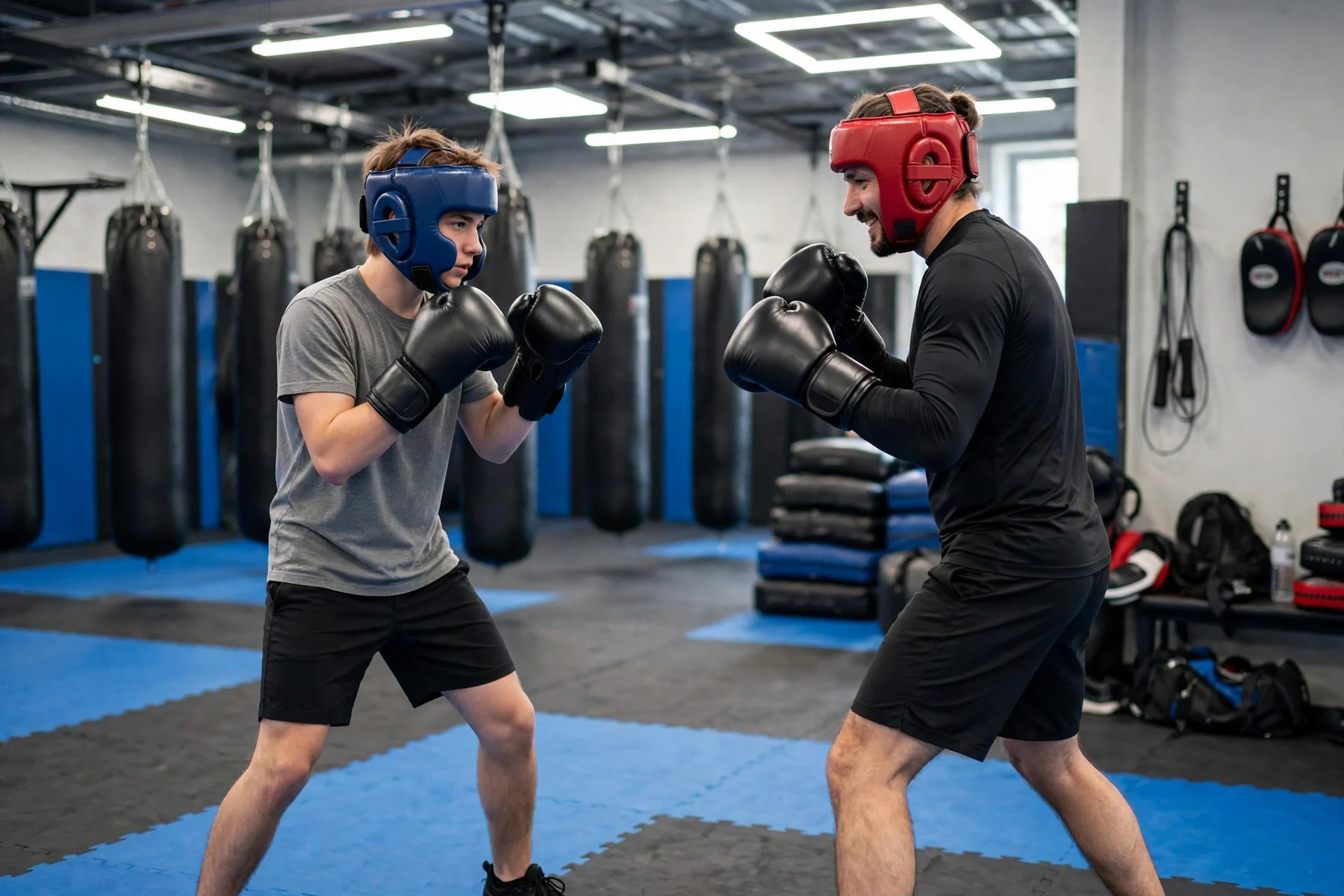
Headgear for combat sports beginners is built for protection and comfort rather than for competition, so it usually has generous padding around the forehead, temples, cheeks, and chin. The padding helps cushion strikes during light partner drills, when a beginner may not yet block well and may take more clean hits than an experienced student. Some headguards are open-faced for better vision, while others have a bar across the face or extra padding around the nose for more coverage.
Good beginner headgear is easy to put on and adjust, with hook-and-loop straps or laces that hold it snug, and a chin cup that keeps it from shifting during movement. Visibility matters a lot for a beginner, because a headguard that blocks the view makes it harder to see strikes coming and harder to learn defence. If you want to understand one of the safety technologies used in modern helmets, reading about what MIPS is for helmets is a good place to start, though that system is made for helmets rather than combat sports headgear. A beginner should pick headgear that fits their sport and feels comfortable, rather than the lightest or cheapest option.
Why Do Combat Sports Beginners Need Headgear?
Combat sports beginners need headgear because they are still learning to defend themselves, and strikes will get through more often than they do for an experienced student. A beginner who is still learning to block, slip, and move the head will take clean hits during partner drills and light sparring, and headgear helps reduce the cuts and bruises those hits can cause. The padding spreads the force of a strike and gives the skin a layer of protection.
Headgear can also give a beginner confidence, because it is easier to practise defence and to stay calm when the head feels protected. It helps protect the ears too, which can be sore after repeated contact in close drills and grappling. In general terms, headgear does not remove the risk of head injury, and it cannot protect against every kind of impact, but it does reduce the surface damage from the kinds of strikes a beginner is most likely to take. For that reason, most gyms ask beginners to wear headgear for partner work.
What Should Beginner Combat Sports Headgear Fit Like?
Headgear for a combat sports beginner should fit snugly all round the head, without pressure points and without wobbling when the student shakes the head. It should sit level, covering the forehead and temples, and the back should sit low enough to protect the back of the head. If the headgear can be shifted easily with a hand, it is probably too loose, and it may move across the eyes when a strike lands at the worst moment.
The chin strap or laces should be fastened snugly before the drill starts, and the beginner should be able to see clearly in all directions, including up and to the sides. It is worth testing the fit with a mouthguard in place, since the jaw sits differently with one, and the headgear should not press on the mouthguard or make breathing hard. In general terms, comfort matters too: headgear that pinches or blocks vision will distract a beginner who is trying to learn, and comfortable headgear is more likely to be worn every session.
What Other Kit Goes With Beginner Combat Sports Headgear?
Beginner combat sports headgear is usually worn with a mouthguard, hand wraps, and gloves suited to the sport. The mouthguard protects the teeth and jaw, while hand wraps support the hands and wrists inside the gloves. Boxers use boxing gloves, MMA students use lighter open-fingered gloves, and karate students may use lighter mitts, depending on the style and the gym. A groin guard is also sensible for any partner work.
Shin guards are useful in sports that involve kicking, such as kickboxing and MMA, while a uniform or rash guard protects the skin during grappling. A coach is part of the safety set too, watching the beginner, setting the pace, and stopping a drill if it gets too hard. The headgear works as part of this whole set: it protects the head, while the other kit protects the hands, teeth, and body. No single item does the whole job on its own.
When Should You Replace Beginner Combat Sports Headgear?
Beginner combat sports headgear should be replaced when the padding has gone flat or soft, even if the outside still looks fine. The padding inside headgear can compress over many sessions of use, and worn padding does not spread the force of a strike as well as it once did. If the headgear feels thin in places, or if strikes that used to feel cushioned now sting, it is generally sensible to retire it and use a new one.
Age and wear matter as well. Repeated sweat, washing, and knocks can wear down the straps, the lining, and the padding over time, and headgear that has been used hard for several months may no longer fit or protect as it once did. Checking the headgear before each session is a good habit: look for torn seams, loose straps, cracked padding, or a lining that has come away. If anything seems wrong, or if the headgear no longer fits snugly, it is time to replace it rather than risk training in worn kit.
Do combat sports beginners have to wear headgear?
In most gyms, yes, for partner drills and light sparring. Coaches usually ask beginners to wear headgear, because it reduces cuts and bruises while they are still learning to defend themselves.
Is the same headgear right for every combat sport?
Not always. Boxing, MMA, and karate have different needs, so a beginner should pick headgear that suits their sport, checking the fit, the coverage, and the gym rules before buying.
When can a beginner start sparring?
That depends on the coach and the gym. Most coaches keep beginners on bags, pads, and slow drills for weeks first, and only start light sparring when the stance, guard, and basic techniques are steady.

Olivia
Writer at Helmet Today, covering helmet reviews, fit and riding safety.