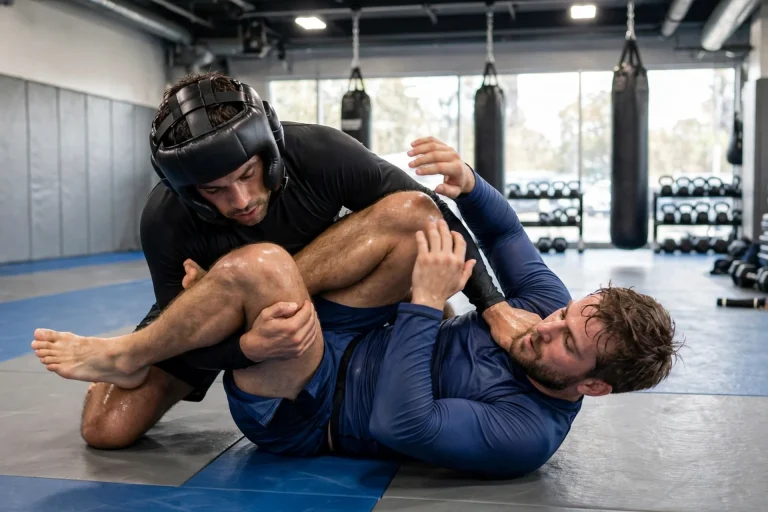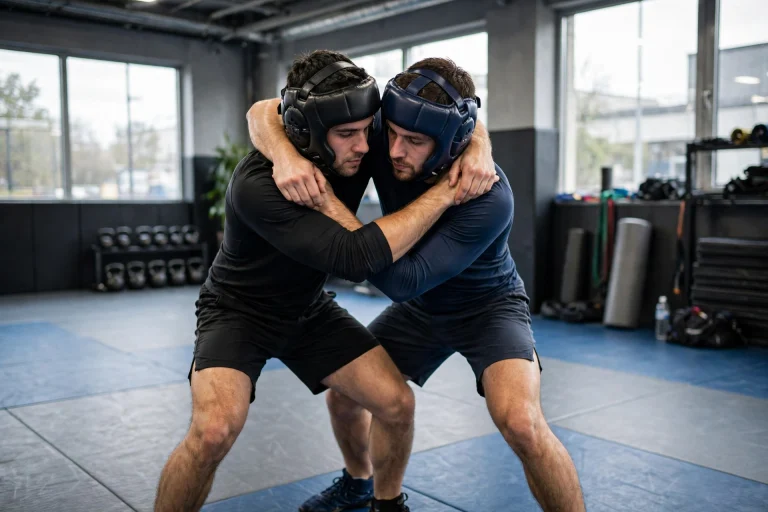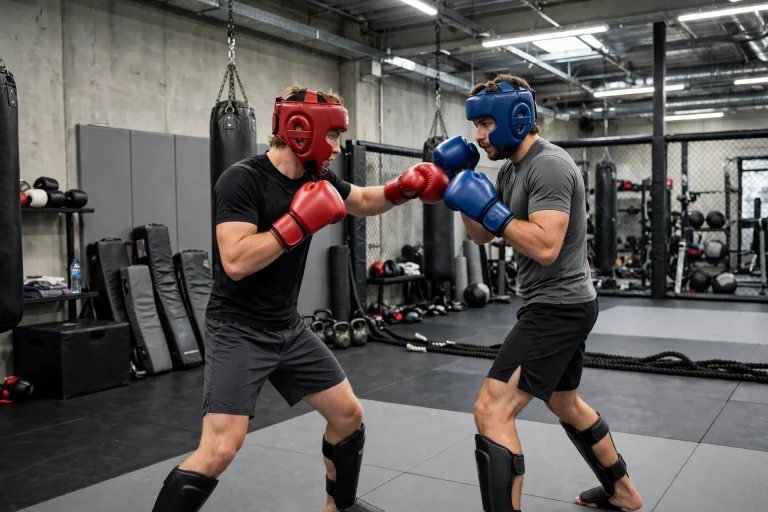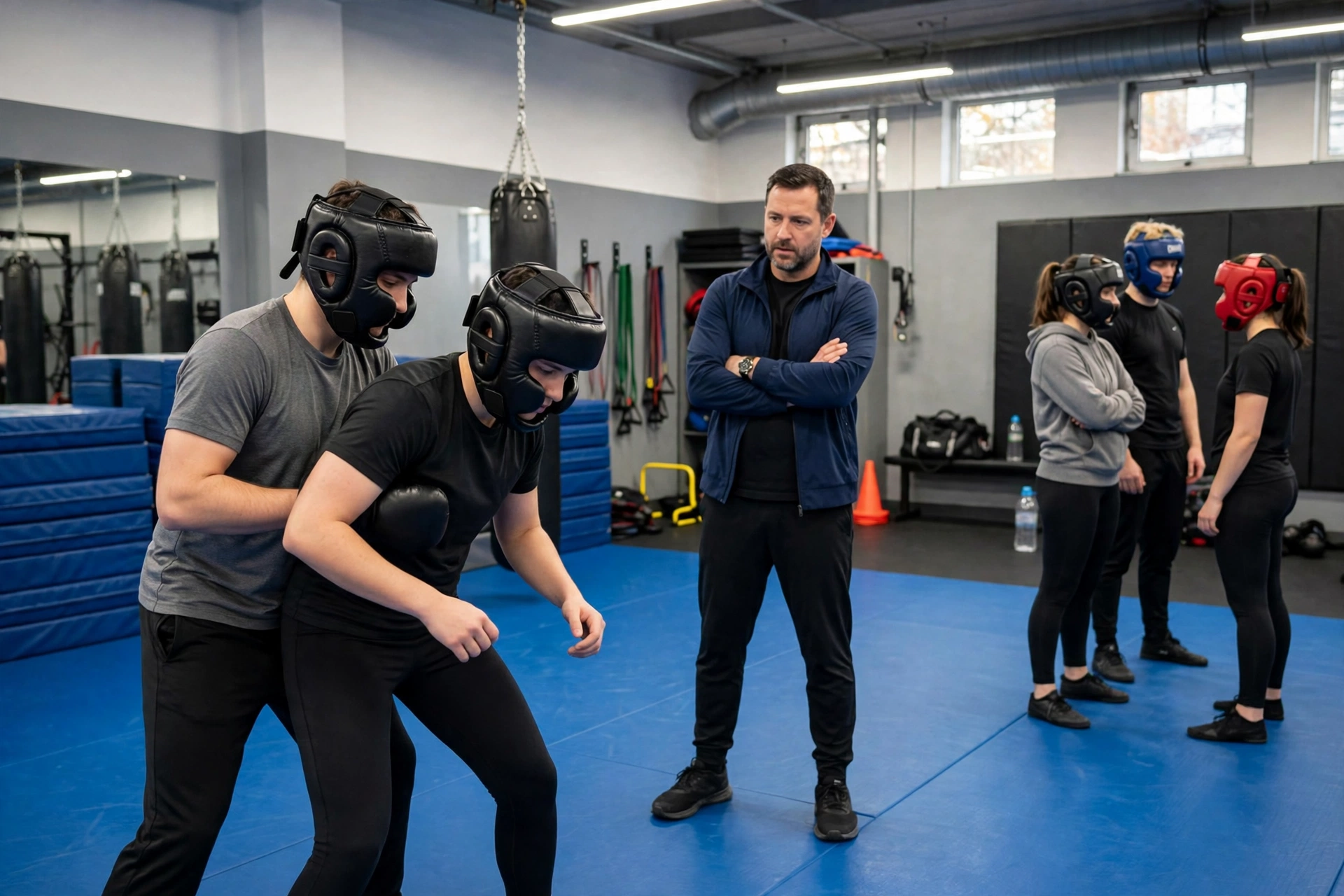
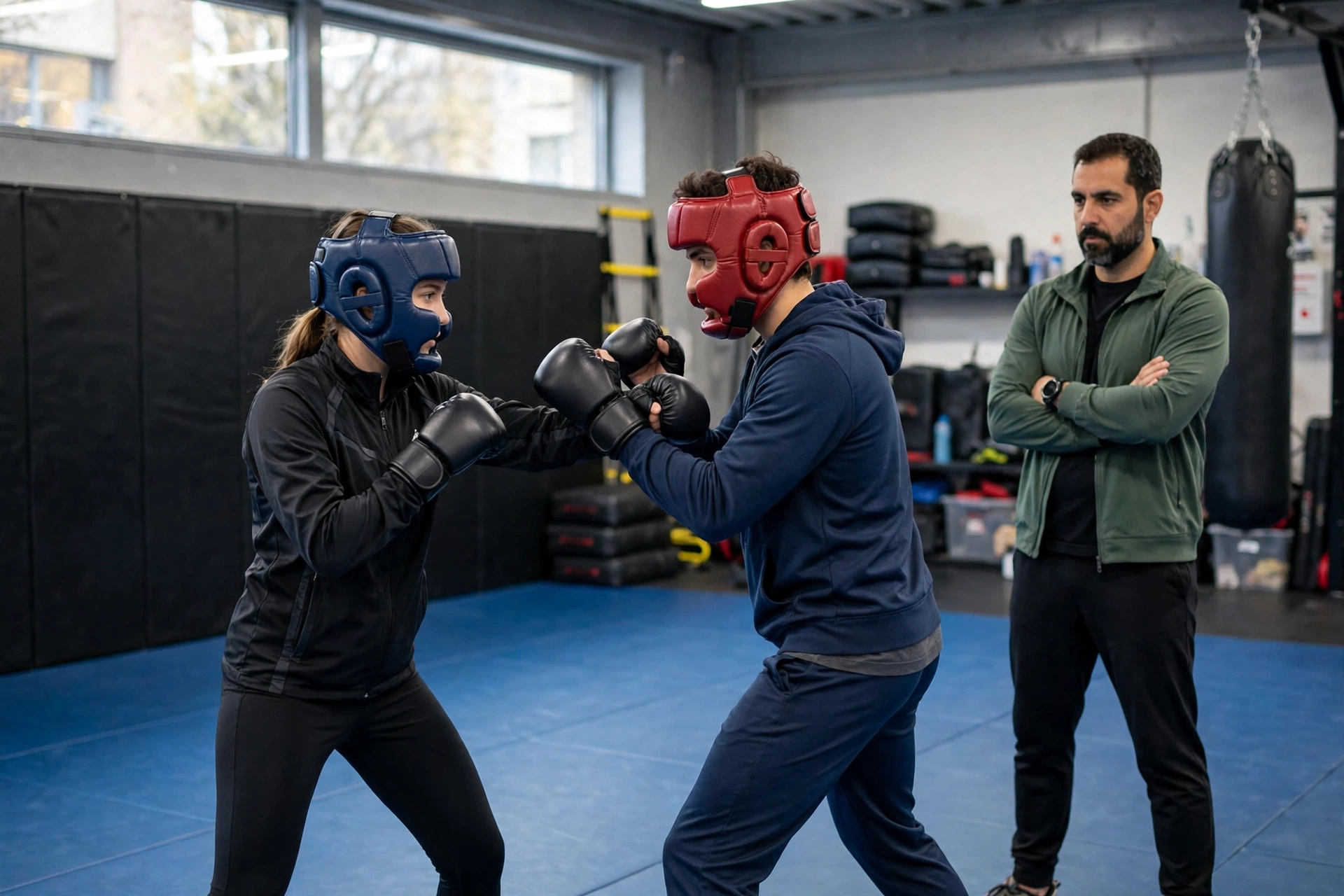
Headgear for self-defence classes is padded protective headgear worn during controlled self-defence training to protect the head and ears from knocks, friction, and glancing blows. It is usually soft and close-fitting, with padded ear cups and straps, and it is designed to let students practise drills and partner work with less risk of cuts, bruises, and ear injuries. Self-defence classes often involve grabs, holds, and simulated strikes, so the head can take contact even in carefully controlled practice. Headgear does not make training risk-free, but in general terms it adds a useful layer of protection that helps students train with more confidence.
What Is Self-Defence Class Headgear?
Self-defence class headgear is a piece of soft protective gear worn on the head during training sessions. It usually has padded ear cups, a padded crown, and adjustable straps that hold it in place, and it is made from foam covered in smooth, durable fabric. Some designs cover more of the head and face than others, depending on how much contact the class involves, and the level of protection can vary a great deal between styles.
Unlike a hard helmet, self-defence headgear is flexible and light, so it does not restrict movement or block vision badly. It is meant for controlled drills and partner practice, not for full-force striking, and it works best alongside good instruction, clear rules, and partners who train with care. In general terms, it is a training aid, and the safety of a class depends far more on how it is run than on any single piece of gear.
Why Is Headgear Used in Self-Defence Classes?
Headgear is used in self-defence classes because even controlled training involves contact with the head. Partner drills can involve grabs to the head, simulated strikes, and close clinch work, and the ears and scalp are easy to catch during these movements. Padded headgear softens glancing blows, reduces friction on the ears, and helps prevent cuts and bruises that might otherwise cut a session short.
Headgear also helps students train with more confidence, which matters in self-defence learning. When students are less worried about a knock to the head or a sore ear, they can focus on the technique being taught and practise it more fully. If you want to understand one of the safety technologies used in modern helmets, reading about what MIPS is for helmets is a good place to start, though soft training headgear does not usually use that system.
How Should Self-Defence Headgear Fit?
Self-defence headgear should fit snugly all round the head, with the ear cups centred over the ears and the straps tightened enough that the headgear does not shift during drills. It should feel secure without pressing painfully on the ears or the top of the head, and it should not slide down over the eyes or ride up off the forehead. A good fit matters because headgear that moves around during practice protects less well and can distract the wearer.
It is worth testing the fit by moving the head quickly in all directions, as you would during a drill, and checking that the ear cups stay in place. The chin strap should be snug but comfortable, and the headgear should not block hearing more than a little, since students need to hear the instructor. Because head shapes differ, trying headgear on before buying is helpful, and the fit should be checked again after a few sessions once the padding has settled.
What Types of Headgear Are Used in Self-Defence Training?
The simplest type is soft grappling-style headgear, with padded ear cups and straps, which suits classes that focus on grabs, holds, and ground work. This style protects the ears well and is light and easy to move in, so it is a common choice for classes that mix grappling with self-defence techniques. It offers only light protection against strikes, but that is enough for the controlled contact most classes use.
Other classes use thicker padded headgear that covers more of the head, and sometimes part of the face, for drills that involve more striking. These designs give broader protection but can feel bulkier and warmer, and they may limit vision slightly. In general terms, the right type depends on what the class actually practises: light headgear for grappling-based work, and fuller padding where controlled striking is part of the training.
Is Headgear Worn in Every Self-Defence Class?
No, headgear is not worn in every self-defence class. Many classes, especially those focused on awareness, escapes, and technique without contact, do not need headgear at all. Other classes use it only for certain drills, such as partner work with grabs or light contact, and take it off for the rest of the session. The decision usually rests with the instructor, who judges the level of contact involved.
Some students choose to wear headgear even when it is not required, often because they have had ear trouble before or simply prefer the extra protection. That is a reasonable personal choice, and most instructors are happy for students to wear it. In general terms, headgear is a tool for the parts of training where the head is likely to take contact, not something that must be worn for every minute of every class.
How Do You Care for Self-Defence Headgear?
Self-defence headgear picks up sweat during training, so cleaning it after each session is a good habit. Most headgear can be wiped down with a damp cloth and mild soap, then left to air dry away from direct heat. It should be allowed to dry fully before being stored in a kit bag, since damp gear in a closed bag can develop odours and wear out faster.
Regular checks are also worthwhile. Look at the straps, buckles, and stitching for fraying or damage, and check that the padding inside the ear cups has not gone flat or lumpy. Headgear that no longer fits securely, or that has torn seams or broken straps, should be replaced, since it will not protect as well. A little care after each session keeps the headgear in good condition and ready for the next class.
Do I need headgear for self-defence classes?
Not always, but in general terms it is a sensible choice when a class involves partner drills, grabs, or light contact. It protects the ears and head from cuts, bruises, and friction, and it can help you train with more confidence.
Can I wear my own headgear to class?
In most cases yes, but it is worth asking the instructor first. Some classes have their own rules about gear, and the instructor can advise whether your headgear suits the kind of training the class does.
Does headgear protect against all strikes?
No, soft training headgear only softens glancing blows and light contact. It is not designed for full-force striking, and the safety of a class depends mainly on good instruction and controlled practice.

Olivia
Writer at Helmet Today, covering helmet reviews, fit and riding safety.