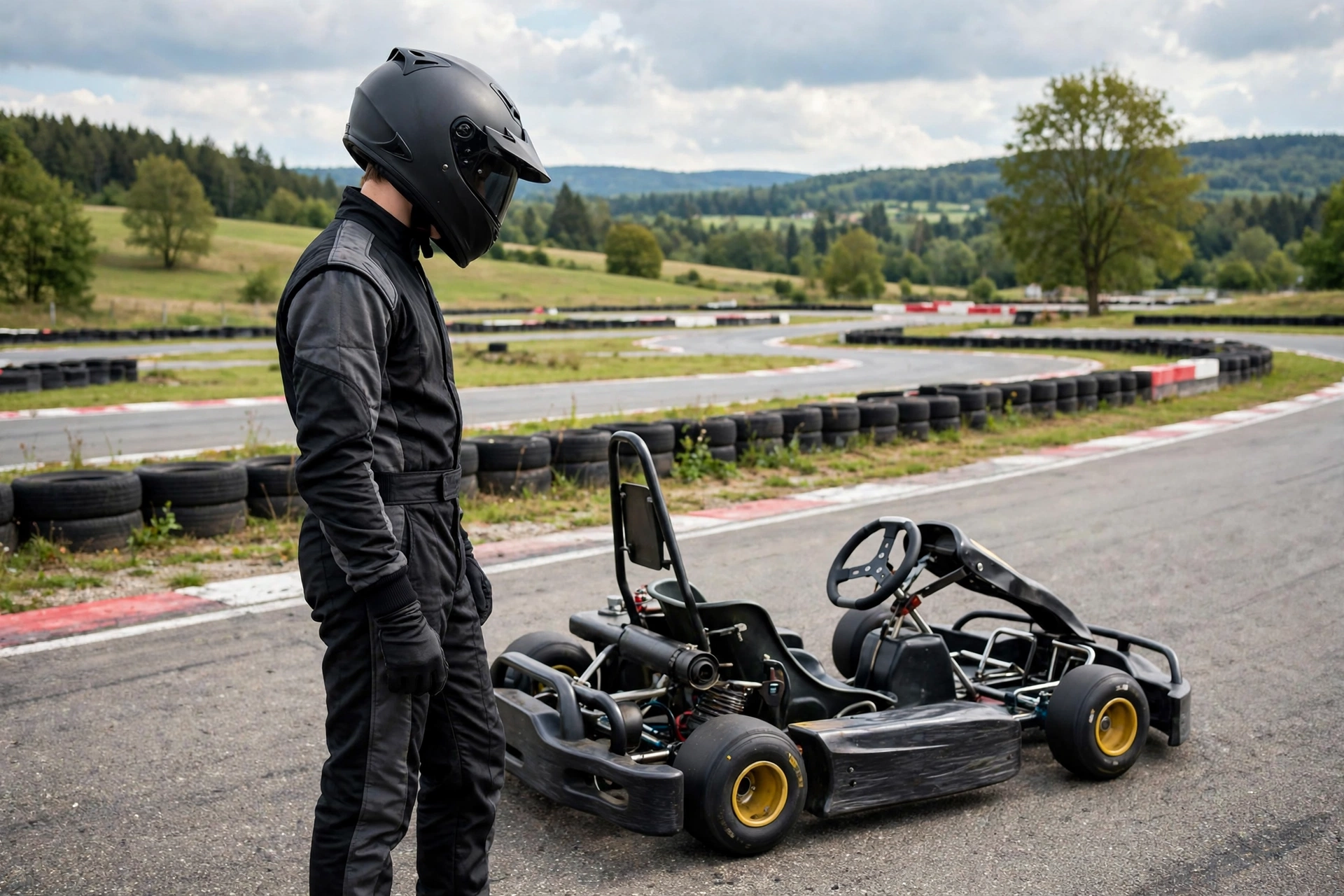
The Snell CMR standard is a helmet standard from the Snell Memorial Foundation, written in general terms for helmets worn by young karting drivers, and it sets out how a karting helmet for children should protect the head in a crash. CMR stands for Children’s Motor Racing, and the standard is aimed at the smaller, lighter helmets that young drivers need.
What Is the Snell CMR Standard?
The Snell Memorial Foundation is an independent, non-profit organisation that writes helmet standards and tests helmets against them. Its standards have been used in motorsport for many decades. The CMR standard is its standard for helmets worn by children in kart racing, and it was written because young drivers are not simply small adults: their heads, necks, and bodies are different, and a helmet built for an adult driver is not the right answer for a child.
A standard like CMR is not a law in itself. It is a set of requirements that a helmet must meet before the Snell Foundation will certify it, and karting organisations then choose to require helmets that carry that certification. In practice, that is what gives the standard its force: a helmet without the right certification will not pass scrutineering. The standard covers the shell, the impact-absorbing liner, the visor, and the chin strap, so that the whole helmet is judged as one piece of safety equipment rather than as separate parts.
Who Needs a Snell CMR Helmet?
CMR helmets are for children and young drivers who race karts, from their first competitive races through to junior karting series. Karting is often where young drivers start in motorsport, and the speeds, the open wheels, and the close racing mean that head protection matters from the very first race. A child who races karts needs a helmet that is made for a child’s head, not an adult helmet in the smallest available size.
Parents should check the rules of the club or series their child races in, because different organisations accept different standards, and some require a CMR helmet specifically for younger age groups. A helmet that meets the CMR standard is designed around the weight and size of a child’s head, so it is lighter than an adult karting helmet and puts less strain on a young driver’s neck.
How Does CMR Differ from Adult Karting Helmet Standards?
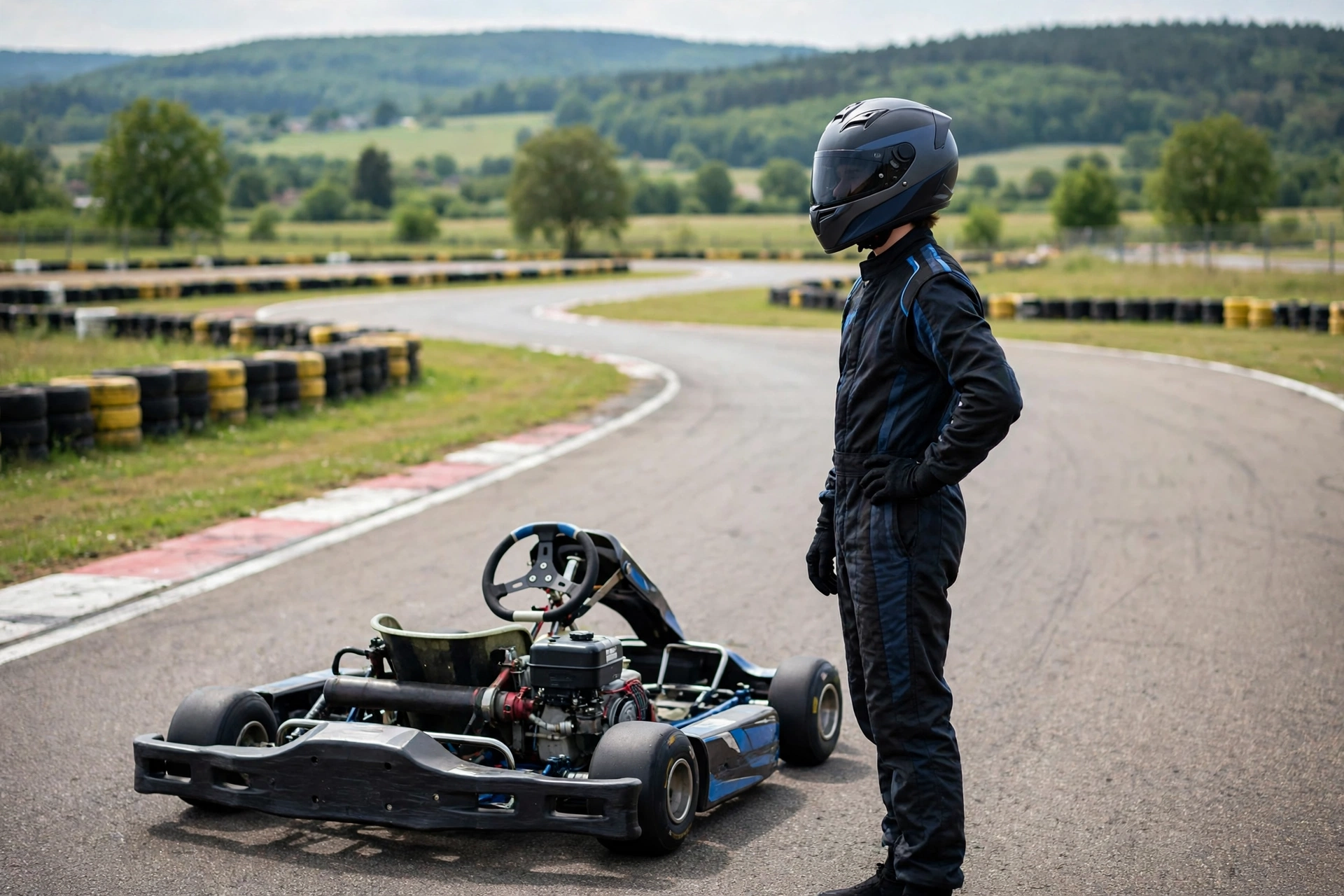
The main difference is that CMR is written for children. An adult karting helmet standard, such as the Snell K standard, is written for adult drivers, and its requirements assume an adult head and neck. CMR helmets are built to be lighter, because a child’s neck muscles are still developing and a heavy helmet is harder to carry safely in a crash and over a race. The standard also takes account of the smaller head sizes that young drivers need, so the range of sizes is built around children’s heads rather than scaled down from adult sizes.
The testing is also shaped by the way children race karts. Young drivers race at lower speeds than adults in many junior classes, but they still face impacts with barriers, other karts, and the track surface, so the helmet must absorb energy well while staying light. For background on how helmet technology manages impact forces in a different kind of helmet, see what MIPS is for helmets. The aim is a helmet that protects a child properly without being so heavy or bulky that it becomes a problem in itself.
What Does a CMR Helmet Need to Have?
In general terms, a CMR helmet needs a strong outer shell, an impact-absorbing liner, a secure chin strap, and a visor that stays in place. The shell is usually made from composite materials such as fibreglass, which spread the force of an impact. The liner, normally made from expanded polystyrene foam, is the part that absorbs energy by crushing in a controlled way when the helmet is struck, and it must cover the parts of the head that the standard says must be protected.
The helmet also needs a visor that gives a young driver a clear view of the track, including looking ahead through corners and checking for other karts, while still protecting the face from stones and debris thrown up by other karts. Ventilation matters too, because a child in a karting suit on a warm day can overheat quickly, so CMR helmets usually have vents that bring in fresh air without weakening the shell. The chin strap must hold firmly, because a helmet that comes off in a crash is no use at all.
How Can You Tell If a Helmet Meets CMR?
A helmet that meets the CMR standard carries a Snell certification label inside it, usually sewn into the lining or fixed to the shell under the padding. The label states the standard, in this case CMR, and it is the proof that the helmet passed the Foundation’s testing. When you buy a helmet, check for that label before you pay, and be wary of any helmet that claims to meet the standard without showing it, or that carries a label that looks copied or badly printed.
It is also worth buying from a reputable karting or motorsport supplier rather than from an unknown seller, because imitation helmets do appear for sale and they may look convincing from the outside while offering far less protection. If you are buying second hand, check the label, check the helmet’s history as far as you can, and remember that a helmet that has been in a serious crash should not be used again, even if it looks undamaged from the outside.
When Should a Child Outgrow a CMR Helmet?
A child will outgrow a CMR helmet in two ways: by size, and by age. As a child grows, their head gets bigger, and a helmet that once fitted snugly will become tight or will sit too high on the head, leaving parts of the head unprotected. If the helmet presses uncomfortably, leaves marks, or can be rocked about on the head, it no longer fits and it is time for a new one.
Age matters too, because karting organisations usually set an age limit for CMR helmets, after which a young driver moves on to an adult karting helmet standard. Check the rules of the club or series your child races in, and the current documents from the Snell Foundation, so that the change is planned rather than discovered at scrutineering. A helmet should also be replaced after any serious impact, or when the lining, straps, or visor show signs of wear that affect fit or function, whatever the age of the child or the date on the label.
Can an adult wear a CMR helmet?
No, not in general terms. CMR helmets are designed and sized for children, and an adult should wear a helmet built to an adult karting standard. Check the rules of the series you race in for the standard that applies to you.
Can a child use a CMR helmet for other motorsport?
It depends on the rules of that sport. CMR is written for karting, and other forms of motorsport may require a different standard. Check with the organisers before relying on a CMR helmet outside karting.
How long does a CMR helmet last?
Until the child outgrows it, until the series age limit is reached, or until it takes a serious impact, whichever comes first. Check the fit every season and the current rules of your child’s club or series, and replace the helmet sooner if it is damaged or no longer fits.

Olivia
Writer at Helmet Today, covering helmet reviews, fit and riding safety.