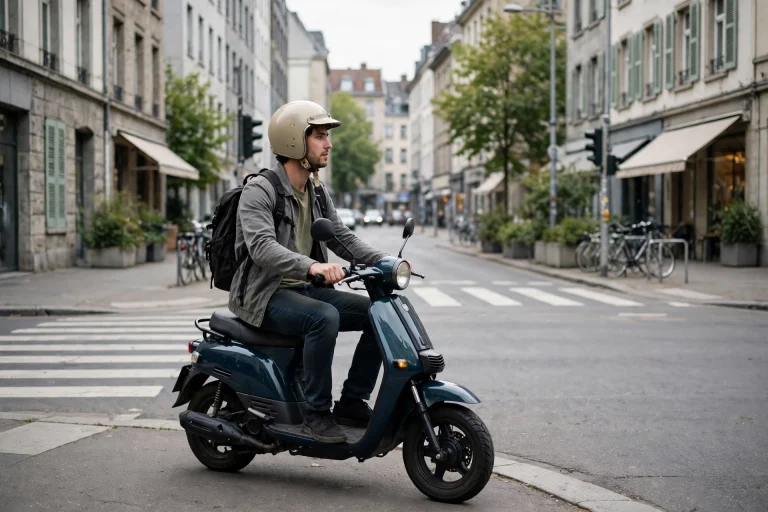
The Snell M2015 standard is a motorcycle helmet standard from the Snell Memorial Foundation, written in general terms for helmets worn by motorcycle riders, and it sets out how a motorcycle helmet should protect a rider’s head in a crash on the road. M stands for Motorcycle, and M2015 is the version of the standard from the 2015 cycle, which has since been followed by a newer version.
What Is the Snell M2015 Standard?
The Snell Memorial Foundation is an independent, non-profit organisation that writes helmet standards and tests helmets against them. Its standards have been used for motorcycle helmets for many decades. The M2015 standard is its standard for helmets worn by motorcycle riders on the road, covering riders of road bikes, cruisers, touring bikes, and other motorcycles in general terms.
A standard like M2015 is not a law in itself. It is a set of requirements that a helmet must meet before the Snell Foundation will certify it, and road authorities then choose to accept helmets that carry that certification. In practice, that is what gives the standard its force: a helmet without an accepted certification may not meet the road rules where you ride. The standard covers the shell, the impact-absorbing liner, the visor, and the chin strap, so that the whole helmet is judged as one piece of safety equipment rather than as separate parts.
Who Needs an M2015 Helmet?
M2015 helmets are for motorcycle riders of all kinds, from commuters riding to work to touring riders covering long distances and weekend riders enjoying a ride in the country. Motorcycle riding carries a real risk of a fall or a collision with another vehicle, and a helmet is the single most important piece of protective gear a rider wears. Most countries and states require a helmet by law, and a helmet that meets a recognised standard such as M2015 is the usual way to meet that requirement.
Whether M2015 is still accepted where you ride depends on the road rules in your country or state. Some places accept a range of helmet standards, while others require a specific standard, and newer versions of the Snell standard have since been published, so some authorities have moved on while others still accept M2015 for a time.

How Does M2015 Differ from Other Motorcycle Helmet Standards?
Different countries write their own motorcycle helmet standards, and M2015 is the Snell Foundation’s version. In Europe, motorcycle helmets are commonly certified to a European standard, and in the United States the Department of Transportation sets its own requirements, so a helmet sold in one market may carry a different certification from one sold in another. These standards are broadly similar in what they aim to do, but they are not identical, and the details of their tests differ, so a helmet certified to one standard is not automatically accepted everywhere.
Some helmets carry more than one certification, which can be useful if you ride in different countries or buy a helmet made for another market. For background on how helmet technology manages impact forces, see what MIPS is for helmets. When you are choosing, start with the standard that your local road rules require, and check the current rules rather than assuming that last year’s requirements still apply. If you plan to ride abroad, check which standards are accepted there before you travel.
What Does an M2015 Helmet Need to Have?
In general terms, an M2015 helmet needs a strong outer shell, an impact-absorbing liner, a secure chin strap, and a visor that stays in place. The shell, usually made from composite materials such as fibreglass or from a tough polycarbonate, spreads the force of an impact. The liner, normally made from expanded polystyrene foam, is the part that absorbs energy by crushing in a controlled way when the helmet is struck, and it must cover the parts of the head that the standard says must be protected.
The helmet also needs a visor that gives the rider a clear view of the road, including checking mirrors and looking over the shoulder at junctions, while still protecting the face and eyes from wind, rain, insects, and stones thrown up by other vehicles. Ventilation matters too, because a rider in a helmet on a warm day can overheat quickly, so M2015 helmets usually have vents that bring in fresh air without weakening the shell. The chin strap must hold firmly, because a helmet that comes off in a crash is no use at all.
How Can You Tell If a Helmet Meets M2015?
A helmet that meets the M2015 standard carries a Snell certification label inside it, usually sewn into the lining or fixed to the shell under the padding. The label states the standard, in this case M2015, and it is the proof that the helmet passed the Foundation’s testing. When you buy a helmet, check for that label before you pay, and be wary of any helmet that claims to meet the standard without showing it, or that carries a label that looks copied or badly printed.
It is also worth buying from a reputable motorcycle gear retailer rather than from an unknown seller, because counterfeit helmets do appear for sale and they may look convincing from the outside while offering far less protection. If you are buying second hand, check the label, check the helmet’s history as far as you can, and remember that a helmet that has been in a serious crash should not be used again, even if it looks undamaged from the outside.
How Long Does M2015 Certification Last and When Should You Replace a Helmet?
Certification does not last forever, and most road authorities put a time limit on how long a helmet standard is accepted for. M2015 has been followed by a newer version of the standard, so a helmet bought to M2015 will eventually fall out of date even if it has never been crashed. Cut-off dates vary between countries and states, so check the rules where you ride and plan ahead rather than discovering at a roadside check that your helmet is no longer accepted.
Age is only part of the story. A helmet should also be replaced after any serious impact, after a drop onto a hard surface from height, or when the lining, straps, or visor show signs of wear that affect fit or function. In general terms, if a helmet no longer fits properly, if the liner feels compressed or damaged, or if the chin strap no longer holds firmly, it is time for a new one, whatever the date on the label says.
Is an M2015 helmet still legal for road use?
It depends on where you ride. Some authorities still accept M2015 helmets, while others have moved to a newer version of the standard. Check the road rules where you live, and the current documents from the Snell Foundation, before relying on an M2015 helmet on the road.
Can you wear glasses with an M2015 helmet?
Yes, in general terms, although it depends on the fit of the helmet and the shape of your glasses. Try the helmet on with your glasses before buying, and check that the arms do not press uncomfortably and that the visor still closes properly.
Can an M2015 helmet be used for track days?
It depends on the organiser. Some track day organisers accept motorcycle helmets certified to M2015, while others require a motorsport standard. Check the event rules before you go, and take your helmet’s certification label details with you.

Olivia
Writer at Helmet Today, covering helmet reviews, fit and riding safety.