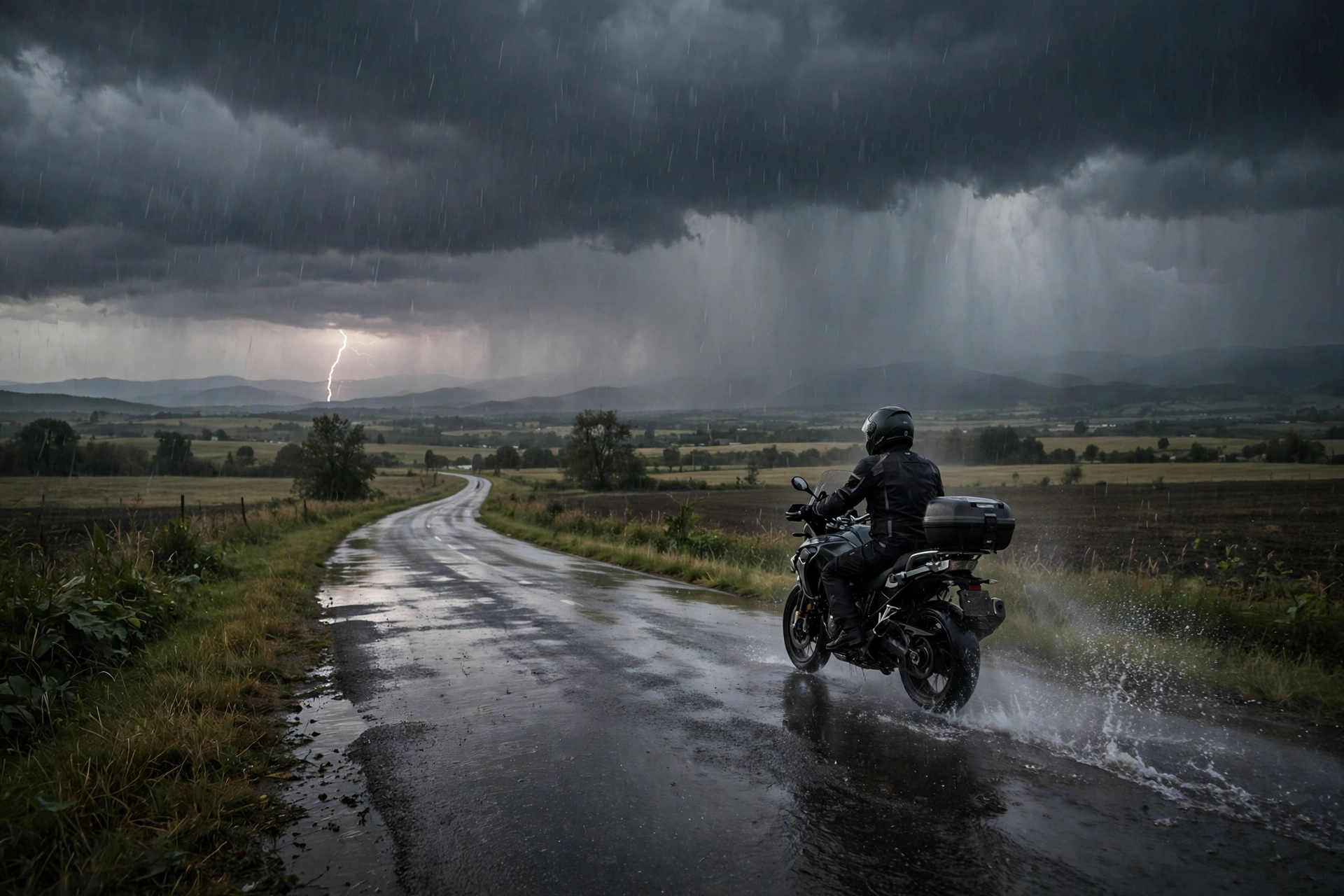
No, in general terms, it is not safe to ride with a helmet in a thunderstorm, not because the helmet itself is dangerous, but because riding in a storm puts you at risk from lightning, heavy rain, wind, and poor visibility. A helmet does not attract lightning, and wearing one is still better than riding bare-headed, but the safest choice in a thunderstorm is to stop riding and shelter somewhere safe. Lightning can strike the ground, trees, and metal objects near you, and a rider on an open road is exposed. If you hear thunder, the storm is close enough to matter.
Does a Helmet Attract Lightning?
No, a helmet does not attract lightning. Lightning is drawn to the tallest object in an area, and a rider is low to the ground compared with trees, poles, and buildings. The helmet’s shell is not a magnet for lightning, and the small amount of metal in a visor or buckle makes no real difference. The danger in a storm comes from being outdoors and exposed, not from what you are wearing on your head.
That said, a helmet does not protect you from lightning either. If lightning strikes nearby, the risk is the strike itself and the ground current that spreads out from it, not your helmet. In general terms, the myth that helmets attract lightning is false, but it should not be used as a reason to keep riding. The real question is not whether your helmet is safe, but whether being on the road in a storm is safe, and in general terms, it is not.
What Makes Riding in a Thunderstorm Dangerous?
Riding in a thunderstorm is dangerous for several reasons at once. Lightning is the most obvious, but heavy rain can flood the road, hide potholes, and make braking much harder. Strong wind gusts can push a bike sideways without warning, and hail can sting, damage a visor, and make the road slippery. Visibility drops sharply in heavy rain, so other drivers may not see you, and you may not see them.
The road surface becomes slick, especially in the first minutes of rain, when oil and dust mix with water. Wet leaves, painted lines, and metal covers become slippery too. In general terms, a thunderstorm turns every part of riding harder at the same time: grip, vision, balance, and the behaviour of other road users all get worse. That combination is why stopping is the safer choice.
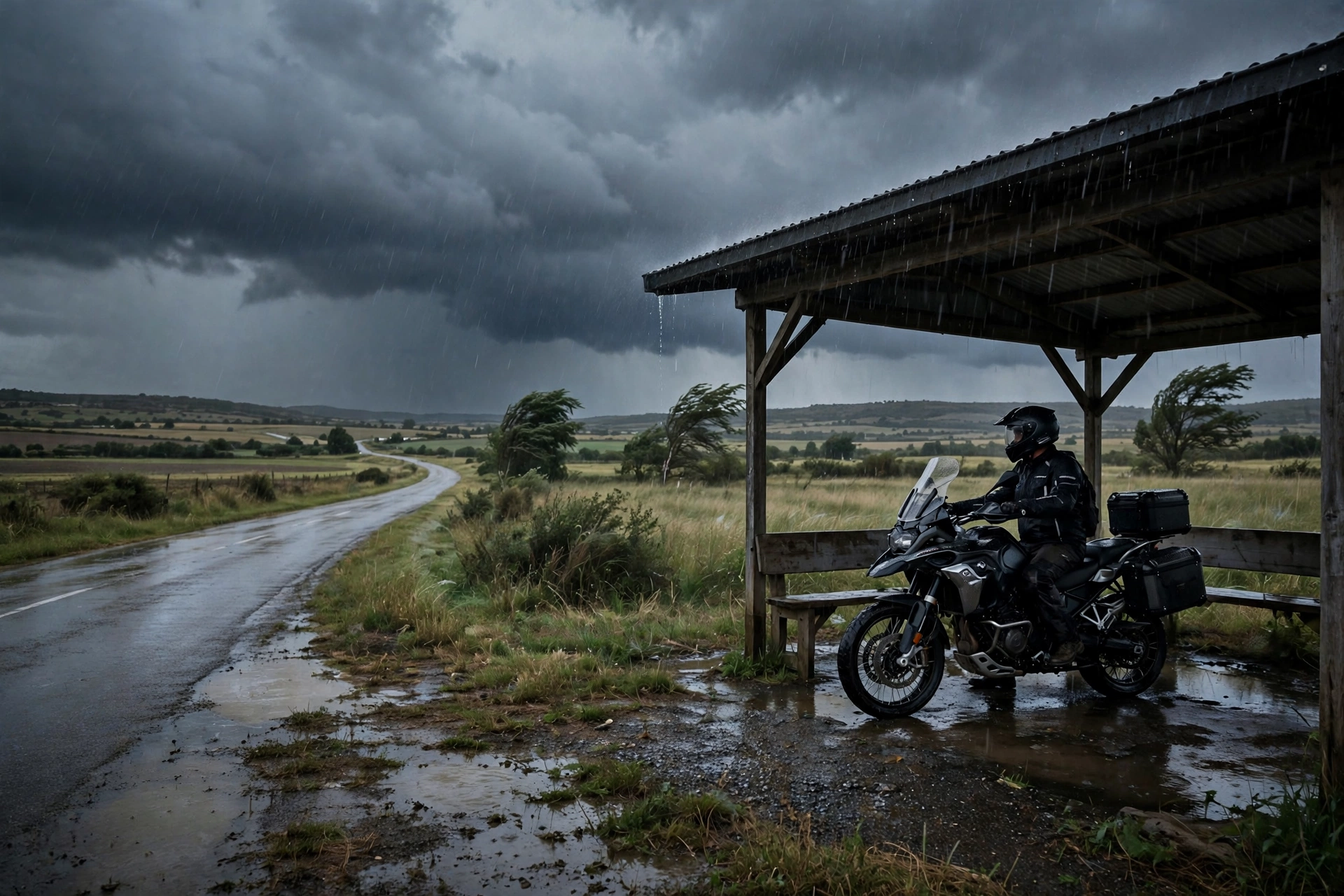
What Should You Do if a Thunderstorm Starts While You Are Riding?
If a thunderstorm starts while you are riding, slow down gently, turn on your lights, and look for a safe place to stop. A building, a petrol station canopy, or another solid shelter is best. Avoid stopping under a lone tree, near tall metal objects, or in a low spot where water can gather. Once you are off the road, stay under cover and wait for the storm to pass.
If no shelter is nearby, pull well off the road onto safe ground, away from water and metal fences, and crouch low if lightning is very close, keeping your feet together. Do not shelter under a single tall tree, and do not stand in open water. In general terms, the safest place in a storm is indoors, so make for a building as soon as you can. Wait until the thunder has stopped for a good while before riding on.
Is It Safe to Keep Riding if the Storm Seems Far Away?
It is tempting to keep riding when the storm seems far away, but lightning can strike several miles from the main storm, and weather can change quickly. If you can hear thunder, lightning is close enough to be a risk. If the sky is darkening, the wind is rising, or the rain is getting heavier, the storm is moving towards you, not away.
Plan ahead when storms are forecast: check the weather before you set out, and be ready to change your route or your timing. A short delay is always better than riding through a storm. In general terms, if you are unsure whether it is safe to carry on, stop. It is far easier to wait out a storm than to deal with a crash or a lightning strike on an open road.
What Should You Check After Riding in a Storm?
After riding in a storm, check your helmet and your bike before your next ride. Dry the helmet’s padding and liner fully, with the visor open in a ventilated place, so damp does not turn into mould or a bad smell. Wipe the visor gently with a clean, damp cloth, and check it for scratches or cracks from hail or flying debris. Check the straps and fasteners too, since wet straps can stretch and dry stiff.
Check your bike as well: brakes, tyres, chain, and lights all suffer in heavy rain, and water can get into places it should not. In general terms, a storm ride is hard on both rider and machine, so a quick check afterwards is worth the time. To understand more about how modern helmets protect your head, it helps to read about what MIPS is for helmets. If your helmet was hit by hail or debris, look it over carefully and replace it if the shell or visor is damaged.
How Can You Stay Safe in Stormy Weather?
Stay safe in stormy weather by checking the forecast before every ride and having a plan for shelter along your route. Carry a waterproof layer, keep your phone charged, and know where you can stop if the weather turns. Ride with your lights on in rain, slow down early, and leave extra space between you and other traffic. A clear visor or glasses help you see, and a calm, steady pace keeps the bike stable.
If storms are common where you ride, build the habit of stopping early rather than pushing on. In general terms, good judgement is the best safety gear in bad weather: a helmet protects your head in a fall, but it cannot protect you from lightning, flooding, or a driver who cannot see you in heavy rain. When the sky turns dark, the safest ride is the one you postpone.
Is it safe to ride with a helmet in a thunderstorm?
No, in general terms, it is not safe to ride in a thunderstorm. A helmet does not attract lightning, but riding in a storm exposes you to lightning, heavy rain, wind, and poor visibility, so stop and shelter.
Does a helmet attract lightning?
No. A helmet does not attract lightning, and the small amount of metal in a visor or buckle makes no real difference. The danger is being outdoors and exposed during a storm.
What should I do if I am caught in a thunderstorm on my bike?
Slow down, find solid shelter such as a building or petrol station canopy, and wait until the thunder has stopped for a good while before riding on.

Olivia
Writer at Helmet Today, covering helmet reviews, fit and riding safety.