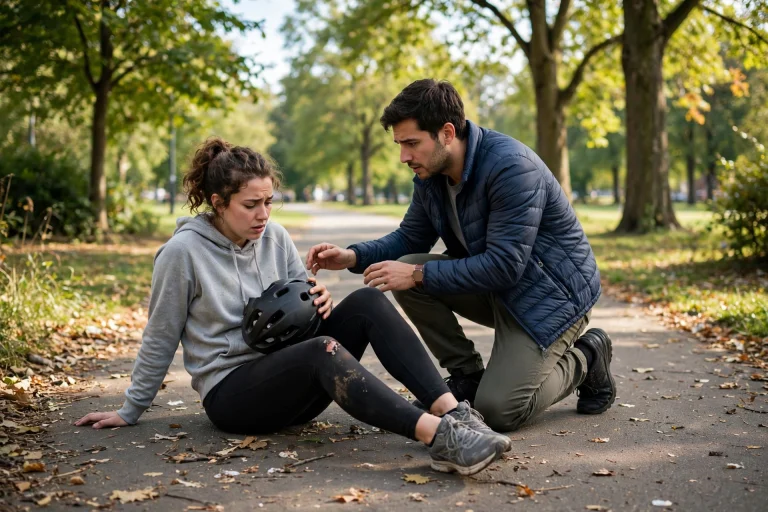
In general terms, you should not remove a helmet after a road accident unless there is an urgent reason to do so, such as the person not breathing or needing resuscitation. A helmet should normally stay on until trained medical help arrives, because removing it can move the head and neck and may make a possible spinal injury worse. If the person is awake, breathing normally, and in no immediate danger, the safest action is to keep them still, keep the helmet on, and call for emergency help. This is general information only, not medical advice, and when in doubt you should always seek medical help.
Why Is It Risky to Remove a Helmet After a Road Accident?
Removing a helmet after a road accident is risky because the crash may have injured the neck or spine, and those injuries are not always visible from the outside. The helmet holds the head and neck in a fixed position, and pulling it off can bend or twist the neck in a way that could worsen a spinal injury. Even a careful removal by a bystander can move the head more than intended, especially if the person is lying in an awkward position on the road.
The helmet itself may also be the only thing holding a head injury in place. If the helmet is cracked or has pressed against a wound, removing it could disturb the injury underneath. Trained responders know how to remove a helmet safely, with one person holding the head steady while another works the helmet free. In general terms, the risk of moving the head and neck is greater than the benefit of taking the helmet off quickly.
When Should a Helmet Be Removed After a Road Accident?
A helmet should be removed after a road accident only when there is a clear and urgent reason, such as the person not breathing, their airway being blocked, or the need to give resuscitation. If the person is vomiting and cannot clear their airway, or if the helmet is on fire or filling with water, removal may also be necessary. In those cases the need to protect breathing comes first, and the helmet should come off as gently as possible.
If you must remove a helmet, keep the head and neck as still as you can, and get help from another person if one is nearby. One person should hold the head steady while the other undoes the chin strap and eases the helmet off, spreading the sides slightly to clear the ears. If you want to understand one of the safety systems used in modern helmets, reading about what MIPS is for helmets is a useful starting point. This is general information only, and emergency services should be called as soon as possible.

What Should You Do Instead of Removing the Helmet?
Instead of removing the helmet, the first steps are to make the scene safe, call for emergency help, and keep the injured person still. Switch off any vehicle engines if it is safe to do so, warn other traffic, and stay with the person. Ask them if they can hear you and whether they can feel their hands and feet, but do not ask them to move their head or neck. Keep talking to them calmly so they stay still and reassured.
Check whether the person is breathing by watching the chest rise and fall, without moving the head. If they are breathing and there is no immediate danger, do not move them, and do not lift the visor if it means moving the head. Cover them with a blanket or jacket to keep them warm if one is available, and wait for the ambulance crew to arrive. In general terms, keeping the person still and the helmet on is the safest thing a bystander can do.
How Do Emergency Services Remove a Helmet Safely?
Emergency services remove a helmet as a team, with one responder holding the head and neck steady while another undoes the chin strap and eases the helmet off. They usually work with the person lying flat, and they keep the head in line with the body throughout. If a neck collar is available, it may be fitted once the helmet is off, and the head is then supported with blocks or padding on a stretcher.
Responders are trained to check breathing and the airway first, and they may remove the helmet sooner if it is blocking the airway or making resuscitation difficult. They also check the helmet for cracks and damage, since this can give doctors useful clues about the force of the crash. In general terms, helmet removal is a careful, two-person job that should be left to people with the right training whenever that is possible.
Does Removing a Helmet Make a Head Injury Worse?
Removing a helmet can make an injury worse if the head or neck moves during the removal, but it does not always do so, and in some situations removal is necessary to save a life. The main danger is to the spine: if a bone in the neck is broken or unstable, bending or twisting the head can damage the spinal cord. This is why responders keep the head still and work in pairs when they take a helmet off.
A helmet that has been in a crash may also be pressing on a wound or a swelling, and pulling it away could disturb the area underneath. That said, if the person is not breathing, the risk of leaving the helmet on is far greater than the risk of removing it, because breathing comes first. In general terms, the decision should be guided by whether the person is breathing and whether trained help is on the way.
What Should You Tell the Paramedics When They Arrive?
When the paramedics arrive, tell them what happened, whether the helmet has been moved or removed, and whether the person was conscious at any point. Mention anything you noticed, such as the person being confused, vomiting, or complaining of pain in the neck or back. If the helmet was removed, keep it nearby so the crew can see it, since the pattern of damage can help doctors judge the force of the impact.
It also helps to tell the crew about any bleeding, broken bones, or other injuries you can see, and whether the person has been given any first aid. If you know the person, pass on any medical details that could matter, such as medicines they take. In general terms, clear, calm information helps the paramedics work faster, so note what you saw and share it with them when they take over.
Should I remove a helmet if the person is unconscious but breathing?
No, in general terms you should leave the helmet on if the person is unconscious but breathing normally. Keep them still, protect them from traffic, and call for emergency help. Only remove the helmet if their breathing becomes blocked or they stop breathing.
Can I lift the visor without removing the helmet?
Lifting the visor gently is usually fine if it does not move the head, and it can help you talk to the person and check their face. Do not force the visor if it is jammed, and do not move the head to reach it.
What if the person asks me to remove their helmet?
If the person is awake, alert, and asking for the helmet to come off, you can help them remove it slowly while they keep their head still, but if they have neck pain, numbness, or weakness, encourage them to keep it on and wait for medical help.

Olivia
Writer at Helmet Today, covering helmet reviews, fit and riding safety.