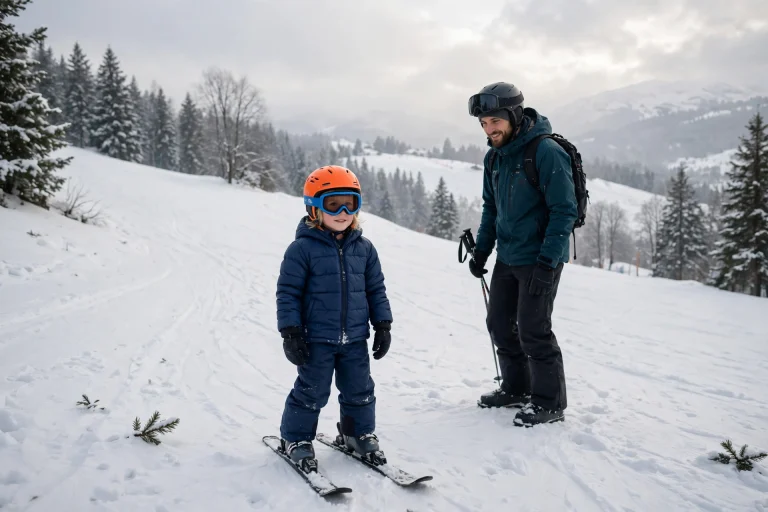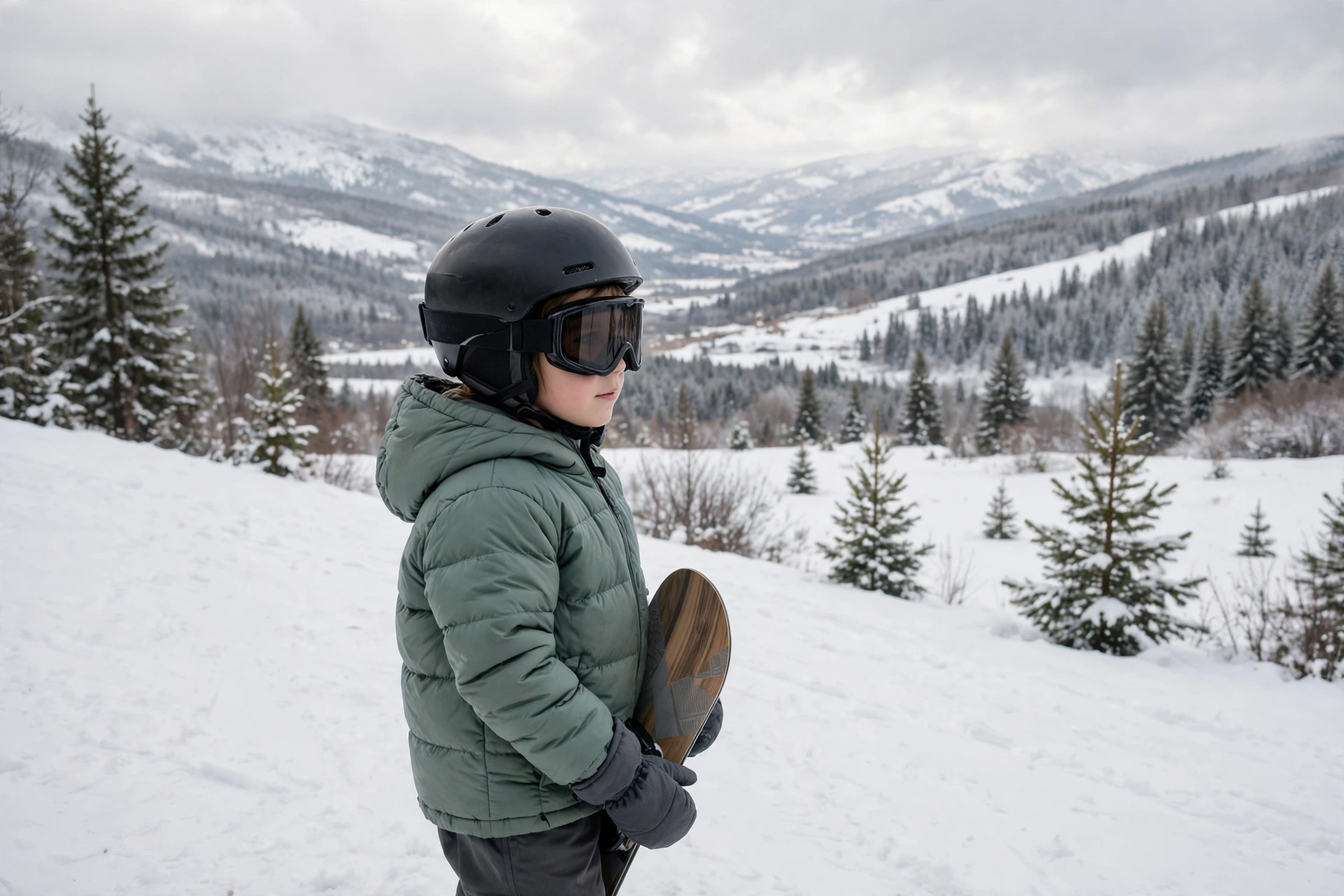
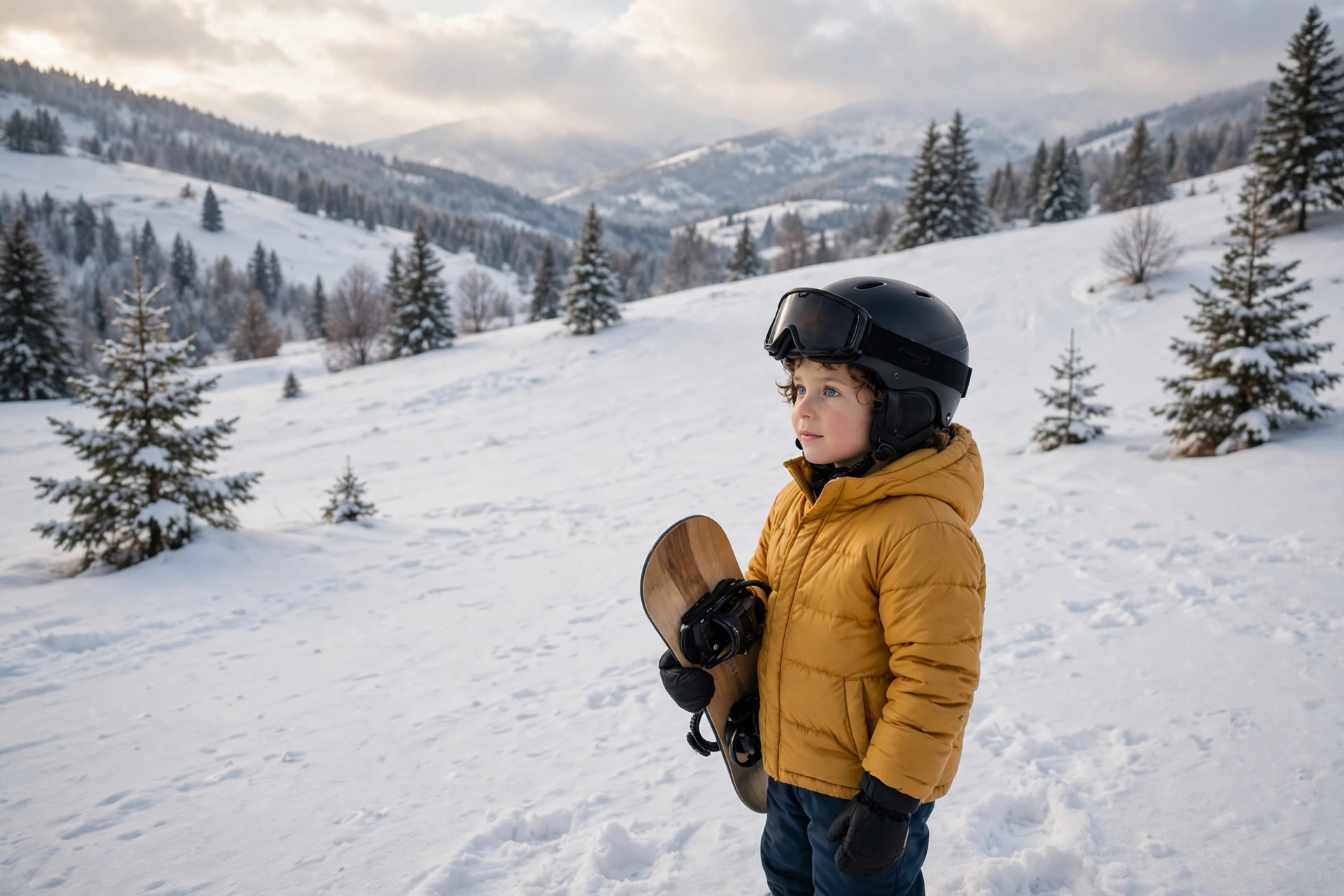
A kids helmet for a first snowboard lesson is a snug-fitting, certified snowboard helmet sized for a child’s head, worn to protect them from falls on the snow. It should sit level, feel comfortable with goggles, and stay firmly in place when your child moves, so they can focus on learning to stand, balance, and turn on the board instead of thinking about their helmet. Beginners on a snowboard fall over often, especially in the first lesson, so head protection is one of the most important pieces of kit. In general terms, a proper snowboard helmet is essential for any child taking their first snowboard lesson.
What Makes a Kids Snowboard Helmet Different?
A kids snowboard helmet is a smaller, lighter version of an adult snowboard helmet, built for a child’s head and neck. It has a hard outer shell and a soft inner liner that absorbs the force of a fall, along with vents that can be opened or closed to control warmth. Many kids helmets have a dial at the back, so the fit can be tuned as your child grows. The shape is low and rounded, which suits a smaller head better than an adult helmet.
Kids snowboard helmets are also designed to work with snowboard goggles, with a front shape that lets the goggles sit neatly against the helmet with no gap. This matters in cold wind and falling snow, because a gap lets in cold air and moisture. In general terms, a kids snowboard helmet should feel light and comfortable, so your child barely notices it while they are learning to glide, stop, and link their first turns.
How Should a Kids Snowboard Helmet Fit for a First Lesson?
A kids snowboard helmet should fit snugly all round the head, with the liner touching the head evenly and no loose spots or pressure points. It should sit level, covering the forehead down to just above the eyebrows, and it should not tip forward or slide back when your child shakes their head gently. The chin strap should be fastened snugly enough that the helmet stays in place, but not so tight that it pinches or causes discomfort.
To check the fit, ask your child to shake their head from side to side and nod up and down. The helmet should move with the head rather than wobbling on its own. If you want to understand one of the safety systems used in modern helmets, reading about what MIPS is for helmets is a useful starting point, though not every kids snowboard helmet uses that system. A helmet that is too big can slip over the eyes, while one that is too small will feel tight and may cause a headache.
Does My Child Need a Snowboard Helmet for a First Lesson?
Yes, in general terms your child should wear a snowboard helmet for a first lesson. Learning to snowboard involves many falls, often backwards onto the snow, and a helmet protects the head when they land hard on packed snow or an icy patch. Snowboard schools usually require helmets for children in group lessons, and many resorts have rules that make helmets compulsory for young riders, so it is worth checking before you travel.
A helmet also helps your child feel more confident. Knowing their head is protected makes it easier to relax, try new movements, and get back up after a fall without fear. It keeps the head warm in cold weather too, which matters on a long morning lesson. Even on a gentle beginner slope, a helmet is a simple way to reduce the risk of a head knock on a first day that is full of tumbles.
What Features Should I Look for in a Kids Snowboard Helmet?
The most important features of a kids snowboard helmet are a good fit, a recognised safety certification, and comfort. Look for a helmet that carries a recognised snow sports standard, with clear labelling inside the helmet or on its box. Adjustable vents are useful because they let you open the helmet up on a warm afternoon and close it down when the weather turns cold. A dial-fit system at the back makes it easy to adjust the fit as your child grows.
Ear pads are another feature worth checking. Soft, padded ear covers keep the ears warm and protect them from cold wind, and many kids helmets have ear pads that can be removed for washing. Goggle compatibility matters too: the helmet should work neatly with your child’s goggles, with no gap at the forehead. In general terms, the best helmet is the one that fits well, feels comfortable, and is easy for your child to put on and take off by themselves.
What Should My Child Wear Under a Snowboard Helmet?
Your child should wear nothing bulky under a snowboard helmet, because a thick hat changes the fit and can make the helmet sit too high or feel loose. A thin balaclava or a close-fitting thermal liner is the most that should go underneath, and only if the weather is very cold. The helmet itself keeps the head warm, so a normal base layer and a warm jacket are usually enough.
If your child is cold, it is better to adjust the vents or add a thin neck warmer than to stuff a thick hat under the helmet. Long hair should be tied back low so it does not push the helmet up at the back, and hair clips should be kept flat so they do not press against the head. The aim is a snug, even fit with the liner in direct contact with the head, which is how the helmet is designed to work best.
How Do I Look After a Kids Snowboard Helmet?
A kids snowboard helmet should be dried and stored carefully after each day on the snow. Shake off any snow, wipe the shell with a soft cloth, and leave the helmet in a warm, dry place with the vents open so the liner can air out. Avoid leaving it in a hot car or near a radiator, because strong heat can damage the liner. The inside can be wiped with a damp cloth to remove sweat, and removable ear pads can be washed following the maker’s instructions.
Check the helmet regularly for damage. Look for cracks in the shell, dents, a loose chin strap, or padding that has gone flat or come unstuck. If the helmet has taken a hard knock in a fall, it should be replaced, since the liner inside can be damaged even when the outside looks fine. In general terms, a helmet that no longer fits snugly, shows damage, or has already absorbed a heavy impact has done its job and should be retired.
Can my child use a bike helmet for a first snowboard lesson?
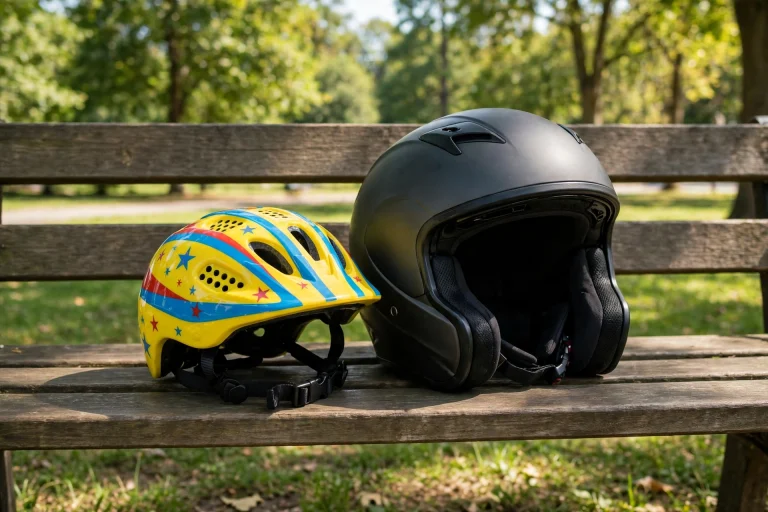
No, a bike helmet is not a good choice for snowboarding. Bike helmets are made for different kinds of impacts, have no insulation for cold weather, and do not fit well with snowboard goggles. A proper snow sports helmet is the right choice for a first lesson.
What size snowboard helmet does my child need?
Measure around your child’s head just above the eyebrows and ears, then match that number to the size guide on the helmet box. If your child is between sizes, try both on and choose the one that fits snugly without pressure points.
Should I buy or rent a helmet for a first lesson?
Either option works for a first lesson. Renting is a good choice if you are not sure your child will enjoy snowboarding, while buying makes sense if they will ride again. A rented helmet should still be checked carefully for fit and damage before the lesson.

Olivia
Writer at Helmet Today, covering helmet reviews, fit and riding safety.