
The SFI 31.1 standard is a helmet standard published by the SFI Foundation, written in general terms for helmets worn in motorsport, and it sets out how a racing helmet should protect a driver in a crash and resist fire. SFI is a non-profit organisation that writes safety standards for motorsport equipment, and 31.1 is its specification for driver helmets used in car racing.
What Is the SFI 31.1 Helmet Standard?
The SFI Foundation is a non-profit organisation that writes standards for motorsport safety equipment, including helmets, driver suits, and restraints. Its specifications are used by racing organisations in the United States and elsewhere. SFI 31.1 is its specification for helmets worn by drivers in car racing, and it covers the design, impact protection, fire resistance, and labelling of a racing helmet, so that drivers, teams, and officials can tell whether a helmet has been tested to an agreed safety level.
A standard like this is not a law in itself. It is a set of requirements that a helmet must meet before it can be certified, and racing organisations then choose to require helmets that carry that certification. In practice, that is what gives the standard its force: a helmet without the right certification will not pass scrutineering. Check the current documents from the SFI Foundation for the version of the specification that applies today, rather than relying on an old version number you remember.
Who Uses SFI 31.1 Helmets and Where Are They Required?
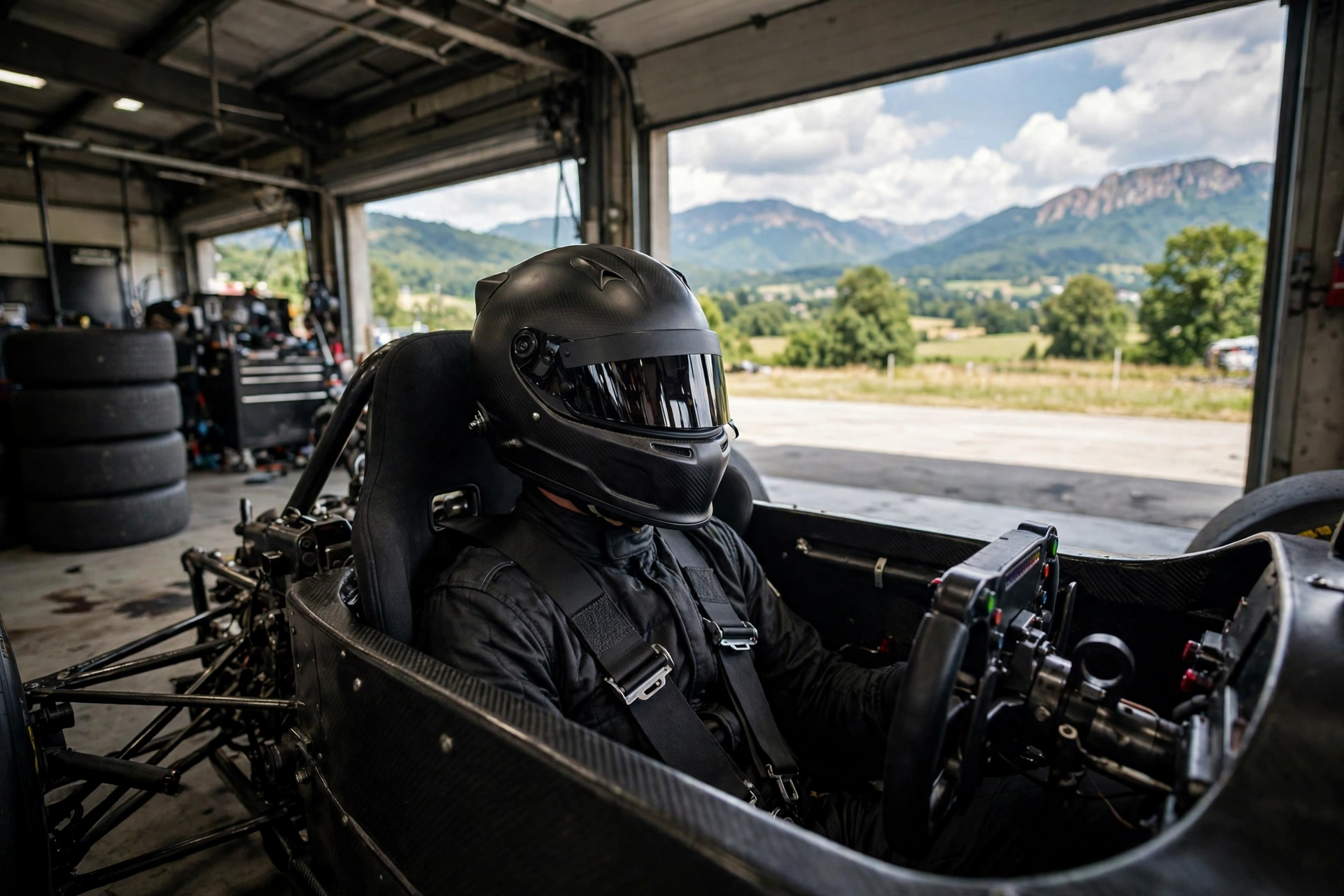
SFI 31.1 helmets are used by drivers in many kinds of car racing, from grassroots club racing and track days through to professional series that follow SFI rules. They are also worn by co-drivers and navigators in rallying. In general terms, any driver who sits in a car with a roll cage, a harness, and a risk of fire will be wearing a helmet built to a motorsport standard, and SFI 31.1 is one of the standards that racing organisations in the United States commonly accept.
Whether SFI 31.1 is actually required depends on the organisation running the event. Many race series, clubs, and track day organisers list the helmet standards they accept in their rules, and SFI 31.1 is commonly on that list alongside other standards such as those from Snell and the FIA. Check the rules of the event you plan to enter before you buy a helmet.
How Does SFI 31.1 Differ from Road Helmet Standards?
Road helmets and racing helmets face different risks, so their standards test different things. A motorcycle helmet standard, for example, is written for a rider who may be thrown from a bike onto a road, while SFI 31.1 is written for a driver strapped into a seat inside a car, often with a roll cage close to the head. A racing helmet must protect against impacts with the roll cage and the inside of the car, and it must work with a head and neck restraint device, which is now a normal part of motorsport safety.
Fire is the other big difference. A racing helmet must resist flame for long enough to give a driver time to get out of a burning car, so SFI 31.1 tests the shell, the lining, and the visor for fire resistance in a way that road helmet standards generally do not. For background on how helmet technology manages impact forces in a different kind of helmet, see what MIPS is for helmets.
What Does an SFI 31.1 Helmet Need to Have?
In general terms, an SFI 31.1 helmet needs a strong outer shell, an impact-absorbing liner, a secure chin strap, and a visor that stays in place. The shell is usually made from composite materials such as fibreglass or carbon fibre, which spread the force of an impact. The liner, normally made from expanded polystyrene foam, is the part that absorbs energy by crushing in a controlled way when the helmet is struck, and it must cover the parts of the head that the standard says must be protected.
The helmet also needs to be fire resistant, as described above, and it needs fittings that let a driver attach a head and neck restraint device. The eye opening must be wide enough for good vision around the track, including checking mirrors and looking through corners, while still leaving the face protected. Ventilation matters too, because a driver in a hot car wearing a fireproof suit can overheat quickly, so SFI 31.1 helmets usually have vents that bring in fresh air without weakening the shell.
How Can You Tell If a Helmet Meets SFI 31.1?
A helmet that meets the SFI 31.1 standard carries a certification label or patch, usually fixed to the lining or the shell under the padding, or sewn onto the helmet. The label states the specification, in this case SFI 31.1, and it is the proof that the helmet passed the required testing. When you buy a helmet, check for that label before you pay, and be wary of any helmet that claims to meet the standard without showing it, or that carries a label that looks copied or badly printed.
It is also worth buying from a reputable motorsport supplier rather than from an unknown seller, because counterfeit helmets do appear for sale and they may look convincing from the outside while offering far less protection. If you are buying second hand, check the label, check the helmet’s history as far as you can, and remember that a helmet that has been in a serious crash should not be used again, even if it looks undamaged from the outside.
How Long Does SFI 31.1 Certification Last and When Should You Replace a Helmet?
Certification does not last forever, and most racing organisations put a time limit on how long a helmet specification is accepted for. Specifications are updated over time, so a helmet bought to an older version will eventually fall out of date even if it has never been crashed. Cut-off dates vary between organisations, so check the rules of the series you race in and plan ahead rather than discovering at scrutineering that your helmet is no longer accepted.
Age is only part of the story. A helmet should also be replaced after any serious impact, after exposure to fire or extreme heat, or when the lining, straps, or visor show signs of wear that affect fit or function. In general terms, if a helmet no longer fits properly, if the liner feels compressed or damaged, or if the chin strap no longer holds firmly, it is time for a new one, whatever the date on the label says.
Is an SFI 31.1 helmet the same as a Snell helmet?
No. SFI and Snell are different organisations that write their own standards, although many racing series accept helmets certified to either one. Check the rules of your series to see which standards it accepts before you buy.
Can you wear glasses with an SFI 31.1 helmet?
Yes, in general terms, although it depends on the fit of the helmet and the shape of your glasses. Try the helmet on with your glasses before buying, and check that the arms do not press uncomfortably and that the visor still closes properly.
Is an SFI 31.1 helmet legal for road use?
Not necessarily. SFI 31.1 is a motorsport standard, not a road helmet standard, so a helmet that meets it may not meet the road rules where you live. Racing helmets are for the track; road use needs a helmet certified to the road standard that applies where you live.

Olivia
Writer at Helmet Today, covering helmet reviews, fit and riding safety.