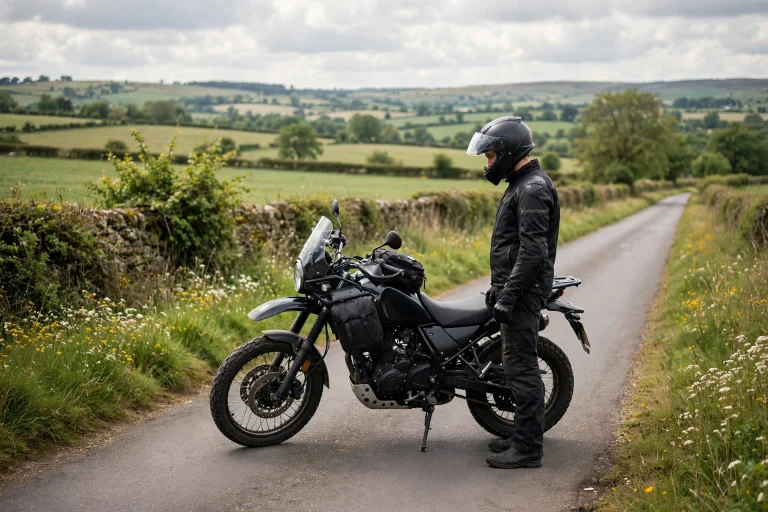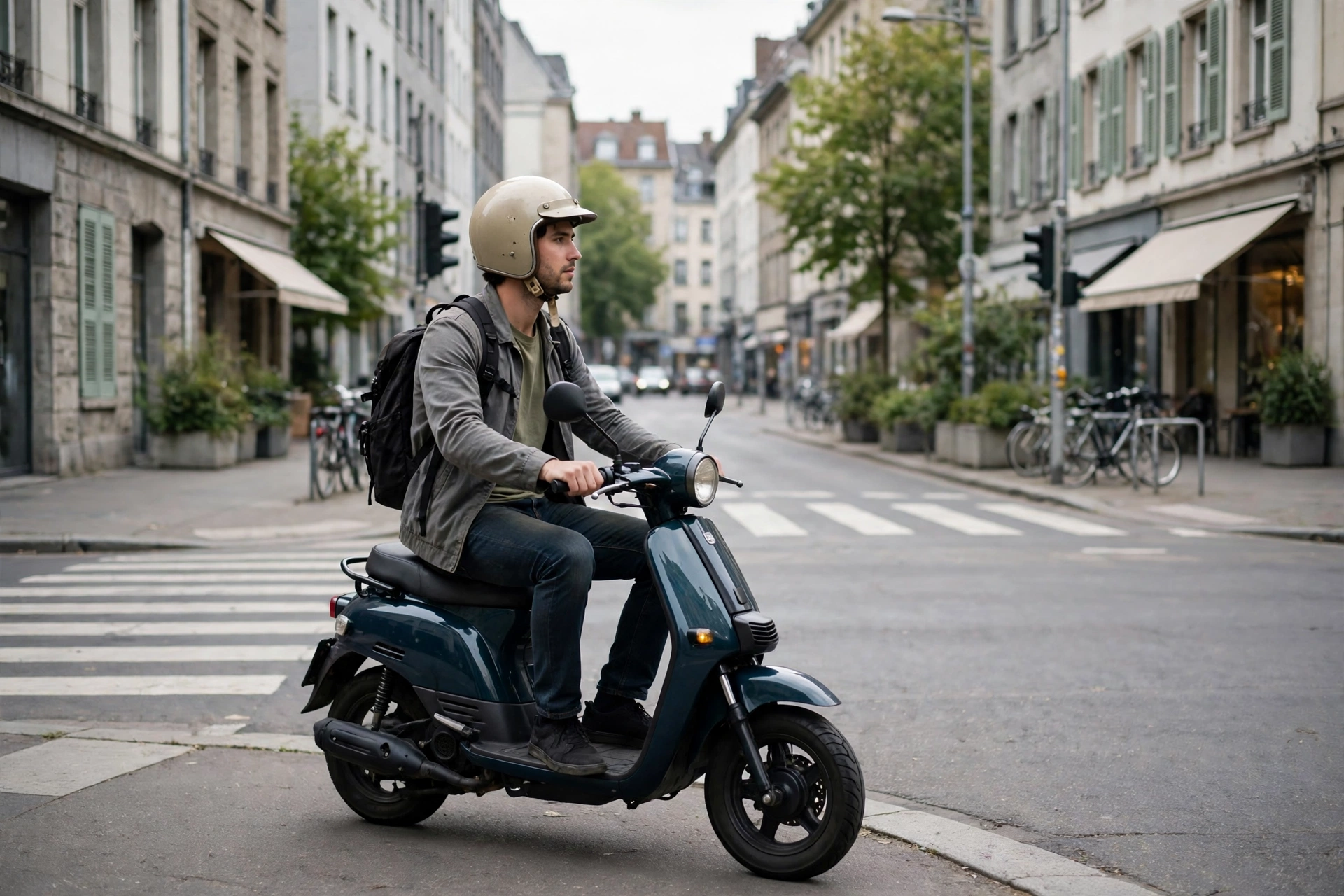
The Snell N94 standard is a helmet standard from the Snell Memorial Foundation, written in general terms for helmets worn by moped riders, and it sets out how a moped helmet should protect the rider’s head at the lower speeds and lighter impacts typical of moped riding. N94 is the standard’s designation within the Snell system, and it covers helmets made for mopeds and other low-powered two-wheelers.
What Is the Snell N94 Standard?
The Snell Memorial Foundation is an independent, non-profit organisation that writes helmet standards and tests helmets against them. Its standards have been used for motorcycle and motorsport helmets for many decades. The N94 standard is its standard for helmets worn by moped riders, and it was written because mopeds sit between bicycles and motorcycles: they are faster than a bicycle but slower and lighter than a full motorcycle, so their riders face different risks from either.
A standard like N94 is not a law in itself. It is a set of requirements that a helmet must meet before the Snell Foundation will certify it, and road authorities then choose to accept helmets that carry that certification. In practice, that is what gives the standard its force: a helmet without an accepted certification may not meet the road rules where you ride. The standard covers the shell, the impact-absorbing liner, the visor, and the chin strap, so that the whole helmet is judged as one piece of safety equipment rather than as separate parts.
Who Needs a Snell N94 Helmet?
N94 helmets are for riders of mopeds and other low-powered two-wheelers, including riders who use a moped for commuting, for short trips around town, or for delivery work. Moped riders often ride in traffic, at junctions, and on busy streets, where a fall or a collision with another vehicle can happen at low speed but still cause a serious head injury. A helmet made for this kind of riding is lighter and more open than a full motorcycle helmet, which suits the short, slow journeys that mopeds are used for.
Whether N94 is accepted where you ride depends on the road rules in your country or state. Some places accept a range of helmet standards for moped riders, while others require a specific standard, so check the rules before you buy. If you are unsure which standard applies, ask your local road authority or a reputable helmet retailer.

How Does N94 Differ from Motorcycle Helmet Standards?
The main difference is the kind of riding it is written for. A motorcycle helmet standard, such as the Snell M standard, is written for riders who travel at higher speeds on larger, heavier machines, and its tests reflect the harder impacts that can happen at those speeds. A moped helmet standard is written for lower speeds and lighter impacts, so N94 helmets are generally lighter and more open, often with a larger eye opening and less coverage around the chin and jaw than a full-face motorcycle helmet.
That does not mean a moped helmet is a lesser helmet. It means it is built for a different job, and a helmet that is right for a moped may not be right for a motorcycle. For background on how helmet technology manages impact forces in a different kind of helmet, see what MIPS is for helmets. The key point is to match the helmet to the vehicle you ride: a moped helmet for a moped, and a motorcycle helmet for a motorcycle, with the standard that your local road rules accept for that vehicle.
What Does an N94 Helmet Need to Have?
In general terms, an N94 helmet needs a strong outer shell, an impact-absorbing liner, a secure chin strap, and a visor or eye protection that stays in place. The shell spreads the force of an impact, and the liner, normally made from expanded polystyrene foam, is the part that absorbs energy by crushing in a controlled way when the helmet is struck, and it must cover the parts of the head that the standard says must be protected.
The helmet also needs a chin strap that holds firmly, because a helmet that comes off in a crash is no use at all, and it needs to give the rider a clear view of the road, including checking mirrors and looking over the shoulder at junctions. Ventilation matters too, because a moped rider in traffic on a warm day can overheat quickly, so N94 helmets usually have vents that bring in fresh air without weakening the shell. Some moped helmets are open-face designs, which suit riders who want a wide field of view and easy communication at low speeds.
How Can You Tell If a Helmet Meets N94?
A helmet that meets the N94 standard carries a Snell certification label inside it, usually sewn into the lining or fixed to the shell under the padding. The label states the standard, in this case N94, and it is the proof that the helmet passed the Foundation’s testing. When you buy a helmet, check for that label before you pay, and be wary of any helmet that claims to meet the standard without showing it, or that carries a label that looks copied or badly printed.
It is also worth buying from a reputable helmet retailer rather than from an unknown seller, because imitation helmets do appear for sale and they may look convincing from the outside while offering far less protection. If you are buying second hand, check the label, check the helmet’s history as far as you can, and remember that a helmet that has been in a serious crash should not be used again, even if it looks undamaged from the outside.
When Should You Replace an N94 Helmet?
A moped helmet should be replaced after any serious impact in which the helmet struck the ground or another vehicle, even if it looks undamaged from the outside. The liner inside a helmet absorbs energy by crushing, and once it has crushed it cannot do the same job again, so a helmet that has taken a hard impact may offer far less protection next time.
Age matters too. Helmets wear out over time as the liner, straps, and padding degrade, and manufacturers generally recommend replacing a helmet after a number of years of regular use, even if it has never been dropped. Check the manufacturer’s guidance for your helmet and the current advice from the certifying body, and replace the helmet sooner if the fit has loosened, the liner feels compressed, the strap no longer holds firmly, or the shell shows cracks or damage. In general terms, a helmet that no longer fits properly is a helmet that no longer protects properly.
Is an N94 helmet legal for road use?
It depends on where you ride. Some road authorities accept N94 helmets for mopeds, while others require a different standard. Check the road rules where you live, and the current documents from the Snell Foundation, before relying on an N94 helmet on the road.
Can you wear an N94 helmet on a motorcycle?
Not as a substitute for a motorcycle helmet. N94 is written for mopeds and low-powered two-wheelers, and a motorcycle needs a helmet built to a motorcycle standard. Use a helmet certified for the vehicle you ride.
Can you wear glasses with an N94 helmet?
Yes, in general terms, although it depends on the fit of the helmet and the shape of your glasses. Try the helmet on with your glasses before buying, and check that the arms do not press uncomfortably and that the visor, if fitted, still closes properly.

Olivia
Writer at Helmet Today, covering helmet reviews, fit and riding safety.