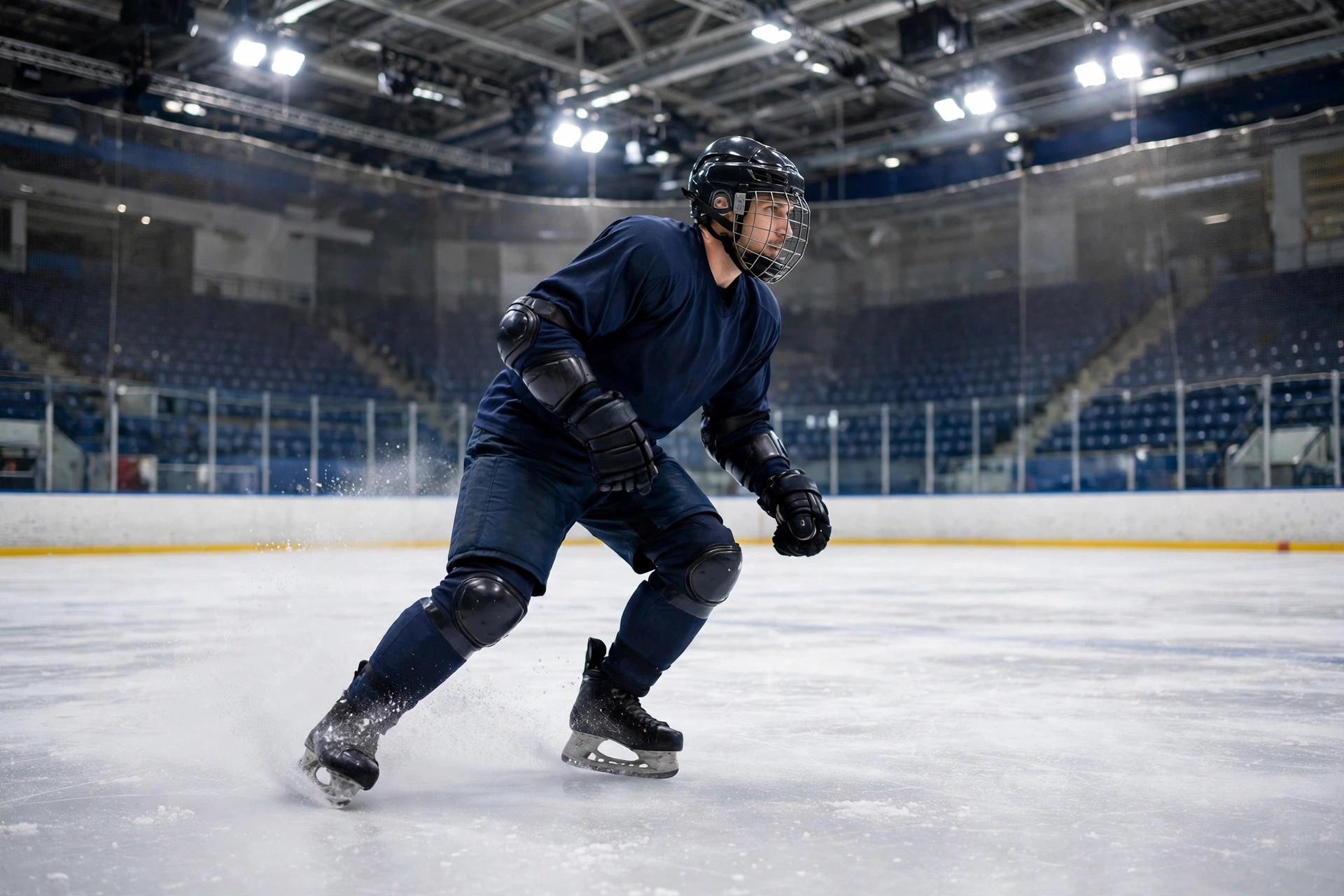
The ISO 10256 standard is the international safety standard for ice hockey helmets, written in general terms to set out how a hockey helmet should protect a player’s head from falls, collisions, and pucks. ISO stands for the International Organization for Standardization, and 10256 is its standard for head protectors worn in ice hockey.
What Is the ISO 10256 Ice Hockey Helmet Standard?
The International Organization for Standardization, known as ISO, writes standards that are used around the world, bringing together experts from many countries to agree on how products should be made and tested. ISO 10256 is its standard for protective headgear for ice hockey players, and it applies to helmets worn by players at all levels of the game, from youth hockey to adult leagues. The standard describes what a hockey helmet must do in an impact, how it should be built, and what information must appear on its labels, so that players and retailers can tell whether a helmet has been tested to an agreed safety level.
A standard like this is not a law in itself. It is a set of requirements that a helmet must meet before a testing laboratory can certify it, and hockey organisations then choose to require helmets that carry that certification. In practice, that is what gives the standard its force: a league or rink can simply say that players must wear a helmet meeting ISO 10256 or an equivalent recognised standard, and everyone knows what that means. The current version of the standard is the one to look for, so check the certifying body’s current documents rather than relying on an old version number you remember.
Who Needs an ISO 10256 Helmet?
ISO 10256 helmets are for ice hockey players of all ages and levels, from a child on a first learn-to-play programme to an adult playing in a recreational league. Ice hockey is a fast, physical game played on a hard surface, and players fall onto the ice, collide with other players and the boards, and face pucks travelling at speed. Head protection is not optional in this sport, and most leagues and rinks make an approved helmet a condition of playing.
Parents buying a first helmet for a child should look for the standard as a minimum, and adult players returning to the game after a break should do the same. Some leagues accept other national hockey helmet standards as well, so check the rules of your league before you buy, because a helmet certified to one standard may not be accepted everywhere.
What Does ISO 10256 Test for in a Hockey Helmet?
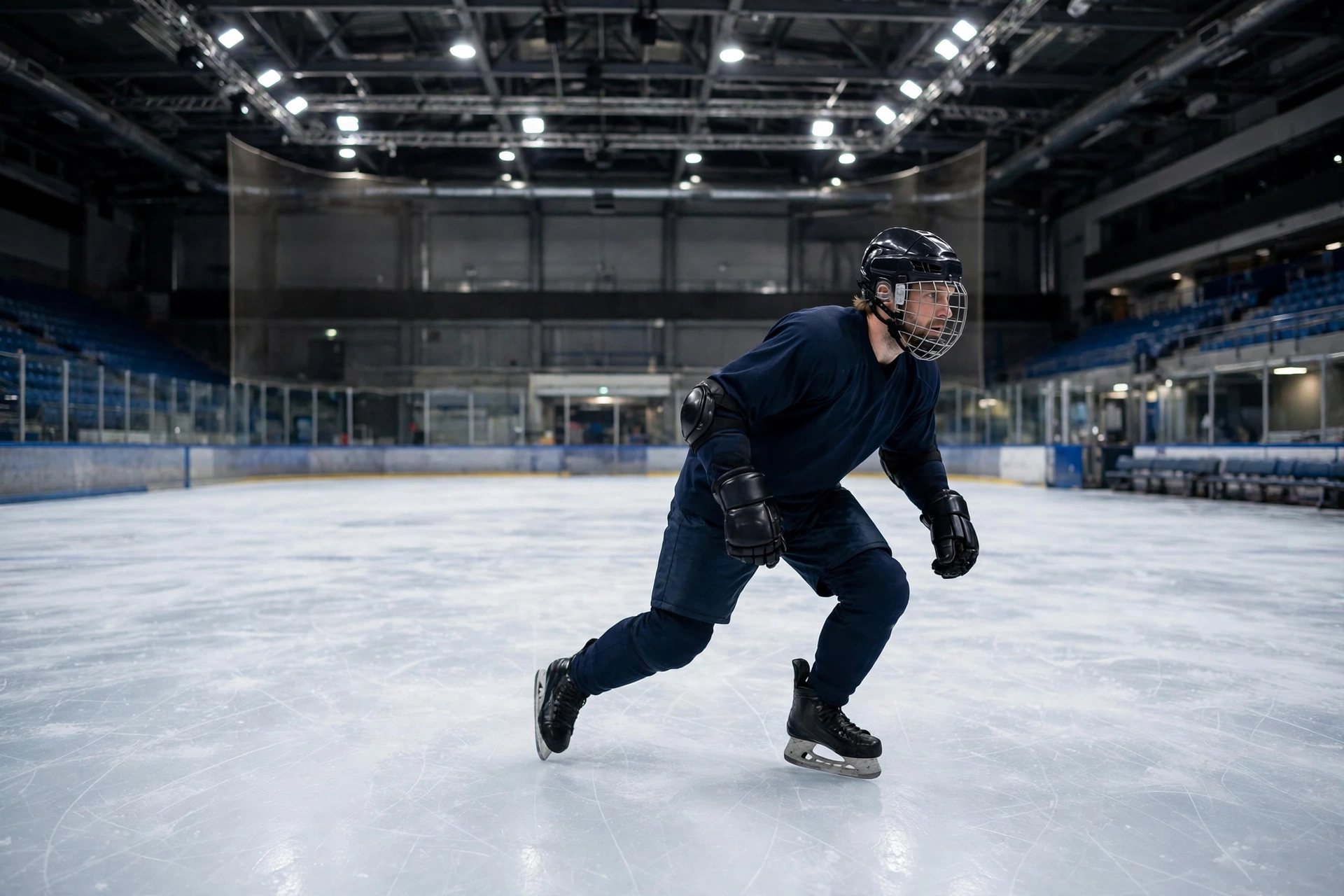
In general terms, the standard tests a helmet’s ability to absorb the energy of an impact, to stay on the player’s head during a fall or collision, and to resist penetration by a puck or a skate blade. The impact test involves striking the helmet against a hard surface and measuring how much force reaches the head inside, which is how the standard judges whether the liner can do its job. The liner, usually made from foam, is the part that absorbs energy by compressing in a controlled way, and it must cover the parts of the head that the standard says must be protected.
The standard also looks at the retention system, which is the chin strap that holds the helmet in place. A helmet that flies off in a collision is no use at all, so the strap must hold firmly under load without stretching so far that the helmet shifts. For background on how helmet technology manages rotational forces in a different kind of helmet, see what MIPS is for helmets. The standard also sets requirements for the helmet’s coverage, so that the shell extends far enough to protect the back and sides of the head, and for the labels that tell the buyer which standard the helmet meets.
How Can You Tell If a Helmet Meets ISO 10256?
A helmet that meets the ISO 10256 standard carries a certification mark, usually fixed to the shell or the lining inside the helmet. The mark states the standard, and it is the proof that the helmet passed the required testing. When you buy a helmet, check for that mark before you pay, and be wary of any helmet that claims to meet the standard without showing it, or that carries a mark that looks copied or badly printed.
It is also worth buying from a reputable hockey retailer rather than from an unknown seller, because imitation helmets do appear for sale and they may look convincing from the outside while offering far less protection. If you are buying second hand, check the mark, check the helmet’s history as far as you can, and remember that a helmet that has been in a serious impact should not be used again, even if it looks undamaged from the outside.
How Does ISO 10256 Compare with Other Hockey Helmet Standards?
ISO 10256 is the international hockey helmet standard, but other countries have their own. In North America, hockey helmets are commonly certified to standards written by national bodies there, and some leagues accept those instead of, or as well as, ISO 10256. These standards are broadly similar in what they aim to do, but they are not identical, and the details of their tests differ, so a helmet certified to one standard is not automatically accepted everywhere.
Some helmets carry more than one certification, which can be useful if you play in leagues that follow different standards or buy a helmet made for another market. When you are choosing, start with the standard that your league or rink requires, and check its current rules rather than assuming that last season’s requirements still apply.
When Should You Replace an ISO 10256 Helmet?
A hockey helmet should be replaced after any serious impact in which the helmet struck the ice, the boards, or another player hard, even if it looks undamaged from the outside. The liner inside a helmet absorbs energy by compressing, and once it has compressed it cannot do the same job again, so a helmet that has taken a hard impact may offer far less protection next time.
Age matters too. Helmets wear out over time as the liner, straps, and padding degrade, and manufacturers generally recommend replacing a helmet after a number of years of regular use, even if it has never taken a hard impact. In general terms, a helmet that no longer fits properly is a helmet that no longer protects properly.
Does ISO 10256 cover goalie helmets too?
Goalies wear helmets and masks built for their position, and different requirements can apply to them. Check the rules of your league and the manufacturer’s guidance for goalie equipment, as well as the standard itself, before you buy.
Can you use an ISO 10256 helmet for other sports?
No, not as a substitute for a helmet made for that sport. A hockey helmet is designed for the risks of ice hockey, and other sports have different impact risks and their own standards. Use a helmet certified for the activity you are doing.
Do you need a face cage or visor with an ISO 10256 helmet?
Many leagues require a face cage or visor as well as the helmet, especially for younger players, but the rules vary. Check the rules of your league, and make sure any cage or visor you fit is made for your helmet model and fitted correctly.

Olivia
Writer at Helmet Today, covering helmet reviews, fit and riding safety.