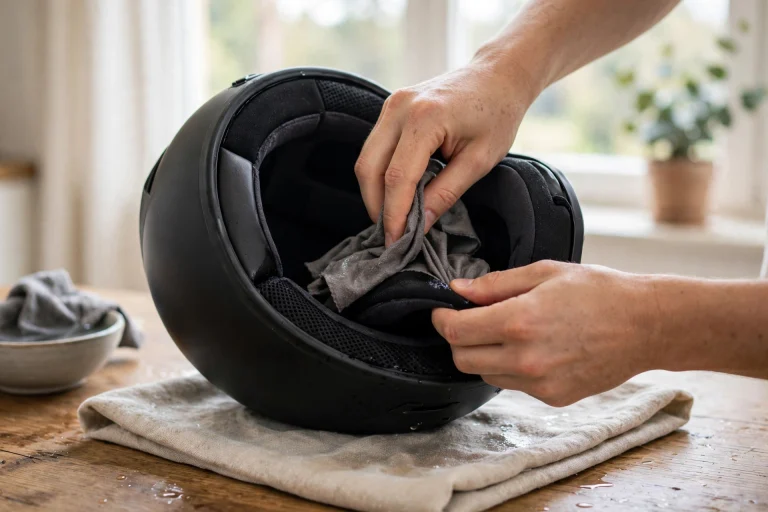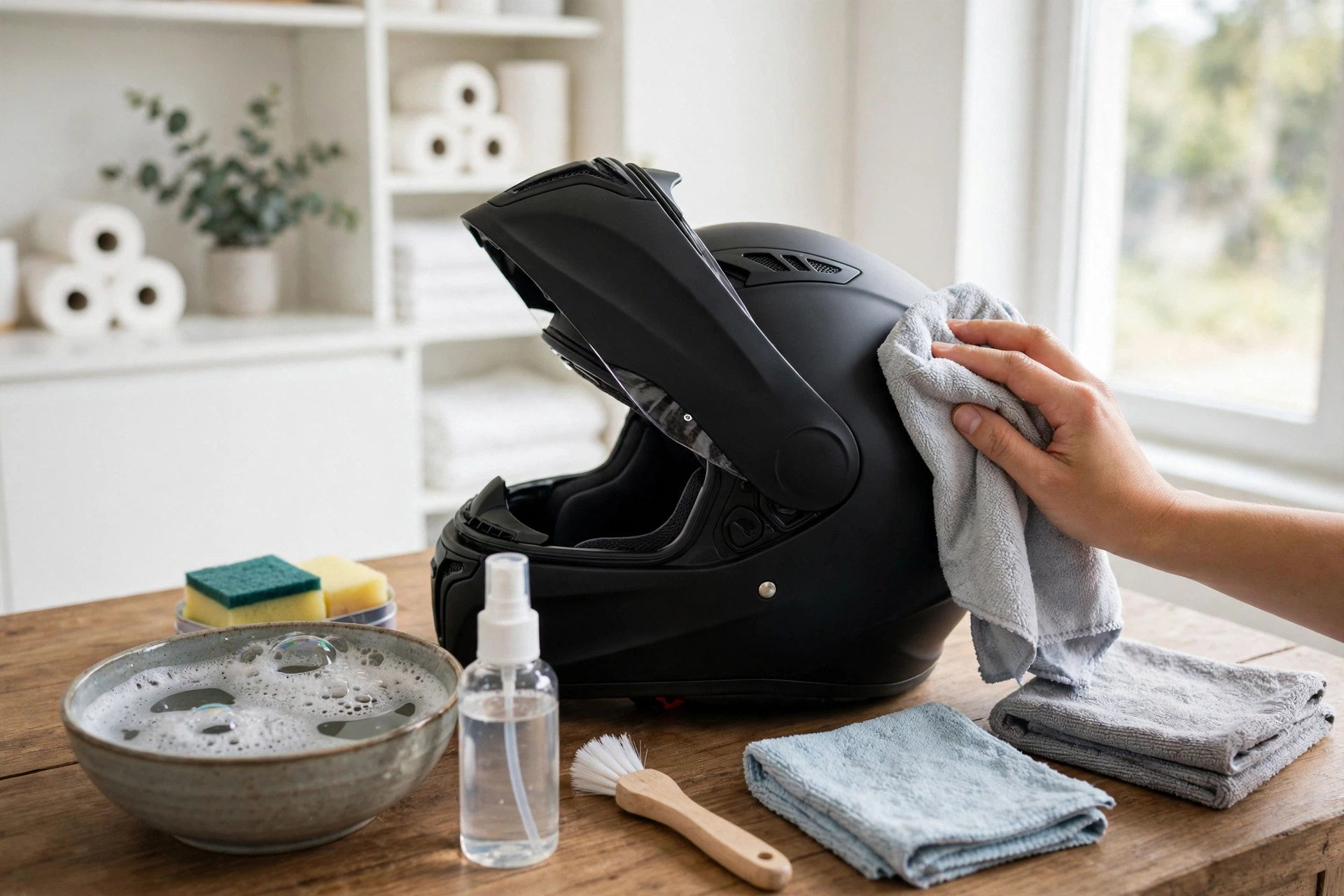
In general terms, you should clean your helmet after every few rides, or at least once a month if you ride regularly, and more often in hot weather or after wet, muddy, or dusty rides. There is no single rule that fits every rider, because how dirty a helmet gets depends on how much you ride, how much you sweat, and the weather. A good habit is a quick wipe and airing after every ride, with a deeper clean of the inside and outside every few weeks. A clean helmet is more comfortable, smells better, and lets you spot damage early.
How Often Should You Clean the Outside of a Helmet?
Clean the outside of your helmet whenever it looks dirty, and give it a quick wipe after every ride if you can. Bugs, dust, and road grime build up fast, and dried-on dirt can scratch the shell and visor if you scrub it off dry. A soft, damp cloth is usually enough for a daily wipe, and a proper wash with mild soap and water every few weeks will keep the shell and visor in good shape.
After a ride in rain, mud, or insects, clean the outside the same day if possible, so the dirt does not dry hard. In general terms, the outside is easy to keep clean with little effort, and regular wiping protects the finish and the visor coatings. Never use harsh cleaners, solvents, or abrasive pads on the shell or visor, since these can damage the surface and the protective coatings.
How Often Should You Clean the Inside of a Helmet?
Clean the inside of your helmet more often than the outside, because sweat, skin oils, and hair products build up in the padding every time you ride. In hot weather or with daily use, the inside may need a clean every week or two; in cooler weather or with light use, once a month may be enough. If the helmet smells, the padding feels damp, or the liner looks stained, it is overdue for a clean.
If the padding is removable, take it out and wash it by hand in lukewarm water with mild soap, then let it dry fully in the air. If it is fixed, wipe it gently with a damp cloth and a little mild soap, then air the helmet until it is dry. In general terms, the inside is where a helmet wears out first, so regular cleaning there matters most for comfort and for the life of the helmet.
Does Riding Frequency Change How Often You Should Clean a Helmet?
Yes, riding frequency changes the cleaning routine a lot. A daily commuter who rides in all weather will need to clean their helmet far more often than someone who rides once a month on dry weekends. A daily rider may need a quick wipe every day and a deep clean every week or two, while an occasional rider can manage with a clean every few months. The more hours the helmet spends on your head, the more sweat and dirt it collects.
Short rides in cool weather are gentler on a helmet than long rides in summer heat. In general terms, match your cleaning to your riding: the more you ride, the more you clean. A simple rule is to clean the helmet whenever it smells, looks dirty, or feels damp after drying, and to keep a regular routine even when it looks fine, because sweat damage builds up quietly.
What Happens if You Do Not Clean Your Helmet Enough?
If you do not clean your helmet enough, the padding can develop a bad smell, mould, and bacteria from trapped sweat and moisture. The foam can break down sooner, the straps can stiffen and fray, and the fit can change as the padding compresses and hardens. A dirty visor can also become harder to see through, especially in low sun or rain, which is a safety problem as well as a comfort one.
Neglect can also hide damage: dirt and grime can cover small cracks in the shell or wear in the straps, so you miss problems that a clean helmet would show clearly. In general terms, a helmet that is never cleaned will feel worse, smell worse, and wear out faster than one that gets regular care. Cleaning is cheap and quick, while replacing a helmet early is not.
What Is a Simple Helmet Cleaning Routine?
A simple routine starts after every ride: leave the helmet somewhere airy, visor open, so it can dry fully. Wipe the outside with a soft, damp cloth to remove bugs and dust, and wipe the visor gently the same way. Once every few weeks, wash the shell with mild soap and water, clean the inside padding, and check the straps, vents, and visor for damage while you work.
Let everything dry fully in the air, away from direct heat, before you store the helmet. In general terms, a routine like this takes only a few minutes after a ride and a little longer every few weeks, and it keeps the helmet fresh and safe. To understand more about how modern helmets protect your head, it helps to read about what MIPS is for helmets. A helmet you look after will look after you for longer.
Should You Clean a Helmet Differently in Summer and Winter?
Yes, summer and winter call for slightly different care. In summer, sweat is the main problem, so clean the inside more often and dry the helmet fully after every ride. In winter, rain, road salt, and damp are the bigger issues, so wipe the outside after wet rides and make sure the helmet dries in a ventilated place, not sealed in a bag while damp. Cold, damp storage can lead to mould just as surely as summer sweat can.
In both seasons, avoid strong heat when drying, and keep the helmet out of direct sun. In general terms, the routine stays the same all year, but the frequency should rise in summer and after wet winter rides. Listen to your helmet: if it smells or feels damp, clean it, whatever the season.
How often should you clean a helmet?
In general terms, wipe it after every ride and deep clean it every few weeks, or at least once a month if you ride regularly, and more often in hot weather or after wet and muddy rides.
Can I wash my helmet with water?
Yes, in general terms, you can wash the shell and removable padding with lukewarm water and mild soap, following the maker’s instructions, and let everything air dry fully.
What happens if I never clean my helmet?
The padding can smell, grow mould, and wear out sooner, the straps can stiffen, and dirt can hide damage, so the helmet becomes less comfortable and less safe over time.

Olivia
Writer at Helmet Today, covering helmet reviews, fit and riding safety.