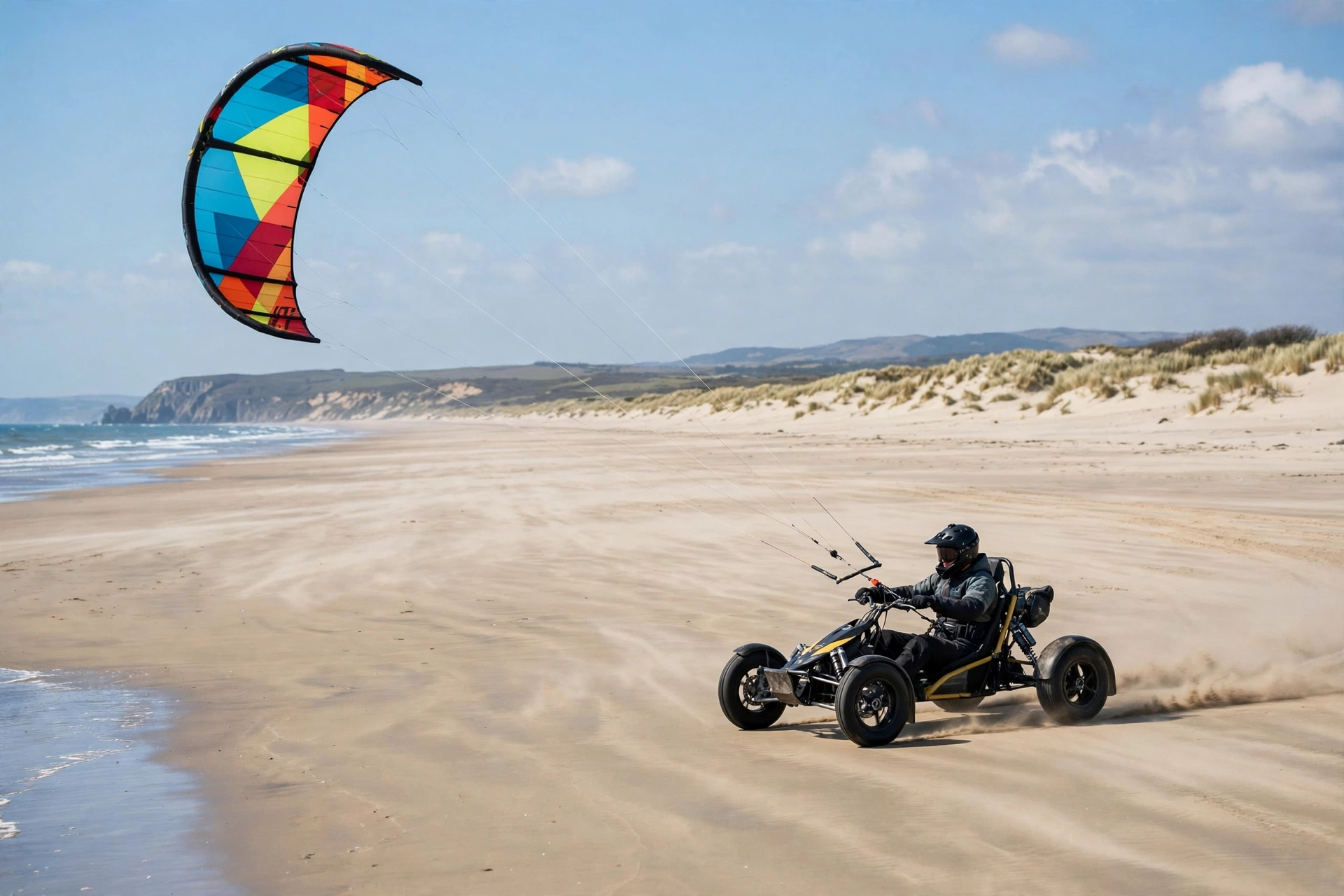
A helmet for kite buggying is a helmet that protects your head from falls and impacts while you ride a kite buggy, which is a three-wheeled cart pulled across land by a large power kite. Kite buggying is a land-based cousin of kitesurfing. The rider sits low in the buggy, steers with their feet, and holds the kite’s control bar with both hands. When the wind gusts or the kite pulls hard, the buggy can tip over or slide, and the rider’s head can hit the ground.
Kite buggies are ridden on beaches, dry lake beds, fields, and open grassland. Speeds can be surprisingly high, and a fall can happen in a moment, often sideways, with little chance to put a hand out. A helmet is one of the most important pieces of kit a kite buggy rider owns, along with the kite itself and a good harness. Most kite buggy clubs and schools expect riders to wear one.
What kind of helmet is best for kite buggying?
A helmet that covers the back and sides of the head well is a good choice for kite buggying. Many riders use a skate-style helmet or a watersports helmet, because these give more coverage than a light road cycling helmet and they stay in place in a sideways fall. A helmet certified to a standard such as EN 1078 in Europe or CPSC in the United States is a good starting point.
Some riders use a full face helmet, especially if they ride fast or on hard surfaces, because it protects the chin and jaw as well as the top of the head. A full face helmet can feel hot, so many riders choose an open helmet with good coverage and add goggles for eye protection. Whatever type you choose, the helmet should fit well, stay in place, and not slide around when you turn your head to watch the kite.
How should the helmet fit for kite buggying?
The helmet should sit level on your head, low on your forehead, with the front edge about two finger widths above your eyebrows. It should feel snug all the way around, without pressing hard in one spot. Use the adjustment dial at the back to fine-tune the fit, and fasten the chin strap so it is snug under your chin, because a loose helmet can be pulled off by the wind or by the kite lines.
Because the rider looks up at the kite a lot, the helmet should not tip back when you tilt your head. If it does, tighten the dial or try a different size or shape. A helmet with a small peak can help with sun glare, but a large peak can catch the wind. Try the helmet on with the goggles or glasses you will actually wear, because the two need to work together.
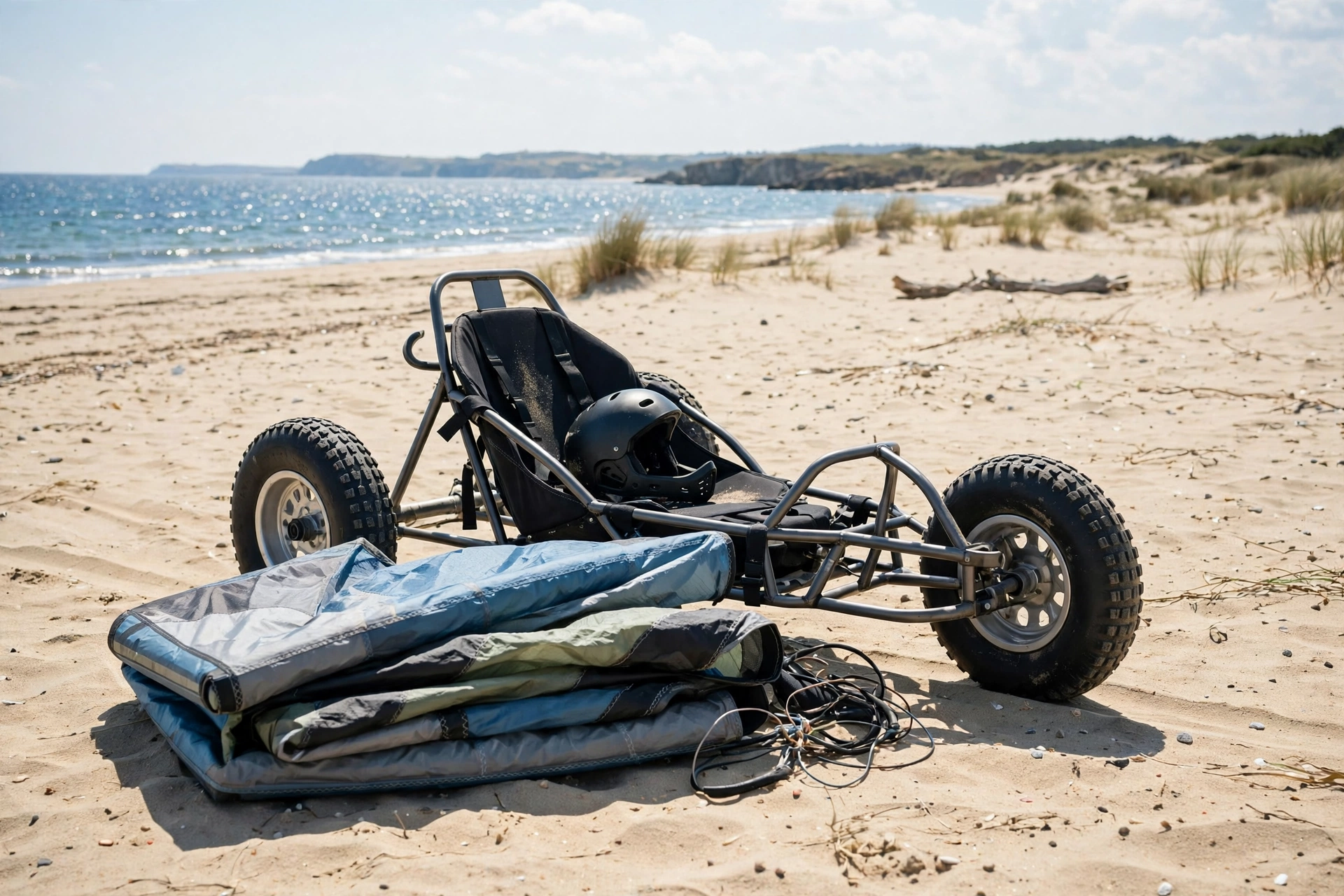
What other safety gear do kite buggy riders need?
Eye protection is essential, because sand, grit, and spray can be blown into your eyes at speed. Goggles that fit well with your helmet are the best choice, and they should be shatterproof. Gloves protect your hands from the kite lines, which can burn or cut if they slide through your grip, and they also help you hold the control bar in wet or sandy conditions.
A harness connects the rider to the kite and spreads the pull across the body, which is much safer than holding the kite with your arms alone. Strong footwear, such as closed shoes or boots, protects your feet, because your feet steer the buggy and can be dragged along the ground in a fall. Knee and elbow pads are also worth considering, especially for beginners, who fall more often.
Where is it safe to ride a kite buggy?
Kite buggying needs a large, open space with no people, animals, power lines, or obstacles downwind. Beaches at low tide, dry lake beds, and large flat fields are popular, but you should always check local rules first, because some beaches ban kite buggies or restrict them to certain areas or times. Never ride near roads, car parks, or crowded areas.
Check the wind before you ride. A steady, moderate wind is best for beginners, while gusty or very strong wind is dangerous, especially for a new rider. Learn to fly the kite on its own before you sit in the buggy, and start with a small kite in light wind. A kite that is too big for the wind can drag you across the ground, and that is when a helmet matters most. Some helmets include a slip layer such as MIPS to reduce rotational forces in an angled impact.
How do I learn kite buggying safely?
The best way to learn is with a qualified instructor or through a kite buggy club. A good course starts with kite control on the ground, then moves to a static buggy, and only then to a moving buggy in light wind. You will learn how to launch and land the kite, how to steer, how to stop, and what to do if the kite pulls too hard.
Do not try to teach yourself with a large kite in strong wind. That is how most serious accidents happen. Start small, wear your helmet for every session, including practice, and ride with other people when you can, so there is someone to help if you get into trouble. In general terms, build up your skills over weeks, not in a single afternoon.
How do I look after a kite buggy helmet?
After a beach session, rinse the helmet with fresh water to remove sand and salt, and let it dry in the shade. Sand can wear out the padding and the adjustment dial, and salt can corrode buckles and straps. Check the shell for cracks or dents after any fall, and check that the straps are not frayed or sun-damaged.
Replace the helmet after a hard impact, even if there is no visible damage, because the foam inside may have compressed. Replace it after about five years in general terms, because sunlight and everyday use wear down the materials over time. Store the helmet out of direct sunlight and away from heat, and do not leave it loose in a car boot where it can be crushed by other kit.
Is a cycle helmet enough for kite buggying?
A light road cycling helmet gives some protection, but a helmet with more coverage at the back and sides, such as a skate-style or watersports helmet, is usually a better choice for kite buggying, because falls are often sideways and at speed.
Do I need a helmet if I only ride slowly?
Yes, in general terms, you should wear a helmet even at low speed. A gust of wind can tip a buggy over in a moment, and your head can hit hard ground even from a slow fall. A helmet takes a moment to put on and can make a real difference.
Can I use a kitesurfing helmet for kite buggying?
Yes, many riders do. A watersports helmet is designed for impacts and for use in wind and water, and it often has good coverage and drainage. Just check that it fits well and meets a recognised safety standard for head protection.

Olivia
Writer at Helmet Today, covering helmet reviews, fit and riding safety.