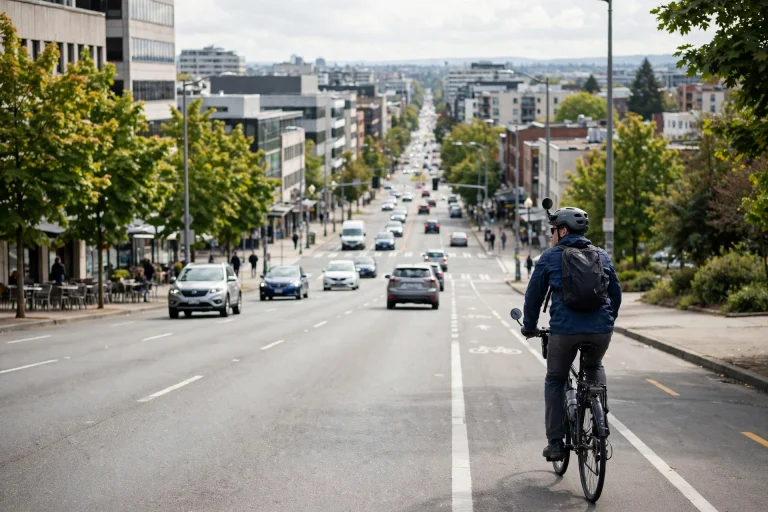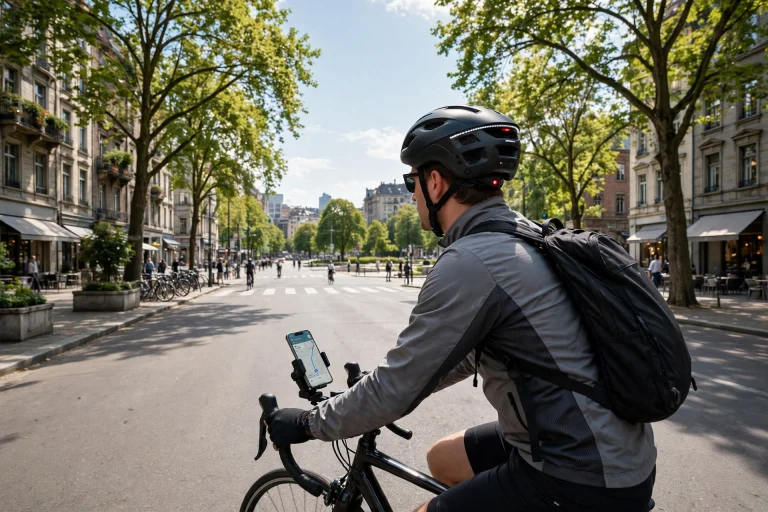
Helmet telemetry is data that a smart helmet collects about a ride, such as speed, distance, location, and impacts, and then shares with a phone app, a computer, or a team. It turns the helmet from a piece of protective gear into a source of information about how the rider is moving and what is happening on the ride. The helmet uses small sensors built into the shell or liner to measure what is going on, and it sends that information onward so the rider, a coach, or a support team can see it. In general terms, telemetry is about measuring the ride, not about changing how the helmet protects the head.
What Kind of Data Does Helmet Telemetry Collect?
Helmet telemetry can collect several kinds of data, depending on the sensors fitted to the helmet. Common examples include speed, distance, ride time, and location, which come from motion and satellite positioning sensors. Some helmets also record acceleration and sudden changes in movement, which can show when the rider brakes hard, corners sharply, or suffers an impact.
Other helmets add sensors for heart rate, temperature, or head position, which can give a fuller picture of the rider and the ride. The exact data depends on the helmet, and not every smart helmet collects the same things. In general terms, the data is most useful when it is shown clearly in an app, so the rider can see patterns over time rather than a single number from a single ride.
How Do the Sensors in a Helmet Work?
The sensors in a helmet are small electronic parts fitted inside the shell or the liner, where they are protected from the weather and from knocks. Motion sensors measure how the helmet moves, speeds up, slows down, or changes direction, while positioning sensors work out where the helmet is and how fast it is travelling. Impact sensors look for sudden, sharp changes in movement that suggest a crash or a hard knock.
These sensors run on a small battery, which is usually rechargeable, and they send their readings to a small processor in the helmet. The processor turns the raw readings into useful figures, such as speed or distance, and then passes them on to a phone or a computer. In general terms, the sensors add a little weight and need charging, but they are designed to work without the rider having to do anything during the ride.
What Is Helmet Telemetry Used For?
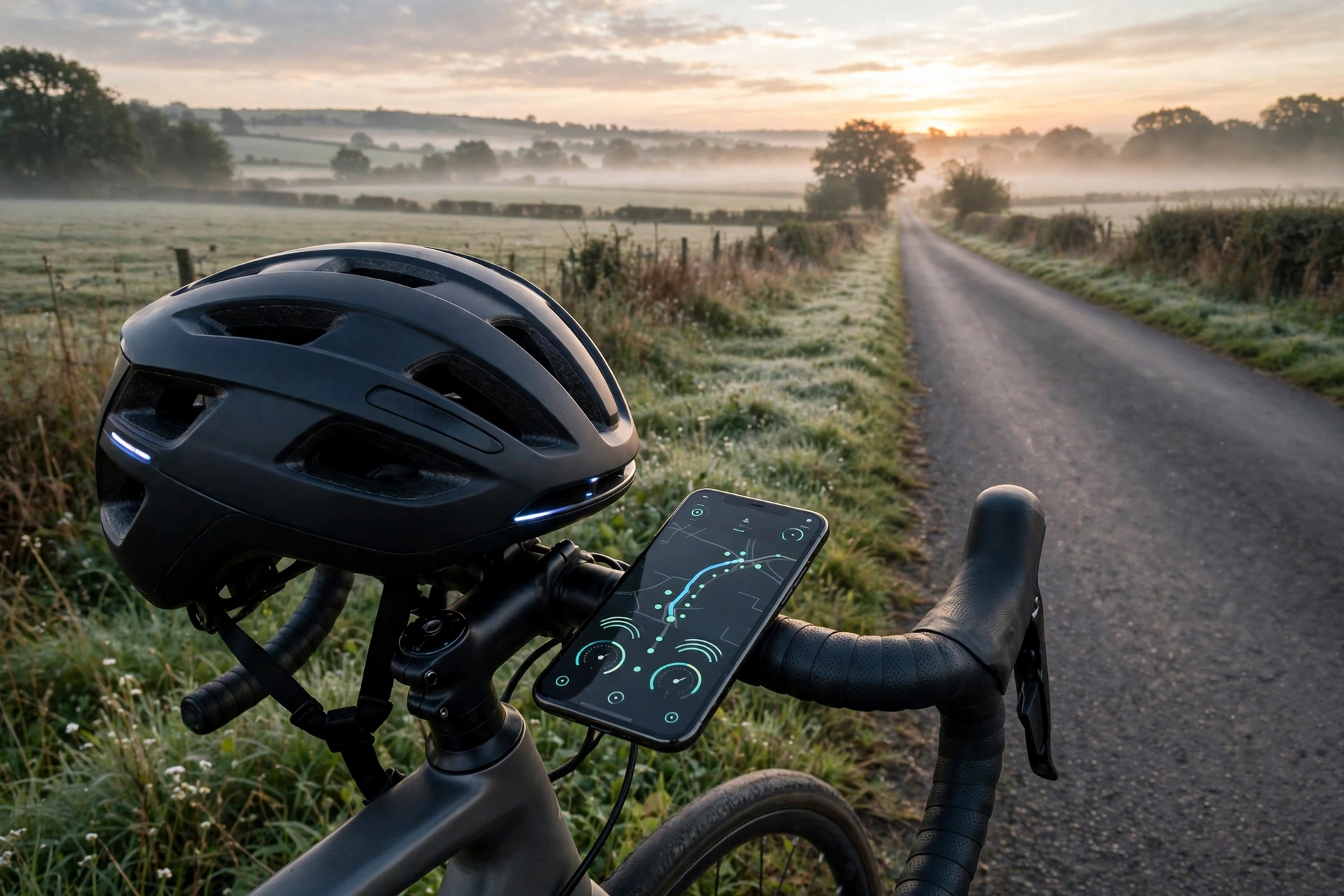
Helmet telemetry is used in different ways by different riders. For a solo rider, it is mostly a way to track rides, see how far and how fast they went, and compare one ride with another over time. That can help with training, because the rider can see whether they are getting faster or riding further, and can spot patterns such as slowing down on certain kinds of terrain.
For coaches and teams, telemetry can give a live view of where riders are and how they are doing, which helps with planning and support during an event. In racing, it can also be used to review a ride after the event and work out what happened at key moments. If you want to understand one of the safety technologies used in modern helmets, reading about what MIPS is for helmets is a good place to start, though telemetry itself is a data feature and not a form of impact protection.
Can Helmet Telemetry Detect a Crash?
Some helmets with telemetry can detect a possible crash, in general terms, by looking for a sudden impact followed by a lack of movement. When the sensors pick up that pattern, the helmet can send an alert to a phone app, which may then contact a chosen person or emergency contact. This feature is designed to help when a rider is hurt and cannot call for help themselves.
Crash detection is not perfect, and it can be triggered by a hard knock that is not a crash, such as dropping the helmet on a hard surface. It can also miss a crash if the impact is gentle or the rider keeps moving afterwards. For that reason, it should be seen as a helpful extra rather than a replacement for riding with other people or carrying a phone. Riders who use it should set it up carefully, make sure their emergency contacts are correct, and test that alerts reach the right people.
What Are the Limits of Helmet Telemetry?
Helmet telemetry has several limits worth knowing. The sensors need battery power, so a helmet that runs flat stops recording, and the rider has to remember to charge it. The data also needs a phone or a computer nearby to be seen in full, so a rider who leaves the phone at home may only get part of the picture.
Accuracy is another limit. Satellite positioning can be less precise in tunnels, under thick tree cover, or between tall buildings, and motion sensors can be confused by vibration on rough roads. In general terms, the figures are good enough to show trends over time, but they should not be treated as exact measurements. Privacy matters too: ride data can reveal where a rider lives and rides, so it is worth checking what the app shares and who can see it.
Do You Need Helmet Telemetry?
Whether you need helmet telemetry depends on how you ride and what you want from your helmet. For a rider who trains regularly, races, or rides in a team, the data can be genuinely useful, and the crash alert feature can add peace of mind. For a casual rider who rides short distances and does not track performance, the extra cost, weight, and charging may not be worth it.
A helmet without telemetry still does the main job, which is protecting the head, and that should always come first when choosing a helmet. Telemetry is an extra feature, not a replacement for a good fit, a sound shell, and a proper safety standard. In general terms, it is worth choosing the helmet for its protection and fit first, and treating telemetry as a bonus that is only useful if you will actually use the data it collects.
Does helmet telemetry work without a phone?
In general terms, the helmet can still collect data on its own, but you need a phone or a computer to see the full results. Some helmets store the data and send it to the app later, once the phone is nearby again.
Is helmet telemetry the same as a bike computer?
Not quite. A bike computer also tracks speed and distance, but it is fixed to the bike, while helmet telemetry comes from sensors in the helmet and can also record impacts and head movement that a bike computer cannot see.
Does telemetry make a helmet safer?
Not directly. Telemetry measures the ride and can alert someone after a crash, but it does not change how the helmet absorbs an impact. The safety of a helmet still comes from its shell, liner, and fit.

Olivia
Writer at Helmet Today, covering helmet reviews, fit and riding safety.