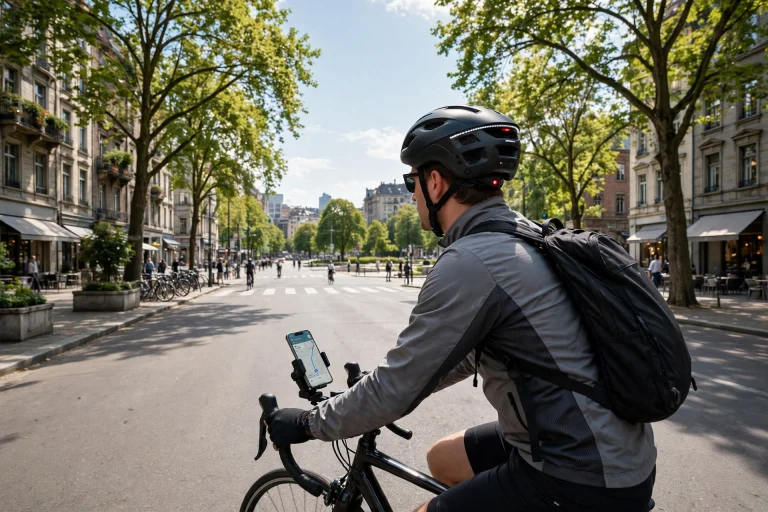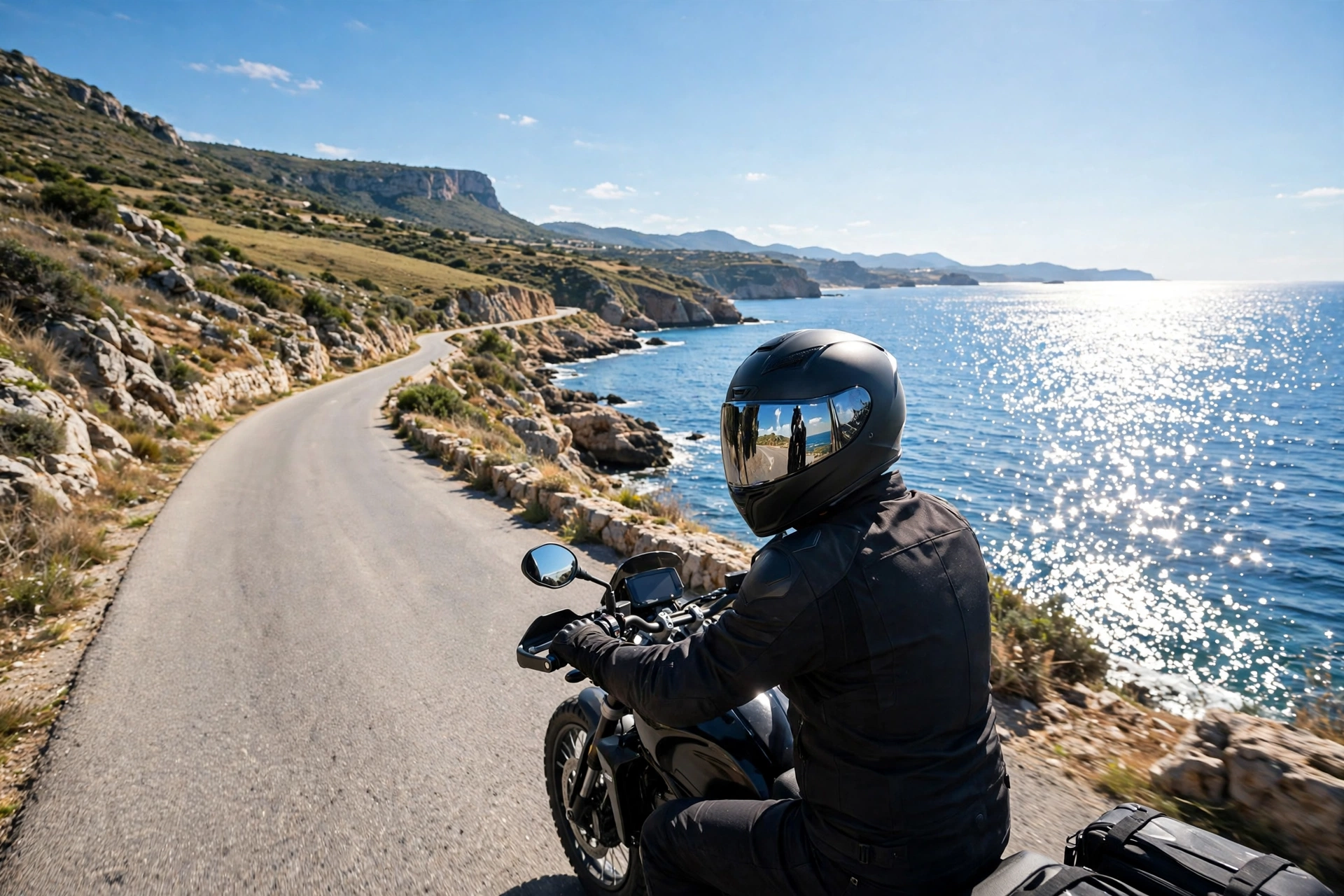
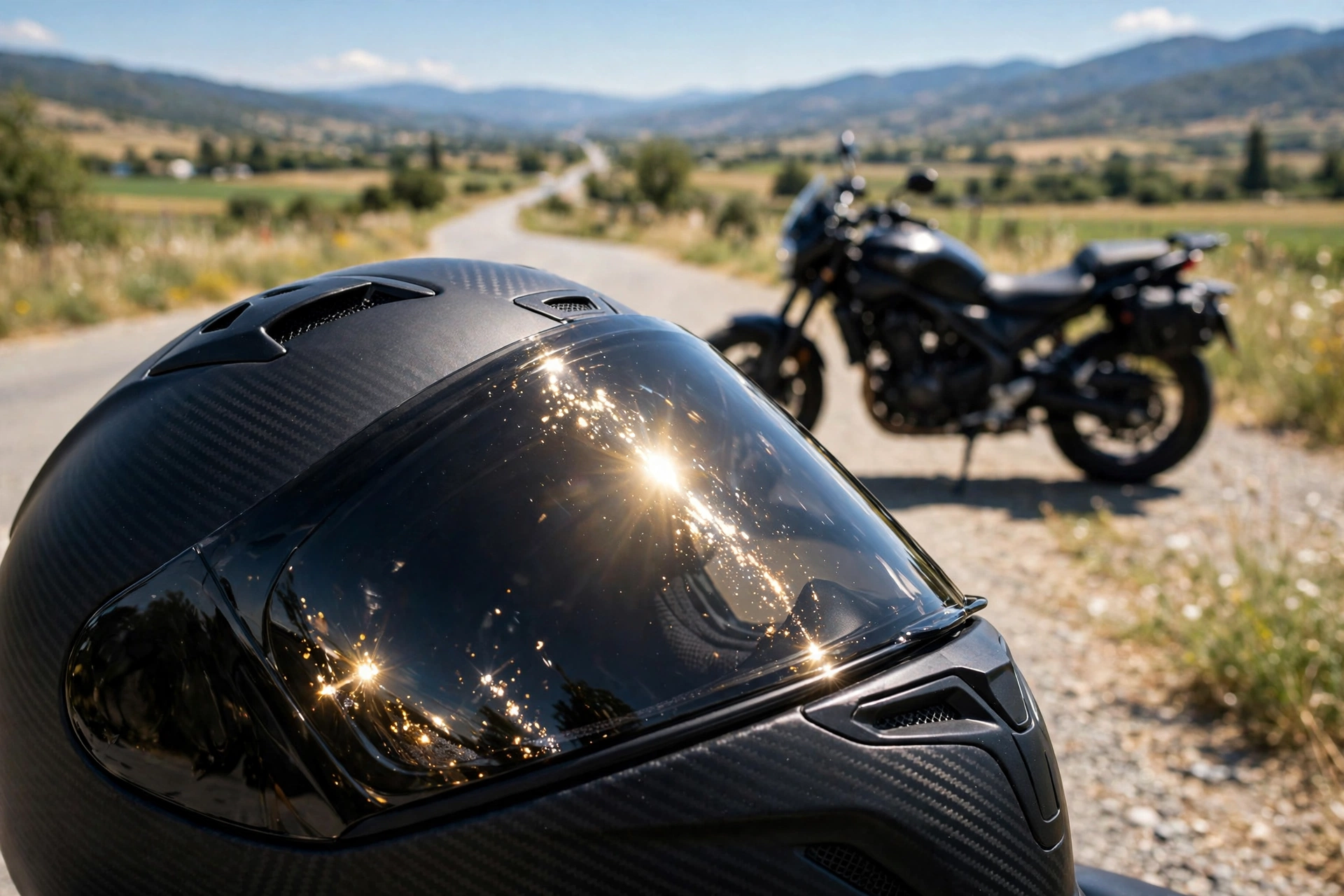
A helmet with a built-in polarised visor is a helmet that has a visor fitted with a polarising filter, which cuts glare from sunlight reflecting off flat surfaces such as roads, water, and car windscreens. It gives the rider a clearer, more comfortable view on bright days, with less squinting and less eye strain. The visor is part of the helmet itself, usually fitted as a drop-down inner shield or a fixed outer shield, so it is always there when it is needed. Polarised visors are most useful in bright sunshine, on wet roads, and near water or snow, where glare is strongest.
How Does a Polarised Visor Work?
A polarised visor works by blocking one direction of light waves while letting the other direction through. Sunlight bouncing off a flat surface, such as a wet road or a lake, becomes polarised, which means its light waves line up in one direction and create the harsh glare that dazzles the eyes. The polarising filter in the visor blocks those lined-up waves, so the glare is cut down while normal light still passes through.
The result is a view that looks calmer and clearer, with less harsh brightness and better contrast. Colours can look a little richer, and it becomes easier to see the surface of the road, the shape of a wet patch, or the edge of a kerb. In general terms, the visor does not make the scene darker in the way a very dark tint would, it mainly takes away the glare, so the rider can still see clearly while being more comfortable.
Why Is Glare a Problem for Riders?
Glare is a problem for riders because it can hide what is on the road ahead. A low sun reflecting off a wet road, a car bonnet, or a stretch of water can create a bright patch that washes out the rider’s view, making it hard to see potholes, markings, or other road users. Squinting against the glare is tiring and narrows the field of vision, which means the rider sees less of what is going on around them.
Glare is worst when the sun is low, in the morning and the evening, and on bright days after rain, when the road is wet and shiny. Riders who spend long hours in these conditions can end the day with sore, tired eyes and a headache. A polarised visor takes much of that glare away, so the rider can keep the eyes open and relaxed and can see the road more clearly for longer.
What Is the Difference Between a Polarised Visor and a Tinted Visor?
A polarised visor and a tinted visor both reduce brightness, but they do it in different ways. A tinted visor is simply darker, so it lets less light through overall, which helps on a bright day but can make things too dark in shade or in a tunnel. A polarised visor is designed to cut glare specifically, so it reduces the harsh reflected light while letting more of the normal light through.
That means a polarised visor can be more comfortable across changing conditions, because it does not darken the whole view as much as a dark tint would. Some visors combine both, with a tint and a polarising filter together, for the strongest effect on very bright days. In general terms, a tinted visor is a simple way to cut brightness, while a polarised visor is a more targeted way to cut glare, and the best choice depends on the kind of riding and the conditions.
Are There Any Downsides to a Polarised Visor?
Yes, there are a few downsides worth knowing. A polarised visor can make some digital displays harder to read, because the screens on phones, bike computers, and dashboard displays are themselves polarised, and the two filters can clash. That can make a screen look dark or patchy when viewed through the visor, which is a nuisance if the rider relies on a navigation display.
A polarised visor can also make it harder to see some road surfaces, because it cuts the reflections that sometimes help the rider spot ice, oil, or wet patches. In general terms, the visor is at its best in bright, sunny conditions and less useful on dull days or at night, when it can make the view too dark. Some helmets deal with this by making the visor retractable, so the rider can flip it up or down as the light changes. If you want to understand one of the safety technologies used in modern helmets, reading about what MIPS is for helmets is a good place to start, though a visor itself is a vision and comfort feature rather than a safety system.
How Do You Look After a Polarised Visor?
Looking after a polarised visor is mostly a matter of keeping it clean and avoiding scratches. The polarising filter is a thin layer, and a scratched or damaged visor can distort the view and create uneven patches of glare. Cleaning should be done gently, with clean water and a soft cloth, and harsh cleaners or rough paper should be avoided, since they can damage the coating.
The visor should be stored with the helmet in a way that keeps it from rubbing against hard objects, and a soft bag or case helps when the helmet is carried in a bag. If the visor becomes scratched, cloudy, or hard to see through, it should be replaced, because a damaged visor is worse than no visor at all. In general terms, a little care keeps a polarised visor working well for a long time.
When Is a Polarised Visor Most Useful?
A polarised visor is most useful in bright sunshine, on wet roads, near water, and on snow, where reflected glare is strongest. Road riders on sunny days, motorcyclists on coastal routes, and riders on bright winter days all benefit from the glare reduction. It is also useful for long rides in strong sun, where eye strain builds up over hours.
The visor is less useful on dull days, in heavy shade, or at night, when there is little glare to cut and the visor may make the view too dark. That is why many helmets with a polarised visor make it retractable or interchangeable, so the rider can use it only when the light calls for it. In general terms, a polarised visor is a small feature that makes a big difference in the right conditions, and it costs the rider nothing to have it there on a ride when it is not needed.
Can I wear sunglasses with a polarised visor?
In general terms, yes, but wearing polarised sunglasses with a polarised visor can make the view too dark or create odd patterns, since the two filters can clash. It is usually better to use one or the other, not both at once.
Does a polarised visor work at night?
No, a polarised visor is made for bright conditions and should not be used at night, because it reduces the light reaching the eyes and makes the road harder to see. A clear visor is the right choice after dark.
Can a polarised visor be fitted to any helmet?
Not to every helmet. Polarised visors are usually made for a particular helmet model, so it is worth checking that a replacement visor matches the helmet before buying one.

Olivia
Writer at Helmet Today, covering helmet reviews, fit and riding safety.