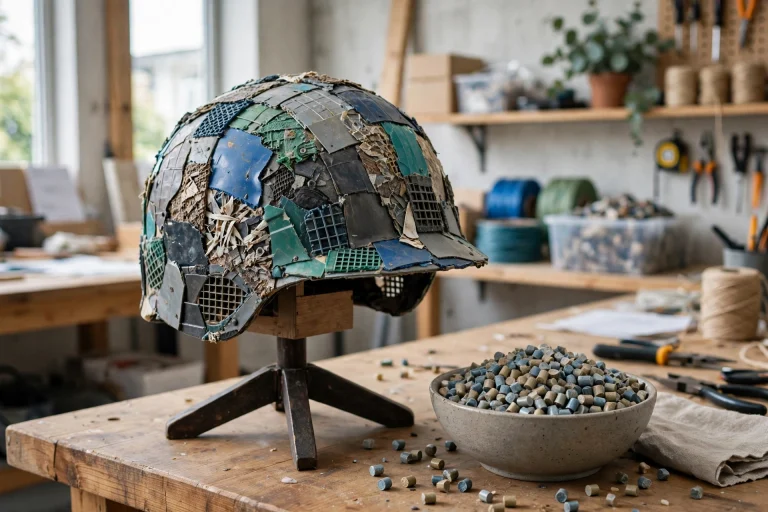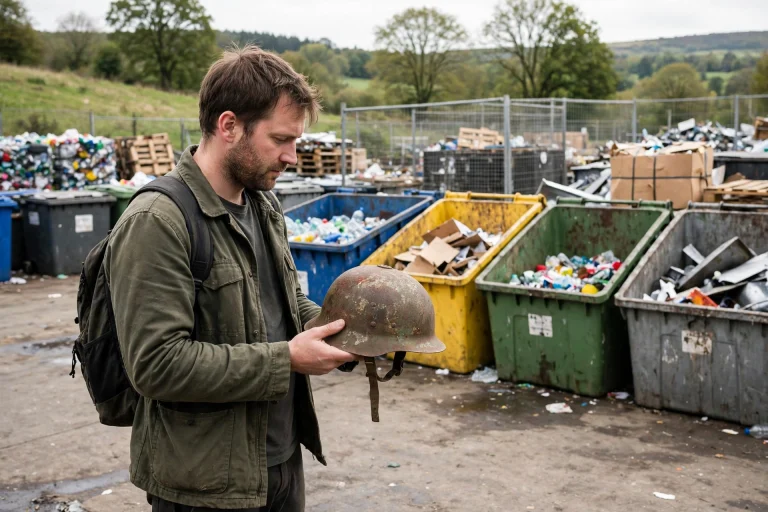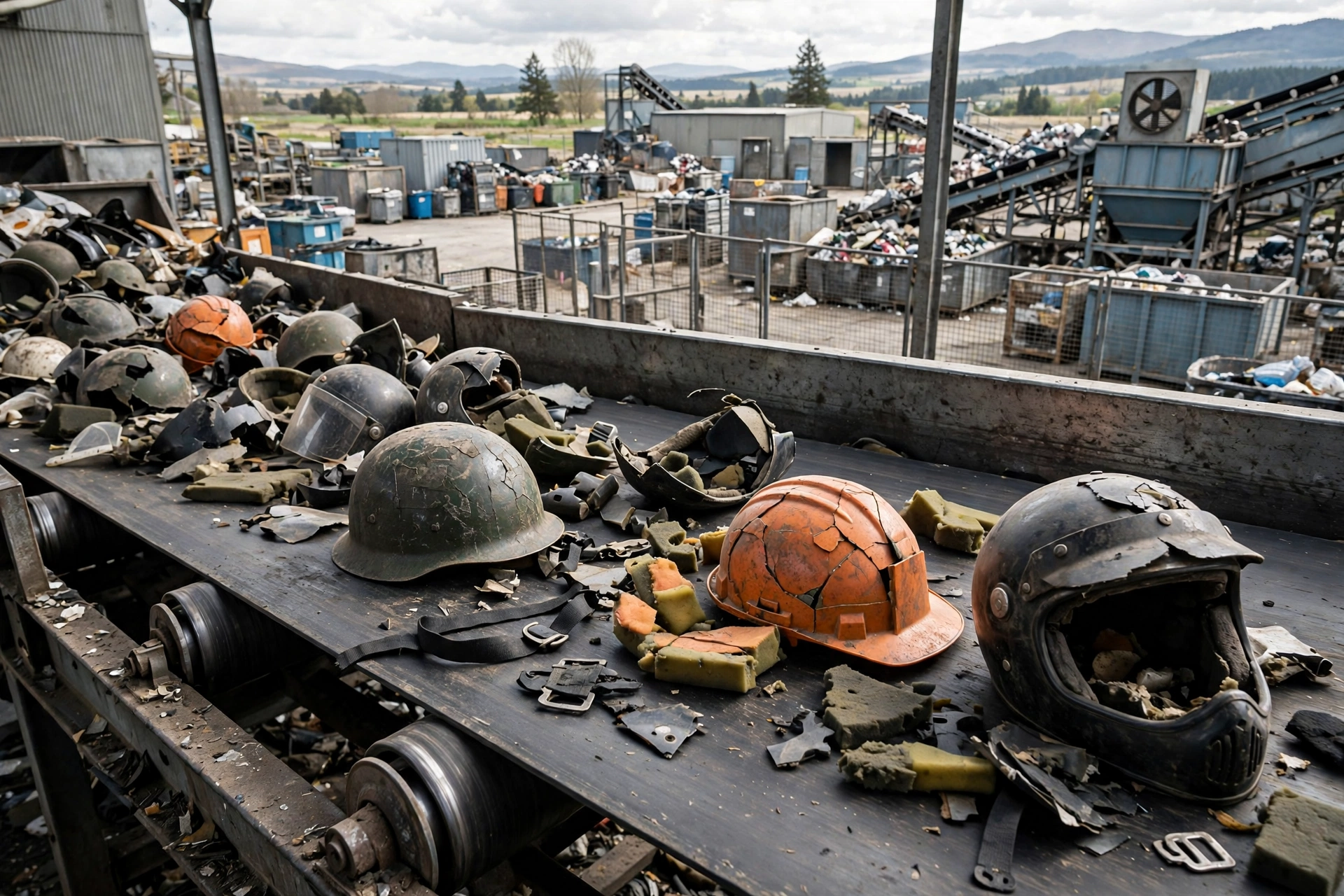
Old helmets are broken down for recycling by separating the shell, foam liner, straps, and buckles, then sending each material to a recycler that can process it. A helmet cannot be recycled whole, because it is made from several materials fixed together, and no recycling plant can process that mix as one item. Breaking it down means pulling those materials apart, cleaning them, and turning them into raw material that can be used to make something new. The process is part hand work and part machine work, and it starts with taking the helmet apart.
Why can’t a helmet be recycled whole?
A helmet cannot be recycled whole because recycling works by material, not by product. A recycling plant is set up to handle one material at a time: a load of plastic bottles, a load of steel cans, or a load of cardboard. Each load goes through the same process, and the machines are tuned for that material. A helmet is a mix of hard plastic, foam, fabric, and metal all glued and riveted together, so it does not fit any single stream. If it goes into a plastic load, the foam and fabric contaminate the plastic. If it goes into a metal load, the plastic and foam cause the same problem.
The glue is part of the problem. The shell is usually bonded to the foam liner so that the two work together in a crash, and that bond is meant to be strong. A recycling plant has no easy way to break that bond without damaging the materials. The straps are riveted or stitched to the shell, and the buckle is fixed to the straps, so the whole helmet is a single locked-together object. That is good for safety and bad for recycling.
How is the shell separated from the liner?
The shell is separated from the liner by breaking the glue bond that holds them together. At home, this is done by hand with a flat screwdriver worked gently between the shell and the foam, easing the two apart a little at a time. At a specialist recycling plant, the work may be done by hand too, because helmets come in so many shapes and sizes that a machine cannot easily handle them all. Workers remove the visor, pads, and straps first, then peel or prise the shell away from the foam.
Once the shell is off, it is checked for dirt and for any foam still stuck to it. Any foam left on the shell is scraped off, because even a small amount of foam can contaminate a load of plastic. The shell is then sorted by plastic type. Most shells are made from polycarbonate or ABS, and these two plastics are kept apart because they are recycled in different ways. The sorting is often done by reading the recycling symbol moulded inside the shell, or by testing a small sample.
What happens to the plastic shell?
The plastic shell is the easiest part of a helmet to recycle. Once it has been separated and sorted by type, it is washed to remove dirt and stickers, then shredded into small flakes. The flakes are melted down and formed into pellets, which are the raw material that factories buy to make new plastic products. This is the same process used for plastic bottles and containers, and it works well because the shell is a single type of plastic once the foam and straps are removed.
The pellets made from old helmet shells are not usually turned back into helmet shells. The recycled plastic may not be strong or consistent enough for a safety product, and helmet makers need new plastic that meets strict standards. Instead, the pellets are used for products that do not need the same strength, such as garden furniture, storage boxes, plant pots, or parts for other goods. This is sometimes called downcycling, because the material is used for a less demanding product than the one it came from. Some makers are now looking at ways to use recycled plastic in new helmets, and a similar idea to MIPS shows how the industry is thinking about the whole life of a helmet, not just its performance on the day it is sold.
What happens to the foam liner?
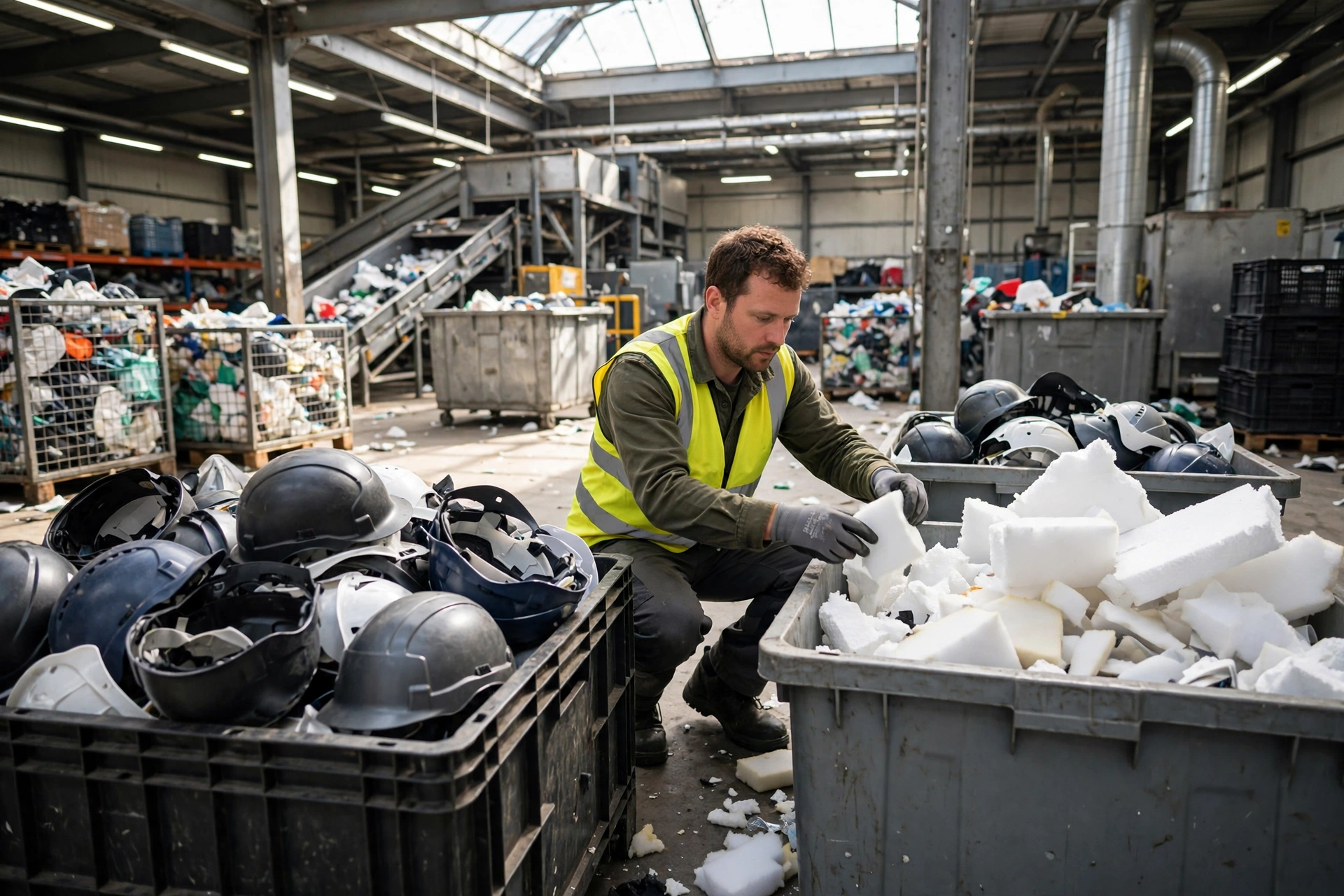
The foam liner is the hardest part of a helmet to recycle. It is made from expanded polystyrene, which is mostly air: a liner that looks large weighs very little, and a truckload of foam liners contains only a small amount of actual plastic. Transporting it is costly, because the truck is carrying mostly air, and many recyclers will not take it for that reason. Some specialist recyclers do accept polystyrene, but they often need it to be compressed first so that it takes up less space.
When polystyrene is recycled, it is usually heated and compressed into dense blocks, which are then melted and made into pellets. Those pellets can be used to make picture frames, coat hangers, or insulation panels. The process works, but it needs a lot of foam to produce a small amount of pellets, so it only makes sense when large amounts are collected together. A single helmet liner is a tiny amount on its own, which is why take-back schemes that collect many helmets at once are so useful.
What happens to straps, buckles and vents?
The straps, buckles, and vents are the small parts of the helmet, and they are dealt with last. The straps are usually made from woven nylon or polyester, which is hard to recycle because the fabric is thin and mixed with stitching and glue. In most cases, the straps are removed and sent to general waste, although some specialist textile recyclers will take them. The pads, which sit against the head, are made from foam and fabric and are usually not recyclable either.
The buckle and the adjustment dial are more useful. Buckles are often made from plastic or metal, and the metal ones can be recycled with other small metal items. Metal is one of the easiest materials to recycle, because it can be melted down and used again without losing quality. The plastic buckles can be recycled with other hard plastics if they are separated from the straps. Small screws and clips are also metal and can go with other metals.
What new products can recycled helmets become?
Recycled helmets can become a surprising range of new products, even though they are rarely turned back into helmets. The plastic from the shell is the most versatile part: it can be made into garden furniture, storage boxes, plant pots, or parts for other consumer goods. The pellets from the shell are sold to factories that mould them into whatever product they are making, and the helmet’s plastic becomes part of something entirely different.
Why can’t I recycle a helmet whole?
A helmet is made from several materials glued and riveted together, and recycling plants handle one material at a time. The helmet must be taken apart first so each material can go to the right recycler.
What is the easiest part of a helmet to recycle?
The hard plastic shell is usually the easiest part. Once it is separated from the foam and cleaned, it can be shredded, melted, and made into pellets for new plastic products.
What happens to the foam liner?
The foam liner is made from expanded polystyrene, which is light and bulky and hard to recycle. Some specialist recyclers compress and melt it into pellets, but in many areas it cannot be recycled and is reused as packing or drainage instead.

Olivia
Writer at Helmet Today, covering helmet reviews, fit and riding safety.