Yes, in general terms, a helmet can protect your head against flying debris, such as small stones, dust, insects, and loose objects kicked up on the road or trail. The hard outer shell is made to spread the force of an impact, so a small object that would otherwise strike your bare head hits the helmet first. That does not mean a helmet makes you safe from every flying object, but for the kind of debris riders meet most often, it gives real protection.
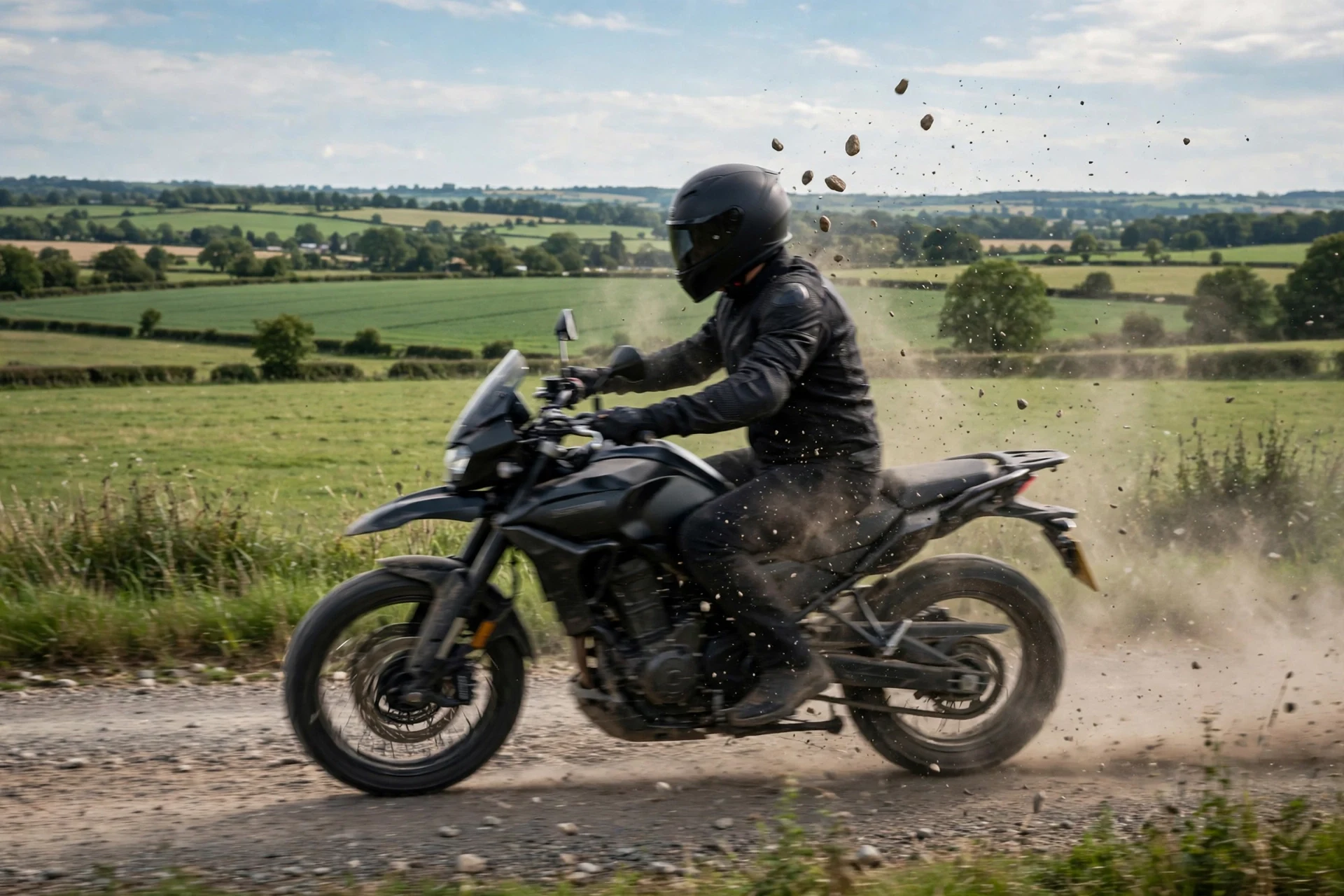
Flying debris is one of the most common hazards for riders. A car tyre can flick up a stone, a lorry can throw up grit, and on a trail a rider ahead of you can kick loose gravel into the air. At speed, even a small object can sting or cause a cut, and a larger one can cause a serious injury.
What kind of flying debris can a helmet stop?
A helmet is most useful against small, light debris. That includes stones and gravel thrown up by tyres, sand and grit blown across the road, insects, and small twigs or leaves. The shell deflects these objects or absorbs their energy, so they bounce off instead of striking your skin. A full-face helmet also protects your chin and jaw, which an open helmet leaves exposed.
Heavier debris is a different matter. A large rock, a piece of metal, or a heavy object falling from a lorry can carry far more energy than a helmet is designed to handle. In general terms, a helmet reduces the harm from such an impact, but it cannot guarantee protection against it. The same is true of very fast objects: a stone thrown up at motorway speed hits much harder than the same stone at cycling speed.
How does a helmet protect against flying debris?
A helmet protects you in two main ways. First, the hard outer shell acts as a barrier. It is smooth and tough, so a flying object tends to glance off it rather than dig in. Second, the foam liner inside the shell absorbs energy. When an object hits the shell, the liner compresses slightly and spreads the force over a wider area of your head, which reduces the peak force at any one point.
The shape of the helmet matters too. A smooth, rounded shell helps objects slide away instead of catching and snagging. Vents let air in, but they are small enough that most debris cannot pass through them. A visor, where one is fitted, adds another layer of protection, shielding your eyes and the front of your face from grit and insects.
Some modern helmets also use a slip layer inside the shell, similar to MIPS, which lets the shell move slightly in an angled impact. This is mainly designed for crash protection, but the same idea can help when debris strikes the helmet at an angle.
Do all helmets protect against flying debris equally?
No, not all helmets give the same protection against debris. A full-face helmet covers more of your head and face than an open-face or half-shell helmet, so it blocks debris from more angles. A helmet with a visor protects your eyes, while a helmet without one leaves your face open to grit and insects.
The fit matters as well. A helmet that sits level on your head, low on your forehead, covers the areas most likely to be hit. A helmet that tips back leaves your forehead exposed, and one that is too loose can shift when debris strikes it. Always fasten the chin strap so the helmet stays in place.
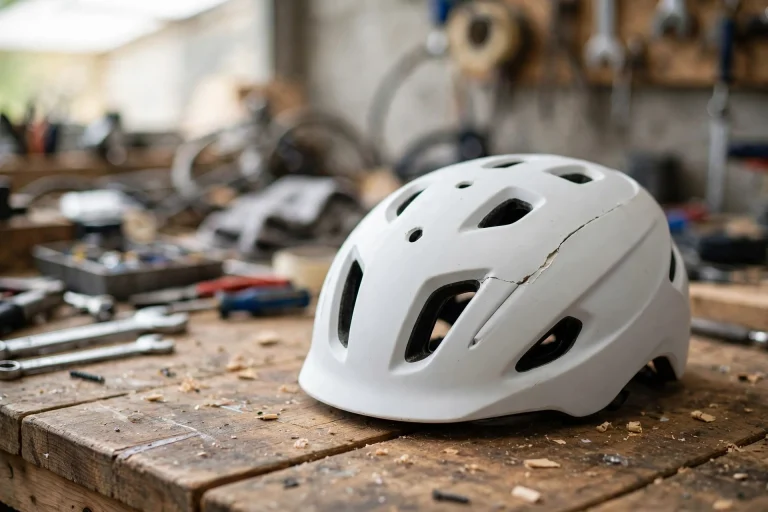
The condition of the helmet matters too. A cracked shell or a worn liner will not protect you as well as a helmet in good condition. If your helmet has taken a hard knock, check it carefully, and replace it if you find any damage.
What are the limits of a helmet against flying debris?
A helmet is not a shield against everything. It cannot stop a large, heavy object, and it cannot protect the parts of your body it does not cover. Your face, neck, arms, and torso are still exposed, and debris can cause cuts and bruises there even when your head is protected.
Speed is another limit. The faster you travel, the harder debris hits. At high speed, a small stone can still cause a painful impact through a helmet, even if it does not break the skin.
A helmet also has limits against very fine debris. Dust and sand can get in through the vents and around the edges, and can irritate your eyes and skin. That is why many riders wear glasses or goggles as well as a helmet, especially on dusty roads or trails.
Should you wear eye protection as well?
Yes, in general terms, eye protection is a good idea whenever you ride where debris is likely. Your eyes are soft, exposed, and easy to injure, and a helmet on its own does not cover them unless it has a visor. A small stone, a piece of grit, or an insect hitting your eye at speed can cause a painful injury and can make you lose control.
Glasses, goggles, or a visor all help. Goggles give the most complete seal against dust and grit, and they are a good choice for off-road riding. Glasses are lighter and easier to wear on the road, but they leave small gaps at the sides. A visor on a full-face helmet covers the whole front of your face and is the simplest option if your helmet has one.
Choose eye protection that fits well with your helmet. It should sit comfortably without pressing on your nose or temples, and it should not fog up. If you wear prescription glasses, look for goggles or a visor that fits over them.
What should you do after debris hits your helmet?
After any noticeable impact, take a moment to check your helmet. Look for cracks, dents, or deep scratches on the shell, and check that the liner is still firmly in place. A small stone may leave only a mark, but a hard hit can damage the shell in ways that are hard to see.
If the impact was heavy, or if you find a crack, the safe choice is to replace the helmet. The foam liner is designed to absorb one hard impact, and it may not protect you as well a second time. Do not try to repair a cracked shell yourself.
It is also worth cleaning your helmet after a dusty or gritty ride. Dust and grit can work their way into the vents and the liner, and over time they can wear down the padding and make the helmet less comfortable.
Do helmets protect against flying stones on the road?
Yes, in general terms, a helmet protects against small stones flicked up by tyres. The shell deflects the stone and the liner absorbs the force, so the impact is much less than it would be on a bare head.
Can flying debris still hurt you if you wear a helmet?
Yes, it can. A helmet reduces the harm, but it cannot stop every object, and debris can still hit your face, neck, and body. Eye protection and sensible speed help as well.
Does a full-face helmet protect better against debris?
Yes, in general terms, a full-face helmet covers more of your head and face, so it blocks debris from more angles than an open helmet, especially around the chin and jaw.

Olivia
Writer at Helmet Today, covering helmet reviews, fit and riding safety.