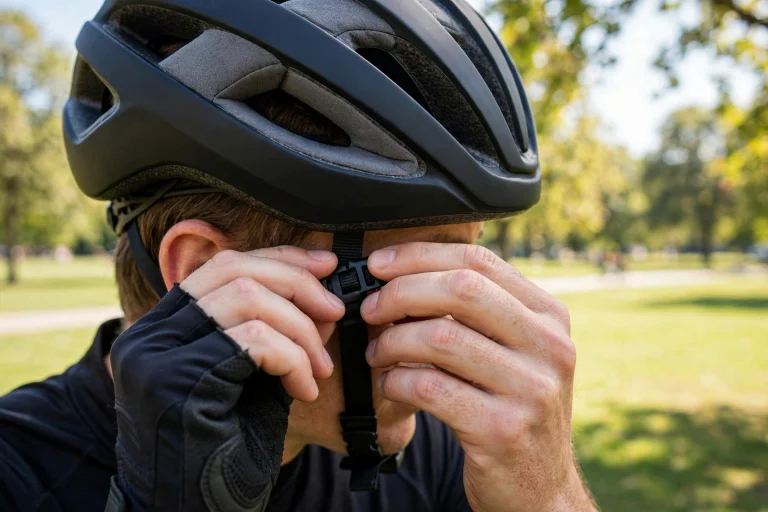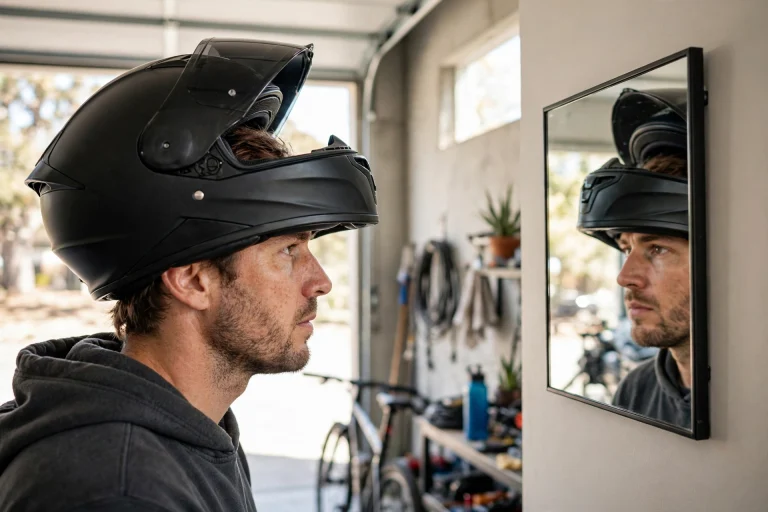
To stop a helmet squeezing your cheeks, loosen the straps slightly, check that the pads are the right thickness, and make sure the helmet is the right size and shape for your head. Cheek squeeze usually comes from pads that are too thick, a helmet that is too small, or straps pulled too tight, and fixing one of those three things usually solves it. A helmet should feel snug, holding steady on your head, but it should not press your cheeks hard enough to hurt or to make talking and smiling uncomfortable.
Cheek pressure is one of the most common helmet complaints, especially with new motorcycle helmets and full-face helmets. The cheek pads are meant to hold the helmet steady, and they sit close to the face by design. When they are too thick, too stiff, or the wrong shape for your face, they squeeze the cheeks, push the lips, and can even make it hard to open your mouth properly. A little pressure when a helmet is new is normal, but pain is not.
Why do helmets squeeze your cheeks?
The main reason is fit. A helmet that is one size too small presses everywhere, and the cheeks feel it first, because the cheek pads are the closest part of the helmet to the face. A helmet that is the right size but the wrong shape can do the same thing: a narrow helmet on a wide face squeezes the cheeks even when the crown fits well.
Thick cheek pads are another cause. Some helmets come with thick pads to suit a slim face, and those pads can feel tight on a rounder face. New pads are also stiffer than worn ones, because the foam has not yet softened. In general terms, cheek pads ease a little with use, often within a few weeks of regular riding, as the foam settles to the shape of your face.
How do you check whether the fit is the problem?
Start by checking the size. Measure around your head just above the eyebrows and ears, and compare it with the maker’s size chart. Then check the crown fit: the helmet should sit level and feel snug on the top of the head without a gap. If the crown is loose but the cheeks are tight, the shape is wrong, not the size.
Try the helmet on and wear it indoors for twenty or thirty minutes. Note where it presses, and whether the pressure eases or grows worse. A helmet that feels snug but even is usually fine. A helmet that presses hard on the cheeks while feeling loose elsewhere is the wrong shape for your face.
- The crown feels snug, with no gap and no rocking.
- The cheeks feel held, not crushed.
- You can talk, smile, and open your mouth without pain.
- The pressure does not grow worse after twenty minutes.
Can thinner cheek pads fix the squeeze?
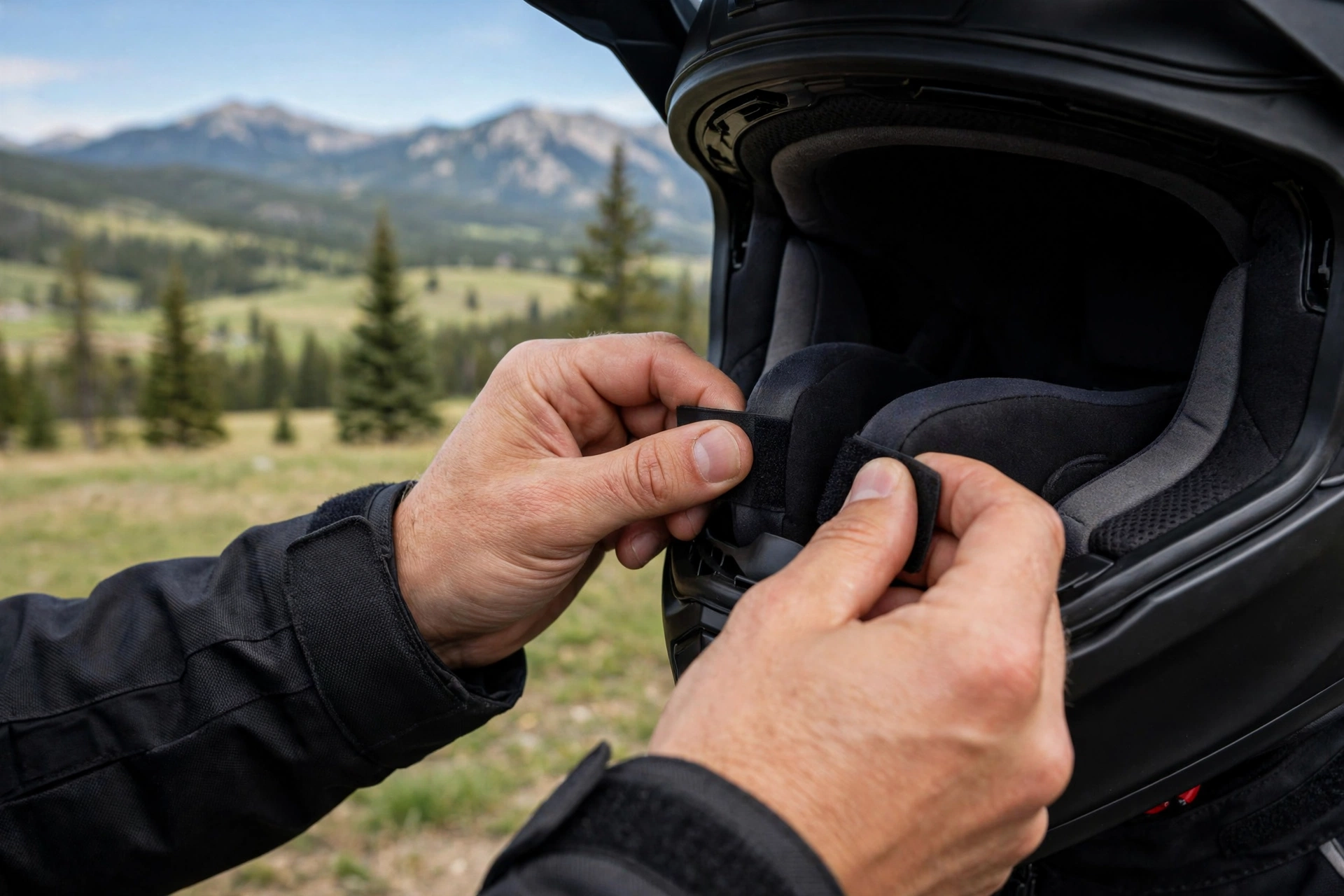
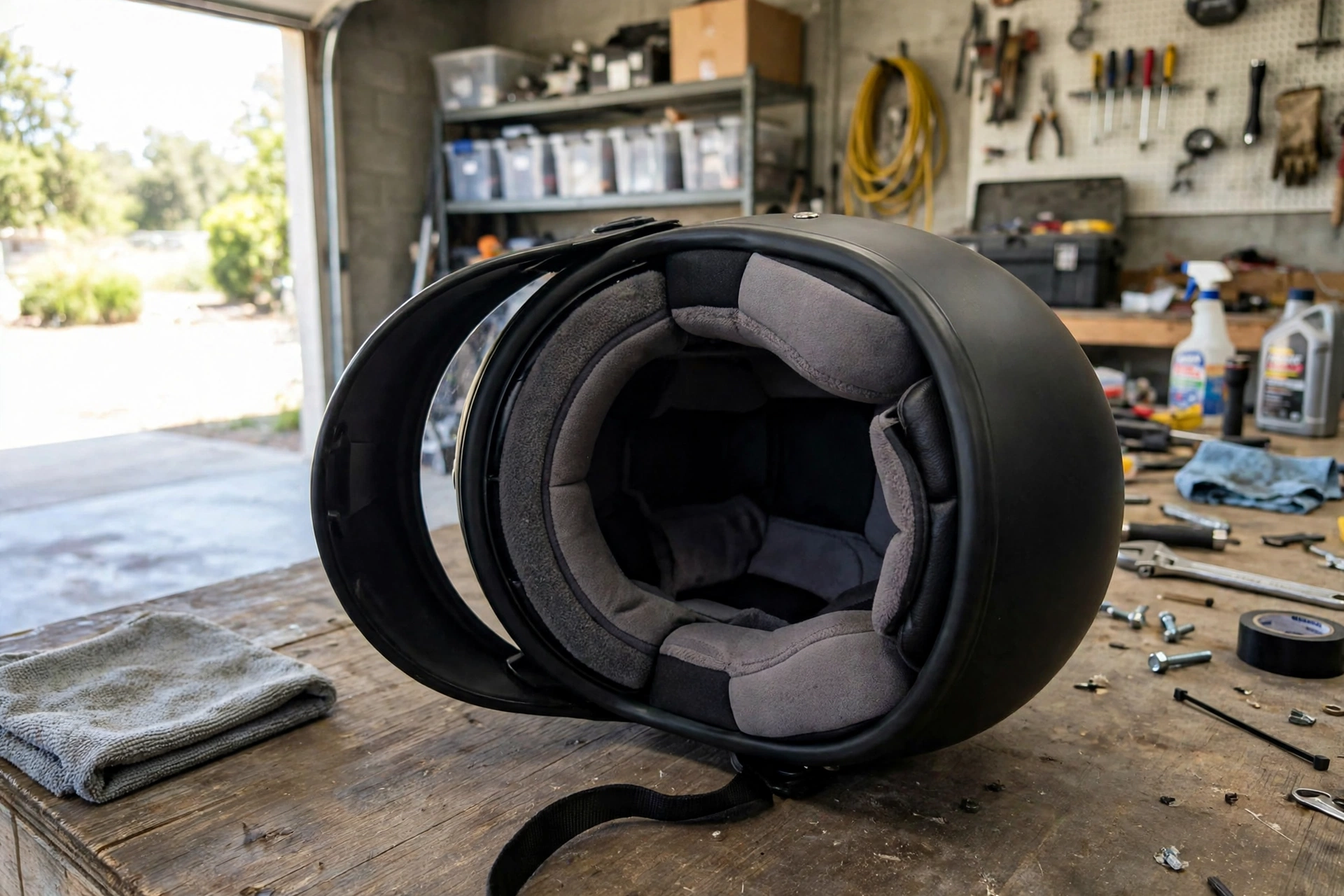
Yes, in many cases thinner cheek pads are the simplest fix. Many helmet makers sell cheek pads in different thicknesses, and swapping to a thinner set can transform the fit. The swap is usually simple: the pads are held in by poppers or Velcro, and they pull out and push back in without tools.
Check with the maker or a dealer for pads made for your helmet model. Pads from another model may not fit properly, and a pad that sits wrong can be worse than the original. Buy the right pads for your helmet, and fit them carefully, making sure they click or press fully into place.
Do not remove the cheek pads altogether. The pads hold the helmet steady and help it protect you in a fall, so riding without them is not a safe answer. Thinner pads are a fix; no pads are not. Some helmets also include a MIPS liner, which sits inside the shell and can change how the helmet feels on the face, so check the fit again after any pad change.
How should you adjust the straps?
Loosen the chin strap a little and see if the squeeze eases. The strap should be snug, with one or two fingers fitting underneath, but it should not pull the helmet hard down onto your face. If you have been tightening the strap as far as it will go, that alone may be causing the problem.
Check the side straps too. They should sit neatly under the ears and hold the helmet level, not drag it forwards. If the straps pull the helmet down at the front, the cheek pads press harder. Adjust the straps so the helmet sits level, with the front just above the eyebrows.
Will a new helmet ease with use?
In general terms, yes, a new helmet usually eases a little as the pads settle. The foam in cheek pads compresses with wear, and after a few weeks of regular use the pressure often drops noticeably. A helmet that feels snug but bearable when new is likely to become comfortable. A helmet that hurts from the first minute is unlikely to improve enough.
Help the process by wearing the helmet at home for short spells before a long ride. Twenty minutes a day for a week lets the pads settle to your face without the pressure of a long journey. Do not try to force the pads to soften by pressing them or washing them roughly, because that can damage them.
When is cheek squeeze a sign to change helmets?
If thinner pads, strap adjustments, and a few weeks of wear have not helped, the helmet is probably the wrong shape or size for your face. A helmet should not hurt, and a different model may fit far better. Try helmets from other makers, and pay attention to the shape as well as the size.
Watch for signs that the squeeze is doing harm. Red marks that last for hours, sores on the inside of the cheeks, or a headache after every ride are all signs that the fit is wrong. A helmet that leaves you sore is a helmet you will wear less often, and that is a safety problem as well as a comfort problem.
Replace the helmet if it has been in a crash or a hard fall, even if it looks fine. The foam inside may be damaged, and a damaged helmet will not protect you properly. When you buy a replacement, use what you learned about your face shape to choose a helmet that fits from the first try-on.
Is it normal for a new helmet to squeeze my cheeks?
A little snug pressure is normal when a helmet is new, because the pads have not settled yet. It should feel snug, not painful. If it hurts, or if you cannot talk comfortably, the fit is wrong, and thinner pads or a different size may help.
Can I cut the cheek pads to make them thinner?
It is best not to. Cutting pads can damage them and may make the helmet fit badly. Buy thinner pads made for your helmet model instead, and fit them properly, so the helmet still holds steady in a fall.
How tight should a helmet feel on my cheeks?
It should hold your cheeks gently, so the helmet moves with your head when you shake it, but it should not crush them or make talking painful. You should be able to smile and open your mouth without discomfort, and the pressure should not grow worse over time.

Olivia
Writer at Helmet Today, covering helmet reviews, fit and riding safety.