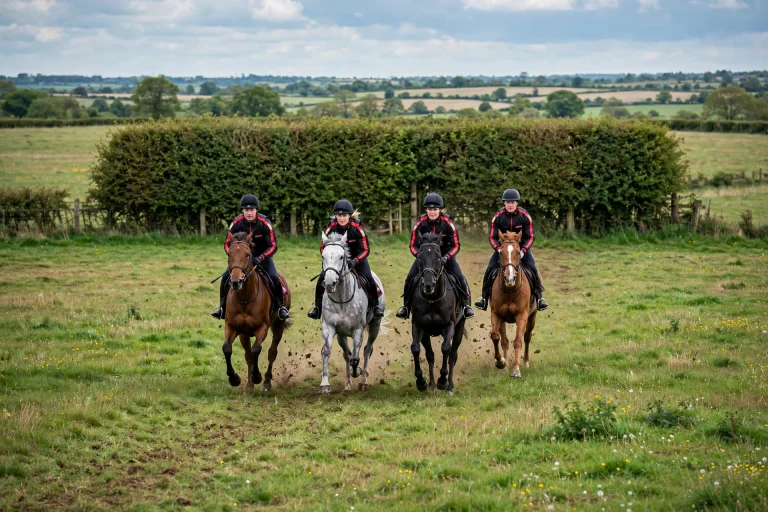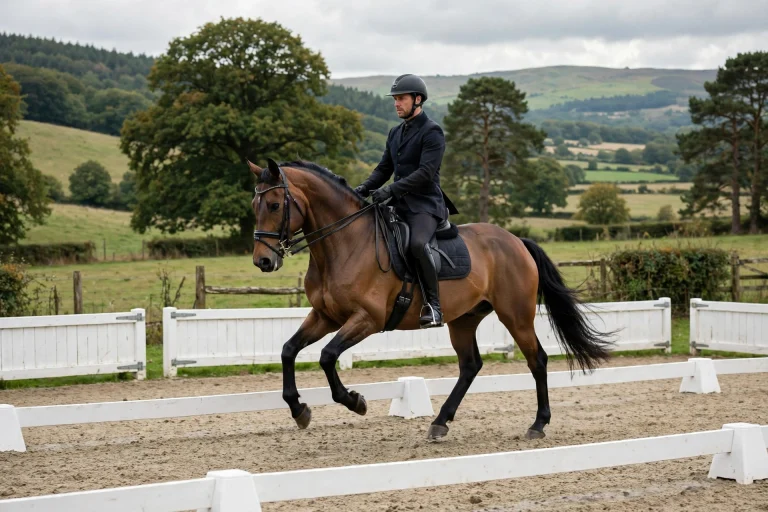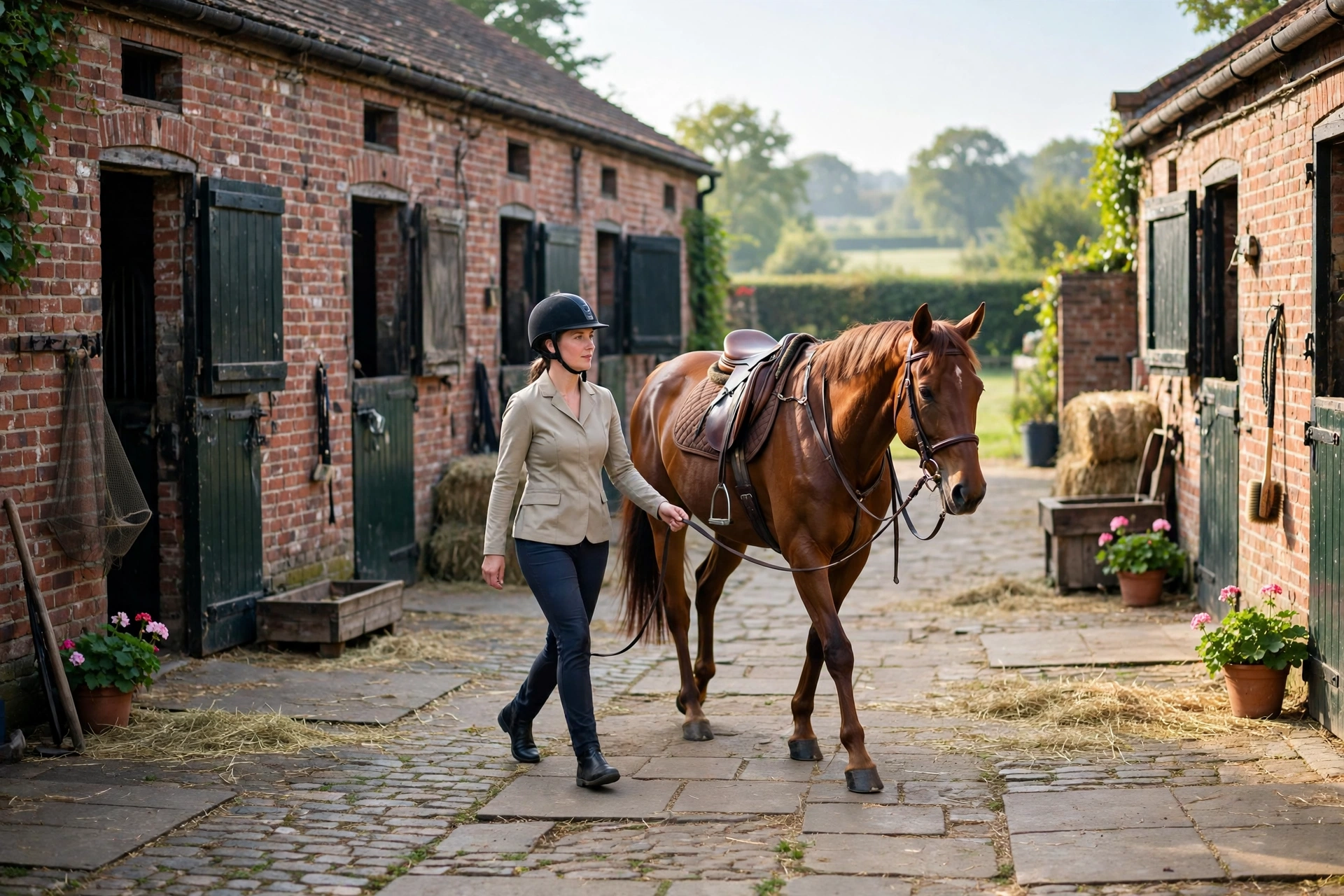
A helmet for riding in a stable yard is a standard horse riding helmet, worn to protect your head while riding around the yard and while handling horses on the ground, where kicks, slips, and sudden spooks can happen at close quarters. A stable yard is a busy place, with horses being led in and out, tacked up, groomed, and ridden in the school or around the yard. Even at a walk, a fall onto concrete or hard ground can hurt, and a helmet is a simple way to lower that risk.
In general terms, the helmet for yard riding is the same kind of riding helmet you would wear on a hack or in the school. It does not need to be a special model, but it does need to fit well, fasten securely, and be in good condition. Many yards and riding schools ask riders to wear a helmet whenever they are mounted, and some also ask for one when handling young or lively horses on the ground.
What does riding in a stable yard involve?
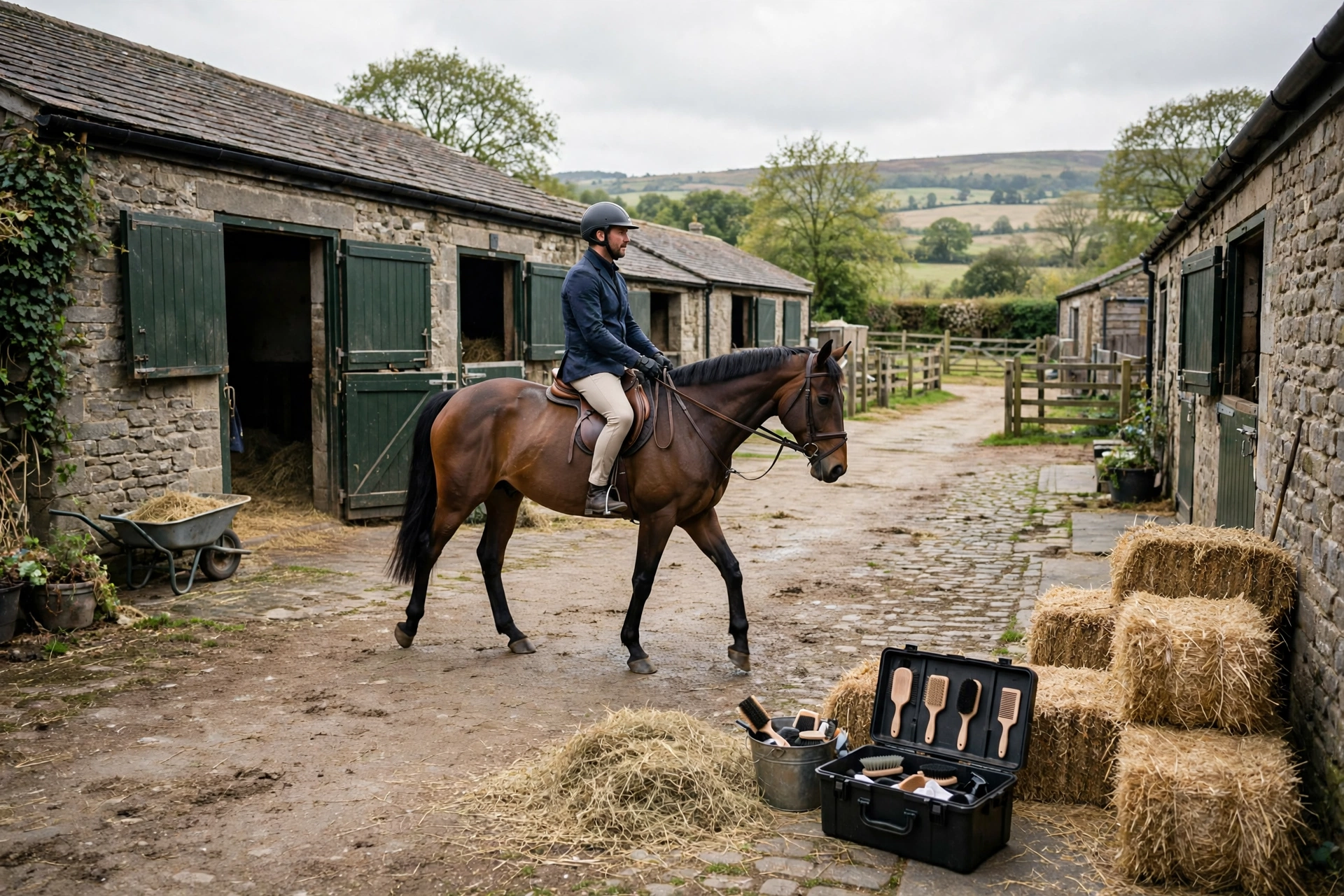
Riding in a stable yard usually means riding in the school, warming up before a lesson, or riding between the stable, the tack room, and the arena. The distances are short and the pace is usually slow, but the ground is often concrete, tarmac, or hard-packed earth, which is much less forgiving than grass if you come off. Horses may also be moving around the yard at the same time, being led past or loaded into a trailer.
Yard riding also involves mounting and dismounting in tight spaces, riding past open stable doors, and passing other horses at close quarters. A horse can spook at a sudden noise, a flapping tarpaulin, or a dog running across the yard, and a rider who is not expecting it can lose their balance. That is why many experienced riders put their helmet on before they mount, even for a short ride around the yard.
Why wear a helmet in the stable yard?
The main reason to wear a helmet in the yard is that the ground is hard and the risks are close. A fall from a horse at a standstill or a walk can still land you on concrete, and a kick or a knock from a horse’s head can happen while you are leading or grooming. A helmet protects the most vulnerable part of you, and it costs nothing to wear once you are used to it.
There is also a habit side to it. Riders who always wear a helmet in the yard never have to decide whether a particular ride is worth one, and they never find themselves mounted without one because they left it in the tack room. In general terms, making the helmet part of your routine, like your boots and gloves, is the simplest way to stay protected in and around the yard.
What type of helmet is best for yard riding?
For yard riding, a standard riding helmet with a smooth shell and a secure chin strap is the right choice. A skull cap style works well, and so does a peaked riding hat, so the choice comes down to what fits you best and what you find comfortable. What matters most is that it is a proper riding helmet, made for horse riding, and that it meets a recognised riding safety standard.
Some riding helmets also include a system designed to reduce rotational forces in a fall, such as MIPS, so it is worth asking about when you choose one. A helmet with good ventilation is worth looking for, because yard work is warm work and you may be wearing the helmet while grooming, tacking up, and leading horses as well as riding. A removable, washable lining is useful too, since yard helmets pick up dust, sweat, and stable smells quickly. A light helmet that sits comfortably will be one you actually wear, and that is the one that protects you.
How should a yard riding helmet fit?
A yard riding helmet should sit level on your head, low at the front, and snug all round without squeezing. It should not rock forward over your eyes when you look down to check a girth, and it should not slide back when you look up. The chin strap should be fastened snugly, with room for only a finger or two underneath, and the harness should hold the helmet steady when you move your head.
Try the helmet on with your hair as you usually wear it for riding, and wear it for a few minutes in the shop to check for pressure points. If you wear a hairnet, check the fit with that too. A helmet that fits well feels secure but not tight, and you should be able to forget you are wearing it once you are busy in the yard. If it pinches, slips, or gives you a headache, try a different size or shape.
What yard habits go with wearing a helmet?
Wearing a helmet works best alongside other sensible yard habits. Lead horses with a proper lead rope and gloves, walk on the side away from the horse’s shoulder, and keep an eye on where other horses are moving. When you mount, check your girth and stirrups, and make sure your helmet strap is fastened before your foot goes in the stirrup, not after.
Keep your helmet in a safe place in the tack room, not on the floor where it can be kicked or stepped on, and not hanging by its strap from a hook where it can fall. A helmet bag protects it from dust and knocks. In general terms, looking after your helmet is part of looking after yourself, and a helmet that is stored well will last longer and protect better.
When should a stable yard helmet be replaced?
A stable yard helmet should be replaced after a fall in which your head hits the ground, or after any hard knock to the shell. Even if the helmet looks fine, the inner lining may have compressed, and it may not protect as well next time. The same applies if the helmet has been dropped hard onto concrete, or if the shell is cracked, dented, or soft in places.
Also check the chin strap, harness, and lining regularly for wear, since yard helmets get a lot of use. If the strap is frayed, the buckle is loose, or the lining no longer holds the helmet snugly, it is time for a new one. In general terms, a helmet is a working piece of safety gear, not a keepsake, and replacing it when it is worn out is part of good horse care and good self-care alike.
Do I need a helmet just to ride around the yard?
Yes, in general terms it is wise to wear a helmet whenever you are mounted, even for a short ride around the yard. The ground is hard, horses can spook, and a fall at low speed can still cause a head injury.
Should I wear a helmet when leading a horse in the yard?
Many riders do, especially with young, fresh, or unfamiliar horses. A helmet is not a substitute for good handling, but it adds protection if a horse kicks, rears, or swings its head suddenly.
Can I use my normal riding helmet in the yard?
Yes, your normal riding helmet is the right helmet for yard riding. There is no need for a separate yard helmet, as long as the one you have fits well and is in good condition.

Olivia
Writer at Helmet Today, covering helmet reviews, fit and riding safety.