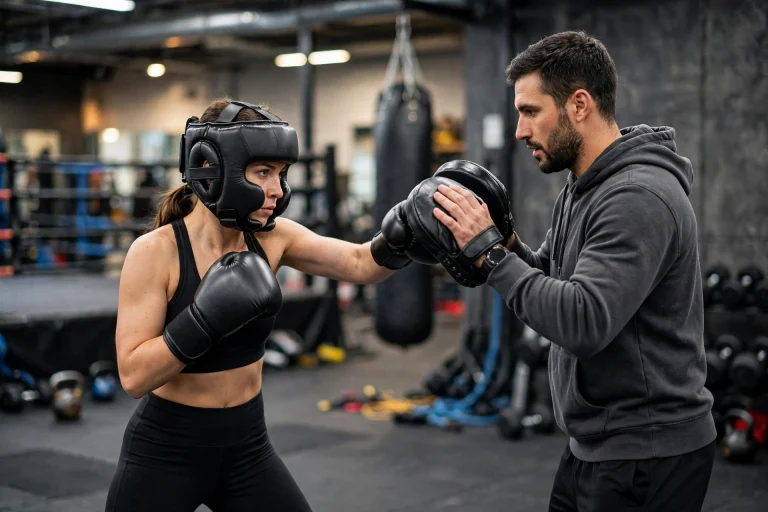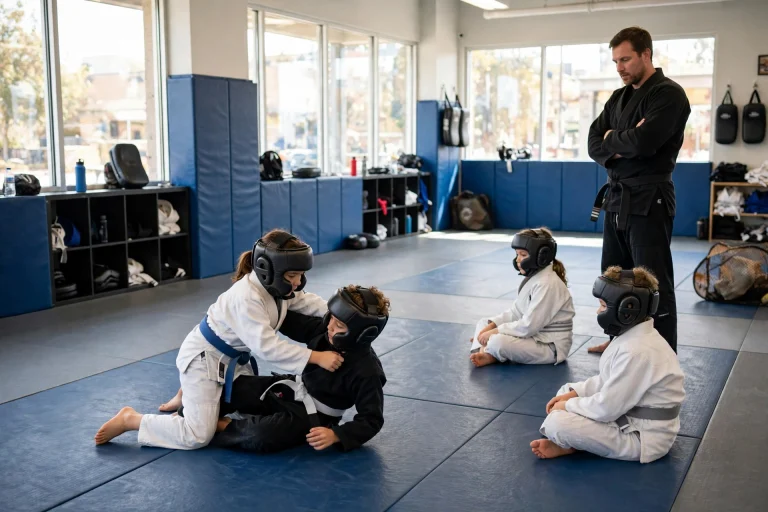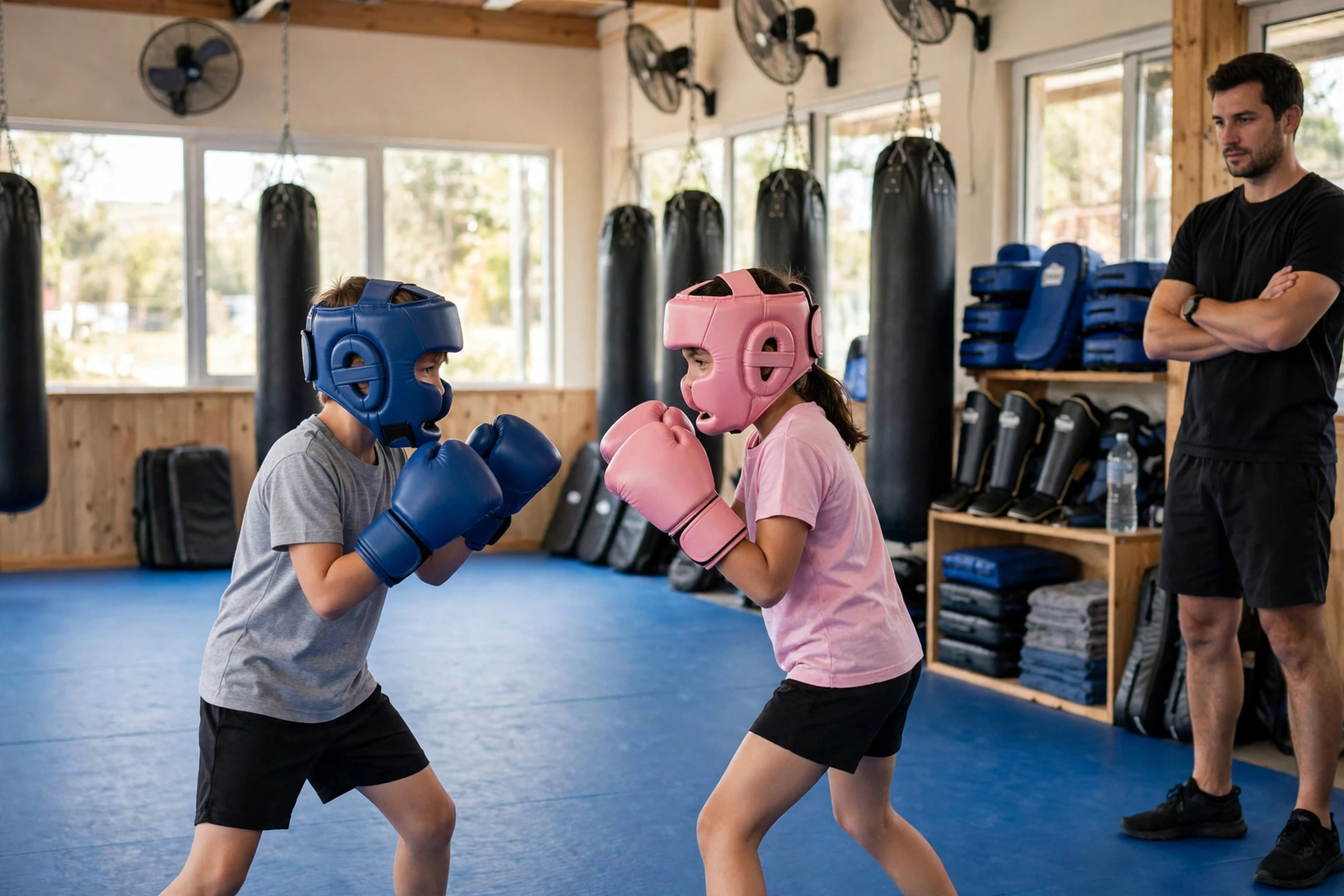
Headgear for kids Muay Thai classes is padded protective headgear, worn by children during supervised sparring and drills to cushion light contact and help protect the head, ears, and face while they learn the sport. Muay Thai is a martial art from Thailand, known as the art of eight limbs because it uses fists, elbows, knees, and shins, and children’s classes teach it in a careful, age-appropriate way. Headgear is one part of the protective kit young students wear when they practise contact skills, alongside gloves, shin guards, and a mouthguard.
In general terms, kids Muay Thai headgear is soft, padded headgear, not a hard helmet. It is made to absorb and spread the force of light contact, to protect the ears and the sides of the head, and to give parents and coaches confidence that the children are training safely. It is used in supervised classes, with a coach watching, and it is fitted to the child so it stays in place and does not block their sight or hearing.
What is Muay Thai for kids?
Muay Thai for kids is a martial arts class in which children learn the basic techniques of the sport: stance, footwork, punches, kicks, knees, and elbows, usually practised on pads and bags rather than on each other. Classes are structured, with a warm-up, technique drills, pad work, and games that build fitness, balance, and coordination, and they are taught by coaches who work with children.
The focus in a good kids class is on learning, discipline, and respect, not on hard fighting. Contact between children is light, controlled, and supervised, and sparring, where it happens at all, is introduced gradually, with protective gear and clear rules. Parents can usually watch a class before signing up, and a good club will be happy to explain how they keep the children safe.
What is Muay Thai headgear?
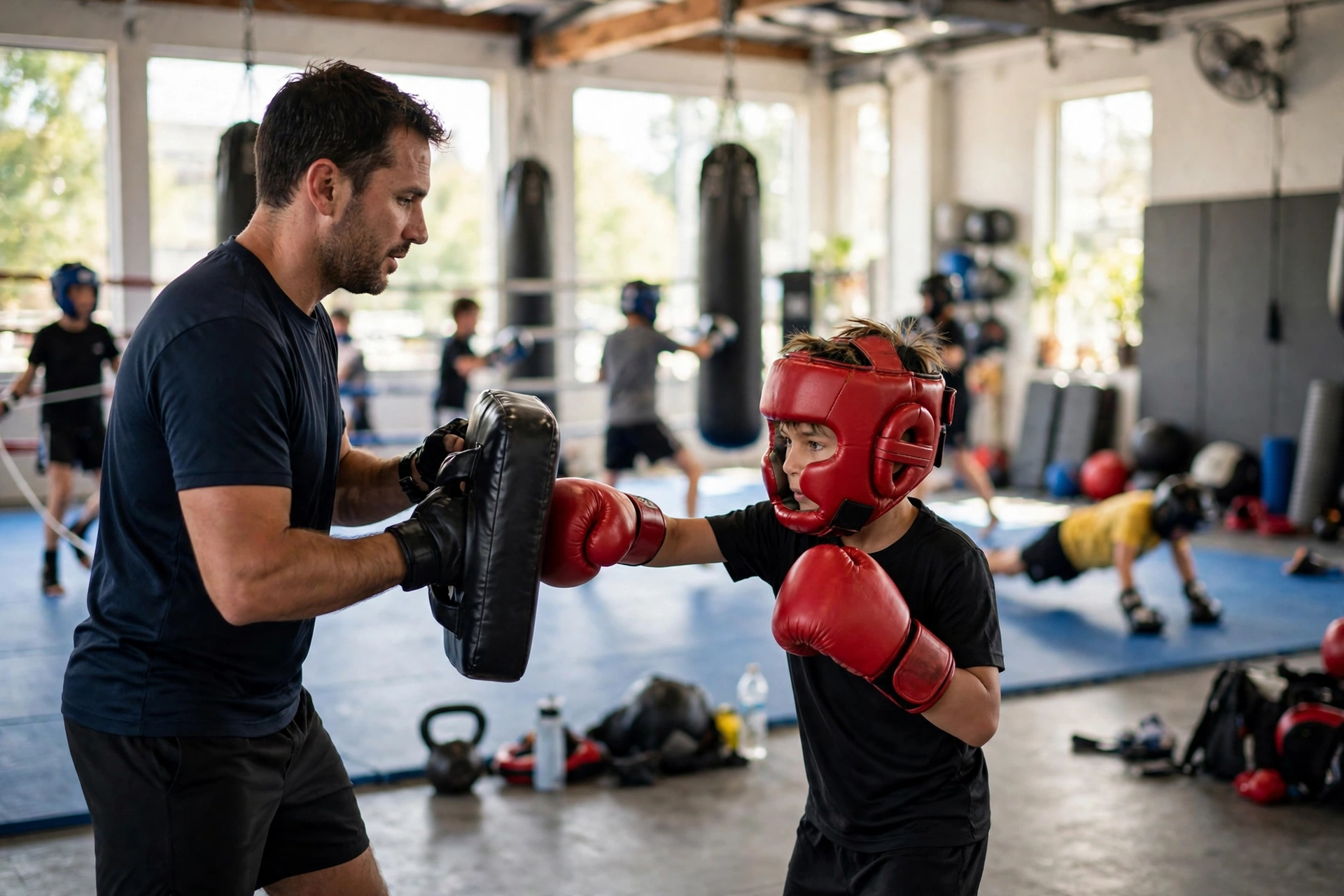
Muay Thai headgear is padded headgear that covers the top, sides, and back of the head, with extra padding around the ears and cheeks. It is usually made from synthetic leather or similar material, with foam padding inside, and it fastens with straps or laces at the back and under the chin. Some styles have a bar across the face for extra protection, while others are open-faced so the child can see and breathe more easily.
The headgear is made to cushion light contact, not to make hard hits safe, and it should be seen as one layer of protection alongside good coaching, light contact, and supervision. Unlike a hard sports helmet, which may include a system such as MIPS to reduce rotational forces in a fall, soft headgear works by cushioning light contact. In general terms, the right headgear for a child is the one that fits their head, stays in place during drills, and lets them see, hear, and breathe comfortably while they train.
When is headgear used in kids classes?
Headgear is used when children do partner drills and light sparring, where there is a chance of contact to the head. It is not usually worn for warm-ups, bag work, pad work, or fitness drills, where there is no contact to the head at all. The coach decides when headgear is needed, and children are taught to put it on, check the fit, and wear it correctly before the drill starts.
Some clubs ask children to bring their own headgear, while others provide it for the class. If the club provides it, check that the headgear fits your child and is clean and in good condition before they use it. If you are buying headgear for your child, ask the coach which style they recommend for the class, since different clubs prefer different designs.
How should kids Muay Thai headgear fit?
Kids Muay Thai headgear should fit snugly all round, without pressing painfully on the forehead or temples, and it should sit level on the head, covering the ears fully. It should not slide forward over the eyes when the child moves, and it should not lift off when they duck or turn. The straps should be fastened snugly, and the headgear should stay put through a whole round of drills.
Check that your child can see clearly to the sides and upwards, since they need to see kicks and punches coming, and that they can hear the coach’s instructions. A headguard that blocks sight or hearing is a hazard in itself. Try the headgear on in the shop or at the club, and let your child move, shadow box, and turn their head in it before you decide it fits.
What should parents check before buying headgear?
Parents should check that the headgear is made for children, in the right size for their child’s head, and that it is in good condition, with no torn seams, flattened padding, or broken straps. The padding should feel firm but not hard, and the ear covers should be intact, since ears are one of the areas headgear is meant to protect. Ask the coach whether the club prefers open-face or full-face styles, and whether there are any club rules about headgear.
It is also worth checking that the headgear is easy to clean, since children sweat in it and it is often shared or used several times a week. A headguard with a wipe-clean surface and removable padding is easier to keep fresh. In general terms, buy from a martial arts shop or a brand the club trusts, rather than the cheapest option you can find, and replace headgear when the padding is worn or the fit no longer suits your growing child.
How do you look after kids Muay Thai headgear?
After each class, wipe the headgear clean with a damp cloth, and let it dry naturally in fresh air, away from direct heat. Do not leave it in a closed bag while it is still damp, since that is when smells and germs build up, and do not dry it on a radiator. If the padding is removable, take it out and let it dry fully between classes.
Check the straps, laces, and seams regularly for wear, and check the padding for flat spots or tears. In general terms, headgear that is worn out, torn, or no longer fits should be replaced, since it will not protect as well as it should. Children grow quickly, so check the fit every few months, and move up a size when the headgear starts to feel tight or to ride up.
Does my child need headgear for Muay Thai?
In general terms, yes, for partner drills and light sparring where head contact is possible. Ask your child’s coach what the club requires, and make sure the headgear fits well and is in good condition.
What age can children start Muay Thai?
Many clubs take children from around five or six years old, in general terms, with classes grouped by age and ability. Ask your local club about their age groups and what the classes involve before signing up.
Is headgear enough to keep my child safe?
Headgear helps, but it is only one part of safety. Good coaching, light and controlled contact, supervision, and the rest of the protective kit, including gloves, shin guards, and a mouthguard, all matter just as much.

Olivia
Writer at Helmet Today, covering helmet reviews, fit and riding safety.