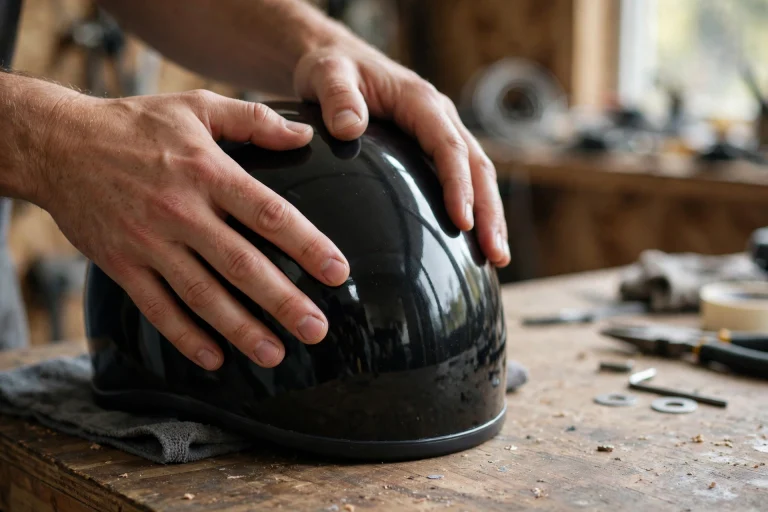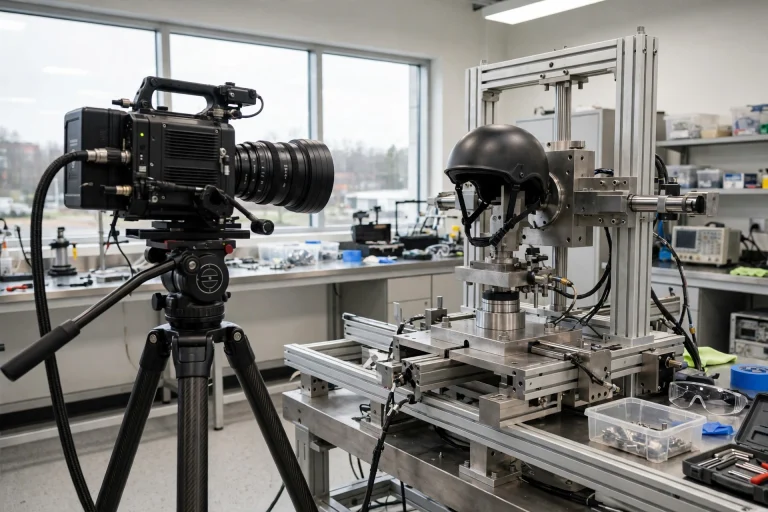
Linear impact in a helmet is a straight-on blow, where the force travels directly into the helmet along a single line, such as when you fall straight down onto a flat surface. The helmet is pushed squarely against your head, and the shell and foam liner work together to spread and absorb the force of that direct hit. It is the simplest kind of impact a helmet has to deal with, and it is the one most helmet tests are built around.
The word linear simply means in a straight line. In a linear impact there is little or no sideways or twisting movement, so the force arrives head-on and the helmet’s job is straightforward: take the energy, spread it, and slow your head down before it stops. Most everyday falls, such as slipping and landing on the back of your head, are close to linear impacts.
What does linear mean in a crash?
Linear describes movement in a straight line. If you fall from a bike and your head moves straight down toward the ground, that is a linear movement. When your head stops, the force acts along the same straight line, pushing the helmet directly against the surface and your head directly into the liner.
This is different from a glancing blow, where your head is moving sideways across a surface at the same time as it hits. In a glancing blow, the force has a sideways part as well as a straight part, and that sideways part can twist the head. A purely linear impact has no twist in it, which makes it easier for a helmet to handle, because the liner can crush evenly in one direction.
How is a straight impact different from a glancing one?
In a straight impact, the whole of the helmet’s liner in the impact area can crush at once, sharing the load evenly. The shell spreads the force over a wide patch, the foam compresses, and your head slows down smoothly. The design is at its most efficient, because the helmet was built to crush in that direction.
In a glancing impact, the helmet also has to deal with rotation. The shell may catch on the surface and drag, which twists the head, and the liner is loaded unevenly, with more crushing on one side than the other. The helmet still absorbs the straight part of the force, but the twisting part needs extra help, which is why some helmets include systems designed to let the shell move slightly relative to the head.
What happens inside the helmet in a linear impact?
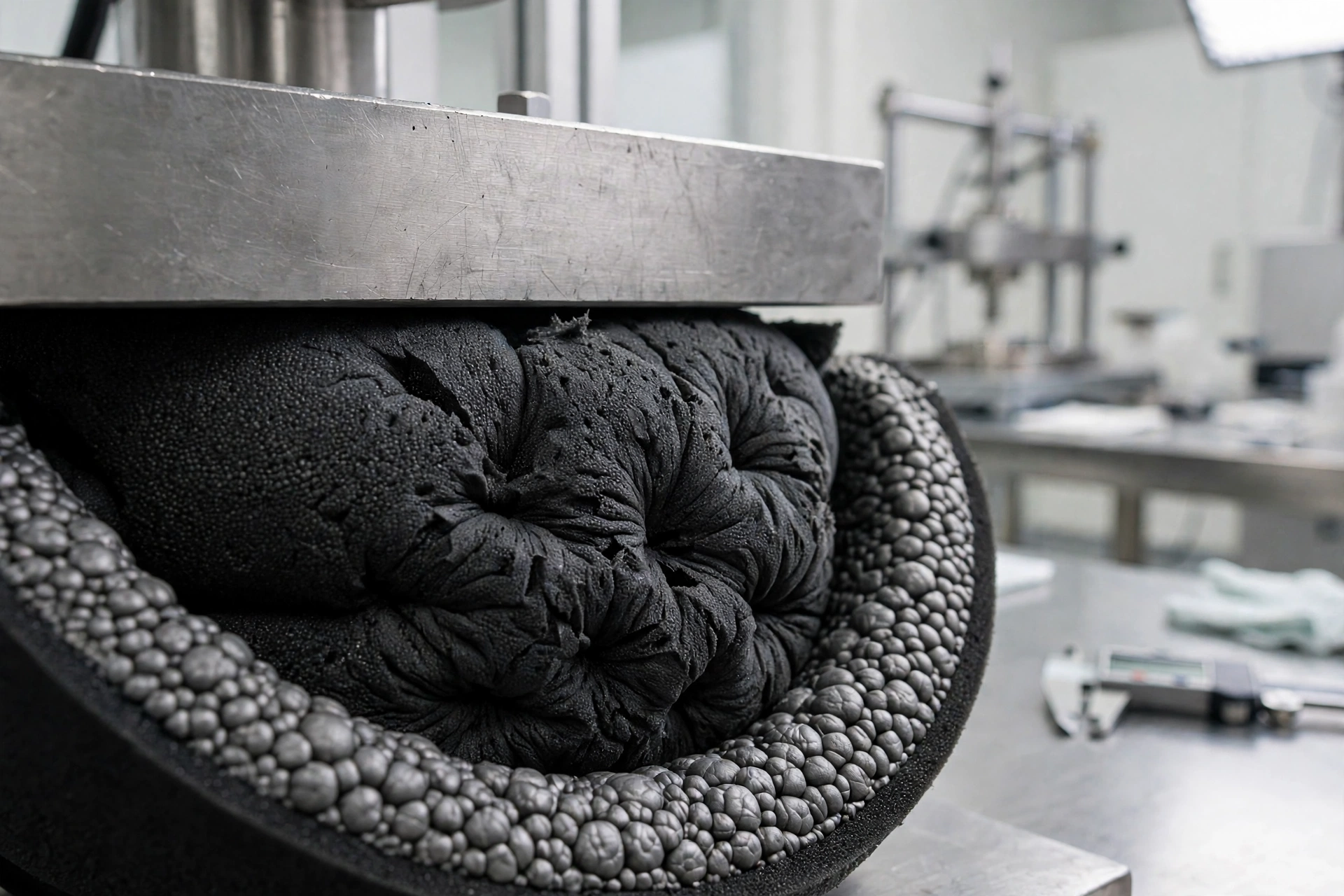
Inside the helmet, a linear impact follows a simple chain. The shell meets the surface first and spreads the force across a broad area. The foam liner under that area then crushes, cell by cell, soaking up energy as your head presses into it. The comfort padding and fit system hold the helmet steady so the liner stays in place and crushes evenly.
Because the force is straight, the liner crushes in a straight line too, from the outside in. Your head travels a short distance into the foam, and that short travel is what stretches the stop out over a slightly longer time. In general terms, the thicker the liner and the more evenly it crushes, the gentler the stop for your head.
Why do labs test straight impacts?
Laboratories test straight impacts because they are repeatable and easy to measure. A helmet can be dropped straight down onto a flat surface, or onto a shaped surface, in exactly the same way every time, so different helmets can be compared fairly. The test shows how well the shell and liner handle a direct hit, which is the foundation of all helmet protection.
Straight impact tests also give a clear baseline. If a helmet cannot handle a simple straight-on blow, it will not handle a more complicated angled one either. The results also help designers compare different foams and shell shapes, so they can see which combinations absorb a straight blow best before moving on to more complex angled tests. That is why standards around the world include straight impact testing as a core check, even though real crashes are often more complicated than a single straight hit.
What does a linear impact feel like for the rider?
For the person wearing the helmet, a linear impact feels like a hard, sudden jolt that comes and goes quickly. There is no spinning or twisting sensation, just a sharp stop. Because the helmet slows the head down over a short distance, the jolt is softer than it would be without a helmet, but it can still leave you shaken, dazed, or with a headache. Some people feel fine at first and only notice symptoms later, which is why it is wise to rest and watch for changes after any head impact.
Any head impact, even a straight one that feels minor, deserves attention. The brain can be injured without any visible damage to the helmet or the head, so if you feel dizzy, confused, or unwell after a fall, you should get checked by a medical professional. The helmet reduces the force, but it cannot remove all risk.
How do helmets handle linear and twisting forces together?
Real crashes rarely involve only one kind of force. A fall often combines a straight impact with a glancing, twisting element, so helmets are designed to handle both at once. The shell and liner deal with the straight part of the force, while extra features deal with the twist. Some helmets use a low-friction layer inside the shell, such as MIPS, that allows a small amount of movement between the helmet and the head when the impact is angled.
This combination matters because a helmet that only handled straight impacts would leave the twisting forces unaddressed. By building the liner for the straight hit and adding a slip layer for the twist, designers cover both parts of a real-world crash. Fit plays a part too: a helmet that stays in place lets both systems work as intended, while a loose helmet can shift and leave the head unprotected in the wrong spot.
Is a linear impact the most common type of crash?
Straight-on falls are common, but many real crashes combine a straight impact with a glancing, twisting element. Helmets are designed and tested for both, with straight impact tests as the baseline.
Can you tell if an impact was linear by looking at the helmet?
Sometimes. A straight impact often leaves a flat, even patch of crushed liner, while a glancing blow may leave a scrape or uneven crushing. Either way, a helmet that has taken a hard hit should be replaced.
Do all helmet standards test linear impacts?
In general terms, yes. Straight impact testing is a core part of helmet standards around the world, because it measures the basic ability of the shell and liner to absorb a direct blow.

Olivia
Writer at Helmet Today, covering helmet reviews, fit and riding safety.