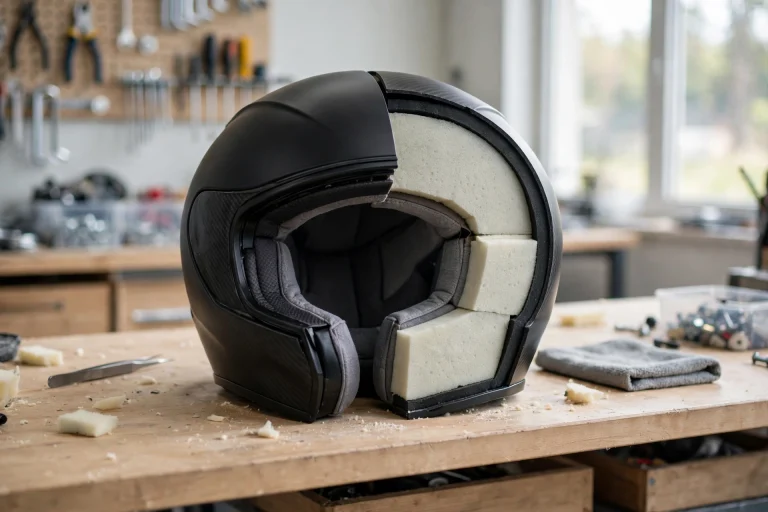
Helmets spread impact force by using the hard outer shell to share the energy of a blow over a wider area, and the foam liner inside to soak that energy up as it crushes. Instead of letting the full force of an impact land on one small spot on your head, a helmet turns a sharp, focused hit into a broader, softer push. That spreading and soaking up is what protects your skull and brain.
Impact force is really about concentration. A fall onto a kerb or a rock puts a lot of energy into a very small area, and that is what causes damage. A helmet stands between the surface and your head, and its layers work together to take that concentrated energy, spread it out, and slow it down. Each layer has a different job, and none of them would protect you well on its own.
What is impact force?
Impact force is the push your head receives when it hits something hard, or when something hard hits it. The faster your head is moving, and the harder the surface, the greater the force. What matters most is how quickly your head is brought to a stop: a sudden stop means a large force, while a slower, more gradual stop means a smaller one.
Your brain is soft and sits inside a hard skull, so a sudden stop can make the brain move and press against the inside of the skull. The aim of a helmet is to make the stop less sudden. By spreading the force and stretching out the stopping time, the helmet reduces the peak force that reaches your head. A helmet is built around this idea: if the stop can be made even a little less sudden, the force drops noticeably, and the brain has a better chance of coming through the impact without serious harm.
How does the hard shell spread the force?
The shell is stiff and smooth, and stiffness is what lets it share a load. When the helmet hits a surface at one point, the shell bends very slightly and passes the load sideways through the shell material, so the foam underneath feels the impact over a broad patch instead of a single point. In general terms, the stiffer and more continuous the shell, the wider the area it can spread the force across.
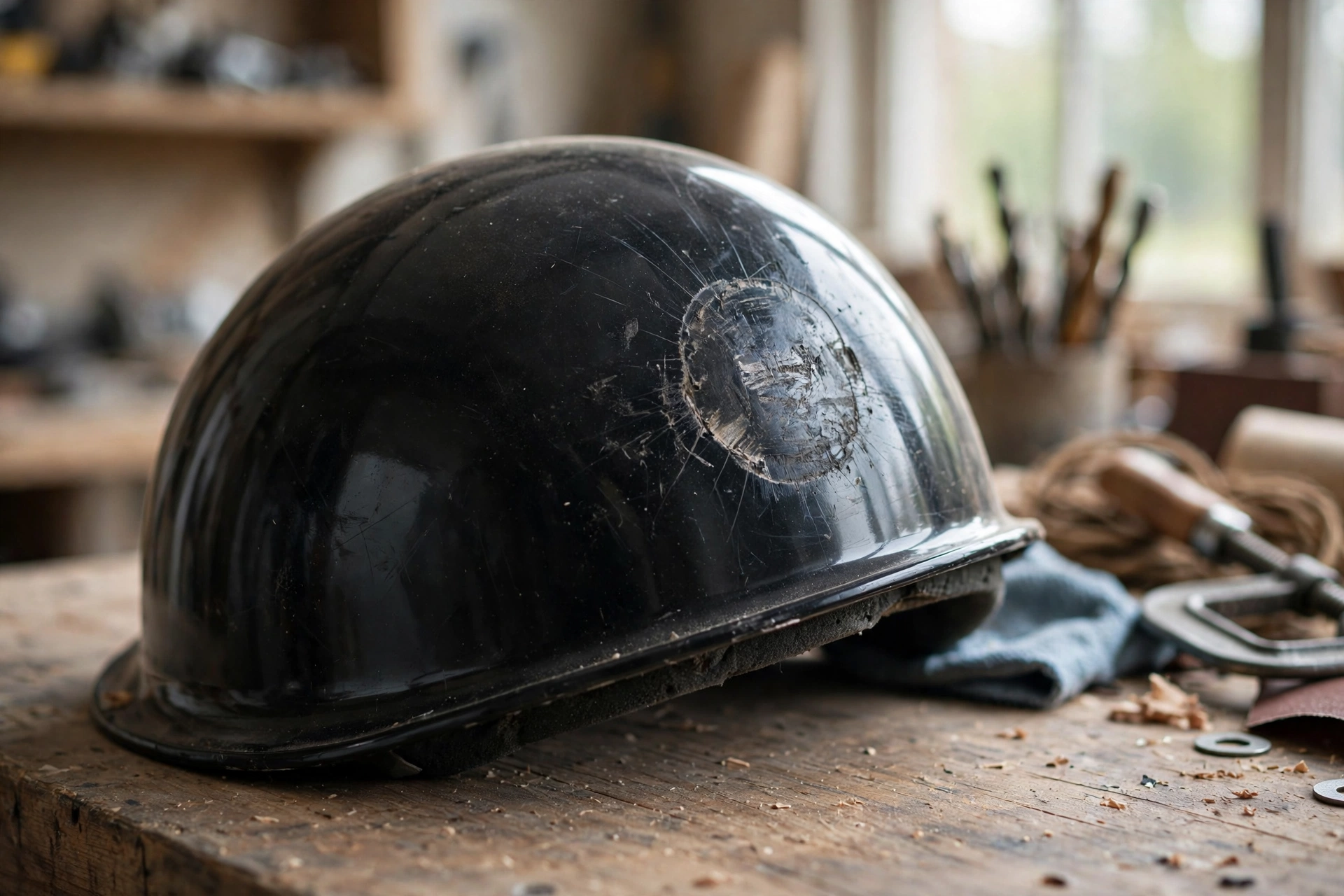
The shell also keeps the impact from concentrating on a sharp edge or point. A stone or a kerb edge would press hard into one spot, but the shell bridges over it and turns a point load into a distributed load. That is why a helmet with a cracked or damaged shell protects less well: a crack breaks the shell’s ability to pass the load sideways, so the force stays concentrated.
What role does the foam liner play?
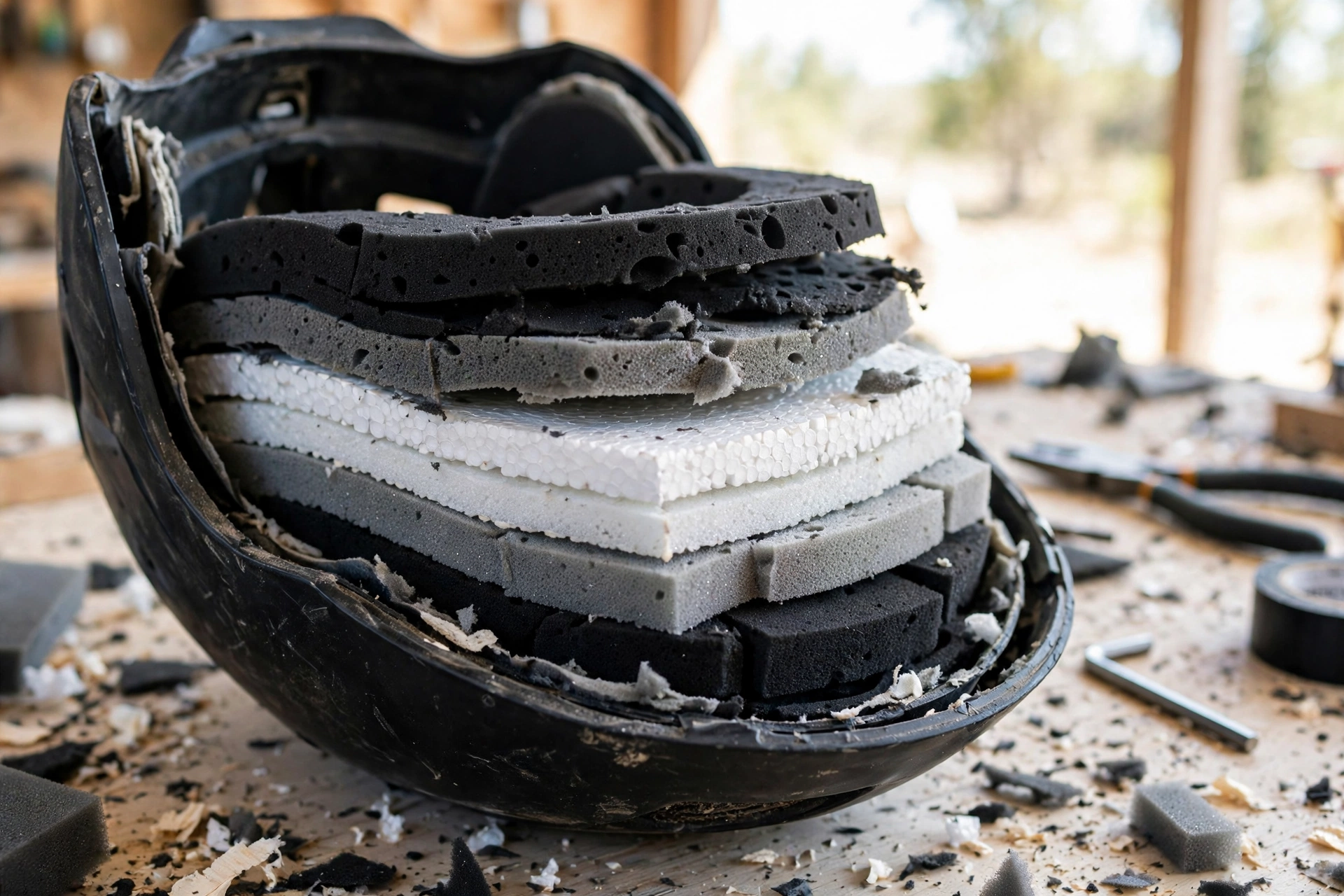
Once the shell has spread the force, the foam liner takes over. The liner is made of foam that crushes under pressure, and as it crushes it absorbs energy. Because the shell has already spread the impact over a wide area, the liner is crushed evenly across that area rather than being punched through in one spot.
The liner works by giving your head room to slow down. As the foam collapses, your head travels a short distance into the liner, and that travel is what stretches out the stop. A thicker liner gives more room for this, which is one reason helmet design balances thickness against weight and comfort. The foam’s job is not to be hard or soft on its own, but to crush at the right rate for the impact.
Why does spreading force over a wider area help?
Spreading force matters because damage depends on pressure, and pressure is force divided by area. The same amount of force spread over a large area presses less hard on any one part of your head than the same force concentrated on a fingertip-sized spot. By widening the area, the helmet lowers the pressure on your skull and brain.
Think of standing on snow in boots versus standing on it in thin heels. Your weight is the same, but the boots spread it over a wide area and you stay on top, while the heels concentrate it and sink in. A helmet does the same thing in reverse: it takes a concentrated impact and spreads it wide, so no single part of your head takes the full blow.
What happens if the force stays concentrated?
If the force of an impact stays concentrated in one spot, the risk of injury rises sharply. A focused blow can crack the skull at that point, and the brain underneath can be bruised where it meets the skull. That is why even a small, sharp object can be so dangerous in a fall, and why a helmet’s ability to spread force is tested so carefully. Concentration is also what makes a sharp object dangerous: all of its energy arrives at a single point.
This is why a helmet that fits badly protects less well. If the helmet sits loosely, it can shift in a crash and let the impact land on an area with less liner, or on the edge of the shell, where the force cannot be spread properly. A good fit keeps the helmet in the right place so the shell and liner can share the load as designed.
How do modern helmets improve force spreading?
Modern helmets improve force spreading in several ways. Shells are shaped to be smooth and continuous, with vents placed so they do not weaken the areas that take the most impact. Liners may use foam of different densities in different places, firmer where big impacts are expected and softer where comfort matters, so the crushing happens evenly.
Some helmets also add systems that deal with twisting forces from angled impacts, such as MIPS, which allows a small amount of slip between the helmet and the head. Together, the shell, the liner, and these extra systems form a chain: the shell spreads the force, the liner absorbs it, and the slip layer helps with the twist. Each part depends on the others to work properly.
Does a thicker helmet spread force better?
In general terms, a thicker liner gives more room for the foam to crush and slow your head down, but thickness alone is not the whole story. The shell, the foam density, and the fit all matter just as much.
Can a helmet spread force from any direction?
A helmet is designed to spread force from the directions it is most likely to be hit, such as the crown, sides, front, and back. No helmet can protect equally well against every possible angle and surface.
Does a cracked shell still spread impact force?
No, not as well. A crack breaks the shell’s stiffness, so it cannot pass the load sideways across a wide area. A helmet with a cracked shell should be replaced.

Olivia
Writer at Helmet Today, covering helmet reviews, fit and riding safety.