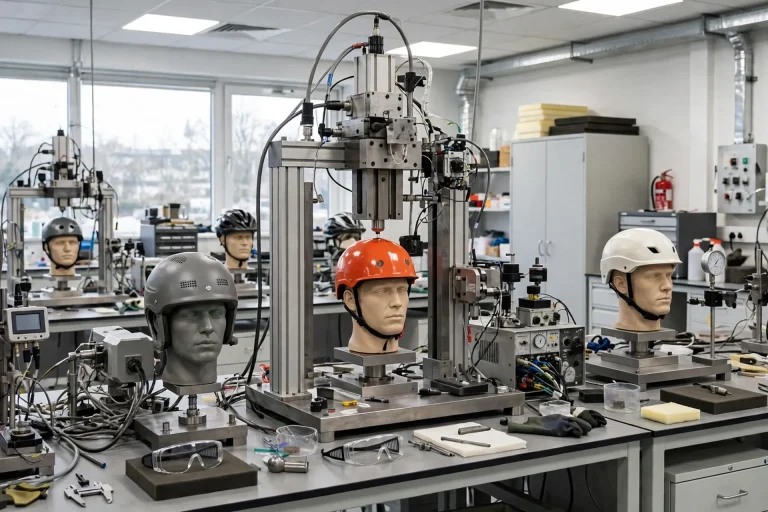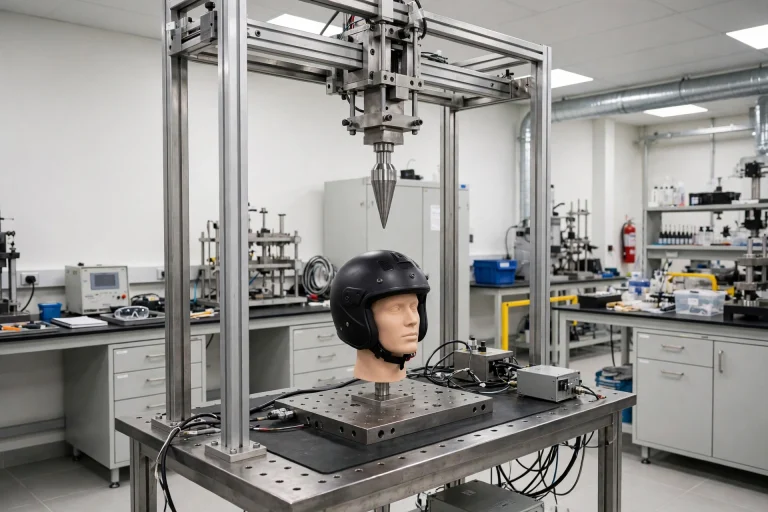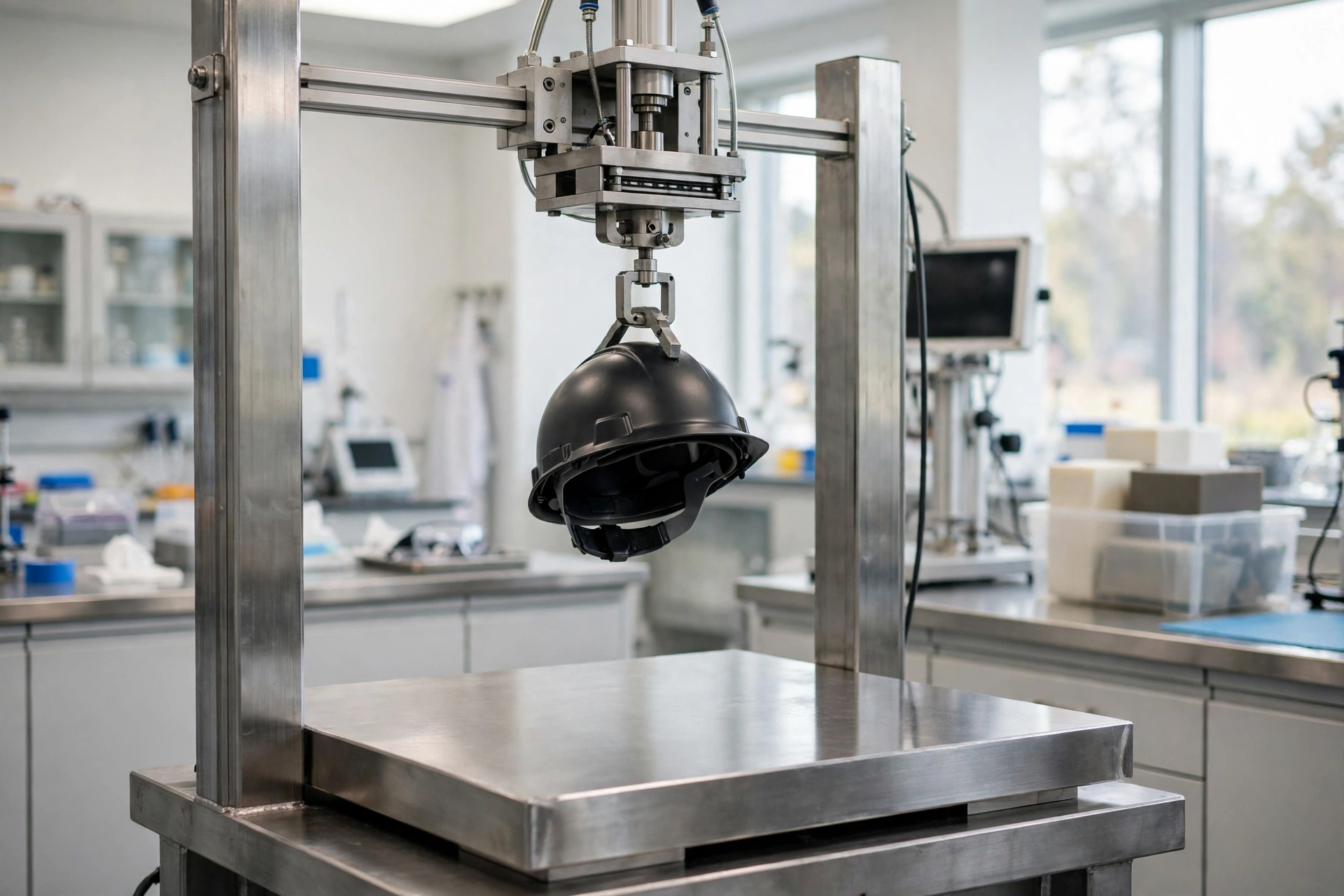
A helmet drop test is a laboratory check in which a helmet is dropped onto a hard surface to see how well its shell and liner handle the impact. The helmet is fitted onto a test headform, raised above a surface, and released, so it falls and strikes the surface just as it would in a real fall. Sensors inside the headform measure how sharply the head slows down, which shows how much protection the helmet provides.
Drop tests are one of the oldest and simplest ways to test a helmet, and they remain a core part of helmet safety standards around the world. They do not copy every kind of real crash, but they give a repeatable, fair way to compare helmets and to check that a helmet meets a minimum level of protection before it can be sold. The test is simple by design, so that a helmet tested in one laboratory can be compared fairly with a helmet tested in another, anywhere in the world.
What is a drop test?
A drop test is a controlled impact test carried out in a laboratory. A helmet is placed on a headform, which is a solid model of a human head, and the whole assembly is dropped onto a hard surface below. The drop is done in a controlled way so that the same test can be repeated exactly, helmet after helmet, giving results that can be compared fairly.
The purpose is to check the basics: does the shell spread the force, does the liner crush and absorb energy, and does the helmet stay in place during the impact? If a helmet passes the drop test, it means it can handle at least a straightforward impact of the kind the test represents. In general terms, it is a minimum standard, not a promise that the helmet will protect you in every crash.
How is a drop test carried out?
A drop test is carried out with the helmet fitted snugly onto the headform, with the straps fastened as they would be in real use. The headform is then raised to a set height above a hard surface, which may be flat or shaped, depending on the standard being tested. The assembly is released and falls freely until the helmet strikes the surface.
During the fall and the impact, sensors inside the headform record how the head moves and how sharply it slows down. The helmet may be dropped more than once, at different points on the shell, so that the crown, sides, front, and back are all checked. Each drop is recorded separately, and the results are compared against the limits set by the standard.
What do testers look for after the drop?
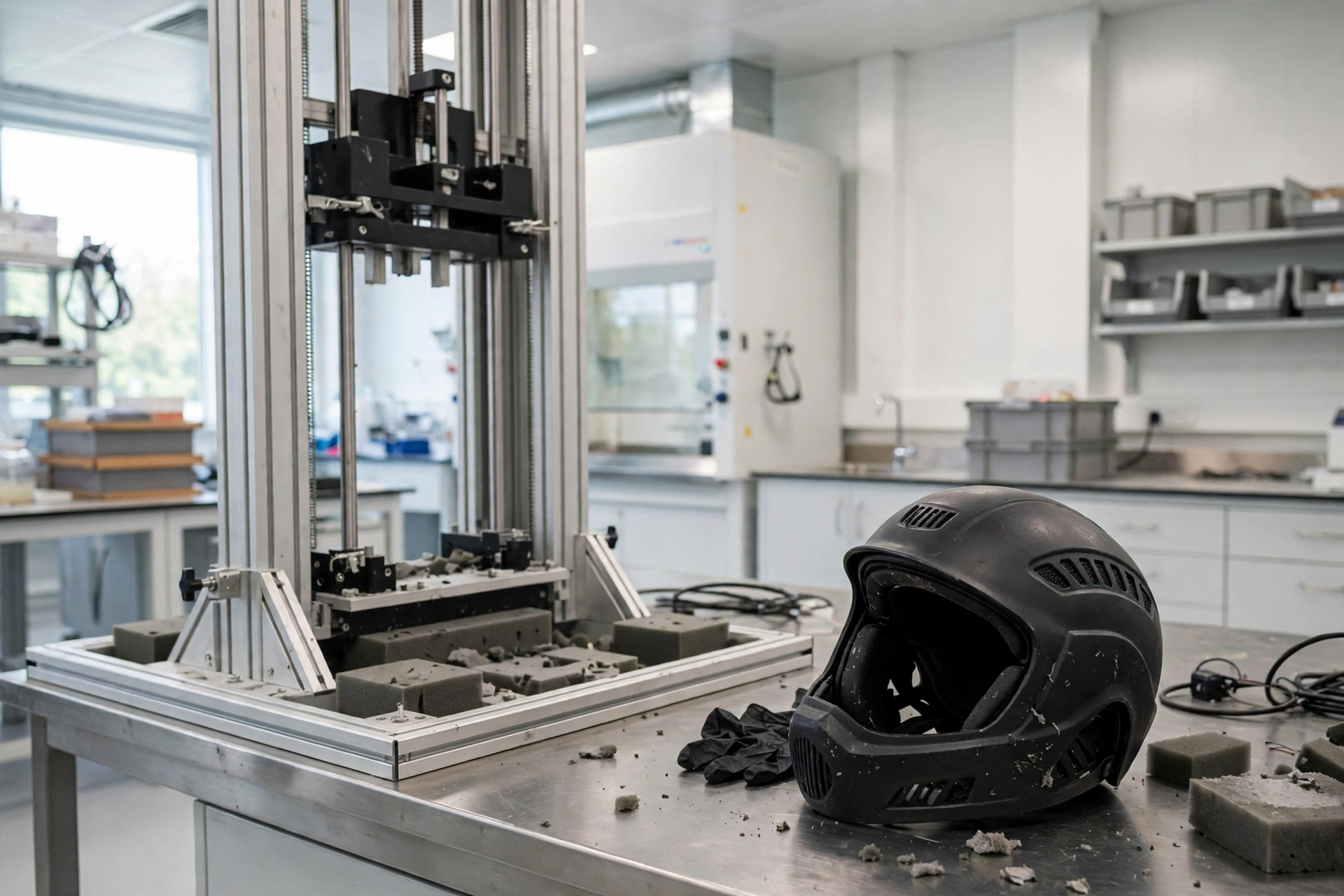
After the drop, testers look at two things: the measurements from the sensors, and the condition of the helmet itself. The sensor readings show how hard the head was jolted, and how much it twisted if the impact was angled. If the jolt is too sharp, the helmet has not absorbed enough energy, and it fails the test.
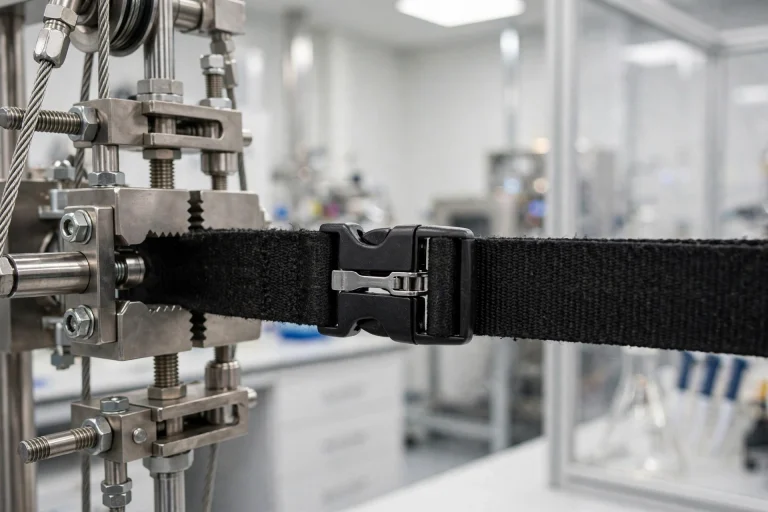
Testers also inspect the helmet for damage. They check whether the shell cracked or split, whether the liner crushed evenly or was punched through, and whether the straps and buckles held. A helmet that stays in one piece but shows a cracked shell has still failed in an important way, because a cracked shell cannot spread force properly in a real crash.
Why drop a helmet more than once?
A helmet is dropped more than once because a single drop only tests one spot. A real crash can strike any part of the helmet, so the crown, the sides, the front, and the back all need to be checked. Each drop tests a different impact zone, and a helmet must pass in all of them to meet the standard.
Multiple drops also show whether the helmet is consistent. A helmet that protects well at the crown but poorly at the side would be a weak helmet in a real crash, even if its first test looked good. Testing several points gives a fuller picture of how the helmet will behave, and it catches designs that are strong in one place and weak in another.
What does a drop test not tell you?
A drop test does not tell you everything about a helmet. It tests a straight, controlled impact onto a hard surface, but real crashes are often angled, involve sliding, or happen on softer or uneven surfaces. A drop test also does not show how the helmet will feel after hours of wear, how well it ventilates, or how it handles repeated small knocks over time.
Drop tests are also done on new helmets in a laboratory, not on old helmets that have been worn for years. Age, heat, sunlight, and everyday wear can all change how a helmet performs, and a drop test cannot capture that. That is why a drop test result is a useful starting point, but not the whole story about a helmet’s safety.
How should riders use drop test results?
Riders should use drop test results as one factor among several when choosing a helmet. A helmet that meets a recognised standard has passed drop tests, and that is a good baseline: it means the shell and liner can handle a basic impact. But the best helmet for you is also one that fits well, is comfortable enough to wear every time, and suits the kind of riding or work you do.
Some helmets also include systems designed to reduce twisting forces in angled impacts, such as MIPS, which drop tests alone do not fully capture. When you compare helmets, look at the standard they meet, the fit, the coverage, and any extra protection features, rather than relying on a single test result. A helmet that passes its tests and fits you properly is the one that will protect you best.
Is a drop test the same as a crash test?
Not quite. A drop test is one kind of crash test, focused on a straight fall onto a hard surface. Full crash testing can include angled impacts, sliding, and other conditions that a simple drop test does not cover.
Can a helmet pass a drop test and still fail in a real crash?
Yes, in general terms. A drop test checks a controlled impact, while a real crash can be angled, involve different surfaces, or be much harder. Passing the test is a minimum standard, not a guarantee.
Should I drop test my own helmet at home?
No. Dropping your own helmet to test it can damage the liner, even if the shell looks fine. A helmet that has been dropped hard should be checked carefully, and a helmet that has been in a crash should be replaced.

Olivia
Writer at Helmet Today, covering helmet reviews, fit and riding safety.