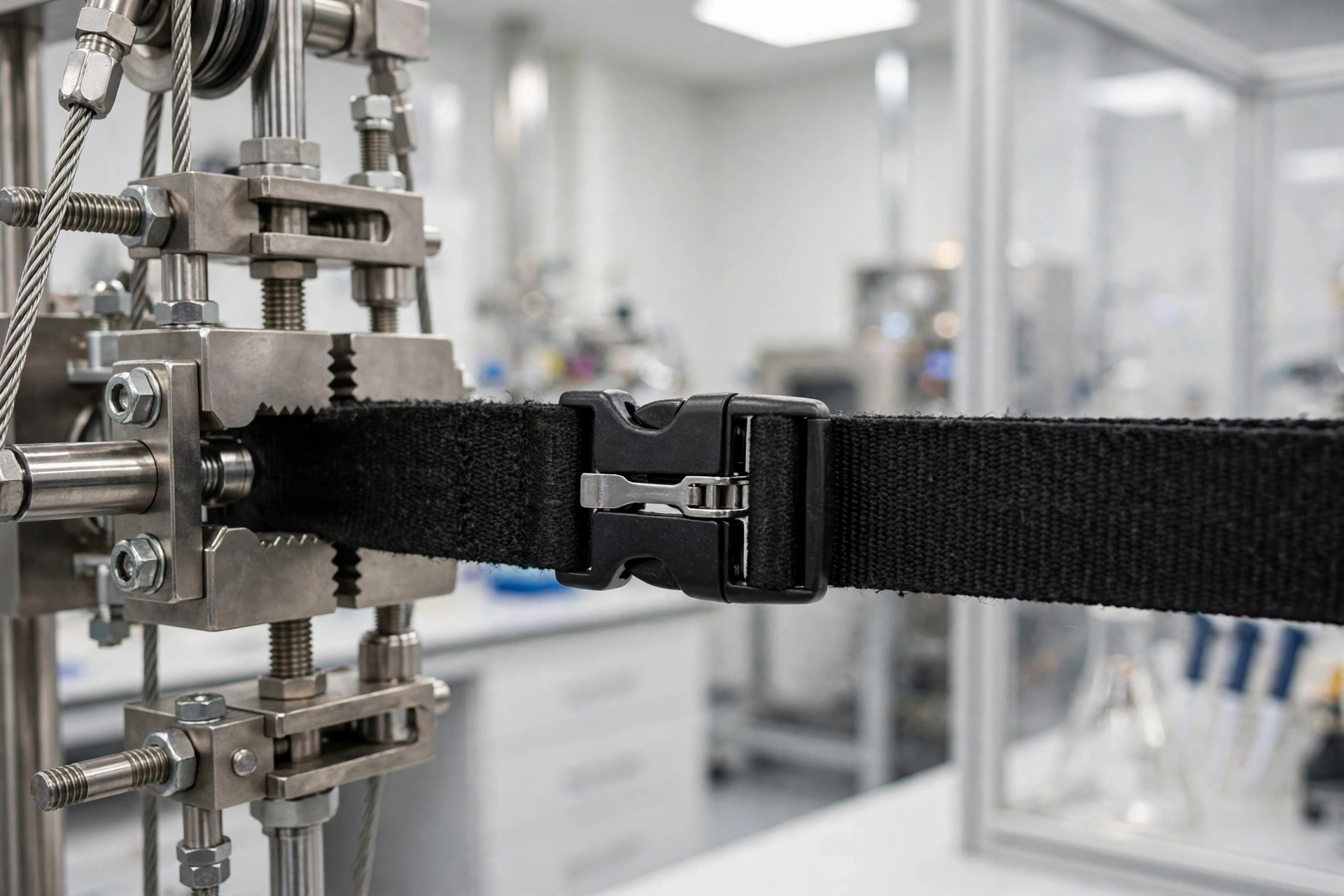
A helmet chin strap strength test is a laboratory check in which the chin strap is pulled with force to see whether it, the buckle, and its fittings can hold without breaking or coming loose. The test copies the kind of sudden tug a strap suffers in a crash, when the helmet is pulled hard against the head. If the strap stretches too far, the buckle slips, or a fitting breaks, the helmet fails, because a strap that gives way cannot keep the helmet in place.
The chin strap is easy to overlook when you buy a helmet. Most riders focus on the shell and the liner, and the strap feels like a simple piece of webbing with a buckle. In a crash, though, the strap is what keeps the helmet on the head, and a helmet that comes off is no protection at all. That is why labs test the strap as carefully as they test the shell.
How is a chin strap strength test carried out?
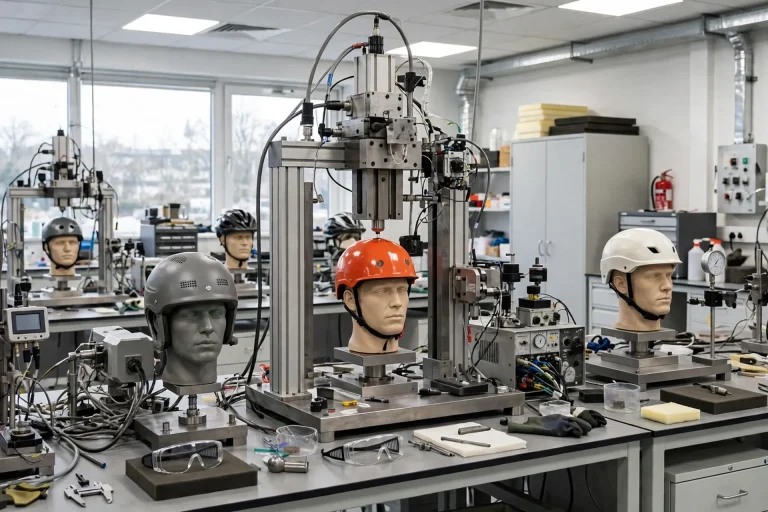
In general terms, the test starts with a helmet fitted onto a headform and the chin strap fastened just as a rider would fasten it. The lab then applies a steady pull to the strap, increasing the force until it reaches the level set by the standard. The pull is applied through the buckle and the strap, so every part of the fastening system is tested at once, not just the webbing on its own.
What parts of the strap system are tested?
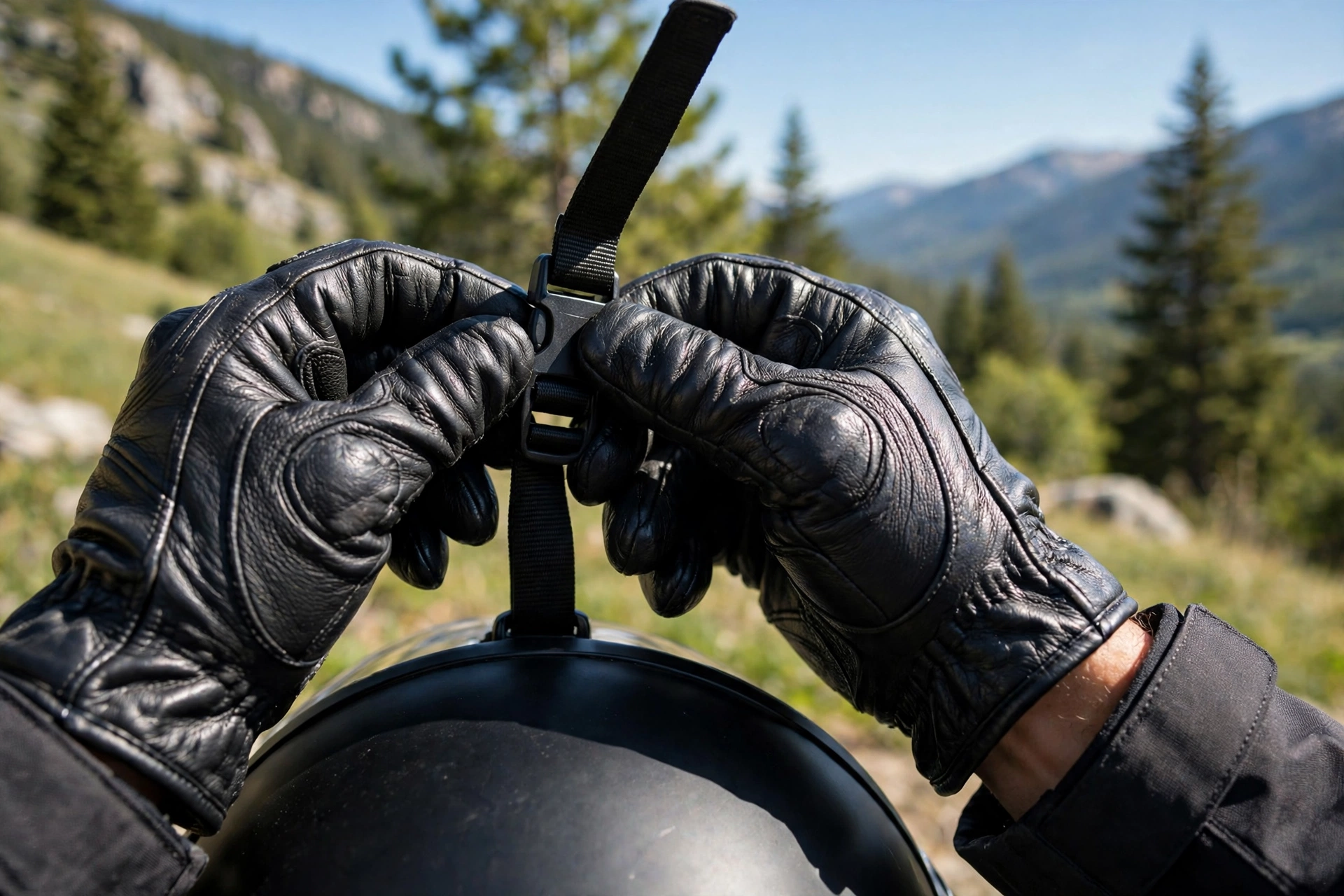
The webbing itself is the first part to be checked. It is the woven band that runs under the chin, and it needs to be strong enough to take a hard pull without tearing or fraying. The lab looks for thin spots, worn edges, or weak weave, and it checks that the webbing is wide enough to spread the load under the chin rather than cutting in like a cord.
Why does strap strength matter so much?
In a crash, the helmet is thrown about by forces that try to pull it off the head. The shell and liner can only protect the head if the helmet stays in place, and the strap is the only thing holding it there. A strap that breaks or slips lets the helmet roll forward over the eyes, slide backwards, or come off entirely, leaving the head unprotected at the worst possible moment.
Strap strength also matters in a roll-off, which is what happens when a crash twists the helmet rather than pulling it straight off. A glancing blow can catch the edge of the helmet and try to roll it off the head, and the strap has to resist that rolling motion. Labs sometimes test for roll-off directly, by applying a force to the back or front of the helmet and seeing whether the strap holds it in place.
For the rider, a strong strap is also a matter of confidence. A strap that feels solid when you fasten it, and that stays snug without slipping, tells you the helmet will stay put. A strap that loosens on its own, or a buckle that feels flimsy, is a warning sign, even if the helmet passed its lab tests when it was new.
What makes a chin strap fail the test?
The most common failure is stitching that comes apart. The strap is stitched to the shell or to an anchor tab, and if the stitching is too sparse, too weak, or placed in the wrong spot, it can tear under load. This is why labs look closely at the stitching after the test, even when the strap itself holds, because a few broken stitches are a sign that the joint is close to failing.
How can you check your own chin strap?
You can check your strap at home without any lab equipment. Fasten the helmet as you would for a ride, then try to roll it off your head by pushing the front up and the back down. The helmet should stay put, and the strap should feel snug under your chin without choking you. If the helmet rolls forward over your eyes, the strap is too loose or too weak.
Look at the strap closely every so often. Check the webbing for fraying, thinning, or cuts, and check the stitching where the strap meets the shell. Look at the buckle too, and make sure it clicks shut firmly and does not slip when you tug on it. If the buckle feels loose, or the strap slides through it when you pull, it is time to replace the helmet or have the strap repaired by the maker.
Keep the strap clean and dry, because dirt, sweat, and moisture can weaken webbing over time. Wash it gently with mild soap and water, and let it dry naturally away from direct heat. Never use harsh chemicals on a strap, and never leave a helmet hanging by its strap for long periods, because the constant pull can stretch the webbing and loosen the stitching.
Does the strap affect anything else in the helmet?
The strap works together with the rest of the retention system, including the fit pads and the liner. A helmet that fits well puts less strain on the strap, because the shell sits snugly on the head and does not try to move around. A helmet that is too big, on the other hand, will pull on the strap every time you move, and that constant strain can wear the strap out faster.
The strap also works with the liner system inside the helmet. A modern liner, such as a MIPS liner, is designed to move slightly against the shell in a crash, and the strap has to hold the helmet in place while that movement happens. The two systems are designed to work together, and a good helmet is tested as a whole, not as separate parts.
Finally, the strap affects comfort, and comfort affects safety. A strap that digs in, rubs, or pinches will tempt a rider to wear it loose, and a loose strap is a weak strap. A comfortable strap, with soft padding under the chin and smooth adjusters, is more likely to be fastened snugly every time, which is exactly what the strength test is trying to guarantee.
How often should I replace a chin strap?
In general terms, a strap should be replaced when it shows fraying, thinning, slipping, or damaged stitching, or when the buckle no longer clicks shut firmly. If the strap cannot be replaced on its own, replace the whole helmet, because a weak strap cannot keep the helmet in place.
Can I tighten a strap that keeps slipping?
You can try adjusting the sliders and re-threading the buckle, and cleaning the webbing may help if dirt is causing the slip. If the strap still slips after that, the buckle or webbing is worn, and the helmet should be checked by the maker or replaced.
Does a stronger strap make a helmet safer?
A stronger strap helps, because it keeps the helmet on the head, but it is only one part of helmet safety. The shell, the liner, and the fit all matter too, and a helmet needs all of them working together to protect the head in a crash.

Olivia
Writer at Helmet Today, covering helmet reviews, fit and riding safety.