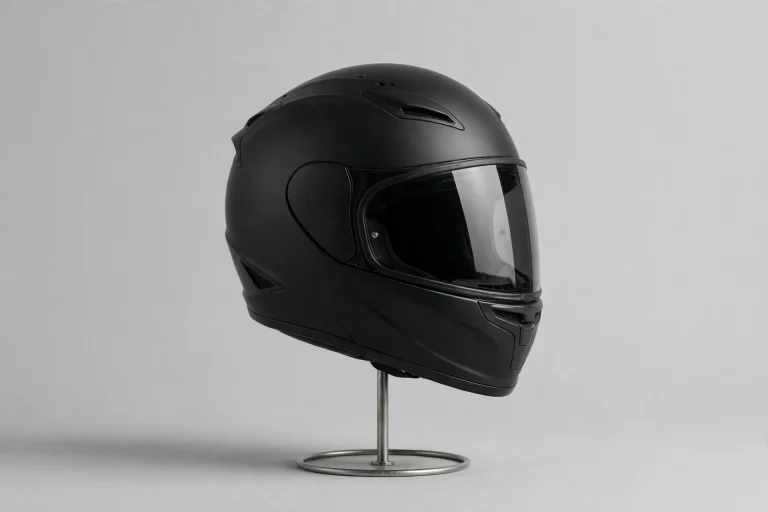
Helmet ventilation works by letting air in through vents at the front of the helmet, guiding it along channels inside the foam liner, and letting it out through vents at the back, so that a steady stream of fresh air passes over the rider’s head. In general terms, the rider’s forward movement pushes air into the helmet, and the shape of the vents and the channels controls where that air goes, carrying heat and sweat away as it flows through. Good ventilation is what keeps a helmet feeling cool and comfortable, even during hard exercise on a warm day.
How Does Air Enter a Helmet?
Air enters a helmet through the intake vents, which are the openings at the front and on top of the shell. As the rider moves forward, the air in front of the helmet is pushed into these openings, and the shape of the vent helps to scoop the air in and direct it inside. The front vents are usually placed where the airflow is strongest, such as above the brow and along the top of the helmet, so that they catch as much air as possible.
Some helmets have vents that can be opened or closed with a slider, which lets the rider control how much air comes in. In general terms, the intake vents are the start of the ventilation system, and without them no fresh air could get inside the helmet at all. The size and position of the front vents set how much air the helmet can take in at a given speed.
What Happens to Air Inside the Helmet?
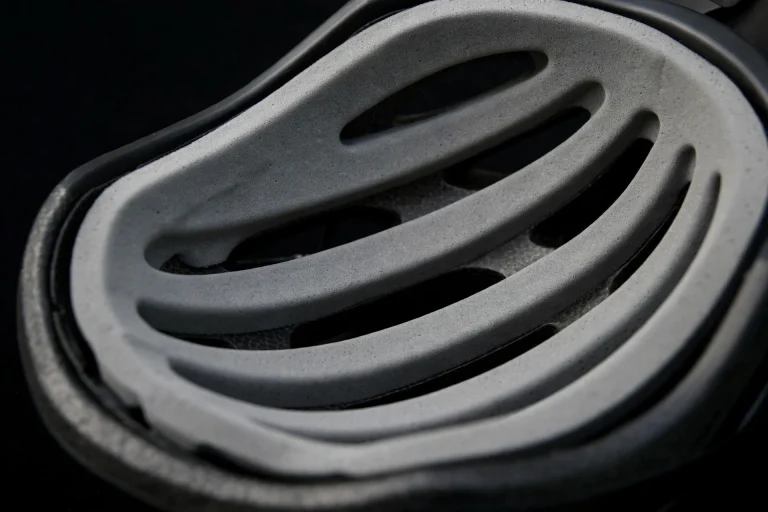
Once air is inside the helmet, it travels along channels that are moulded into the foam liner, flowing over the top and the sides of the head. These channels act like small tunnels, guiding the air from the front vents toward the back of the helmet and making sure it passes over the scalp rather than getting stuck in one place. As the air moves, it picks up warmth from the head and moisture from sweat, carrying both away.
The channels are kept clear of padding so that nothing blocks the airflow, and they are shaped to spread the air evenly across the head. In general terms, the channels are just as important as the vents themselves: a helmet with large vents but no channels would let air in without moving it across the head, and the cooling effect would be lost. The channels turn a few openings into a full ventilation system.
How Does Air Leave the Helmet?
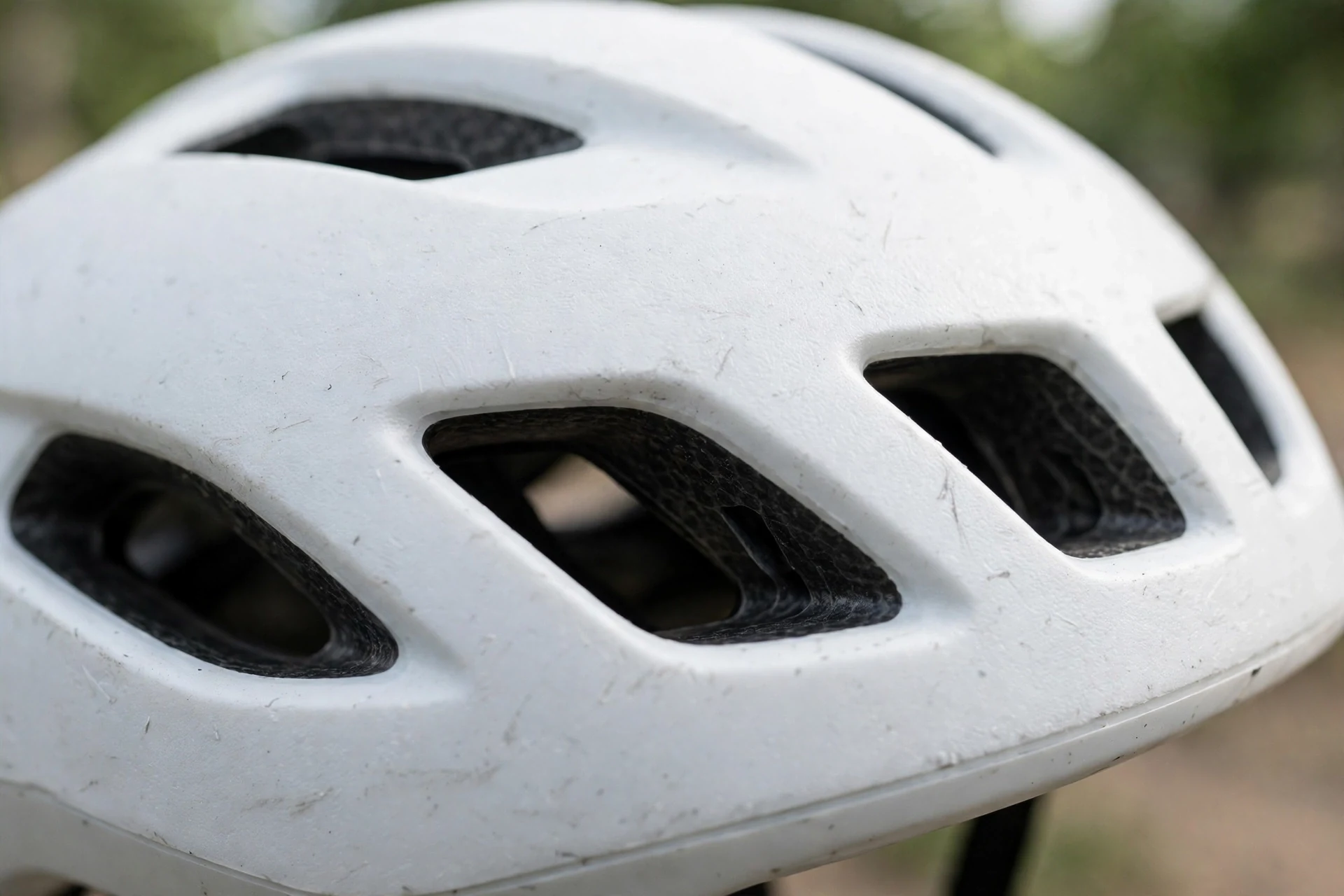
Air leaves a helmet through the exhaust vents, which are the openings at the back and the rear sides of the shell. As the rider moves forward, the air rushing past the back of the helmet creates a gentle pull that draws the warm air out through these rear vents, in the same way that opening a window at the back of a moving car pulls air through. This pull keeps the air inside the helmet moving, so fresh air keeps coming in at the front.
The exhaust vents are usually smaller than the intake vents, but their position matters more than their size, since they need to sit where the passing air can draw the warm air out. In general terms, ventilation is a flow-through system: air in at the front, across the head, and out at the back, and if any part of that path is blocked, the whole system works less well.
Why Does Speed Change Ventilation?
Speed changes ventilation because the faster a rider moves, the more air is pushed into the front vents and the stronger the pull at the rear vents. At riding speed, the airflow through the helmet is strong and the cooling effect is easy to feel, while at a standstill the air barely moves at all and the helmet quickly feels warm. This is why a helmet that feels cool on a fast road can feel hot and stuffy when the rider stops at a junction.
The shape of the vents is designed to work with the rider’s speed, catching air when moving and letting it flow smoothly. In general terms, ventilation is a moving-air system, and it depends on the rider’s motion to work. Some helmets have larger vents to make the most of low speeds, while others rely on the strong airflow of fast riding to push air through.
How Do Vents and Channels Work Together?
Vents and channels work together as one system: the vents are the doors that let air in and out, and the channels are the corridors that carry the air across the head. The front vents feed air into the channels, the channels guide it over the scalp, and the rear vents let it escape, so the air follows a clear path from the front of the helmet to the back. If the vents and the channels do not line up, the air cannot flow freely and the cooling effect drops.
Makers design the vents and the channels together, so that each front vent has a channel leading away from it and each channel ends at a rear vent. If you want to understand one of the safety technologies used in modern helmets, reading about MIPS is a good place to start, though the ventilation system is separate from the liner system. In general terms, good ventilation comes from the vents and the channels working as a matched pair, not from either one alone.
How Can You Get the Best Airflow From a Helmet?
Getting the best airflow from a helmet starts with keeping the vents and the channels clear, since dirt, mud, and insects can block the openings and stop the air from flowing. The vents should be rinsed with clean water and brushed out gently, and the channels inside the liner should be checked to make sure the padding has not slipped over them. A helmet with blocked vents will feel hot no matter how well it was designed.
It also helps to wear the helmet level and fastened snugly, so that the vents sit in the right place and the air can flow as designed. In general terms, the best airflow comes from a clean helmet that fits well and is worn correctly, with the vents open on warm days and closed only when the weather turns cold or wet.
Why does my helmet feel stuffy at low speed?
In general terms, ventilation depends on forward movement, so at low speed or at a standstill very little air flows through the helmet. The head feels stuffy because warm air is not being carried away, and the feeling passes once the rider speeds up again.
Do vent covers stop ventilation completely?
In general terms, closing the vent covers greatly reduces the airflow, since the intake vents are blocked. Some air still moves through small gaps, but a helmet with closed vents will feel much warmer than one with the vents open.
Can I improve my helmet’s ventilation?
In general terms, the best way is to keep the vents and channels clean and to wear the helmet correctly. Cutting extra holes in a helmet would weaken it and should never be done, so the ventilation a helmet has is the ventilation it was designed with.

Olivia
Writer at Helmet Today, covering helmet reviews, fit and riding safety.