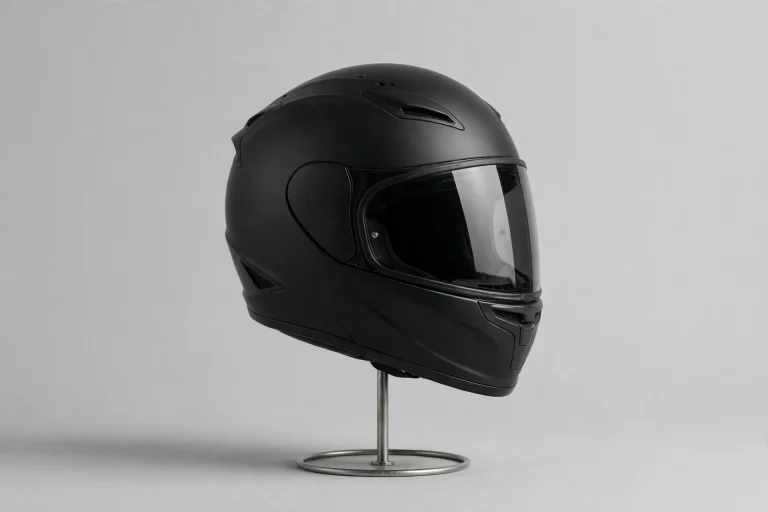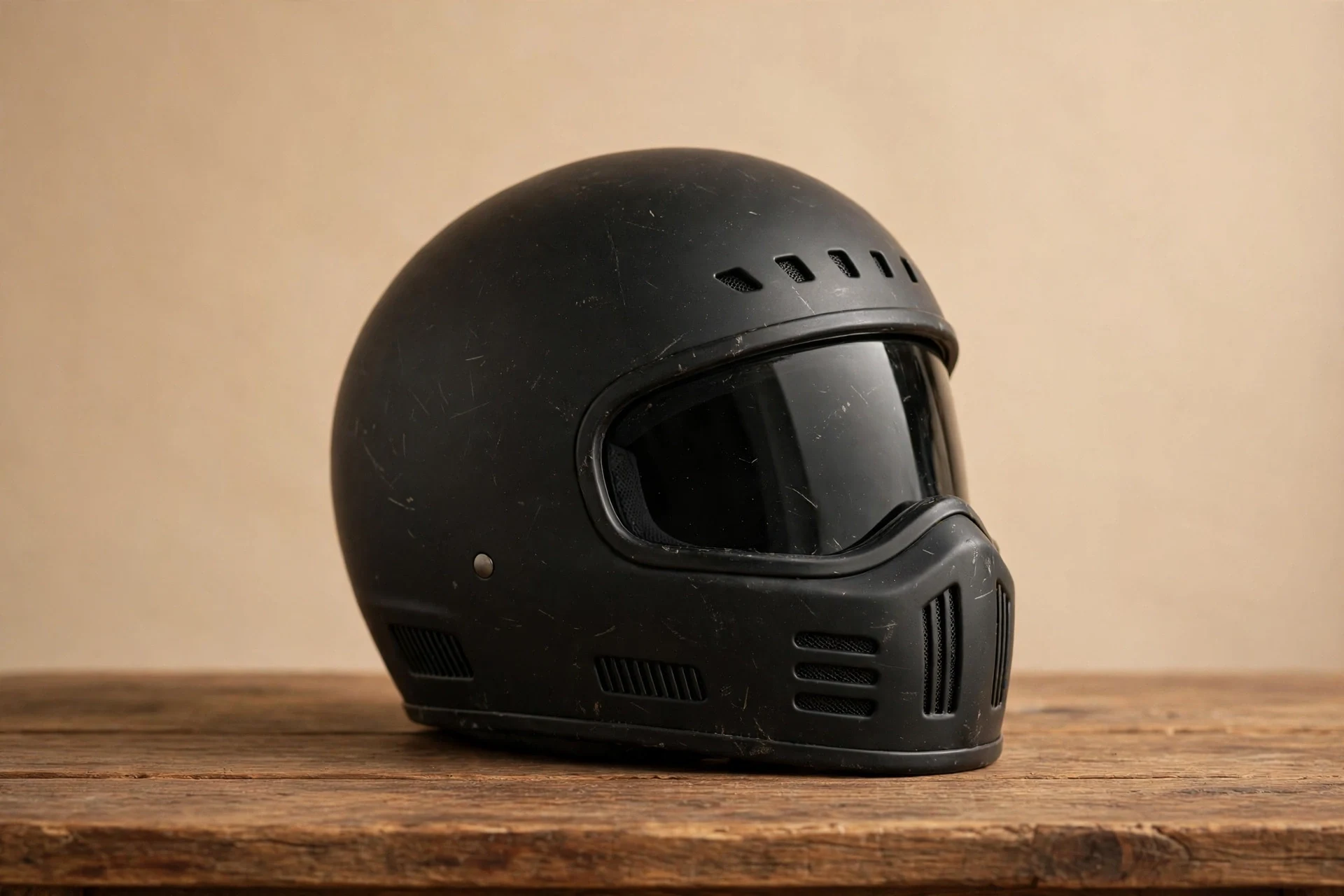
Some helmets feel heavier than others because of how their weight is balanced on the head, how well they fit, and what fittings they carry, not just because of what they weigh on a scale. In general terms, a helmet that is poorly balanced, loosely fitted, or loaded with a visor, a peak, or accessories will feel heavy and tiring, while a well-balanced helmet of the same weight can feel light and easy to wear for hours. The feeling of weight is as much about balance and fit as it is about the actual weight of the helmet.
Is It the Weight or the Balance?
When a helmet feels heavy, the cause is often its balance rather than its weight. A helmet whose weight is spread evenly around the head sits comfortably, while a helmet whose weight hangs forward or to one side pulls constantly on the neck, and that pull is what the rider feels as heaviness. Two helmets can weigh the same and yet feel very different, simply because one is balanced and the other is not.
The centre of gravity is the key: if it sits close to the centre of the head, the helmet feels stable and light, while if it sits forward, the neck has to work hard to hold the helmet level. In general terms, riders who say a helmet feels heavy are often describing an imbalance, and a helmet that feels light is usually one whose weight is well spread, even if it is not the lightest helmet available.
How Does Fit Change How Heavy a Helmet Feels?
Fit changes how heavy a helmet feels because a helmet that fits snugly stays centred on the head and shares its weight evenly, while a loose helmet slides around and its weight shifts with every movement. When a helmet rocks forward or backward, the neck has to correct it constantly, which is tiring and makes the helmet feel heavier than it is. A helmet that is too tight, on the other hand, presses on the head and creates pressure points that make the weight feel worse.
The padding plays a part too, since worn or flattened padding lets the helmet sit unevenly and changes where its weight rests. In general terms, a well-fitted helmet feels lighter because its weight is carried evenly by the whole head, while a poorly fitted helmet concentrates its weight on a few spots and feels heavy very quickly. Trying a helmet on for several minutes is the best way to judge how it will feel.
Why Does Padding Matter for How Heavy a Helmet Feels?
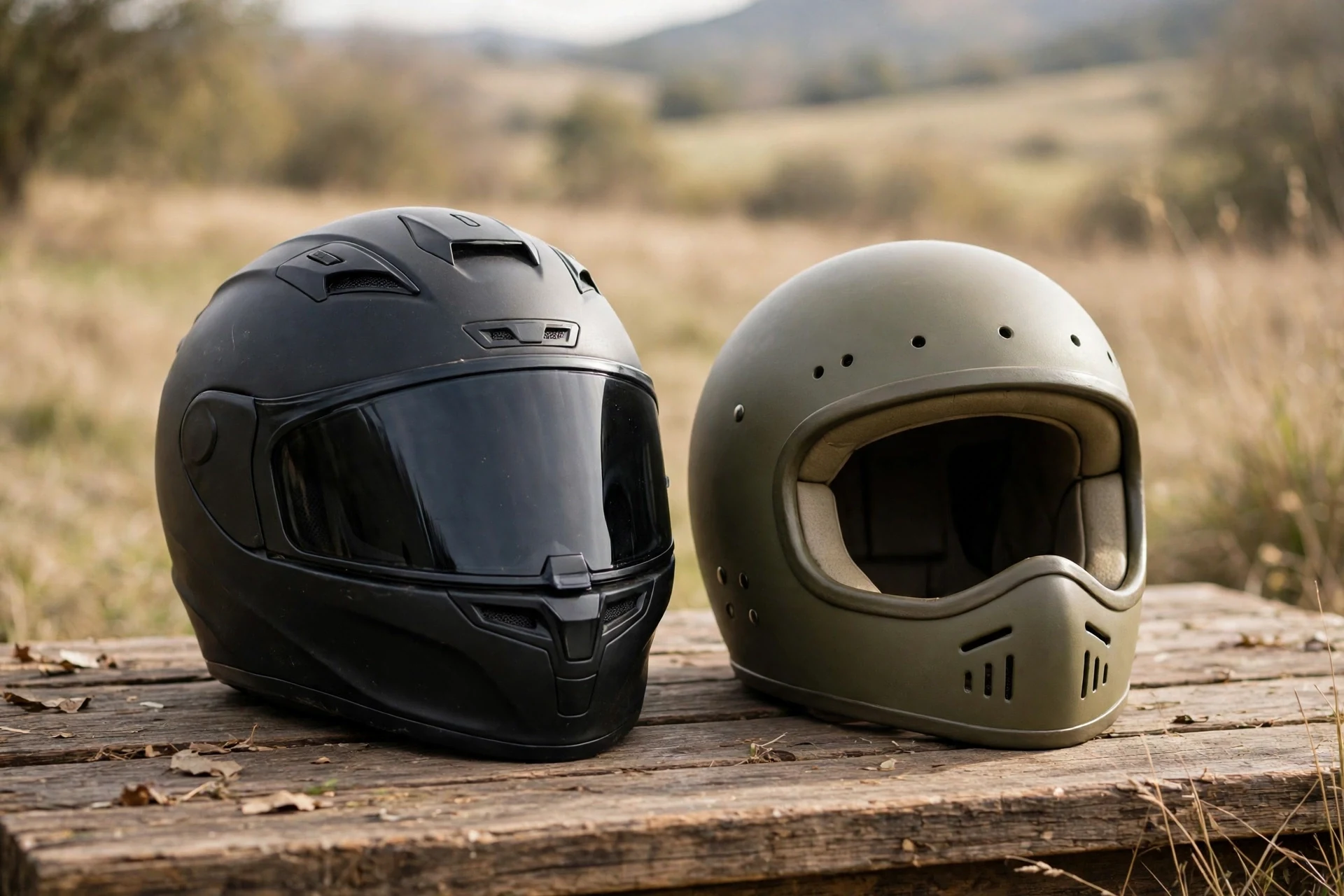
Padding matters for how heavy a helmet feels because it is the layer that spreads the helmet’s weight across the head. Thick, even padding shares the load over a wide area, so no single point carries too much weight and the helmet feels comfortable. Thin, flattened, or uneven padding lets the helmet press on a few spots, which makes the weight feel concentrated and the helmet feel heavier.
Padding also affects stability: fresh, springy padding holds the helmet firmly in place, while worn padding lets it move around and shift its weight. In general terms, padding that is in good condition makes a helmet feel lighter, while padding that has gone flat or hard makes the same helmet feel heavier. Replacing worn padding can make an old helmet feel noticeably lighter without changing its weight at all.
Do Visors and Accessories Add to the Feeling of Weight?
Visors and accessories add to the feeling of weight because they add real weight in places that can unbalance the helmet. A large visor adds weight at the front, a peak catches the wind and pulls the helmet forward, and a camera or a light mounted on one side pulls the helmet sideways. Each of these adds only a little weight on its own, but together they can change how the helmet balances and how heavy it feels.
The position of the accessory matters as much as its weight: a camera mounted high on the helmet pulls differently from one mounted low, and a device on one side unbalances the helmet more than one in the centre. If you want to understand one of the safety technologies used in modern helmets, reading about MIPS is a good place to start, though the feeling of weight is a separate question from the liner system. In general terms, keeping accessories light and central helps a helmet keep its balance.
Why Do Helmets Feel Heavier Over Time?
Helmets often feel heavier over time because the neck muscles tire during a long ride, and tired muscles notice the helmet’s weight far more than fresh ones do. At the start of a ride the neck is strong and the helmet feels light, but after hours of holding the head level, the same helmet can feel like a burden. This is normal, and it happens with every helmet, though a balanced helmet will feel lighter for longer.
The helmet itself can also change over time: padding flattens, straps stretch, and fittings loosen, which can make the helmet sit unevenly and feel heavier. In general terms, a helmet that feels heavier than it used to may need fresh padding or a refit, or it may simply be that the rider is tired. Regular breaks and a well-fitted helmet make a long ride far more comfortable.
How Do You Choose a Helmet That Feels Light?
Choosing a helmet that feels light starts with trying it on and wearing it for several minutes, moving the head from side to side and up and down to see how it balances. A good helmet should feel even and stable, with no pull forward or to one side, and it should stay in place without needing to be held. It is worth trying several helmets, since two helmets of the same weight can feel very different once they are on the head.
It is also worth checking the fit and the padding, and thinking about the fittings that will be used, since a visor, a peak, or a mounted device will change how the helmet feels. In general terms, the lightest-feeling helmet is usually the one that fits best and balances best, rather than simply the one that weighs least on a scale. Comfort over a long ride matters more than a small difference in weight.
Should I choose the lightest helmet I can find?
In general terms, a light helmet is a good start, but balance and fit matter just as much. A slightly heavier helmet that fits well and balances evenly will often feel lighter on a long ride than the lightest helmet that fits poorly.
Why does my new helmet feel heavier than my old one?
In general terms, a new helmet has fresh, firm padding that holds it differently on the head, and the fit may not be broken in yet. After a few rides the padding settles and the helmet often starts to feel lighter and more natural.
Can a heavy-feeling helmet be fixed?
In general terms, sometimes. Adjusting the fit, replacing worn padding, or removing a heavy accessory can improve the balance. If the helmet still feels heavy after that, a different model with better balance may be the answer.

Olivia
Writer at Helmet Today, covering helmet reviews, fit and riding safety.