You should replace a helmet liner when the padding is flattened, torn, loose, or smelly, when the helmet no longer fits snugly, or when the liner itself is cracked or crumbling. The liner is the padding inside the shell that makes the helmet comfortable and helps it sit correctly on your head. When it wears out, the helmet fits worse and protects less well, even if the shell still looks fine.
It helps to know that a helmet has two kinds of liner. The comfort liner is the soft padding that touches your head, and in many helmets it can be removed, washed, and replaced. The impact liner is the firm foam underneath, which absorbs energy in a crash and cannot be replaced in the same way. This guide covers both, so you can tell which one needs attention and what to do about it.
What is a helmet liner?
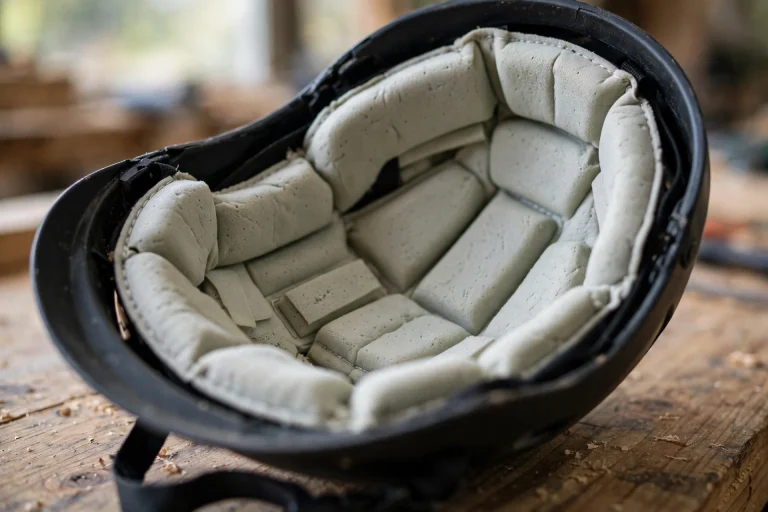
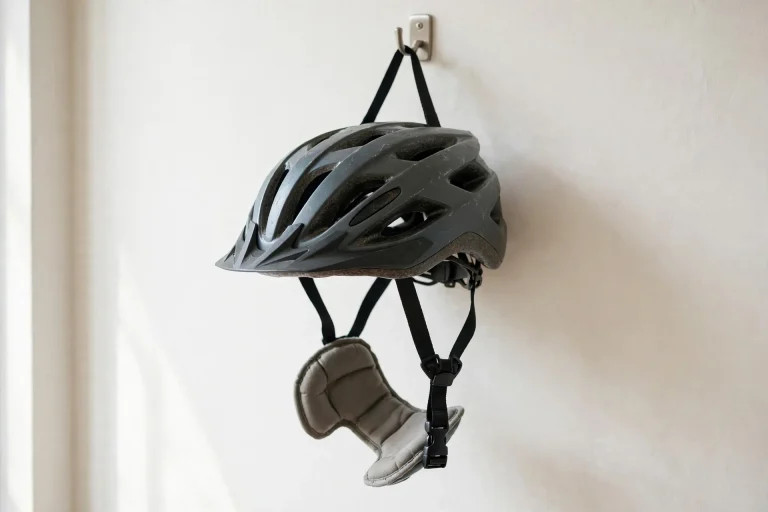
A helmet liner is the layer of material inside the hard outer shell. The comfort liner is usually made of soft fabric-covered foam pads that sit against your forehead, temples, and the back of your head. Its job is to make the helmet comfortable, to wick away sweat, and to help the helmet grip your head so it stays in place. In many helmets, these pads are held in by press studs or hook-and-loop fasteners and can be taken out for washing.
Underneath the comfort liner sits the impact liner, a firm foam layer bonded to the inside of the shell. Its job is to crush slowly in a crash and absorb the force before it reaches your head. The impact liner is the main protective part of the helmet, and it is not meant to be removed or replaced by the wearer. Knowing which liner you are looking at is the first step in deciding what needs replacing.
How do you know a comfort liner needs replacing?
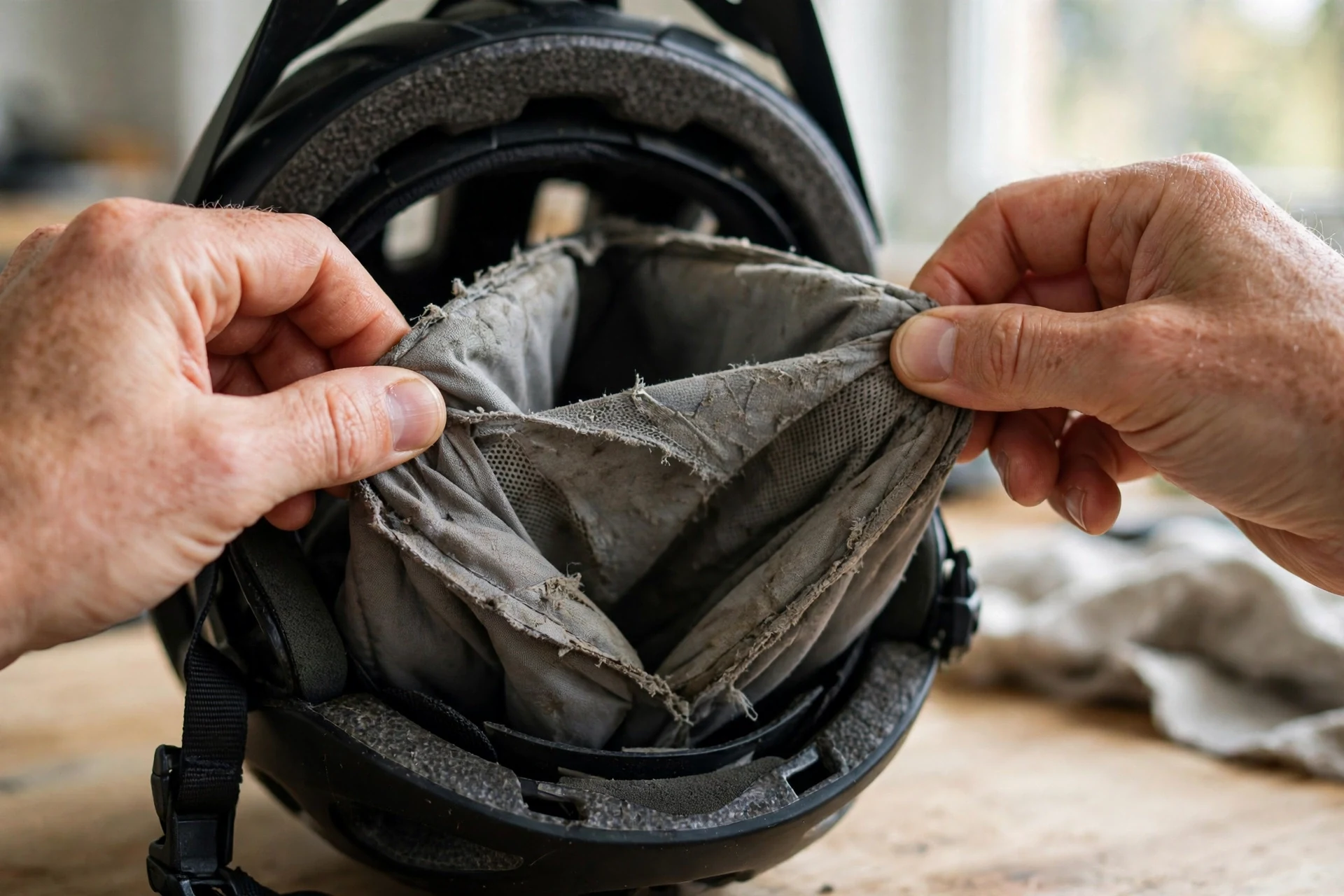
A comfort liner needs replacing when it no longer does its job. The most obvious sign is flattened padding: pads that have gone thin and hard no longer cushion your head, and the helmet may feel loose or start to rock about. Torn fabric, pads that have come unstuck, or stitching that has come apart are also clear signs. If the liner smells bad even after washing, the foam inside the pads has likely broken down.
Fit is the best test. Put the helmet on and check whether it still sits level and snug, without sliding forward or back when you nod your head. If it feels loose and new pads are available from the maker, a fresh comfort liner can often restore the fit. Check the maker’s guidance for your model, as liners vary in shape and fastening, and the wrong pads will not sit correctly. Wash removable liners gently with mild soap and let them dry naturally, away from direct heat.
Can you replace the impact liner?
No, in general terms you cannot replace the impact liner, because it is bonded to the shell and forms part of the helmet’s safety structure. If the impact foam is cracked, crumbling, dented, or has gone hard with age, the helmet itself needs replacing. Trying to glue in new foam or pad over the damage will not restore the helmet’s protection, and it can change how the helmet fits and works in a crash.
The impact liner also needs replacing, in the sense of a new helmet, after any hard knock or fall. The foam absorbs energy by crushing, and once it has crushed it cannot spring back to full strength. This damage is often invisible from the outside, which is why a helmet that has taken a hard hit should be replaced even if the shell looks fine. Some helmets include a system designed to reduce rotational forces in a fall, such as MIPS, and that system sits within the liner assembly too, so damage to the liner affects the whole system.
How often should you check your helmet liner?
Check your helmet liner every few months, and always after a fall, a hard knock, or a long period of heavy use. Take out the removable comfort pads and look at them in good light. Press them gently to feel whether they still have spring, and look for flattening, tears, or loose fasteners. Then look at the impact foam underneath for cracks, dents, or pieces coming away from the shell.
It also helps to check the liner when you clean the helmet. A regular wash of the removable pads keeps them fresh and lets you spot wear early, before it affects the fit. If you use your helmet every day, check the liner more often, as sweat and constant pressure wear the pads out faster. Keep a note of when you bought the helmet, so you can judge how much use the liner has had.
Where do you get a replacement liner?
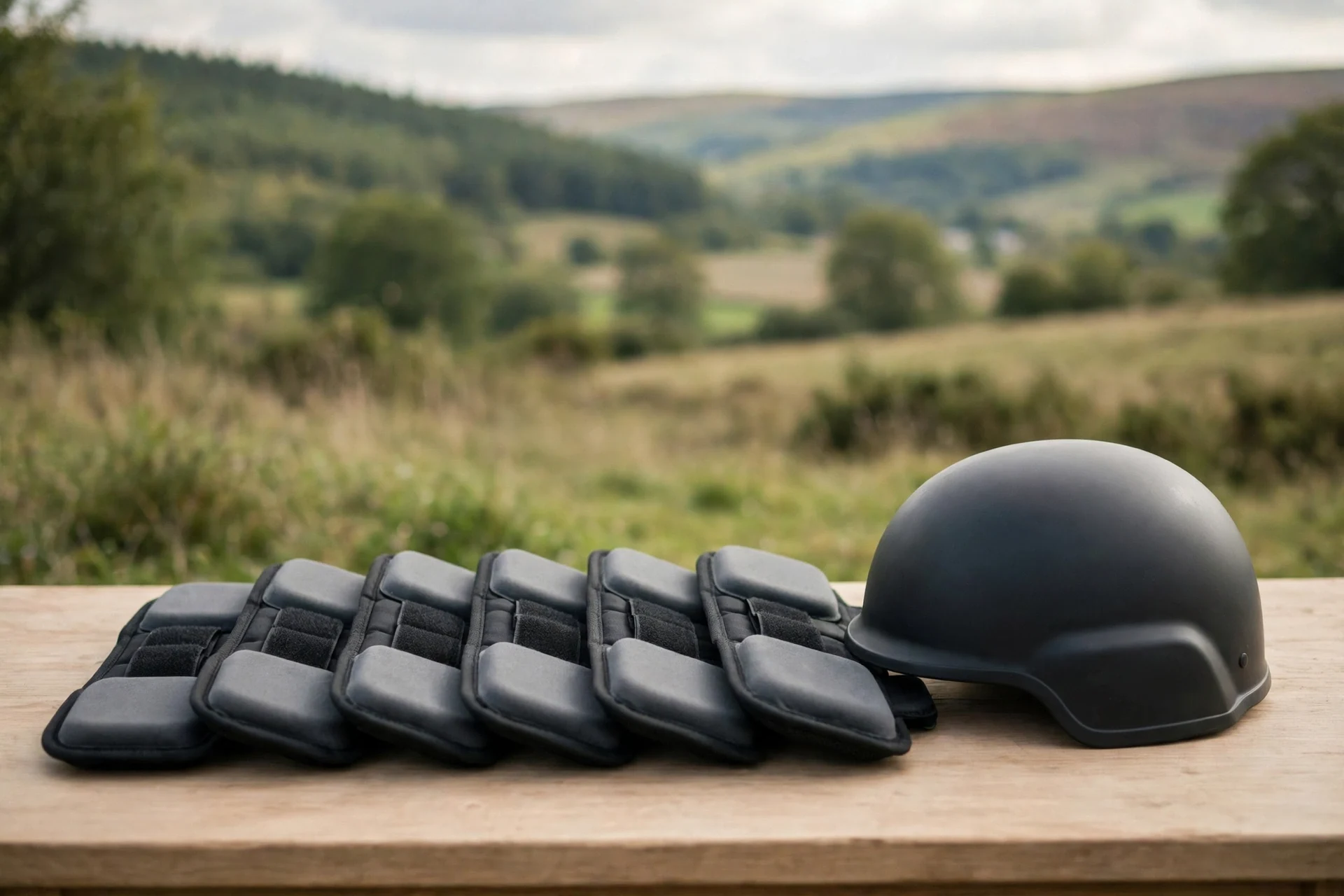
Replacement comfort liners usually come from the helmet maker or an authorised dealer, and they are made to fit a specific model and size. Check the maker’s website or ask a specialist retailer, and have your helmet model and size ready when you ask. Fitting the correct liner matters: a liner made for another model may not sit properly, and a poor fit can make the helmet less comfortable and less secure.
When you fit a new liner, follow the maker’s instructions and make sure every pad is in the right place and fastened firmly. Then try the helmet on and check that it sits level, feels snug all round, and stays put when you move your head. If a replacement liner is no longer available for an older helmet, that is often a sign that the helmet itself is due for replacement, as the rest of the helmet will have aged alongside the liner.
What happens if you keep using a worn liner?
Keeping a worn liner in use usually means a worse fit, and a worse fit means less protection. A helmet with flattened pads can slide about on your head, sit too high on your forehead, or twist in a fall, leaving part of your head exposed. It can also be uncomfortable, which tempts people to wear the helmet loosely or leave the strap undone, and that makes things worse.
A worn liner can also hide damage. Torn pads can cover cracks in the foam underneath, and a bad smell can point to padding that has broken down and is holding damp against the foam. Replacing the comfort liner is a small job and a small cost, and it keeps the helmet fitting as it should. But if the impact liner underneath is damaged, no new comfort liner will fix it, and the helmet should be replaced.
Can I wash a helmet liner instead of replacing it?
Yes, removable comfort liners can usually be washed gently with mild soap and water, then dried naturally away from direct heat. Washing helps with sweat and smells, but it will not restore padding that is flattened, torn, or worn thin.
How do I know if my liner is removable?
Look for pads held in by press studs or hook-and-loop fasteners, and check the maker’s guidance for your model. If the pads are glued in or form part of the foam shell, they are not meant to be removed.
Should I replace the liner or the whole helmet?
Replace just the comfort liner when the pads are worn but the shell and impact foam are sound. Replace the whole helmet when the impact foam is damaged, the shell is cracked, or the helmet has taken a hard knock.

Olivia
Writer at Helmet Today, covering helmet reviews, fit and riding safety.