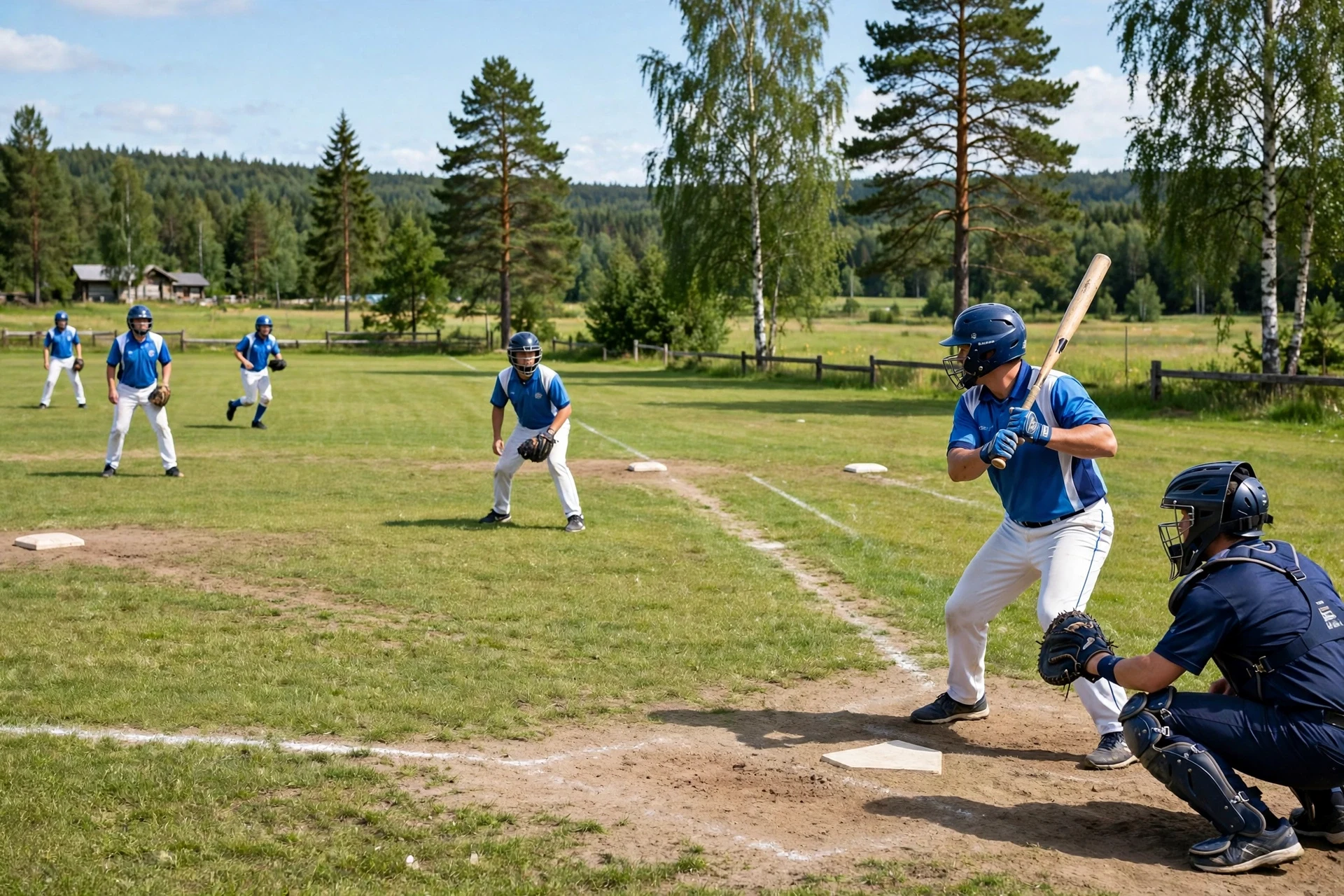
A helmet for pesäpallo is a protective helmet worn by players of the Finnish bat-and-ball game, mainly by batters and runners, to protect the head from a pitched ball and from falls on the field. Pesäpallo is Finland’s national bat-and-ball game, played on a grass or sand field with a bat, a ball, and bases, and it moves quickly. Because the ball is pitched underarm toward the batter at close range, a helmet is an important part of the kit for those at the plate.
Pesäpallo is often compared with baseball, but the games are quite different. In pesäpallo, the ball is pitched vertically, straight up, and the batter hits it as it drops, which makes for fast, tactical play with lots of running between bases. Players also field close to the batter, so everyone on the field needs to stay alert. The helmet is one of the simplest and most effective pieces of protection in the game.
What is pesäpallo?
Pesäpallo is a Finnish bat-and-ball team game, played outdoors on a field with bases laid out in a zigzag pattern rather than the diamond used in baseball. Two teams take turns batting and fielding, and the batting team scores runs by hitting the ball and running around the bases. The pitcher stands close to the batter and throws the ball up vertically, and the batter must hit it into the field of play.
The game is fast and tactical, with short, sharp hits, quick running, and close fielding. It is played at club level all over Finland and is popular with school and youth teams too. Because the pitcher stands near the batter and the ball is hit hard at close range, the pace of play is high, and that is why head protection matters for the players most exposed to the ball.
Who wears a helmet in pesäpallo?
Batters wear helmets in pesäpallo, and so do runners on the bases, as they are the players closest to the ball and most at risk of being struck. The batter stands at the plate while the ball is pitched up and then hit, so a helmet guards against a mistimed pitch or a ball that comes back off the bat. Runners wear helmets too, because they move between bases while the ball is in play and can be hit by a thrown or batted ball.
Fielders, on the other hand, do not always wear helmets, as they stand further from the plate and need a clear view and freedom to move. In youth and junior games, helmets are more widely worn, and coaches often ask young players to wear them whenever they bat or run. The general rule is simple: if you are batting or running, wear a helmet; if you are fielding, follow your team’s and your league’s guidance on what to wear.
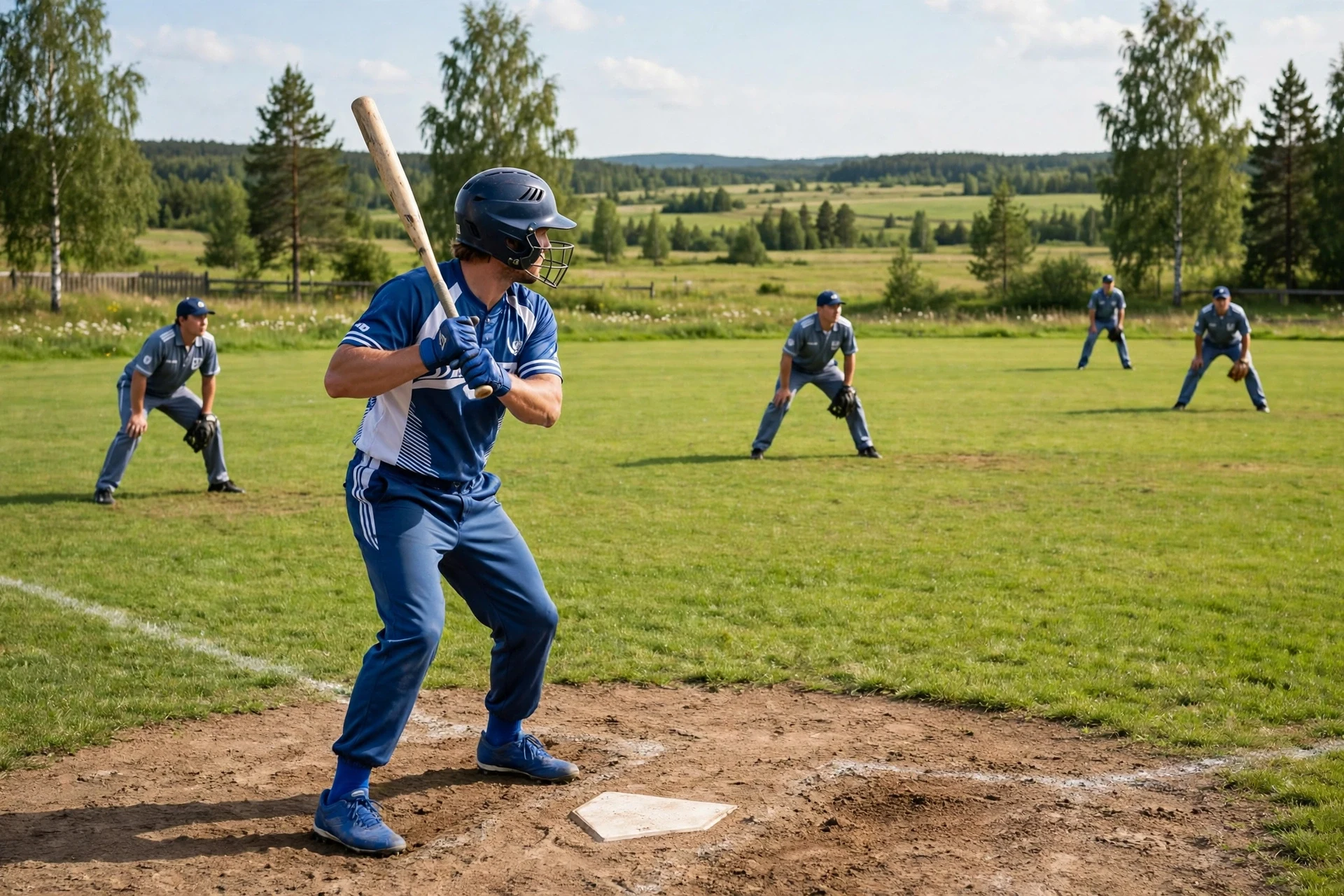
What does a pesäpallo helmet look like?
A pesäpallo helmet looks much like a batting helmet used in other bat-and-ball games. It is a hard-shell helmet that covers the top, sides, and back of the head, with an ear guard on one or both sides to protect the ear facing the pitcher. The shell is smooth and low-profile, so it stays out of the way when the batter swings, and it has a secure fit so it does not shift during a run.
The helmet is usually made of a tough plastic shell with foam padding inside, and it fastens with a chin strap or a snug, adjustable fit. Some helmets have small vents to keep the player cool in summer games, and many are worn in team colours. The key features are a hard shell that can take a knock from a ball, padding that sits comfortably against the head, and a fit that stays put when the player runs the bases.
How should a pesäpallo helmet fit?
A pesäpallo helmet should fit snugly all round, without pressing painfully on the forehead or temples. It should sit level on the head, low enough at the front to protect the forehead, and it should not tip forward over the eyes or slide back when you run. The ear guard should sit over the ear facing the pitcher, and the helmet should feel secure when you shake your head gently.
Fit is best checked in the shop, wearing your hair the way you will wear it in a game. Try the helmet on, take a few practice swings, and jog a short distance to see if it stays put. A helmet that is too loose can shift when you run and protect less well, while one that is too tight will give you a headache long before the game ends. If you are unsure about the fit, ask your coach or a sports shop to check it for you.
How do you look after a pesäpallo helmet?
After a game, wipe the shell with a damp cloth to remove dirt and grass, and let the inside dry naturally, away from direct heat. Do not leave the helmet in a hot car or in strong sun, as heat can damage the shell and the padding over time. Check the helmet after every game for cracks, dents, or loose padding, and check the chin strap and fasteners for wear.
Replace the helmet if it has taken a hard knock from a ball, if the shell is cracked, or if the padding has flattened so much that the fit has become loose. In general terms, a helmet that has protected you in a hard impact should not be relied on again. Some helmets include a system designed to reduce rotational forces in a fall, such as MIPS, though this is more common in cycling and riding helmets than in batting helmets, so check what your helmet offers when you buy.
Do young players need a pesäpallo helmet?
Yes, young players need a pesäpallo helmet whenever they bat or run, and many youth leagues and clubs ask them to wear one as part of the kit. Young players are still learning the game, and mistimed hits and loose throws are more common, so the risk of being struck by the ball is higher. A well-fitting helmet gives them confidence at the plate and lets them focus on the game.
Parents and coaches should check that a young player’s helmet fits properly and is in good condition before each season, and replace it as the player grows. A helmet that is too small will press uncomfortably and may not cover the head fully, while one that is too big will slide about. A helmet bought for a growing child should be checked again partway through the season, as a good fit is what makes the helmet work.
Do all pesäpallo players wear helmets?
No, batters and runners wear helmets, as they are closest to the ball. Fielders do not always wear one, and young players are often asked to wear helmets more widely. Follow your team and league guidance on who should wear one.
Can I use a baseball batting helmet for pesäpallo?
In general terms, a baseball batting helmet is similar in shape and purpose, but check with your club or league first, as they may have guidance on which helmets are suitable for pesäpallo play.
When should a pesäpallo helmet be replaced?
Replace it after a hard impact from a ball, if the shell is cracked or dented, if the padding has worn thin, or if it no longer fits snugly. Check the maker’s guidance for your helmet as well.

Olivia
Writer at Helmet Today, covering helmet reviews, fit and riding safety.