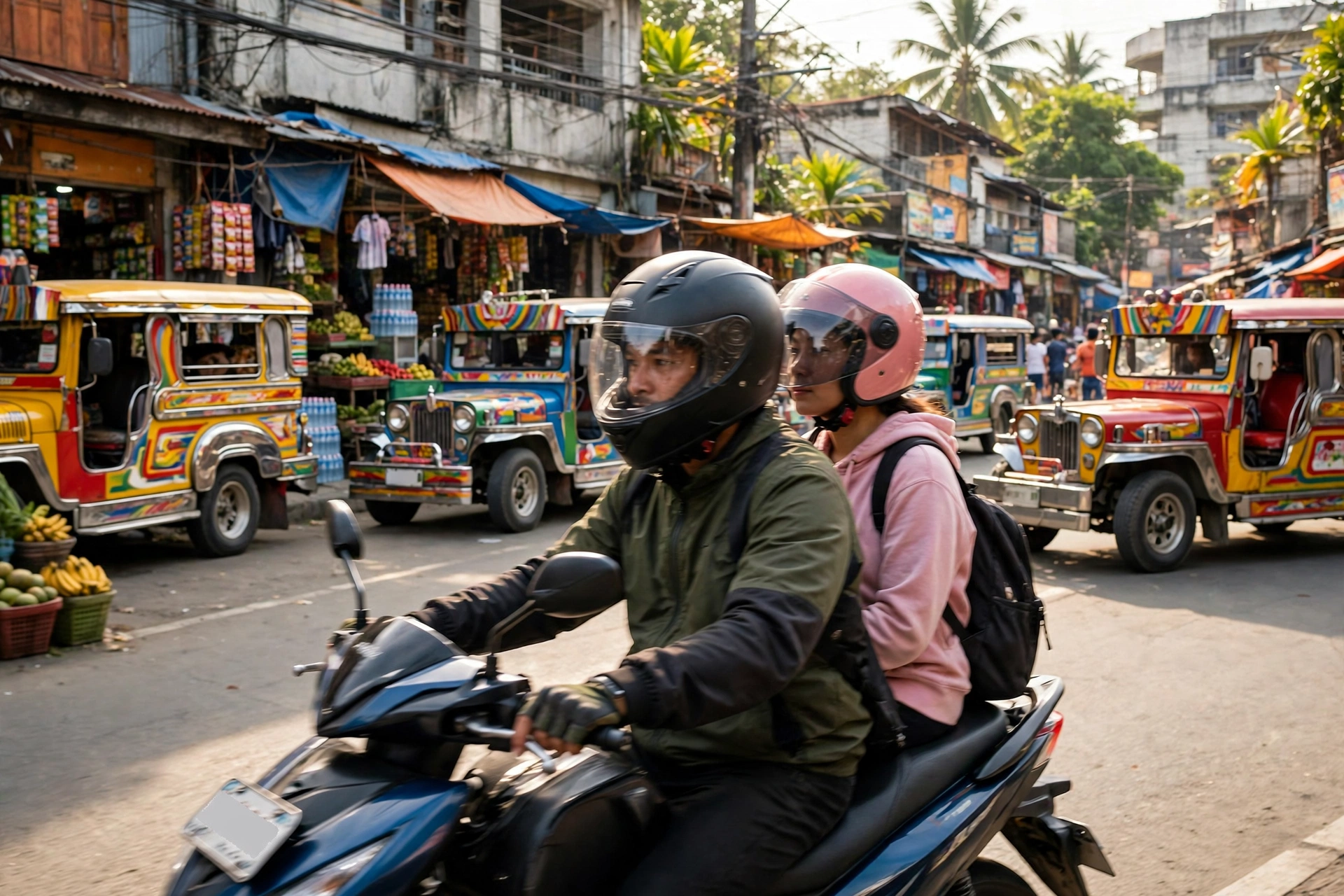
Motorcycle helmet laws in the Philippines require riders and passengers to wear a helmet when riding, and in general terms the helmet must be a proper motorcycle helmet that meets an approved safety standard. The rules apply across the country, and they cover both the person riding the motorcycle and anyone riding on the back, so a helmet is not optional for either of them.
The Philippines has a lot of motorcycles on its roads, from small scooters used for daily errands to larger bikes used for longer trips, and helmets are one of the main ways riders protect themselves. The law sets out who must wear a helmet, what kind of helmet counts, and what can happen if you are caught without one, so it is worth knowing the basics before you ride there, whether you live there or are visiting.
Who has to wear a helmet in the Philippines?
In general terms, everyone on a motorcycle in the Philippines has to wear a helmet, including the rider and any passenger. The rule applies on public roads, and it does not depend on how far you are going or how fast you plan to ride, so even a short trip to the shops calls for a helmet.
Children riding as passengers are covered by the same idea, although there are separate rules about how old a child must be to ride on a motorcycle at all, and a small child may not be allowed as a passenger in some cases. If you are carrying a passenger, you are responsible for making sure they have a helmet too, and it should fit them properly rather than being a spare that is too big or too loose.
What kind of helmet does the law require?
The law in the Philippines requires a helmet that meets an approved safety standard, and in general terms that means a proper motorcycle helmet with a hard outer shell, a protective inner lining, and a chin strap that fastens securely. A construction hard hat, a bicycle helmet, or a thin novelty helmet does not count, because it is not made to protect a motorcycle rider in a crash.
Approved helmets usually carry a mark or sticker showing that they meet the standard, and enforcement officers can check for it. A full-face helmet gives the most protection, because it covers the chin and jaw as well as the top and sides of the head, but open-face helmets that meet the standard are also widely used. Whatever style you choose, the helmet should fit well, sit level on your head, and fasten under your chin.
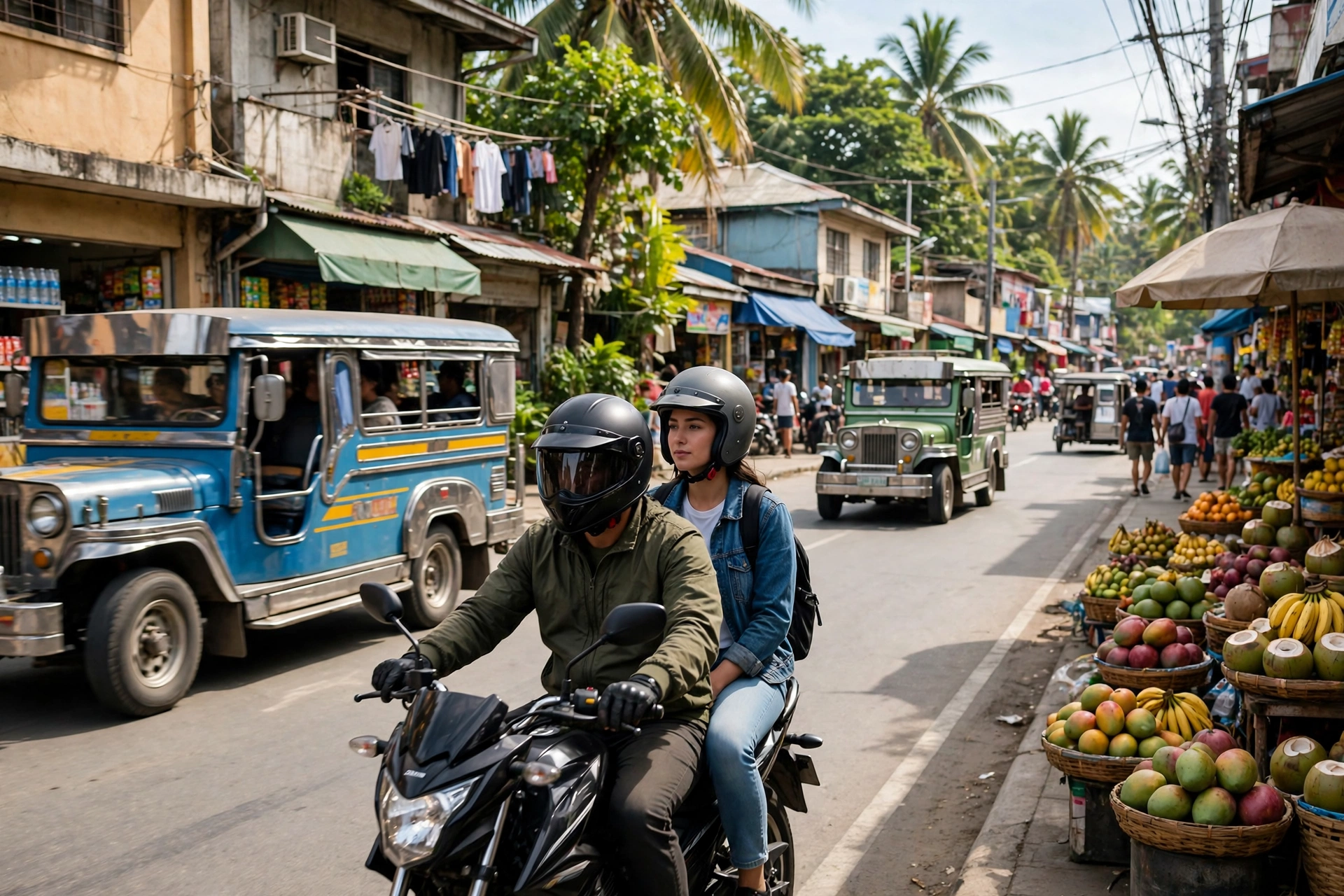
Are there fines for riding without a helmet in the Philippines?
Yes, riding without a helmet in the Philippines can lead to a fine, and the amount can increase if you are caught again. Enforcement is carried out by traffic officers and by local authorities, and in general terms the penalty applies to the rider, while a passenger without a helmet can also be penalised.
The exact amounts and procedures can change over time and can vary between areas, so it is best to check the current rules with an official source before you ride rather than relying on what someone told you months ago. Some areas also impound the motorcycle or require the rider to attend a seminar, so the cost of riding without a helmet can be more than just the fine itself.
How are the helmet laws enforced?
The helmet laws in the Philippines are enforced through roadside checks, traffic stops, and checkpoints, where officers look at whether the rider and passenger are wearing helmets and whether those helmets meet the standard. In cities the checks are more common, but they can happen anywhere, including on smaller roads outside town.
Some areas also run road safety campaigns, especially around holidays when traffic is heavy, and officers may set up checkpoints at busy junctions. In general terms, wearing a proper helmet every time you ride is the simplest way to stay on the right side of the law, and it also protects you if you are in a crash, which is the real reason the law exists.
What should visitors and tourists know?
If you are visiting the Philippines and plan to ride a motorcycle, you should bring or buy a helmet that meets an approved standard, and you should not assume that a rental bike comes with a good one. Some rental shops provide a helmet, but it may be worn, damaged, or the wrong size, so check it carefully before you ride, and buy your own if the one offered is not up to standard.
You should also carry your driving licence and any permits the rental company asks for, and ride with the same care you would at home. Some helmets include a system designed to reduce rotational forces in a fall, such as MIPS, which is worth asking about when you choose a helmet for a trip. In general terms, the rules apply to visitors just as they apply to local riders, so there is no exemption for tourists.
How do you choose a helmet that meets the rules?
To choose a helmet that meets the rules, look for the standard mark on the helmet, check that the shell and lining are in good condition, and try the helmet on to make sure it fits snugly without pressing painfully. The chin strap should fasten securely, the visor should be clear and undamaged if the helmet has one, and there should be no cracks or dents in the shell.
Buy from a reputable shop rather than a roadside stall when you can, because counterfeit helmets with fake standard marks do exist, and a fake helmet may look right while offering little real protection. In general terms, a helmet that has taken a hard knock in a fall should be replaced, even if it looks fine on the outside, because the inner lining may have been compressed.
Do motorcycle riders in the Philippines have to wear a helmet?
Yes, in general terms both the rider and any passenger must wear a helmet that meets an approved safety standard when riding on public roads in the Philippines.
Can I wear a bicycle helmet on a motorcycle in the Philippines?
No, a bicycle helmet does not count. The law requires a proper motorcycle helmet with a hard shell, a protective lining, and a fastening chin strap.
What happens if I am caught riding without a helmet?
You can be fined, and the penalty can increase for repeat offences. The exact amount can change over time and vary by area, so check the current rules with an official source.

Olivia
Writer at Helmet Today, covering helmet reviews, fit and riding safety.