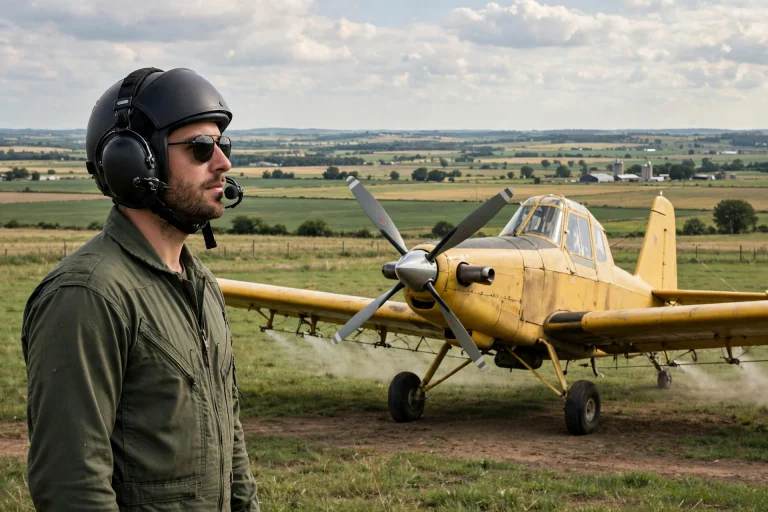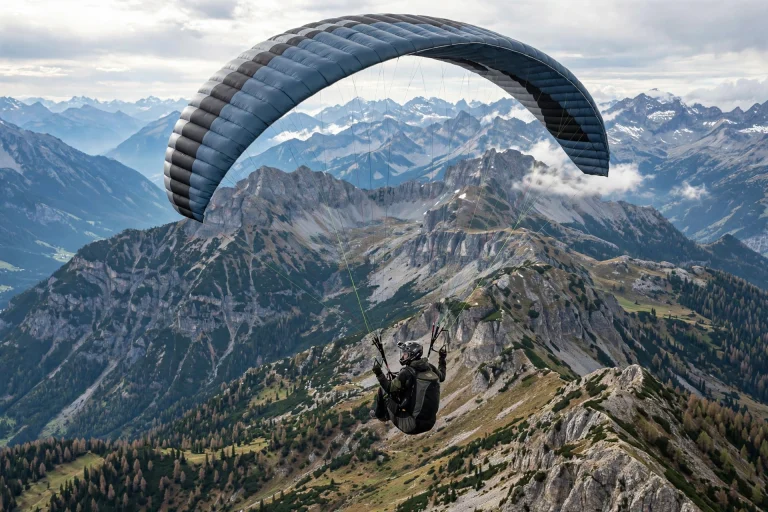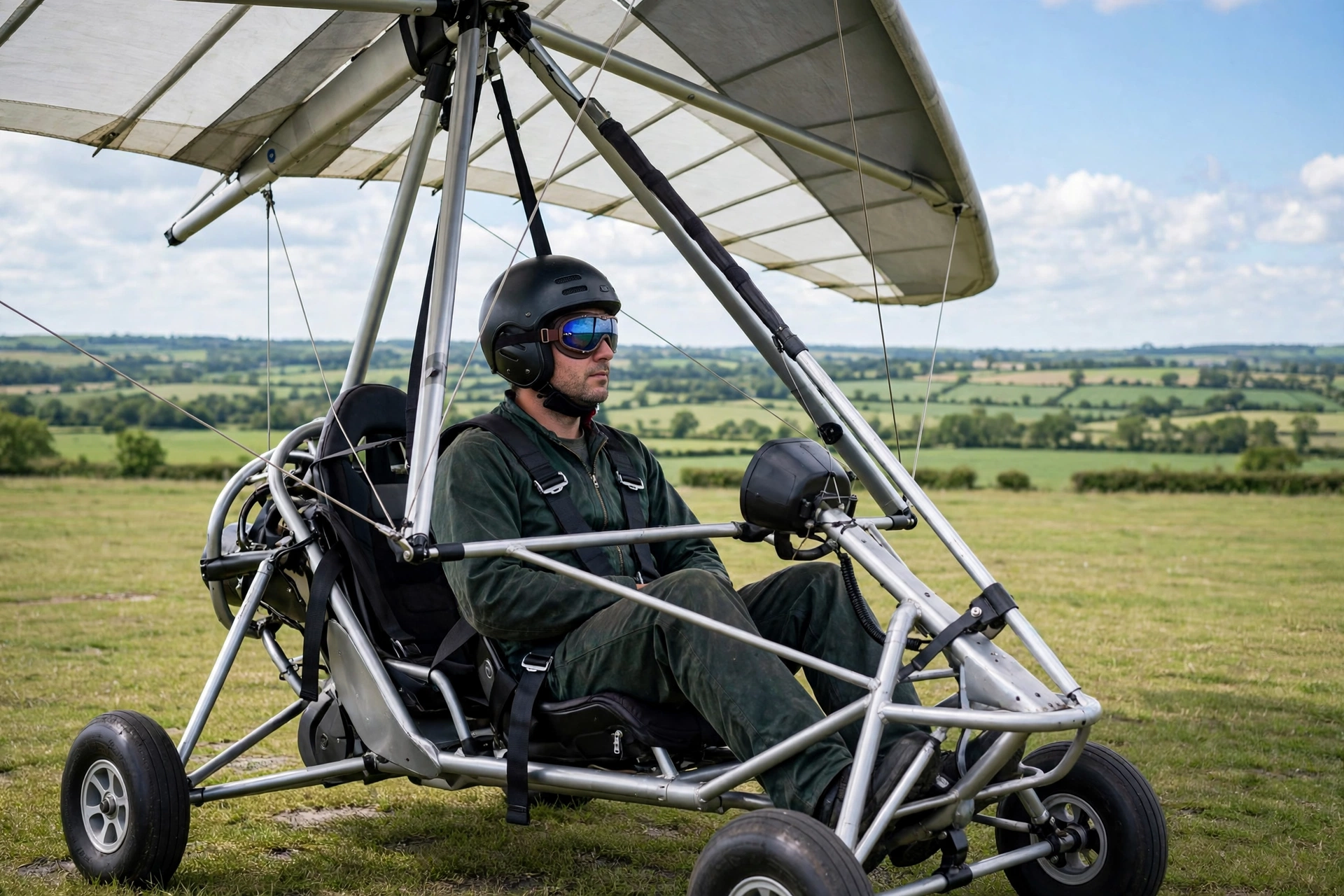
A helmet for microlight pilots is a light aviation helmet worn to protect the head, cut wind noise and work with a headset while flying a small, open-cockpit microlight aircraft. A microlight, also called an ultralight in some places, is a very light aircraft with an open or partly open cockpit, so the pilot sits close to the wind, the engine and the airframe, and head protection is a sensible part of the flying kit.
Microlight flying is usually low and slow, often over fields and countryside, and the cockpit is far more exposed than the cabin of a larger aircraft. A helmet will not change how the aircraft flies, but it can protect the pilot from knocks, wind blast and noise, and it can make a long flight far more comfortable. In general terms, that is why many microlight pilots wear one, whether they are flying for fun or training.
What is a microlight aircraft?
A microlight is a small, lightweight aircraft designed for one or two people, with a simple engine and light controls. Some have a fixed wing and look like a tiny aeroplane, while others are weight-shift aircraft, where the pilot hangs below a flexible wing and steers by moving their body. Many have an open cockpit or only a small windscreen, so the pilot feels the full force of the airflow.
Microlights are used for leisure flying, for learning to fly, and for short cross-country trips. They take off and land on grass strips and small airfields, and they fly at modest speeds and heights compared with larger aircraft. Because the cockpit is open and the pilot sits close to the structure of the aircraft, a bump on a rough strip, a sudden gust, or a loose item in the cockpit can all make head protection worth having.
What kind of helmet do microlight pilots wear?
In general terms, most microlight pilots wear a light aviation helmet, often a leather or fabric flying helmet, or a modern composite helmet with a built-in headset. A classic leather flying helmet is soft, warm and comfortable, and it holds a headset and microphone in place. A hard-shell aviation helmet gives more protection against knocks and is often chosen by pilots who fly weight-shift microlights or fly from rough strips.
Some pilots wear a helmet designed for open-cockpit flying, with a smooth shell that does not catch the wind and a visor or goggles to keep the wind out of the eyes. Whatever style you choose, the helmet should fit well, fasten securely under the chin, and work with your headset and microphone, so you can hear and be heard clearly. It should also be comfortable enough to wear for the whole flight, with no pressure points that grow painful after an hour in the air.
How should a helmet for microlight flying fit?
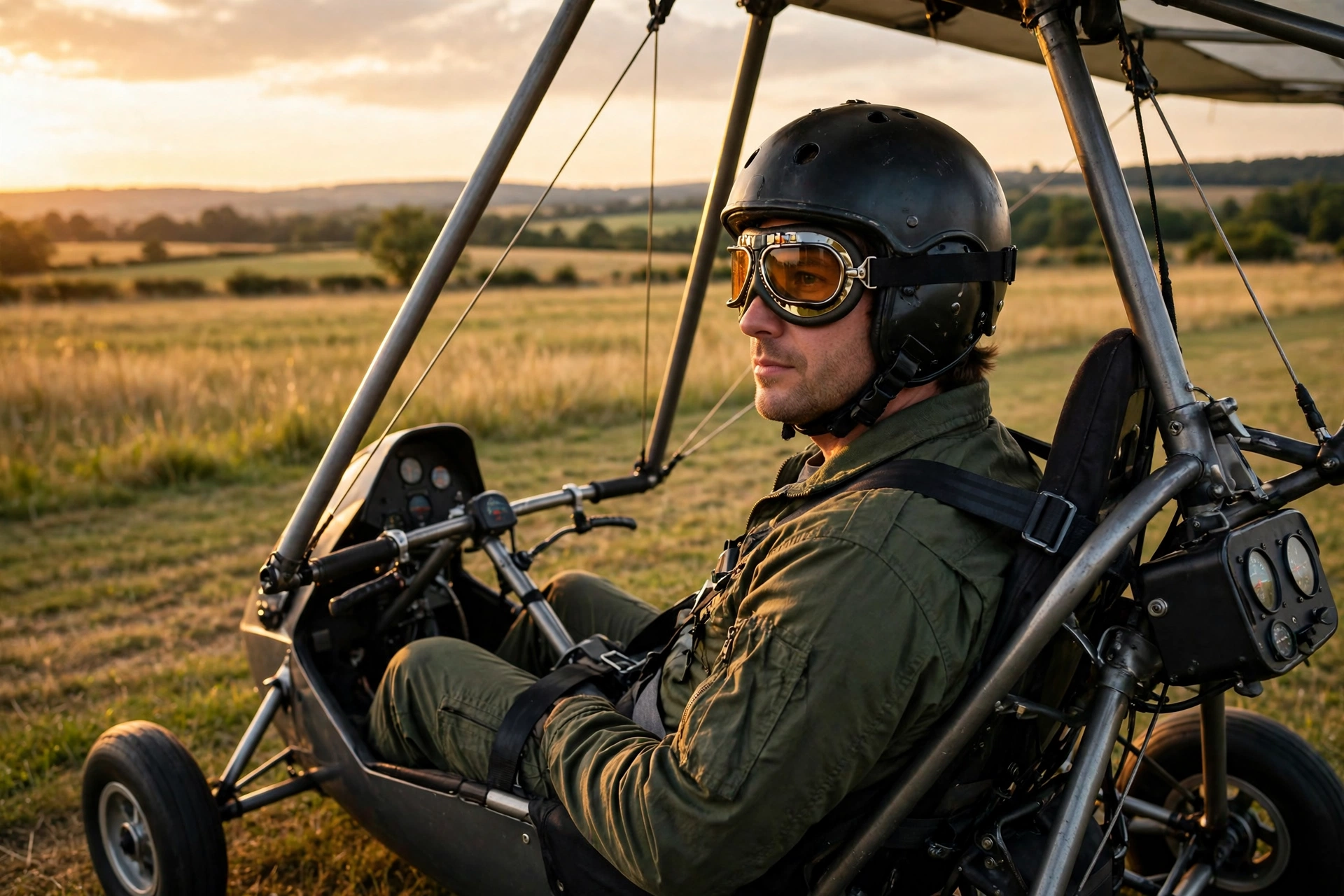
A helmet for microlight flying should sit level on your head, low enough at the front to cover your forehead, and snug all round without pressing painfully on your temples or the top of your head. It should not tip forward over your eyes or slide back when you nod, and it should stay in place when you shake your head gently from side to side.
The chin strap should be snug enough that you can fit only a finger or two between the strap and your chin. Try the helmet on with the headset you plan to use, and with any goggles or sunglasses, and make sure nothing pushes the helmet out of position or presses the headset ear cups into your ears. Sit in the cockpit if you can before you buy, and check that the helmet does not catch on the seat, the wing struts, or the controls when you turn your head.
What features matter in a helmet for microlight pilots?
Noise matters a great deal in an open cockpit, because the engine sits close by and the wind rushes past your ears. Look for a helmet that works well with a good headset, with ear cups that seal comfortably and a microphone that sits close to your mouth. Some helmets include a system designed to reduce rotational forces in a fall, such as MIPS, and it is worth asking about when you choose, although the main job of a microlight helmet is protection from knocks and wind rather than high-speed impact.
Ventilation and warmth both matter, because an open cockpit can be cold at height and warm on the ground. A helmet with a soft lining keeps you warm in cool air, while vents or a light shell help on a warm day. A visor or goggles protect your eyes from wind, dust and insects, which is important when you are trying to read instruments and watch for other aircraft. Weight matters too: a light helmet is easier on your neck over a long flight, and a helmet that feels comfortable is one you will actually keep wearing.
Do microlight pilots have to wear a helmet?
Whether a helmet is required depends on the type of aircraft, where you fly, and the rules of the club or school you fly with. In general terms, some microlight pilots are required to wear a helmet by their training organisation or flying club, while others wear one by choice. Rules can differ from one country to another, and from one type of microlight to another, so it is worth checking the rules that apply to your own flying before you take off.
Even where a helmet is not required, many experienced pilots still wear one. The cockpit is open, the strip can be rough, and a helmet adds protection and comfort for very little extra weight or fuss. If you are learning to fly, ask your instructor what they recommend, and follow the rules of the school or club you fly with.
How do you look after a microlight flying helmet?
After a flight, wipe the shell clean and let the helmet dry naturally, away from direct heat. Do not leave it in a hot car or next to a radiator, as heat can damage the materials inside over time. If the lining is removable, take it out and wash it following the maker’s instructions, and let it dry fully before you put it back.
Check the helmet regularly for cracks, dents, or loose parts, and check the chin strap and buckle for wear. Keep the headset and microphone clean, and check the leads and plugs for damage before each flight. In general terms, a helmet that has taken a hard knock should be replaced, even if it looks fine on the outside, because the inner lining may have been compressed. When in doubt, replace it.
What is a helmet for microlight pilots?
A helmet for microlight pilots is a light aviation helmet that protects the head, cuts wind noise and works with a headset in the open cockpit of a small microlight aircraft.
Can you wear a motorcycle helmet for microlight flying?
In general terms, a motorcycle helmet can offer head protection, but it is often heavy and may not work well with an aviation headset and microphone, so a helmet made for open-cockpit flying is usually a better fit.
When should a microlight helmet be replaced?
Replace it after a hard knock, if the shell or lining is damaged, or if the strap and buckle are worn. A helmet that has protected you in a knock has done its job and should not be relied on again.

Olivia
Writer at Helmet Today, covering helmet reviews, fit and riding safety.