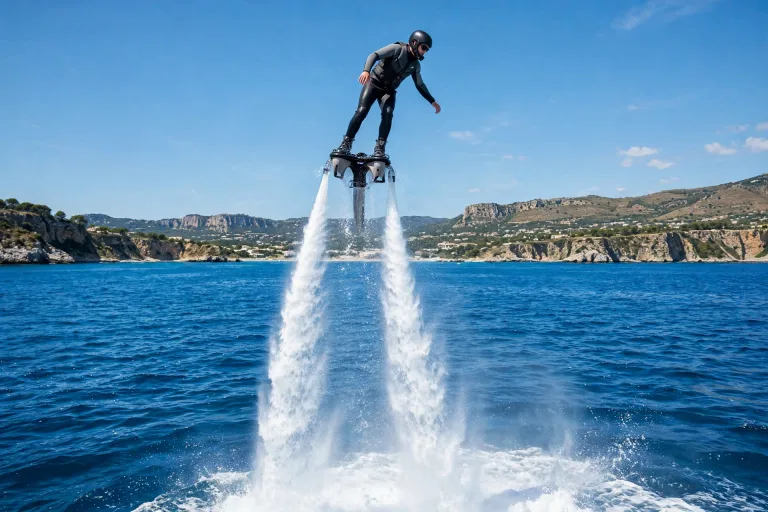
A helmet for river surfing is a protective helmet worn to guard the head while surfing a standing wave on a river, and in general terms a light water sports helmet is what most river surfers use. River surfing takes place on a wave that stays in one place while the water rushes past, often over a shallow riverbed, so a fall can mean a knock against rock or gravel rather than a soft landing in deep water.
A river wave forms where fast water flows over a ledge or a drop and folds back on itself, creating a wave that a surfer can ride in one spot. Unlike ocean surfing, there is no paddle out and no waiting for sets, but there is also very little water under you in some spots. That is the main reason river surfers wear a helmet: to protect the head if they fall onto the riverbed, a rock, or a piece of debris caught in the flow.
What is river surfing?
River surfing is the sport of riding a standing wave on a river, usually on a short surfboard, a river board, or a bodyboard. The wave is created by the shape of the riverbed, often at a weir, a ledge, or a purpose-built wave feature. The surfer rides in one place, balancing against the flow of the water, and can stay on the wave for as long as they can hold their balance.
River surfing has grown quickly in recent years as more towns have built artificial wave features, and as surfers have discovered natural standing waves. It attracts ocean surfers who live far from the coast, kayakers who want a new challenge, and beginners who like the idea of a wave that never stops. Sessions are often short and intense, with the surfer falling off, swimming back, and getting on the wave again, sometimes many times in an hour.
What kind of helmet do river surfers wear?
In general terms, river surfers wear a light water sports helmet, similar to the helmets used for whitewater kayaking. These helmets are made to protect the head from knocks against hard surfaces, to drain water quickly, and to stay on in fast-moving water. They usually have a hard outer shell, a foam or padded lining, and a chin strap that fastens securely.
A water helmet for river surfing should fit snugly so that the current cannot pull it off, and it should not have vents so large that a small stone or piece of gravel could get through. Many river surfers choose a helmet with ear coverage, which also protects the ears from the force of the water and from cold. Some helmets include a system designed to reduce rotational forces in a fall, such as MIPS, and it is worth asking about when you choose.

Why is a helmet important for river surfing?
A helmet matters in river surfing because the water is often shallow. At many river waves the depth under the surfer is only a metre or so, and the riverbed may be made of rock, concrete, or gravel. A fall at speed can send you head first toward that hard surface, and even a gentle-looking fall can hurt if you hit a rock the wrong way.
There are other hazards too. Debris such as branches can be carried down the river and caught in the wave. Other surfers may be in the water at the same time, and boards can be knocked about by the current. A helmet will not stop a fall from happening, but it can reduce the force of a knock to the head, and that is why most experienced river surfers treat it as part of the basic kit, along with a buoyancy aid and suitable footwear.
How should a helmet for river surfing fit?
A helmet for river surfing should sit level on your head, low enough at the front to cover your forehead, and snug all round without pressing painfully on your temples. It should not tip forward over your eyes or slide back when you nod, and it should stay in place when you shake your head gently from side to side.
The chin strap should be snug enough that you can fit only a finger or two between the strap and your chin, and the buckle should be easy to fasten and release with wet hands. Try the helmet on while it is wet if you can, because water can change how a helmet feels, and check that it does not shift when you move your head quickly. If the helmet has ear pads, make sure they sit comfortably and do not press too hard.
What features matter in a river surfing helmet?
Good drainage matters, because a helmet that holds water becomes heavy and uncomfortable. Look for drain holes in the shell and a lining that does not soak up water. A comfortable, removable lining is useful too, since it can be washed after a session in river water, which is often far from clean.
Coverage matters as well. A helmet that covers the back and sides of the head, and the ears, gives extra protection where knocks are most likely. Weight matters too: a light helmet is easier to wear for a long session, and a helmet that feels comfortable is one you will actually keep wearing. Bright colours can help other surfers and rescuers spot you in the water, which is a small but real safety bonus.
How do you look after a river surfing helmet?
After a session, rinse the helmet with clean fresh water to wash away river silt and grit, then let it dry naturally, away from direct heat. Do not leave it in a hot car or next to a radiator, as heat can damage the materials inside over time. If the lining is removable, take it out and wash it following the maker’s instructions, and let it dry fully before you put it back.
Check the helmet regularly for cracks, dents, or loose parts, and check the chin strap and buckle for wear. In general terms, a helmet that has taken a hard knock in a fall should be replaced, even if it looks fine on the outside, because the inner lining may have been compressed. The same applies to a helmet that has been dropped hard onto a hard surface. When in doubt, replace it.
Do you need a helmet for river surfing?
In general terms, yes, a helmet is sensible for river surfing. The water is often shallow and the riverbed can be hard, so a well-fitting water helmet is a simple way to protect your head.
Can you wear a kayak helmet for river surfing?
Yes, a whitewater kayak helmet is a good choice for river surfing. It is made for the same kind of knocks in fast water, and it drains well and stays on in the current.
When should a river surfing helmet be replaced?
Replace it after a hard knock in a fall, if the shell or lining is damaged, or if the strap and buckle are worn. A helmet that has protected you in a fall has done its job and should not be relied on again.

Olivia
Writer at Helmet Today, covering helmet reviews, fit and riding safety.