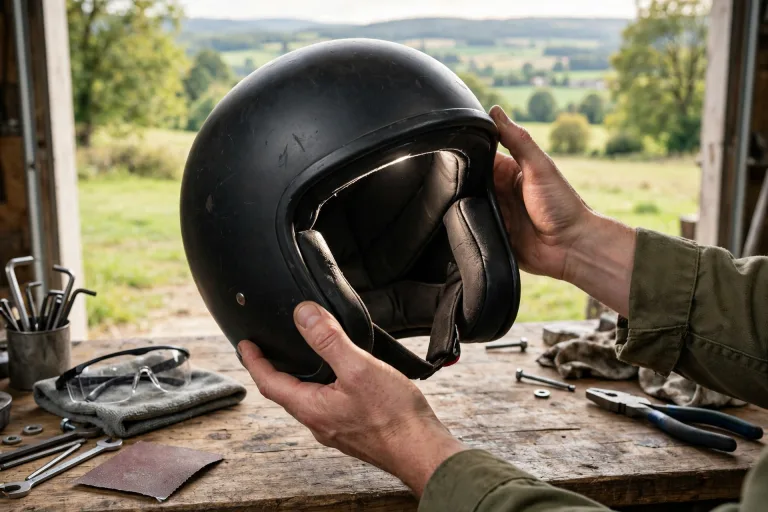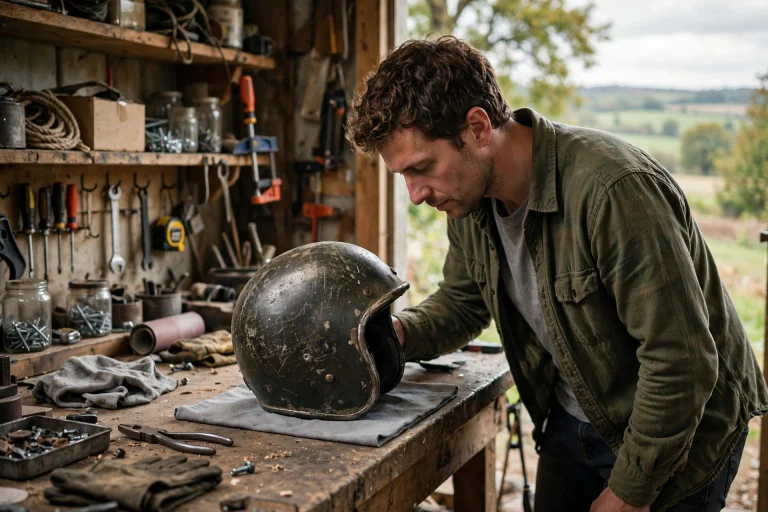
Should you keep a crashed helmet? In general terms, no, a helmet that has taken a hard knock in a crash should be replaced rather than kept, because the damage that matters is often hidden inside where you cannot see it. A helmet is designed to protect your head by absorbing the force of an impact, and much of that protection is used up in the process. Keeping it and riding with it again means trusting protection that may no longer be there.
This is a question many riders ask after a fall, especially when the helmet looks fine from the outside. A scuffed shell or a small mark can be tempting to ignore, and a good helmet is not cheap, so the wish to keep using it is understandable. But the way helmets work means that a visual check alone is not enough to know whether it is still safe.
What happens to a helmet in a crash?
When a helmet hits the ground, the outer shell spreads the force of the impact and the foam lining inside compresses to absorb it. That compression is what slows your head down more gently and reduces the force that reaches your skull. In general terms, the foam is designed to crush once, in the spot where the impact happened, and it does not spring back to its original shape afterwards.
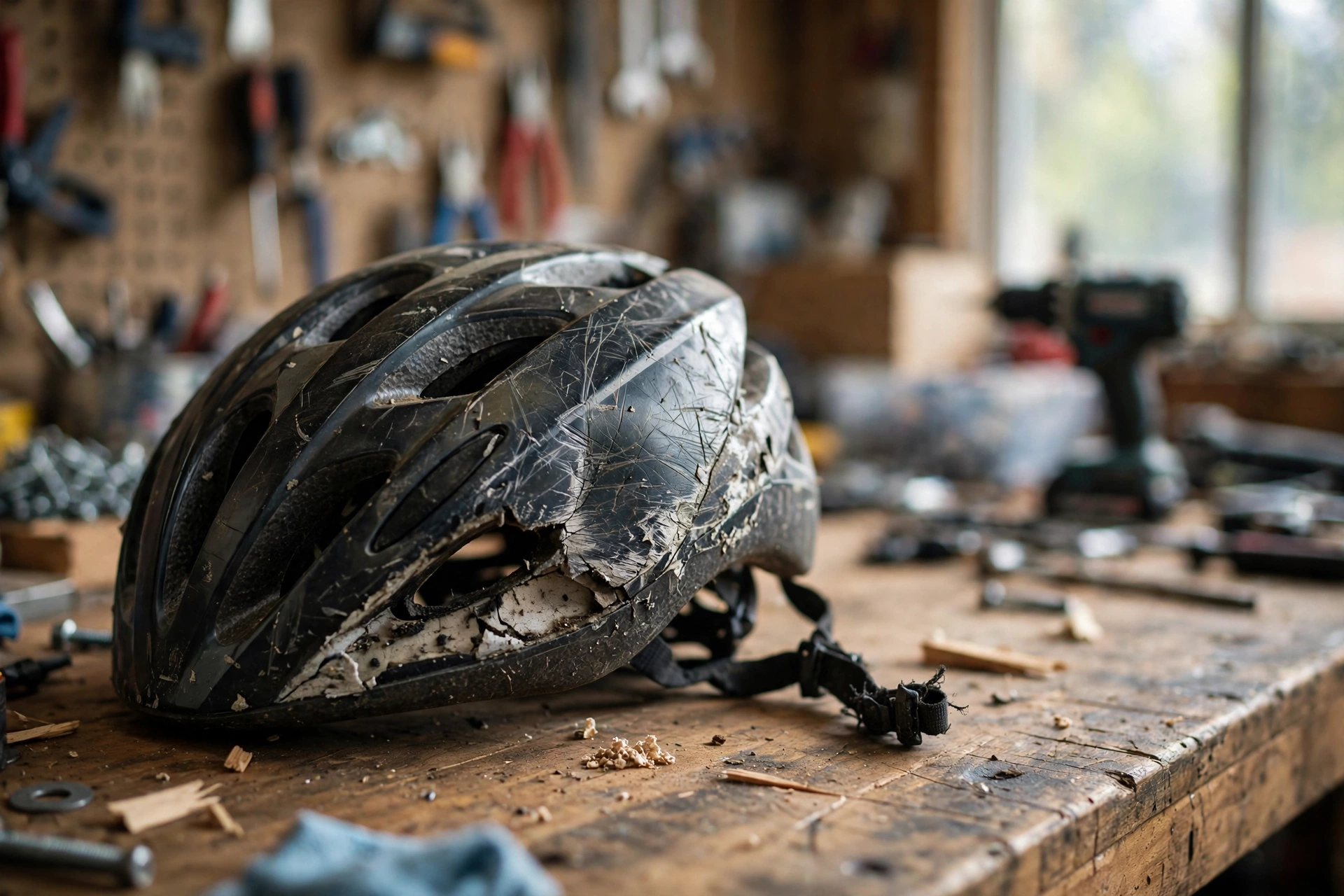
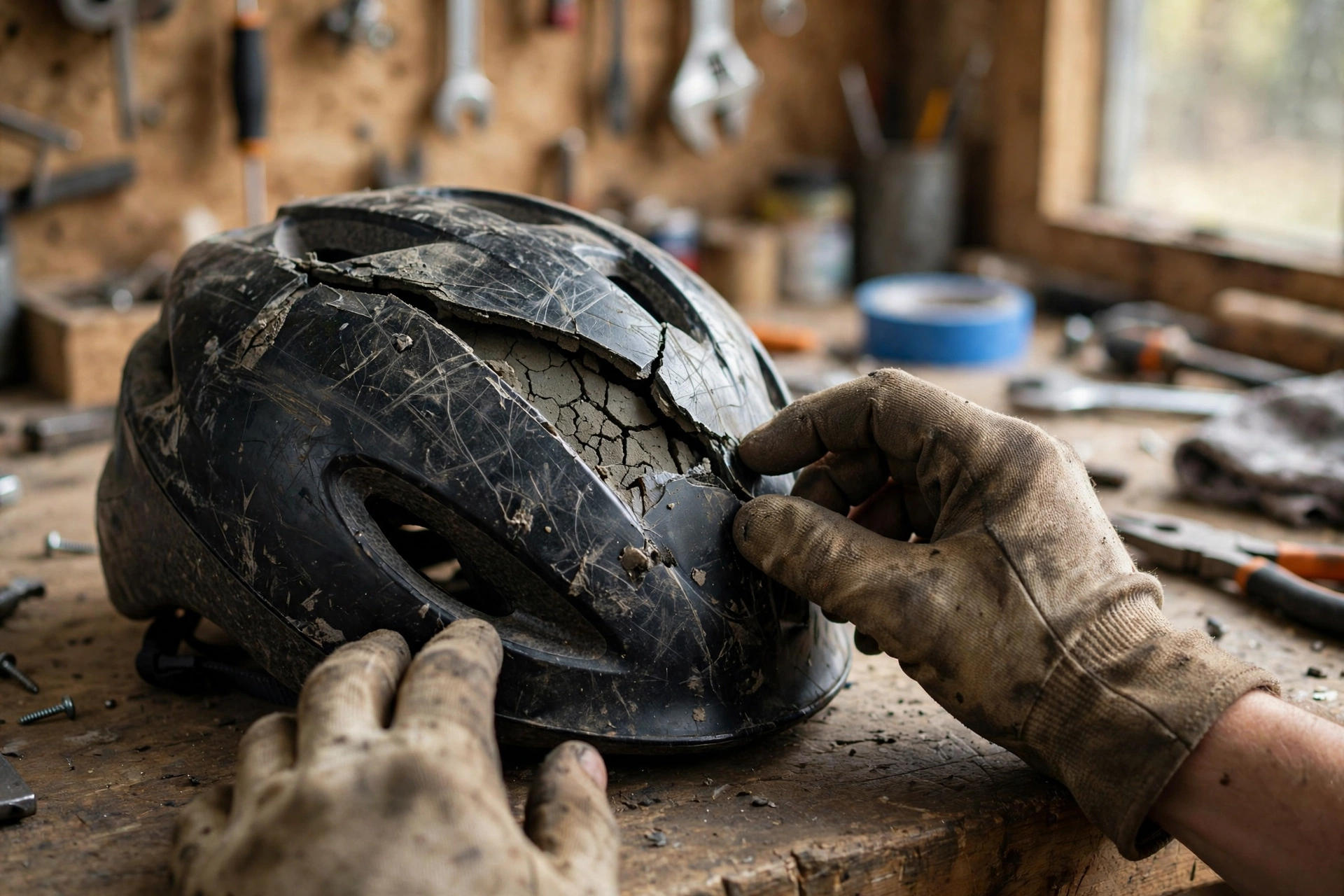
This is why a helmet can look almost normal after a crash while still being badly weakened. The shell may show only a scratch or a scuff, but the lining underneath may be compressed or cracked in a way that is invisible from the outside. A helmet in that state may not absorb a second impact in the same way, which is the whole reason to replace it.
Can a helmet look fine but still be damaged?
Yes, a helmet can look fine and still be damaged. The foam lining sits under the shell, so compression, small cracks, or a dent in the lining are easy to miss. You can sometimes feel a change by pressing gently around the inside of the helmet, but a small area of damage can be hard to find by touch alone, especially if you do not know exactly where the impact was.
Some helmets include a system designed to reduce rotational forces in a fall, such as MIPS, and those parts can also be affected by a crash. A slip liner that has moved, torn, or come loose may not work as intended next time. In general terms, if you are not sure whether the helmet is damaged, the safe choice is to treat it as damaged and replace it.
When should you replace a crashed helmet?
Replace the helmet after any crash in which your head hit the ground or another hard surface, even if the impact felt light. If you fell but your head did not touch anything, the helmet may be fine, but check it carefully all the same. A good rule is simple: if your head hit something, the helmet has done its job and should be retired.
It is also worth replacing a helmet if you are unsure how hard the impact was. After a fast fall it can be hard to remember exactly what your head hit, and a rider who was shaken up may not recall the details clearly. In that case, err on the side of caution. A new helmet costs far less than the risk of riding with one that has already absorbed a serious knock.
Also replace a helmet if you notice a crack in the shell, a dent, a loose part, or a strap and buckle that no longer work properly. Age and wear matter too, but a crash is the clearest reason to replace a helmet straight away. In general terms, waiting to see if it is still fine is not worth the risk, because the next fall is the one that would test it.
What should you do with a crashed helmet?
Once you have decided to replace a crashed helmet, it is best to make sure nobody else uses it. Cut the chin strap or mark the helmet clearly as damaged before you throw it away, so it cannot be picked up and worn by someone else. Some shops and recycling schemes take old helmets, so it is worth asking locally before you bin it.
If you have insurance that covers your helmet, keep the damaged helmet and take photos of it before you dispose of it, because the insurer may want to see it as part of a claim. The same applies if the crash involved another person or a vehicle and you may need evidence. In general terms, do not give a crashed helmet away or sell it on, even to someone who only wants it for a short ride.
Does a small drop count as a crash?
A small drop, such as knocking your helmet off a table onto a hard floor, is not the same as a crash, but it is still worth checking. A light knock may leave the helmet fine, while a hard drop from height onto concrete may compress the lining in the spot where it landed. Inspect the shell and lining where it hit, and look for cracks or dents.
If the helmet fell from a bike onto a soft surface, it is probably fine, but if it hit a hard floor with force, be more careful. When in doubt, contact the maker and describe what happened, as some makers offer a crash replacement discount for helmets damaged in a fall. In general terms, a drop is a reason to inspect, and a crash is a reason to replace.
Can you keep using a helmet after a small crash?
In general terms, no. Even a small crash can compress the lining inside, and that damage is often invisible. Replace the helmet after any crash where your head hit a hard surface.
How can you tell if a helmet is damaged after a crash?
Look for cracks, dents, or loose parts in the shell, and press the lining gently to feel for soft or compressed spots. But a helmet can be damaged inside without showing it, so a visual check is not a guarantee.
Should you keep a crashed helmet as a spare?
No, a crashed helmet should not be kept as a spare or given to someone else. Once it has absorbed an impact, it may not protect properly a second time.

Olivia
Writer at Helmet Today, covering helmet reviews, fit and riding safety.