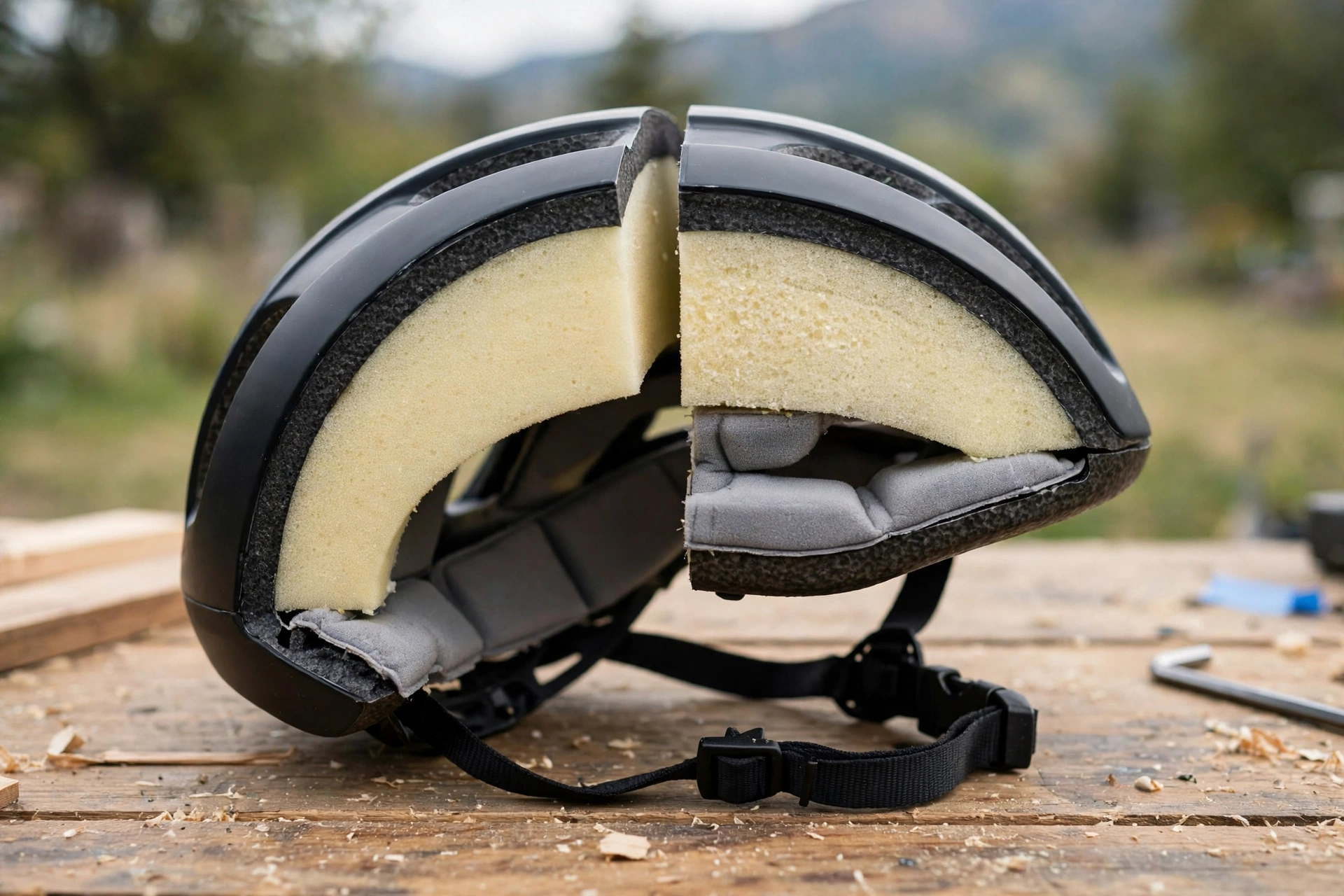
A helmet inner shell is the layer inside a helmet that sits between the hard outer shell and your head, and in general terms it is the part that absorbs the force of a knock and spreads it out so your head takes less of the impact. When you look inside a helmet, you can usually see it as the firm foam-like layer beneath the soft comfort padding, and although it stays out of sight most of the time, it does much of the protective work.
The inner shell is sometimes called the impact liner, and it is fitted closely inside the outer shell so the two layers work together. The outer shell spreads the force of a blow over a wider area, and the inner shell then crushes slightly to soak up the energy before it reaches your head. Without this layer, a helmet would be little more than a hard hat, and a knock would pass straight through to the wearer.
What is the inner shell of a helmet?
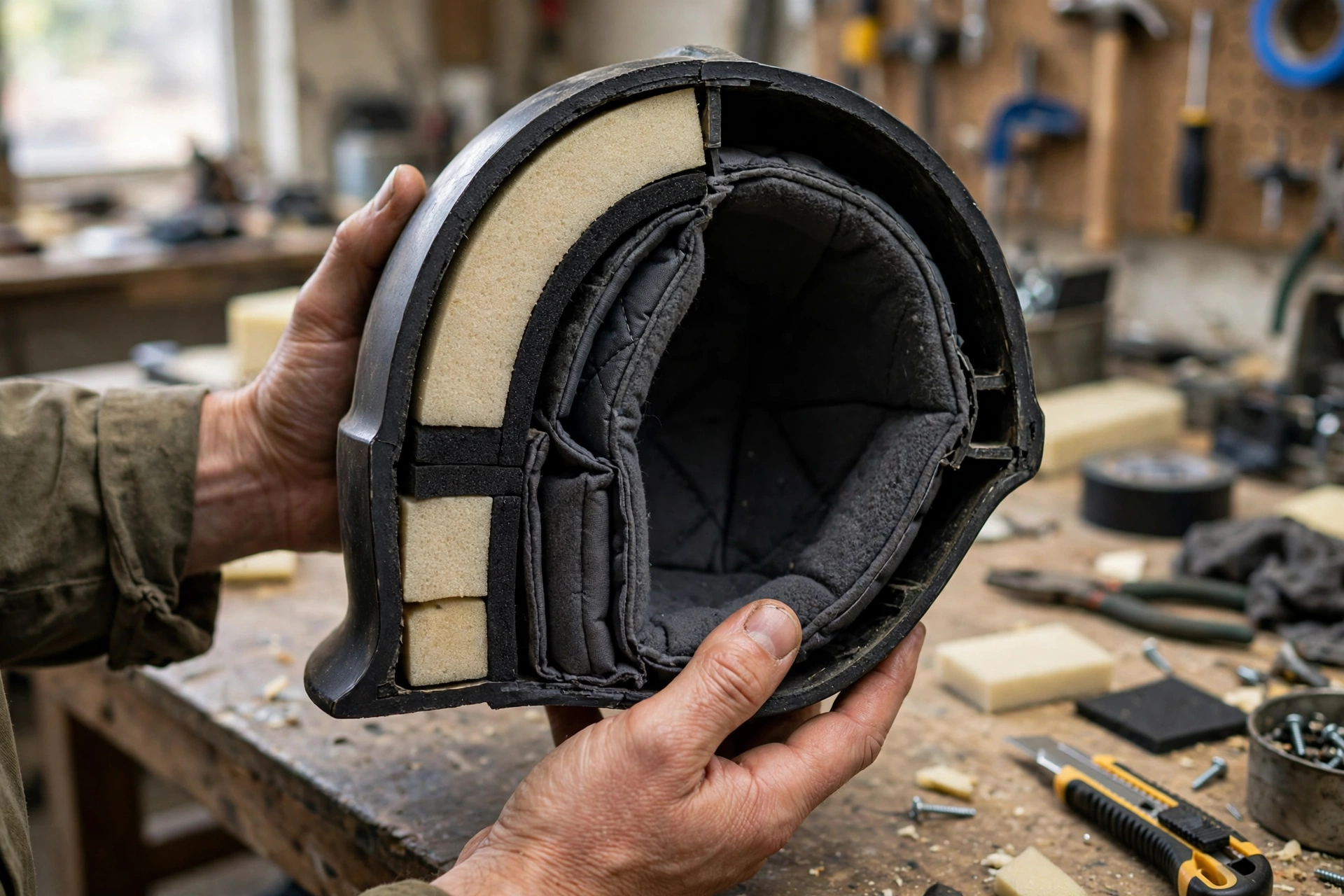
The inner shell of a helmet is the thick layer of firm material that lines the inside of the outer shell. It is shaped to match the curve of the helmet and to sit close to your head, with only a thin layer of soft padding between it and your scalp. If you take out the removable padding in most helmets, you will see the inner shell underneath, usually white, grey or black, with a slightly rough or beaded surface.
In general terms, the inner shell is the part of the helmet that is designed to be damaged in a crash. It works by compressing when it is hit hard, and that compression uses up energy that would otherwise reach your head. This is why a helmet that has taken a serious knock should be replaced even if the outside looks fine: the inner shell may already have done its job once, and it cannot be expected to do it again in the same way.
What is a helmet inner shell made of?
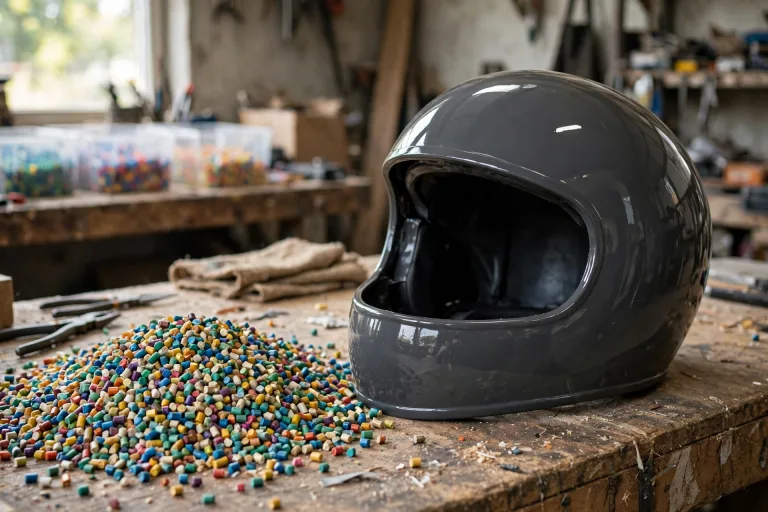
Most helmet inner shells are made from expanded polystyrene, often shortened to EPS. This is the same light, foamy material used in packaging, but in a helmet it is moulded much more firmly and to a precise shape. EPS is made up of tiny beads fused together, and when it is struck hard the beads crush and the structure collapses in a controlled way, which absorbs energy.
Some helmets use other materials instead. Expanded polypropylene, known as EPP, is a similar foam that can bounce back after a lighter knock, which is why it is sometimes used in helmets made for repeated small impacts, such as skate-style helmets. A few helmets use more than one density of foam in the same liner, firmer in some areas and softer in others. Whatever the material, the aim is the same: to slow down the force of a blow before it reaches your head.
What does the inner shell do in a crash?
In a crash, the inner shell does two things. First, it spreads the force of the impact over a larger area of your head, so no single spot takes the full blow. Second, it crushes and deforms as it absorbs energy, which slows down the sudden stop your head would otherwise make. Together, these two actions reduce the peak force reaching your skull, and in general terms that is how a helmet lowers the risk of a serious head injury.
The inner shell also works with the rest of the helmet to manage the way your head moves in a fall. Some helmets include a system designed to reduce rotational forces, such as MIPS, which allows a small amount of movement between the helmet and the head. The inner shell still does the main job of absorbing the direct force, while such a system deals with the twisting motion that can happen when you hit the ground at an angle.
How is the inner shell different from the outer shell?
The outer shell and the inner shell have different jobs, and they are made from different materials for that reason. The outer shell is the hard skin you see on the outside of the helmet. It is usually made from tough plastic or a composite material, and its job is to resist punctures, spread the force of a blow, and protect the softer material inside from scrapes and weather.
The inner shell, by contrast, is softer and thicker, and its job is to absorb energy by crushing. The outer shell is built to stay in one piece, while the inner shell is built to give way under a hard impact. If you tap the outside of a helmet it feels hard and smooth, but the foam inside gives a little under your thumb. That difference reflects their roles: one deflects and spreads, the other absorbs.
How do you check the inner shell for damage?
To check the inner shell, take out any removable padding and look at the foam layer in good light. Look for cracks, dents, or areas where the foam looks compressed or crumbled, and feel for dips or soft spots that should not be there. Pay attention to where the helmet hit the ground, if you know, and check around the vents and edges too, since damage can hide there.
Also check that the inner shell is still firmly attached to the outer shell, with no loose sections or rattling. If the foam has come away from the shell, or if you can see daylight through a crack, the helmet should not be used again. In general terms, any visible damage to the inner shell means the helmet has lost some of its ability to protect you, and it is safer to replace it than to keep riding in it.
How long does a helmet inner shell last?
There is no single answer to how long a helmet inner shell lasts, because it depends on how often the helmet is used, how it is stored, and whether it has taken any knocks. A helmet that is worn daily and left in a hot car will age faster than one that is worn now and then and kept in a cool, dry place. Heat, sunlight and sweat can slowly wear down the foam over time, even if the helmet has never been in a crash.
As a rough guide, many makers suggest replacing a helmet after a few years of regular use, and sooner if it has been dropped hard or involved in a fall. If the foam feels brittle or the fit has become loose, those are signs the inner shell may have worn down. When in doubt, replace the helmet: the inner shell is hidden, so you cannot always tell from the outside whether it is still in good shape.
What is a helmet inner shell?
A helmet inner shell is the firm foam layer inside a helmet, between the hard outer shell and your head, that absorbs the force of a knock and spreads it out.
Is the inner shell the same as the padding?
No. The padding is the soft, removable layer that sits against your head for comfort, while the inner shell is the firmer foam layer underneath it that does the protective work.
Can a damaged inner shell be repaired?
In general terms, no. Once the foam of an inner shell has been crushed or cracked, it cannot be fixed, and the helmet should be replaced.

Olivia
Writer at Helmet Today, covering helmet reviews, fit and riding safety.