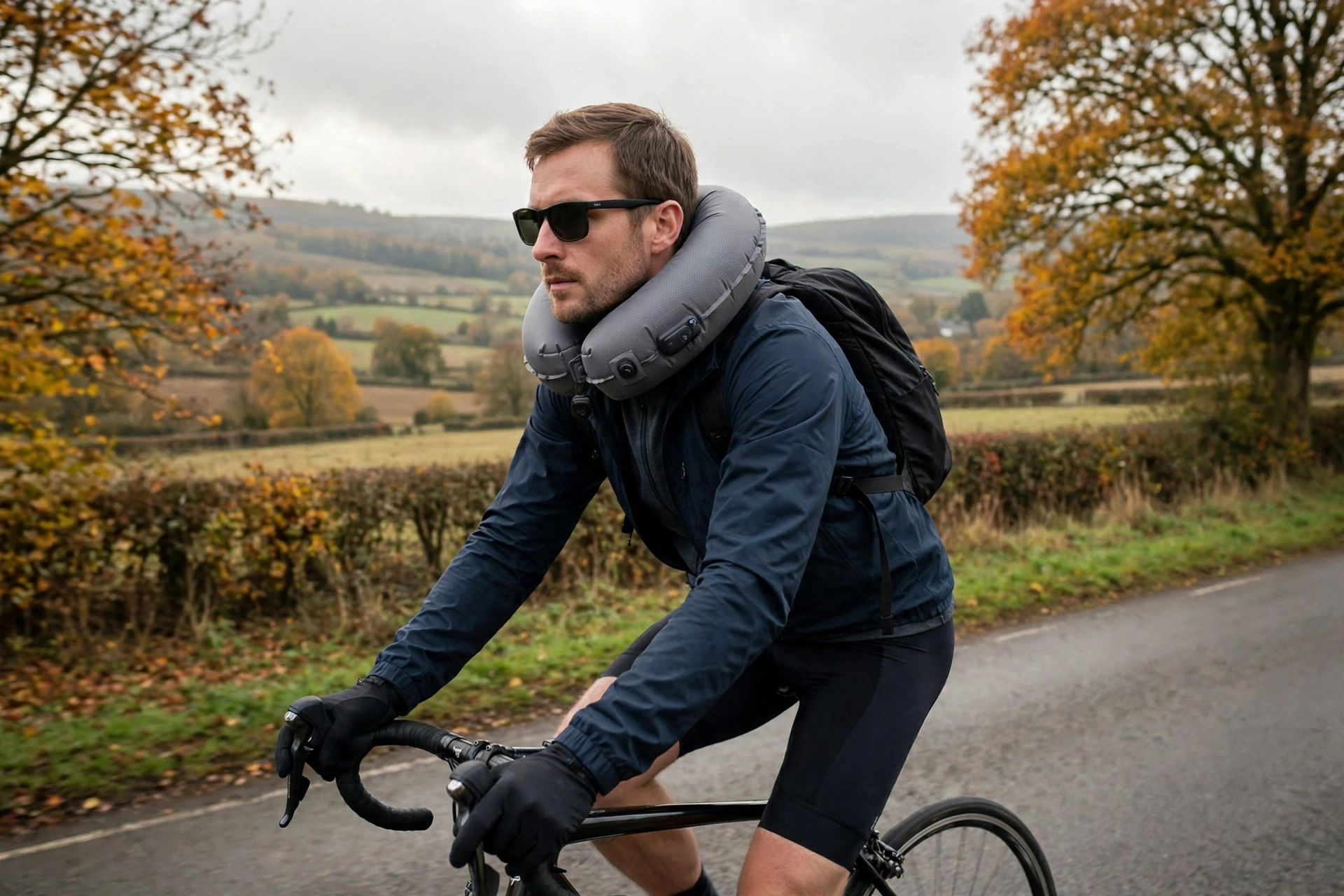
Helmet airbag systems work by sensing a fall or crash and inflating a cushion of air around the head and neck in a fraction of a second, and in general terms they are designed to add protection on top of, or instead of, a hard helmet shell. The most common form is a collar worn around the neck, which stays flat and out of the way while you ride and only inflates when its sensors decide a crash is happening.
These systems are used by cyclists, motorcyclists, and riders of other two-wheeled vehicles. The idea is simple: a normal helmet protects your head with a hard outer shell and a foam lining that absorbs force, while an airbag system adds a soft, air-filled cushion that spreads the force of an impact over a larger area. In general terms, the two approaches aim at the same thing, which is to reduce the force that reaches your head in a fall.
What is a helmet airbag system?
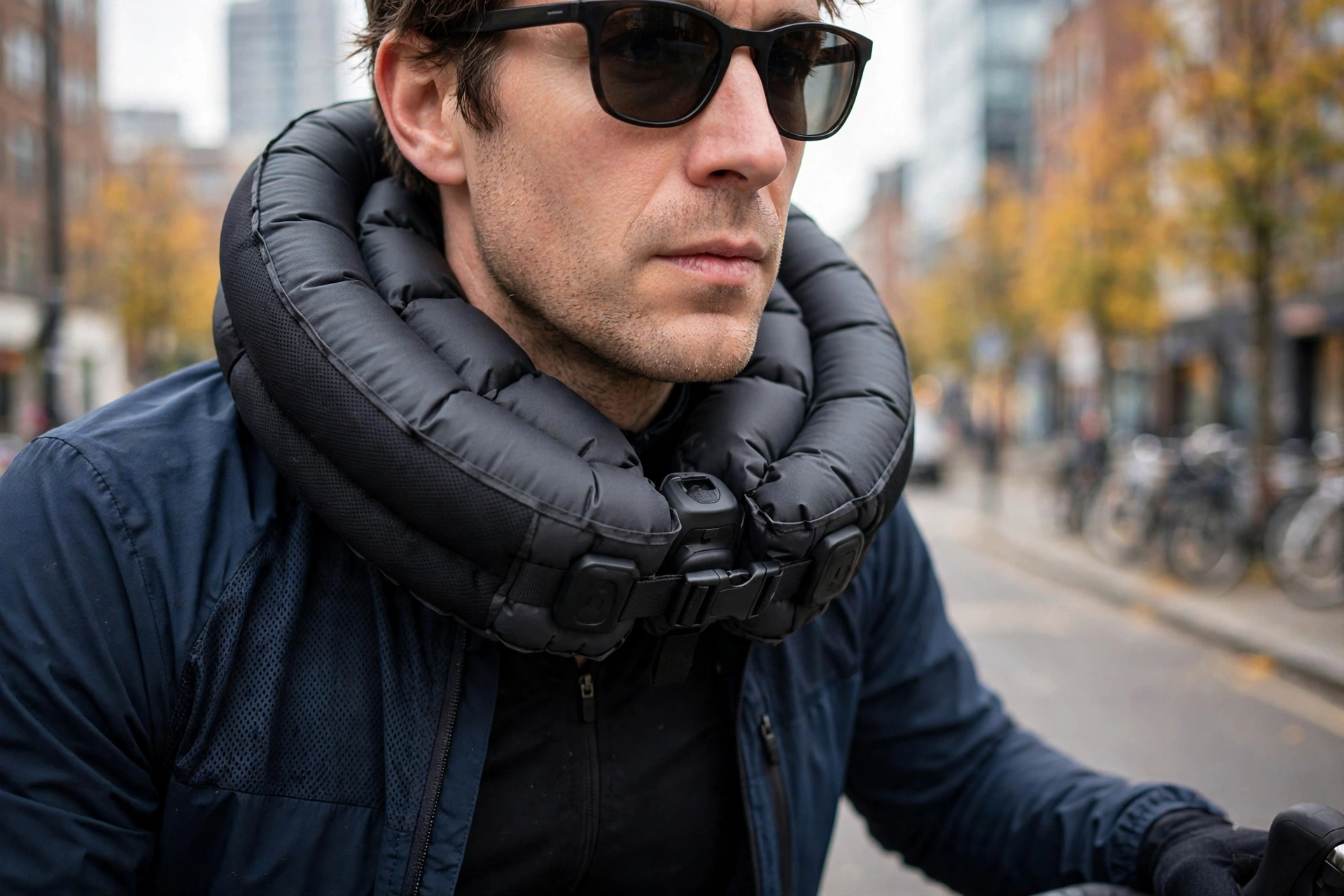
A helmet airbag system is a wearable device that contains one or more airbags, sensors, and a small gas cartridge or inflator. The best-known type is the inflatable collar, which looks like a scarf or neck brace and is worn around the neck over or under a jacket. Some systems are built into a vest or jacket instead, with the airbag covering the neck, shoulders, and upper chest.
Unlike a traditional helmet, an airbag system is soft and flexible when it is not inflated, which is why some riders find it more comfortable and easier to wear. It does not cover the head at all until it inflates, so it relies entirely on its sensors and its inflation speed to be in place before the head hits anything. That is the key difference from a helmet, which is always in place.
How does a helmet airbag system detect a fall?
In general terms, a helmet airbag system detects a fall using small motion sensors, similar to the ones in a phone, that constantly measure how the rider is moving. The sensors track acceleration, rotation, and changes in position, and a small computer compares that movement against patterns linked to normal riding and to crashes.
When the movement matches a crash pattern, the system triggers the inflator, which releases gas into the airbag. The whole process, from detection to full inflation, takes a fraction of a second. The system is designed to ignore normal movements such as leaning into a turn, going over a bump, or braking hard, so it should only inflate when something genuinely goes wrong.
What happens when the airbag inflates?
When the airbag inflates, it forms a soft hood or cushion around the head and neck, a bit like a small air-filled pillow. The gas cartridge fills the bag quickly, and the cushion stays inflated for a short time, long enough to cover the first impact and any bounce that follows.
After a crash, the airbag slowly deflates. Most systems are single-use, which means the gas cartridge and the airbag need to be replaced or serviced before the system can be used again. Some systems can be reset by the rider with a fresh cartridge, while others need to be sent back to the maker for checking. In general terms, a system that has inflated in a crash should not be relied on again until it has been properly reset.
Are helmet airbags better than a regular helmet?
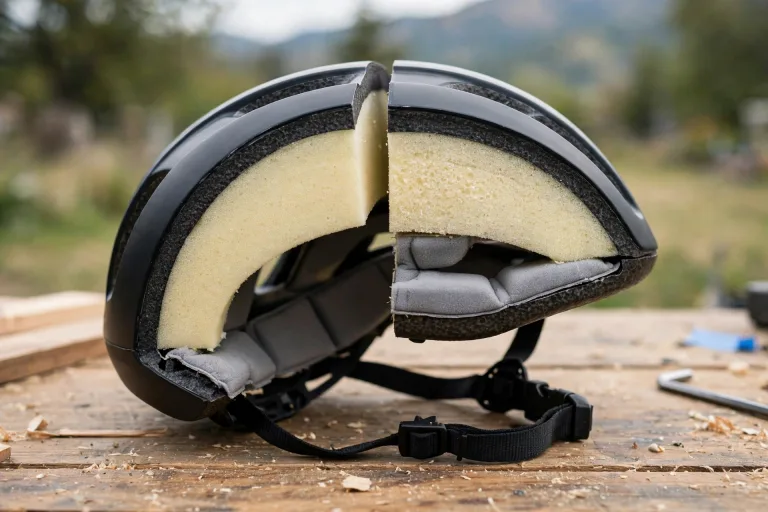
There is no simple answer, because the two work in different ways. A regular helmet is always in place, needs no battery or sensors, and protects the head in a wide range of falls, including slow ones and knocks that would not trigger an airbag. An airbag system can cover a larger area, including the neck, and can cushion the head very effectively when it inflates in time.
The main risk with an airbag system is that it must detect the crash and inflate before the head hits the ground. If the fall is unusual, or the sensors do not recognise it, the airbag may inflate late or not at all. A regular helmet has no such timing problem. Some riders wear both, using a normal helmet together with an airbag collar, which in general terms gives the always-there protection of the helmet plus the extra cushioning of the airbag. Some helmets include a system designed to reduce rotational forces in a fall, such as MIPS, which is worth asking about when you choose any helmet.
What should you look for when buying a helmet airbag system?
Fit is the first thing to check. A collar system should sit snugly around the neck without pressing on the throat or restricting your head movement, and it should work with the jacket and clothing you normally ride in. Check how heavy it is, because you will be wearing it for the whole ride, and check how long the battery lasts between charges, since the sensors need power to work.
Also check what happens after an inflation. Find out whether you can reset the system yourself, what a replacement cartridge costs, and whether the maker checks the system after a crash. Look for clear instructions on care and storage, and check the maker’s guidance on which types of riding the system is designed for, because some systems are made for road cycling and others for motorcycling, and they are not always interchangeable.
How do you look after a helmet airbag system?
Keep the system charged, because a flat battery means the sensors cannot work. Store it somewhere cool and dry, away from direct heat, and keep it clean following the maker’s instructions. Do not try to open the inflator or the gas cartridge yourself, and do not use the system if it shows a fault light or warning.
Check the system regularly for damage to the collar, the fabric, or the fastenings, and check that any straps or zips still work. In general terms, a helmet airbag system that has been in a crash should be checked by the maker before it is used again, even if it looks fine on the outside. The same applies if it has been dropped hard or soaked through.
Do helmet airbag systems replace a normal helmet?
In general terms, they are designed to add protection, and some riders use them instead of a helmet, but a normal helmet is always in place while an airbag must detect the crash and inflate in time. Many riders wear both for extra protection.
How fast does a helmet airbag inflate?
It inflates in a fraction of a second once the sensors detect a crash pattern. The system is designed to be fully inflated before the head hits the ground in a typical fall.
Can a helmet airbag system be reused after it inflates?
Most systems are single-use and need a new gas cartridge, and sometimes a service check, before they can be worn again. Check the maker’s instructions, because some systems can be reset by the rider and others must be sent back.

Olivia
Writer at Helmet Today, covering helmet reviews, fit and riding safety.