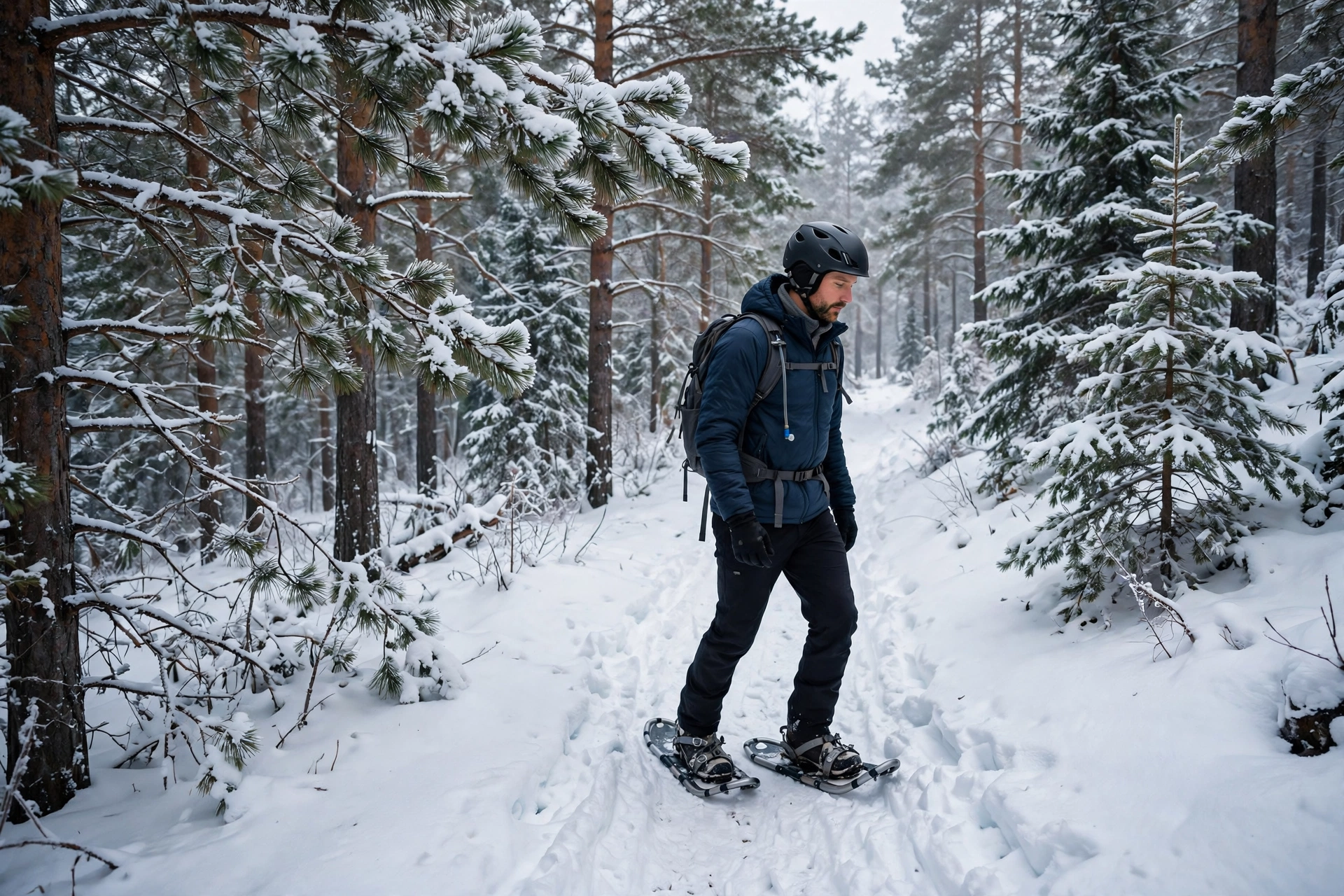
A helmet for snowshoeing is a protective helmet worn to guard the head while walking on snowshoes, and in general terms a light, warm winter helmet is what most snowshoers use when they choose one. Snowshoeing is a quiet winter activity, usually done on forest trails and snowy hillsides, and many people never think of wearing a helmet for it. But a slip on ice, a fall on a steep slope, or a low branch can still cause a knock to the head, so a helmet is worth considering.
Snowshoes spread your weight over the snow so you can walk where boots would sink, and the trails can be uneven, icy and steep in places. A fall in deep snow is often soft, but a fall onto ice, rock or a hidden tree root is not. A helmet will not stop a fall from happening, but it can reduce the force of a knock to the head if you come down hard. In general terms, that is the main reason snowshoers wear one.
What is snowshoeing?
Snowshoeing is walking over snow on snowshoes, which are wide frames with a binding for your boot that spread your weight so you do not sink deep into soft snow. It is one of the oldest ways of travelling in winter, and today it is mostly a leisure activity, done on marked trails, in forests, and on open hillsides.
Snowshoers usually carry poles for balance, and they dress in warm, layered clothing. The pace is gentle, and the trails are often quiet, which is part of the appeal. But the ground under the snow is uneven, and the weather can change quickly, so a snowshoe walk can be more demanding than it looks from the trailhead.
Do you need a helmet for snowshoeing?
In general terms, a helmet is a sensible choice for snowshoeing on steep, icy or wooded trails, and it is less important on a flat, open, well-groomed trail. The risk comes from the ground and the trees, not from speed: a slip on an icy slope can send you into a rock or a tree trunk, and a low branch can catch you across the head as you duck under it.
Children, new snowshoers, and anyone walking a steep or icy route are the most likely to benefit from a helmet. If you are snowshoeing on a gentle, flat trail in open ground, the risk is low and many walkers go without one. The choice is yours, but a light helmet is easy to carry, and it is a simple way to protect your head on a winter walk.
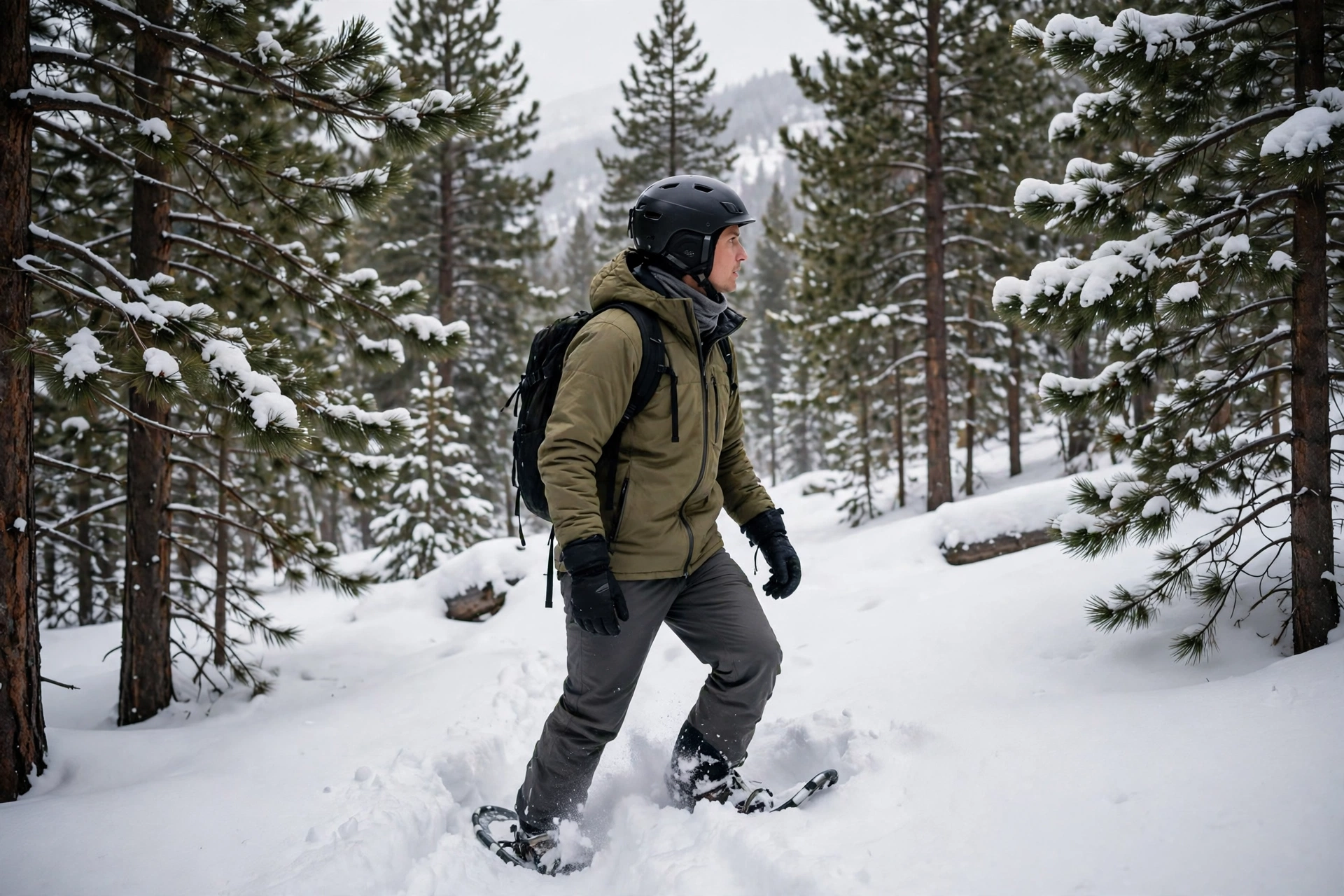
What kind of helmet works for snowshoeing?
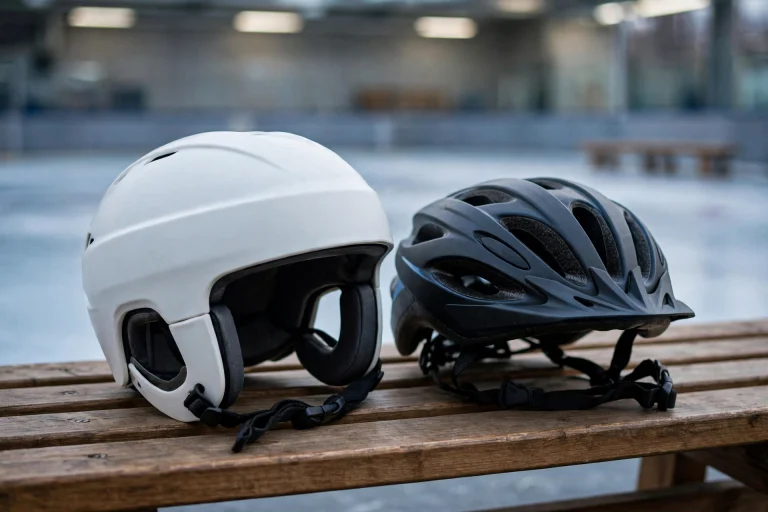
In general terms, most snowshoers who wear a helmet choose a ski helmet or a light climbing helmet. A ski helmet is warm, covers the ears, and is made for cold weather and for falls on snow and ice, which makes it a natural fit. A climbing helmet is lighter and cooler, and it suits a hard uphill walk where you are working up a sweat.
A bicycle helmet can also work on a mild day, but it is not made for cold weather and it leaves the ears exposed, so it is less comfortable in wind and falling snow. Whatever style you choose, the helmet should fit well over a thin hat or headband if you wear one, fasten securely under the chin, and be in good condition, with no cracks or damage to the shell or the lining inside.
How should a snowshoeing helmet fit in winter?
A helmet for snowshoeing should sit level on your head, low enough at the front to cover your forehead, and snug all round without pressing painfully on your temples. It should not tip forward over your eyes or slide back when you nod, and it should stay in place when you shake your head gently from side to side.
Try the helmet on with the hat or headband you plan to wear underneath, because winter layers change the fit. The chin strap should be snug enough that you can fit only a finger or two between the strap and your chin, even over a neck warmer or a scarf. Check the fit with your goggles or sunglasses too, and make sure nothing pushes the helmet out of position when you look down at the trail.
What features matter in a snowshoeing helmet?
Warmth matters, because you will be out in the cold for hours. Look for a helmet with ear coverage or room for a thin hat underneath, and vents that you can open or close, so you can let heat out on a steep climb and keep it in when you stop. A comfortable lining also helps the helmet sit well, which matters on a long winter walk.
Weight matters as well: a light helmet is easier to wear for a long day, and a helmet that feels comfortable is one you will actually keep wearing. Some helmets include a system designed to reduce rotational forces in a fall, such as MIPS, and it is worth asking about when you choose. A clip or a strap for goggles is a useful extra if you wear them in wind or falling snow.
How do you look after a winter helmet?
After a walk, wipe the shell clean and let the helmet dry naturally, away from direct heat. Snow should be brushed off, and the lining should be allowed to dry fully, because damp padding can become cold and uncomfortable on the next walk. Do not leave the helmet in a hot car or next to a radiator, as heat can damage the materials inside over time.
Check the helmet regularly for cracks, dents, or loose parts, and check the chin strap and buckle for wear. In general terms, a helmet that has taken a hard knock in a fall should be replaced, even if it looks fine on the outside, because the inner lining may have been compressed. The same applies to a helmet that has been dropped hard onto a hard surface. When in doubt, replace it.
Is a helmet necessary for snowshoeing?
In general terms, it is not essential on a flat, easy trail, but it is a sensible choice on steep, icy or wooded routes. The risk is low on gentle ground, but a helmet is a simple way to protect your head where a fall could end badly.
Can you wear a ski helmet for snowshoeing?
Yes, a ski helmet is a good choice for snowshoeing. It is warm, covers the ears, and is made for falls on snow and ice, which suits a winter walk very well.
When should a snowshoeing helmet be replaced?
Replace it after a hard fall or a heavy knock, if the shell or lining is damaged, or if the strap and buckle are worn. A helmet that has protected you in a fall has done its job and should not be relied on again.

Olivia
Writer at Helmet Today, covering helmet reviews, fit and riding safety.