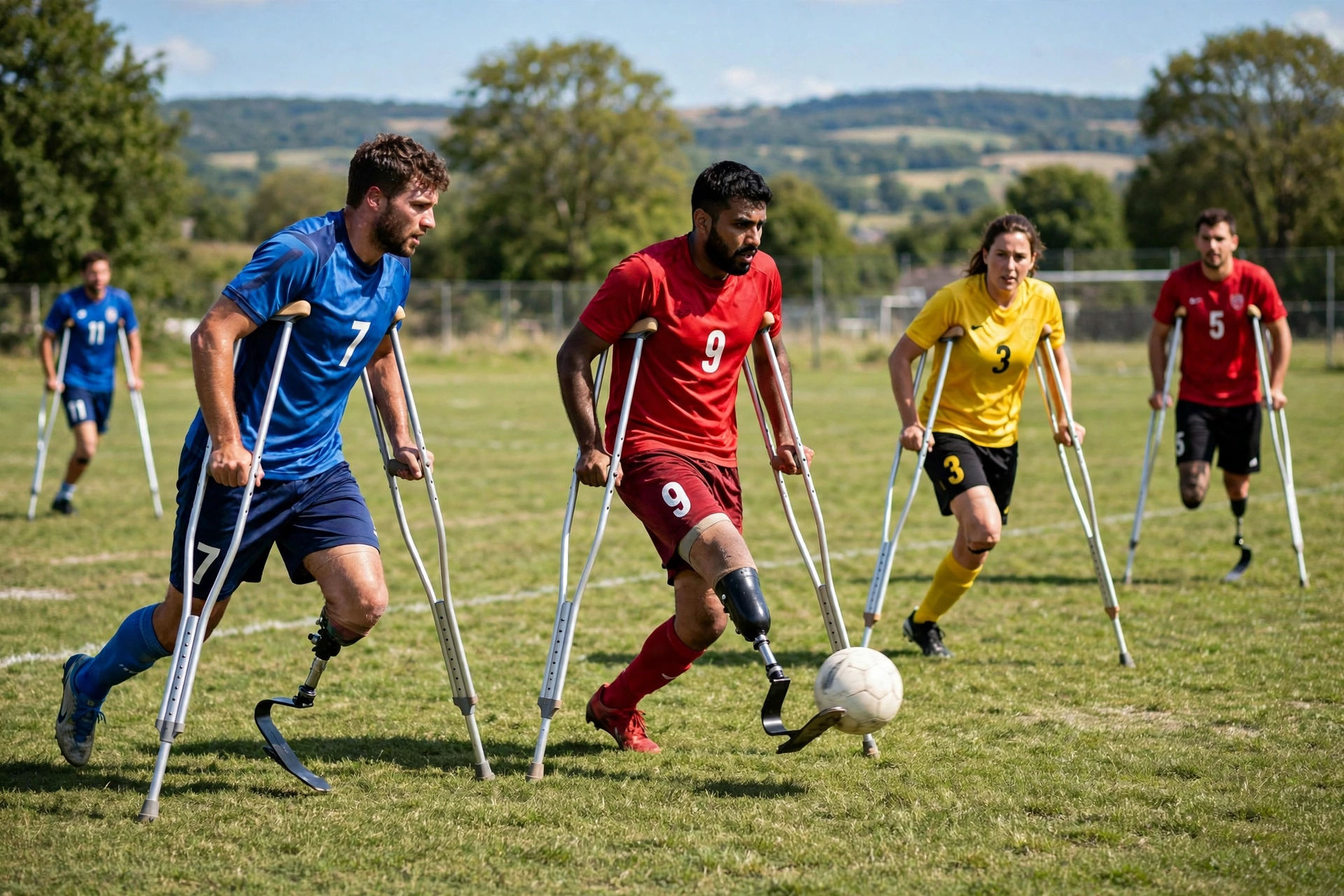
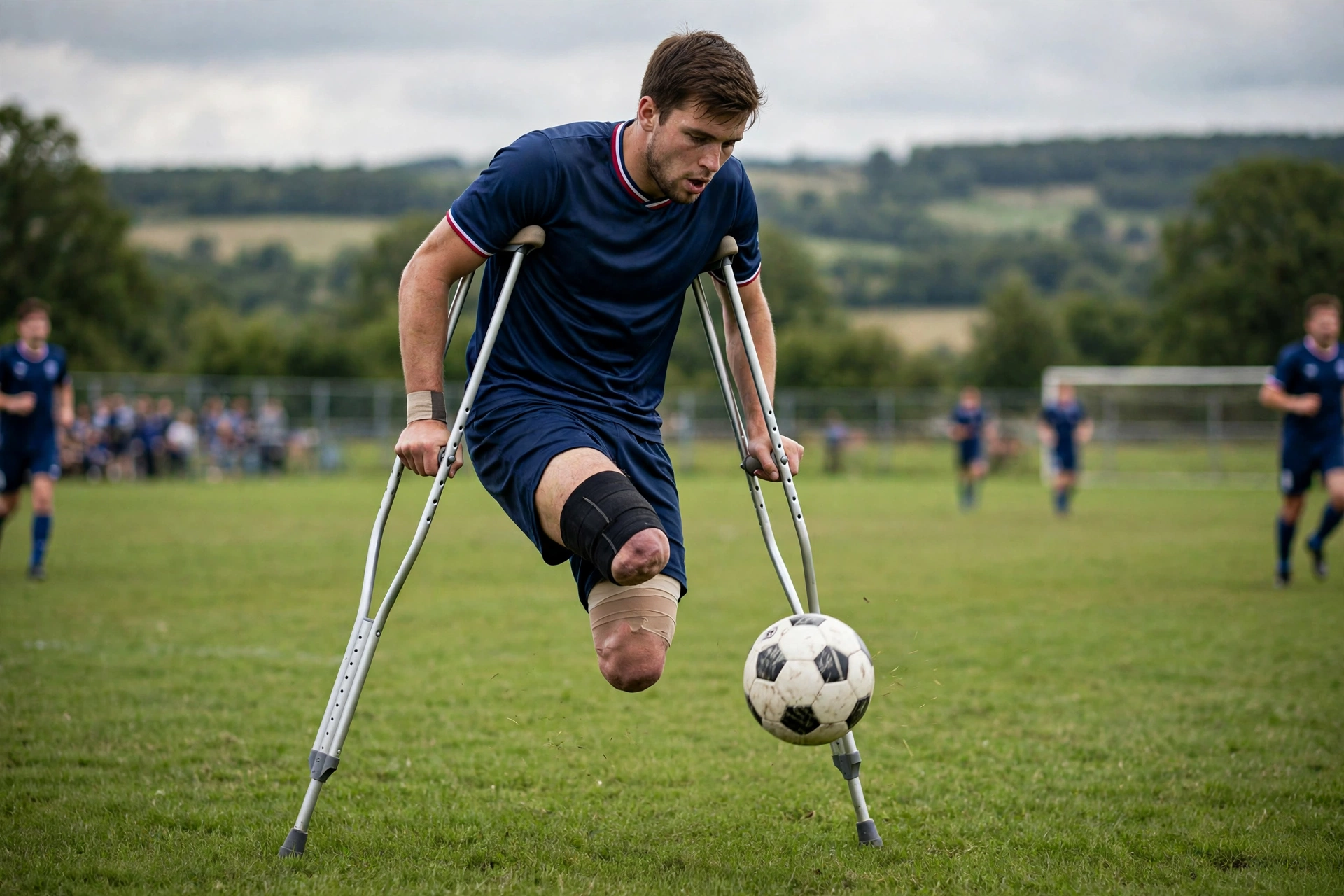
In general terms, no — amputee football is played without helmets, and players do not wear one as part of the standard kit for the sport. Amputee football is a version of football played by athletes with a limb difference, usually on crutches, on a smaller pitch with a smaller ball. The game is built around balance, speed and close control, and the kit is the same as in regular football: shirt, shorts, socks and boots, with crutches as the only extra equipment.
Because the sport looks different from regular football, it is natural to wonder whether players wear extra protection. This guide explains why helmets are not part of amputee football, what protection players do use, and when a helmet might still make sense off the pitch.
Why Don’t Amputee Football Players Wear Helmets?
The main reason is that amputee football does not involve the kind of head contact that helmets are designed for. Players run on crutches, the ball stays low, and tackling is made with the feet and the crutches rather than with the head or shoulders. There is no heading of high balls in the way there is in regular football, and there is no tackling at head height, so a helmet would not add much protection for the risks the game actually carries.
There is also a practical reason: a helmet would get in the way. Amputee football is a fast game played in a small space, and players need a clear view, free hearing and full balance to move on crutches. A helmet adds weight on the head and can limit vision and hearing, which matters more in this sport than in sports where the head is the main point of contact. In general terms, the kit stays light so the players can move freely.
What Protection Do Amputee Football Players Use Instead?
Protection in amputee football comes from the rules and the kit, not from a helmet. The game is played on a smaller pitch with fewer players, which keeps speeds manageable and reduces heavy collisions. Fouls are called tightly, and dangerous play — including tackling with a crutch in a way that could hurt another player — is penalised. These rules shape a game where the main risks are falls and knocks to the legs, not head injuries.
Players protect themselves with good footwear, shin guards and well-fitted crutches. Shin guards are the main piece of protective kit, because most contact in the game is at leg level. Crutches are also checked and maintained carefully, because a broken or slipping crutch is a bigger risk than anything a helmet would guard against. Some players wear gloves to protect their hands on the crutch grips, which is a small but practical piece of kit.
Falling is part of the game, and players learn how to fall safely as part of their training. Coaches teach players to tuck, roll and protect their arms when they go down, so a fall ends in a slide rather than a hard landing. In general terms, the sport relies on technique and awareness to keep players safe, rather than on padding or helmets.
Is Amputee Football a Contact Sport?
Amputee football involves contact, but it is not a heavy-contact sport in the way rugby or American football are. Players challenge for the ball, shoulder to shoulder, and they can be knocked off balance, but there is no tackling that targets the head or upper body. The contact is mostly at leg level, and the small pitch keeps the game close and controlled rather than wide open and fast.
Because the contact is limited, the injury pattern is different from heavy-contact sports. The most common problems are falls, twists and knocks to the legs and hands, which are handled with shin guards, good boots and safe falling technique. A helmet is designed for sports where the head is regularly at risk, and that is not how amputee football is played.
When Might a Helmet Make Sense for an Amputee Football Player?
There are situations off the pitch where a helmet is sensible. Some players also play other sports, such as cycling or wheelchair basketball, where a helmet is part of the kit. A player who cycles to training, for example, should wear a cycling helmet for the ride, even though they will take it off for the match. The helmet belongs to the activity, not to the person.
Young players are another case. A child learning the game may fall more often while they build balance on crutches, and a coach or parent may decide that a soft headguard gives extra reassurance during early training. That is a personal choice rather than a rule of the sport, and it should be discussed with the coach so it does not limit the child’s vision or balance. If you are learning about how helmets handle different kinds of impact, reading about what MIPS is for helmets can help you understand one of the technologies used in modern helmet design.
What Should a Parent or Coach Know Before a First Session?
The most useful thing is to check the kit list with the club before the first session. The club will say what is needed — usually boots, shin guards, a water bottle and crutches — and what is not. There is no need to buy a helmet for amputee football itself, and the money is better spent on well-fitted boots and shin guards that will be used every week.
It is also worth asking about the club’s approach to falls and safety. A good club will have a warm-up routine, a clear plan for what happens when a player falls, and a first aider on the sideline. Parents should feel free to ask these questions, because they show the club takes safety seriously. The answer will almost always confirm that helmets are not part of the kit, and that the club’s safety plan is built around the real risks of the game.
Frequently Asked Questions
Q: Do amputee football players wear helmets in matches?
A: In general terms, no. Helmets are not part of the standard kit for amputee football, because the game does not involve the head contact that helmets are designed for.
Q: Should a child wear a helmet when learning amputee football?
A: In general terms, it is not required, and most children play without one. A parent who wants extra reassurance should discuss a soft headguard with the coach first, so it does not limit vision or balance.
Q: What protective kit is most important in amputee football?
A: Shin guards and good boots matter most, along with well-maintained crutches. These protect against the knocks that actually happen in the game.

Olivia
Writer at Helmet Today, covering helmet reviews, fit and riding safety.