In general terms, a carbon fibre helmet lasts about five years from first use, though the exact lifespan depends on how often you ride, how you store it, and whether it has been dropped or involved in a crash. Carbon fibre helmets are prized for their light weight and strength, but the material of the shell is only part of the story. The protective foam inside the helmet, the straps, and the liner all age as well, and they are often the parts that decide when a helmet should be retired.
Many riders assume that because carbon fibre is a strong, high-tech material, a carbon fibre helmet will last much longer than a helmet made from other materials. That is not quite how it works. The shell is tough, but the helmet as a whole is a system, and the parts that absorb impact wear out with time and use.
What Decides How Long a Carbon Fibre Helmet Lasts?
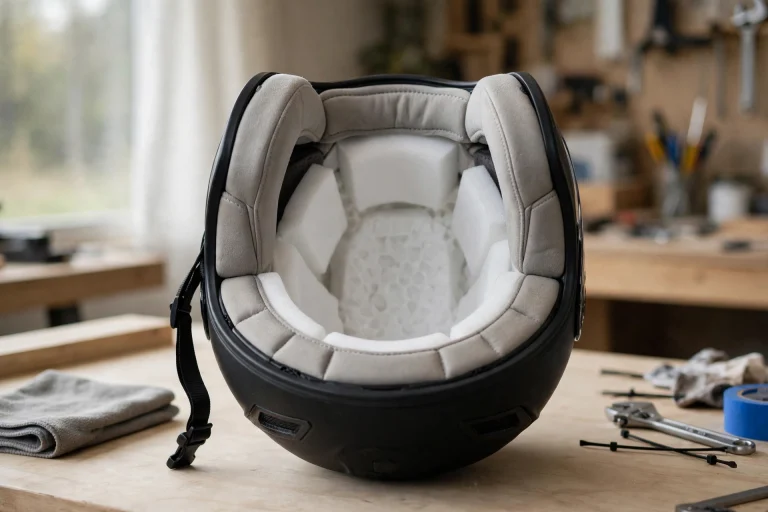
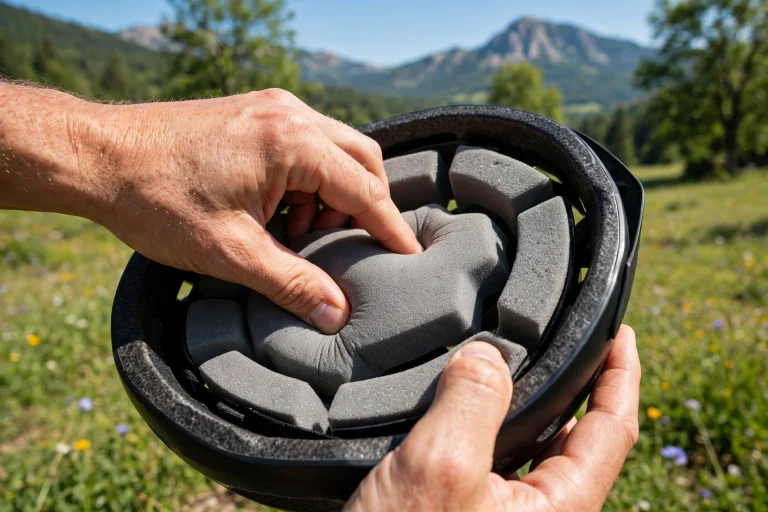
Several factors decide the life of a carbon fibre helmet. The first is the foam liner inside the shell, usually made from expanded polystyrene. This foam is designed to crush and absorb energy in an impact, and it slowly loses its springiness with age, heat, and use.
The second factor is how the helmet is used and stored. A helmet that is worn daily, left in a hot car or in direct sunlight, or knocked around in a garage will age faster than one that is worn at weekends and stored in a cool, dry place. Ultraviolet light, heat, and chemicals can all affect the materials in a helmet over time, including the shell, the liner, and the straps.
The third factor is damage. A carbon fibre shell is strong, but it can be damaged by a hard drop or a crash, and that damage may not be visible from the outside. The shell can develop small cracks or layers separating inside the material that are hard to spot without a close inspection. In general terms, a helmet that has been damaged should be replaced at once, however new it is.
Does the Carbon Fibre Shell Itself Wear Out?
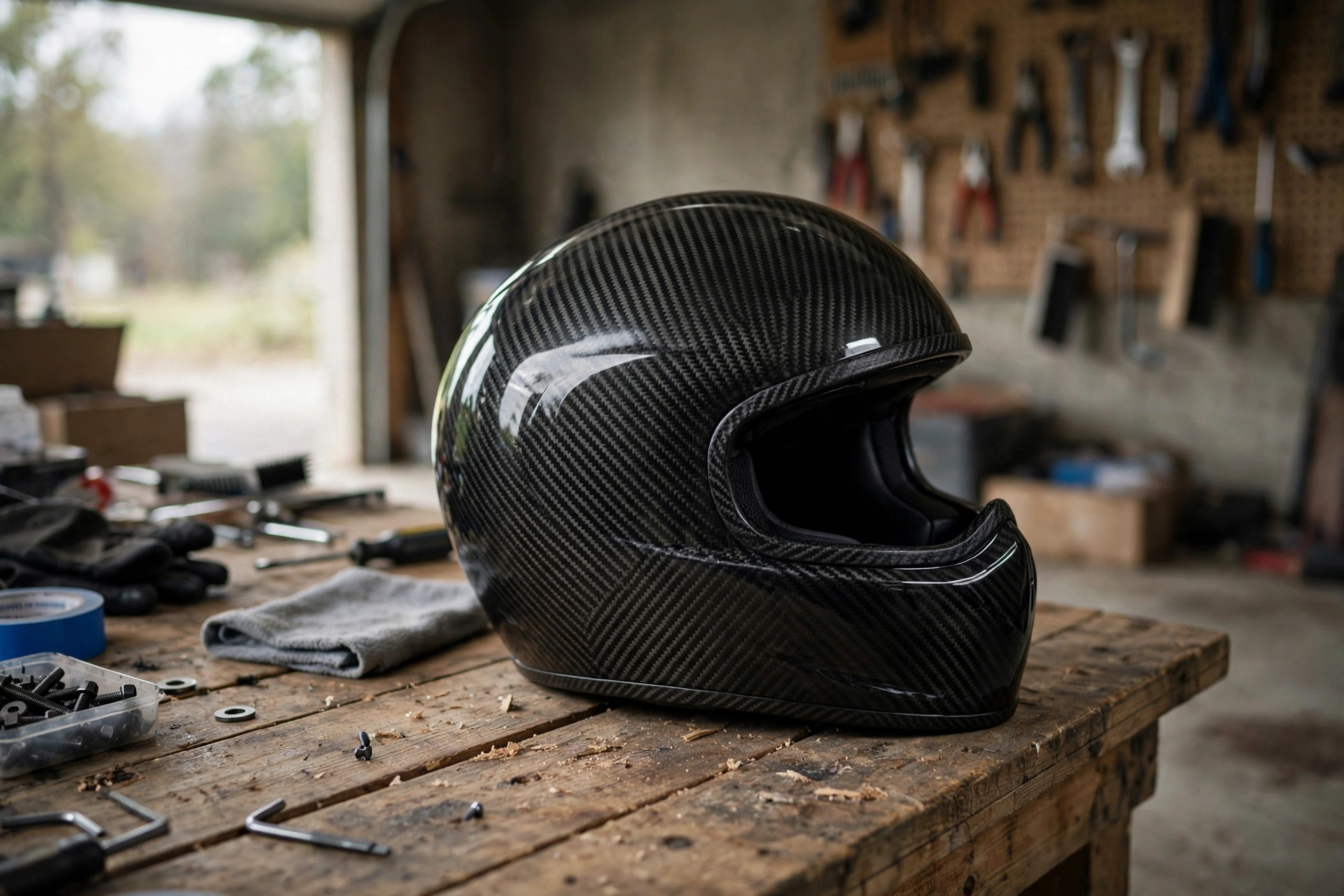
Carbon fibre is a very strong and light material, and the shell of a carbon fibre helmet is designed to spread the force of an impact across a wide area. In normal use, the shell itself does not wear out in the way the foam liner does. It does not go soft with age, and it holds its shape well. This is one of the reasons carbon fibre helmets are popular with riders who want a light, strong helmet.
However, a strong shell does not mean an indestructible one. Carbon fibre can be damaged by sharp impacts, and once the fibres or the resin holding them together are cracked, the shell may not protect as it should. The damage can be hidden under the paint or the clear coat, which is why a helmet that has been dropped hard onto a hard surface should be checked carefully and, if there is any doubt, replaced.
How Can You Tell When a Carbon Fibre Helmet Needs Replacing?
There are several signs that a carbon fibre helmet is reaching the end of its life. The most obvious is age: if the helmet is five years old or more from first use, it is time to think about replacing it, even if it looks fine.
Fit is another useful sign. If the helmet feels looser than it used to, or if it moves around more than it did when it was new, the liner has probably compressed and the helmet may no longer fit as it should. A helmet that no longer fits snugly cannot protect you properly, because it may shift in a crash.
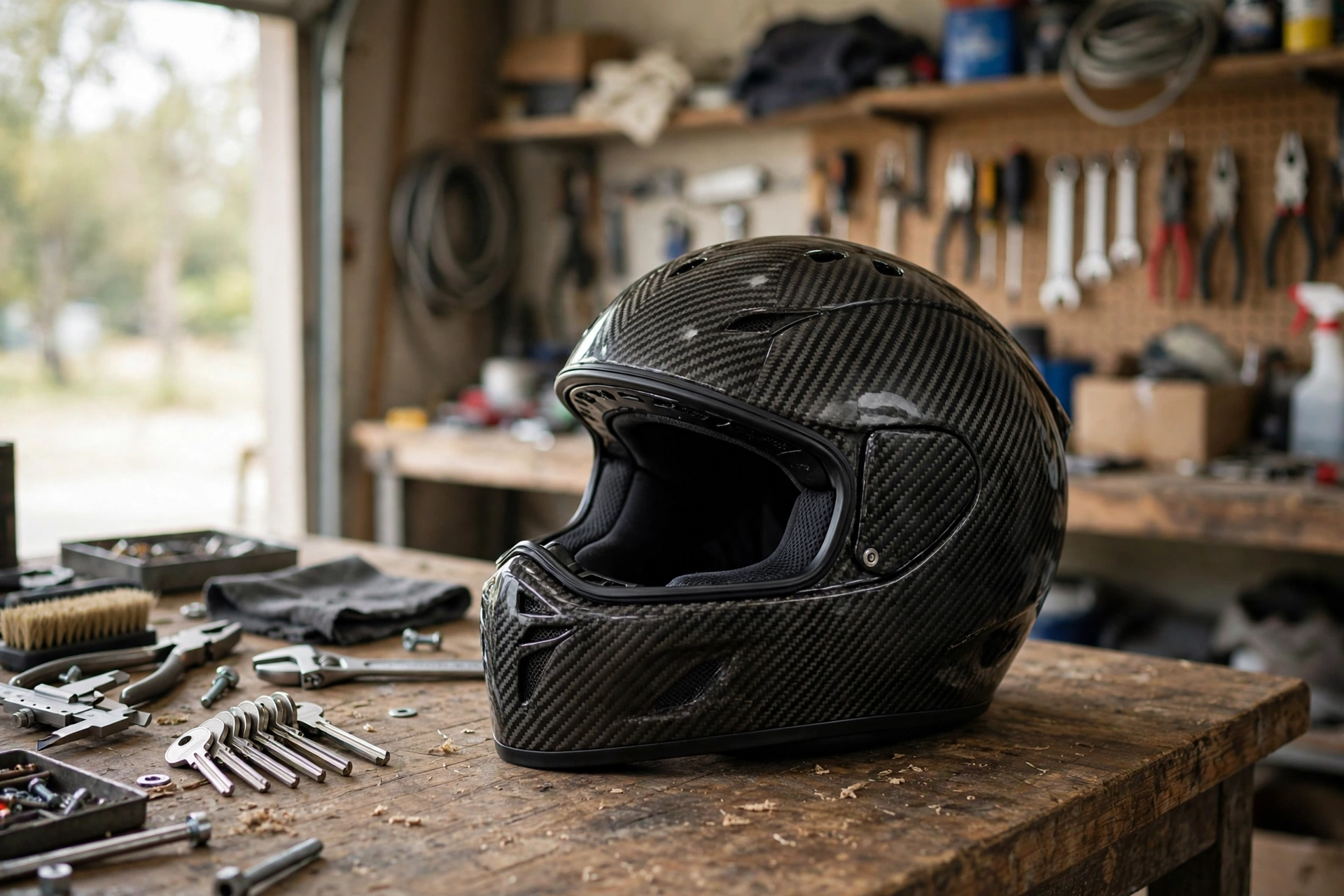
Look for visible signs of wear as well. Check the shell for cracks, chips, or areas where the clear coat is peeling. Check the straps for fraying, and make sure the fastening still holds firmly. Check the liner for flattening, crumbling, or a smell that will not go away after cleaning. Any of these signs, on their own or together, is a good reason to retire the helmet. When in doubt, replace it — a helmet is not the place to take chances.
How Should You Look After a Carbon Fibre Helmet?
Good care can help a carbon fibre helmet reach the full span of its useful life. Store it in a cool, dry place, away from direct sunlight and away from heat sources. Do not leave it on a motorcycle in strong sun, in a car boot on a hot day, or hanging on a mirror where it can fall. A helmet bag or a shelf in a garage is a better home for it.
Clean the helmet gently. Wipe the shell with a soft cloth and mild soap and water, and avoid strong solvents, petrol, or harsh cleaning products, which can damage the shell, the clear coat, or the liner. Remove the comfort liner if you can and wash it according to the maker’s instructions. Let everything dry naturally, away from direct heat, before you put the helmet back together.
Handle the helmet with care. Do not drop it, do not throw it down, and do not hang it by its strap where it can swing and knock against hard surfaces. Small knocks add up over time, and a helmet that is treated roughly will not last as long as one that is treated gently.
Does Impact Technology Change the Lifespan?
Many modern carbon fibre helmets include extra technology designed to help manage rotational forces in a crash. These systems usually sit between the shell and the liner, and they are made from lightweight materials that can also age with time and use. They do not make the helmet last longer, and they do not extend the five-year guide. If anything, they are one more part of the helmet that should be checked as it ages.
If your helmet has this kind of system, it is worth understanding how it works so you can look after it properly. Reading about what MIPS is for helmets can help you understand one of the most common systems and what it does in a crash. In general terms, the system is designed to work for the life of the helmet, and it should be replaced along with the helmet when the time comes.
The important thing is not to assume that extra technology means extra lifespan. A helmet with the latest impact system still has foam that ages, straps that wear, and a shell that can be damaged. The five-year guide applies to carbon fibre helmets with or without extra technology.
Frequently Asked Questions
Q: How long does a carbon fibre helmet last in general terms?
A: In general terms, about five years from first use. The carbon fibre shell itself is very strong, but the foam liner, straps, and comfort liner age with time and use, and they are usually what set the retirement date.
Q: Does a carbon fibre helmet last longer than other helmets?
A: Not by much. The shell is strong and holds its shape well, but the foam inside ages in the same way as in other helmets. The five-year guide applies to carbon fibre helmets just as it does to helmets made from other shell materials.
Q: Should I replace a carbon fibre helmet after dropping it?
A: If it was a hard drop onto a hard surface, yes, or at least have it checked carefully. Carbon fibre can hide damage under the paint, and a cracked shell may not protect you properly. When in doubt, replace the helmet rather than risk it.

Olivia
Writer at Helmet Today, covering helmet reviews, fit and riding safety.