In general terms, the EPS liner inside a helmet lasts about five years from first use, and it should be replaced along with the helmet when that time comes — because the liner is the part that absorbs the force of an impact, and it slowly loses that ability as it ages. EPS stands for expanded polystyrene, the firm foam you can see or feel inside the shell of most helmets. It looks simple, but it does the hardest job in a crash: it crushes in a controlled way and soaks up the energy that would otherwise reach your head.
Many riders know they should replace a helmet every few years, but fewer know why. The answer is mostly about the EPS liner. This guide explains what the liner is, how it works, what makes it wear out, and how to tell when it has reached the end of its life.
What Is the EPS Liner and What Does It Do?
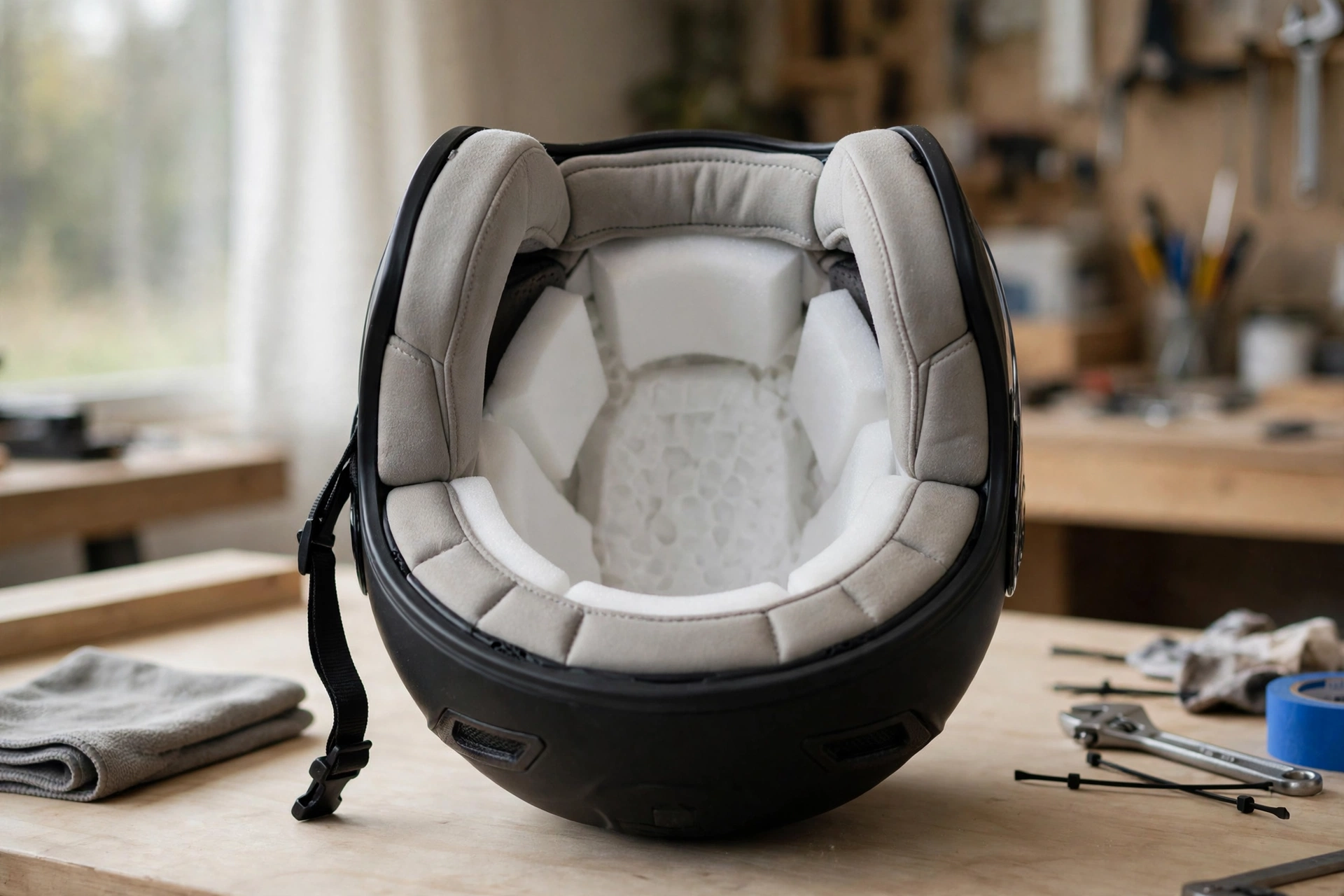
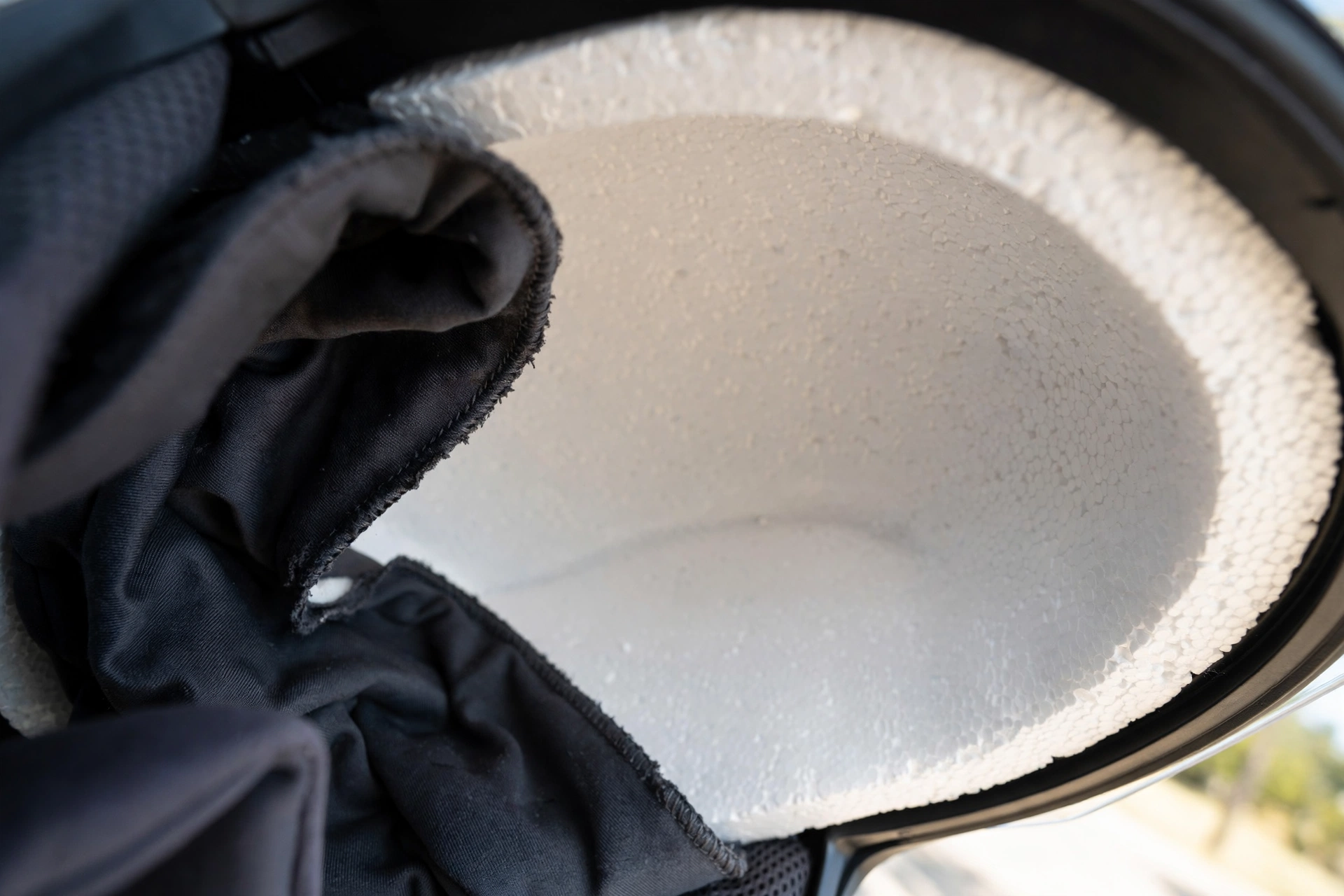
The EPS liner is the layer of firm foam that sits between the outer shell of your helmet and your head. It is usually white or pale in colour, and it is shaped to fit closely inside the shell. You may not see much of it, because it is covered by a thin comfort liner, but it is there in every modern helmet, and it is the main reason a helmet protects you in a crash.
When your head hits something in a crash, the outer shell spreads the force over a wide area, and the EPS liner then crushes to absorb that force. By crushing, it slows your head down more gently than a hard surface would, and that slower stop is what reduces the force reaching your brain. The liner is designed to crush once: after it has absorbed a serious impact, it stays crushed and cannot do the job again, which is why a helmet must be replaced after a crash.
The liner also helps the helmet fit. It holds its shape around your head and works with the comfort liner to keep the helmet snug and stable. Over time, though, the foam loses some of its springiness, and the fit loosens.
What Makes an EPS Liner Wear Out?
Several things wear out an EPS liner over time. The first is simply age. The foam slowly loses its resilience as the years pass, even if the helmet is rarely worn. Heat speeds this up: a helmet left in a hot car, in a sunny garage, or on a motorcycle in strong sunlight will age faster than one stored in a cool, dry place.
The second is use. Every time you put the helmet on and take it off, the liner is compressed slightly. Sweat, hair products, and skin oils seep into the comfort liner and reach the foam, and repeated compression slowly flattens the foam where it presses against your head.
The third is damage. A drop or a knock can dent or crack the EPS, and that damage may be hidden under the comfort liner where you cannot see it. Even a small crack can weaken the liner in that spot. Chemicals can also damage it: strong solvents, petrol, and some cleaning products can soften or dissolve the foam.
How Long Does an EPS Liner Last in Practice?
In general terms, an EPS liner lasts about five years from the first time the helmet is used. This is the same timeframe makers usually suggest for the helmet as a whole, and it is no coincidence: the liner is the part that sets the limit. A helmet that is five years old may still look good and feel comfortable, but the foam inside may no longer absorb impact as well as it did when it was new.
How you use and store the helmet affects where in that range you land. A helmet worn every day in hot weather and stored in a warm garage may be past its best sooner than five years. A helmet worn occasionally and stored in a cool, dry place may still be sound at five years, but it is still sensible to replace it rather than stretch the guide further. The liner’s decline is gradual and invisible, so there is no reliable way to tell by looking that it is still fully effective.
How Can You Tell When the Liner Is Worn Out?
The most useful sign is fit. If your helmet feels looser than it used to, or if it moves around more when you shake your head, the liner has probably compressed and the helmet no longer fits as it should. A loose helmet cannot protect you properly, because it may shift in a crash and leave part of your head unprotected. If you notice this change, it is time to replace the helmet.
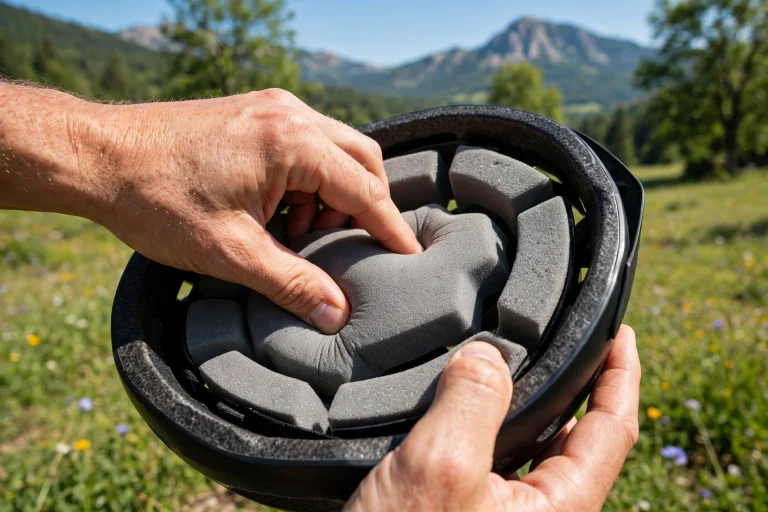
You can also inspect the liner itself. Remove the comfort padding if you can, and look at the foam underneath. Look for cracks, dents, crumbling edges, or areas that feel softer than the rest. A healthy EPS liner feels firm and even all the way around. If you find a crack or a dent, or if the foam feels soft or crumbly in places, the helmet should be retired.
Smell and staining can be clues as well. A liner that smells strongly even after cleaning, or comfort padding that is badly stained, suggests the helmet has absorbed a lot of sweat and oils over the years. This does not prove the foam is worn out, but it is a sign that the helmet has had a lot of use.
Can the Liner Be Replaced Instead of the Helmet?
In most helmets, the EPS liner cannot be replaced on its own. It is glued or moulded into the shell, and it is shaped to that particular helmet. The comfort liner — the soft padding you feel against your head — can usually be removed, washed, or replaced, but the EPS foam underneath is a fixed part of the helmet. When the EPS liner is worn out, the whole helmet must be replaced.
This is one reason why it pays to look after your helmet. Keeping it clean, storing it properly, and avoiding drops and harsh chemicals will help the liner last for the full span of its useful life. If you are comparing helmets and want to understand the impact technology inside them, reading about what MIPS is for helmets can help you understand how one common system works alongside the EPS liner to manage the forces in a crash.
When you do replace your helmet, check the new one carefully. Look for a firm, even EPS liner, a shell free of defects, and a fit that is snug all the way around. Keep a note of the date you start using it, and store it well from the beginning.
Frequently Asked Questions
Q: How long does a helmet EPS liner last?
A: In general terms, about five years from first use. The foam slowly loses its ability to absorb impact as it ages, and heat, sweat, and daily use can shorten its life.
Q: Can I replace just the EPS liner in my helmet?
A: In most helmets, no. The EPS liner is fixed into the shell and shaped to that helmet, so it cannot be swapped on its own. The soft comfort padding can usually be removed and washed or replaced, but the EPS foam underneath is part of the helmet itself.
Q: How do I know if my EPS liner is damaged?
A: Remove the comfort padding and look at the foam for cracks, dents, or crumbling edges, and feel for soft spots. A looser fit is also a warning sign. If you find damage, replace the helmet.

Olivia
Writer at Helmet Today, covering helmet reviews, fit and riding safety.