The best way to carry a helmet on a train is in a padded helmet bag or clipped to the outside of your backpack, kept on your lap or on the luggage rack, so it is secure, out of the aisle, and safe from knocks. Trains are far gentler on luggage than planes or buses, but a helmet still needs a little care. The right method depends on whether you are commuting, travelling long distance, or just hopping on for a few stops.
What Is the Easiest Way to Carry a Helmet on a Train?
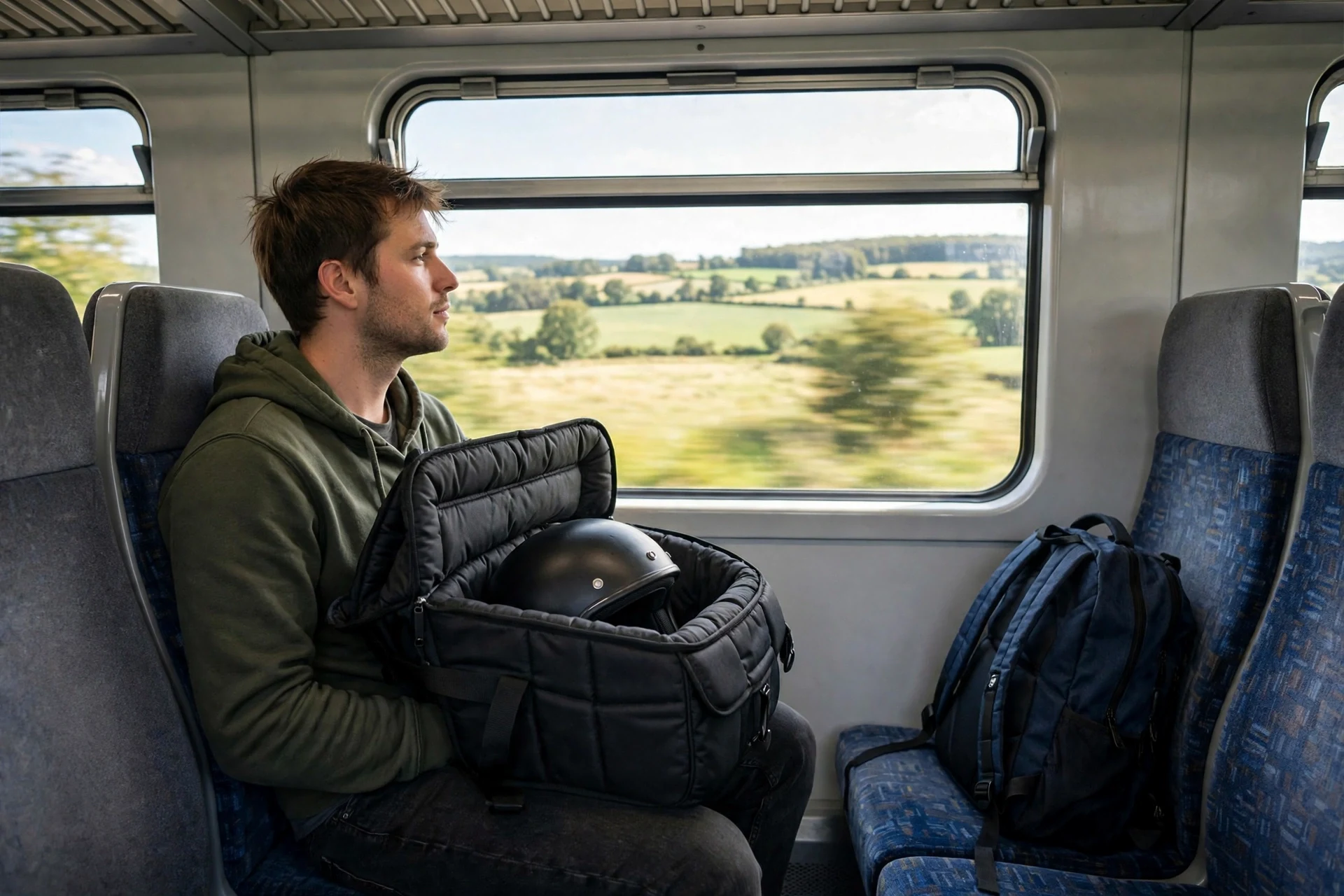
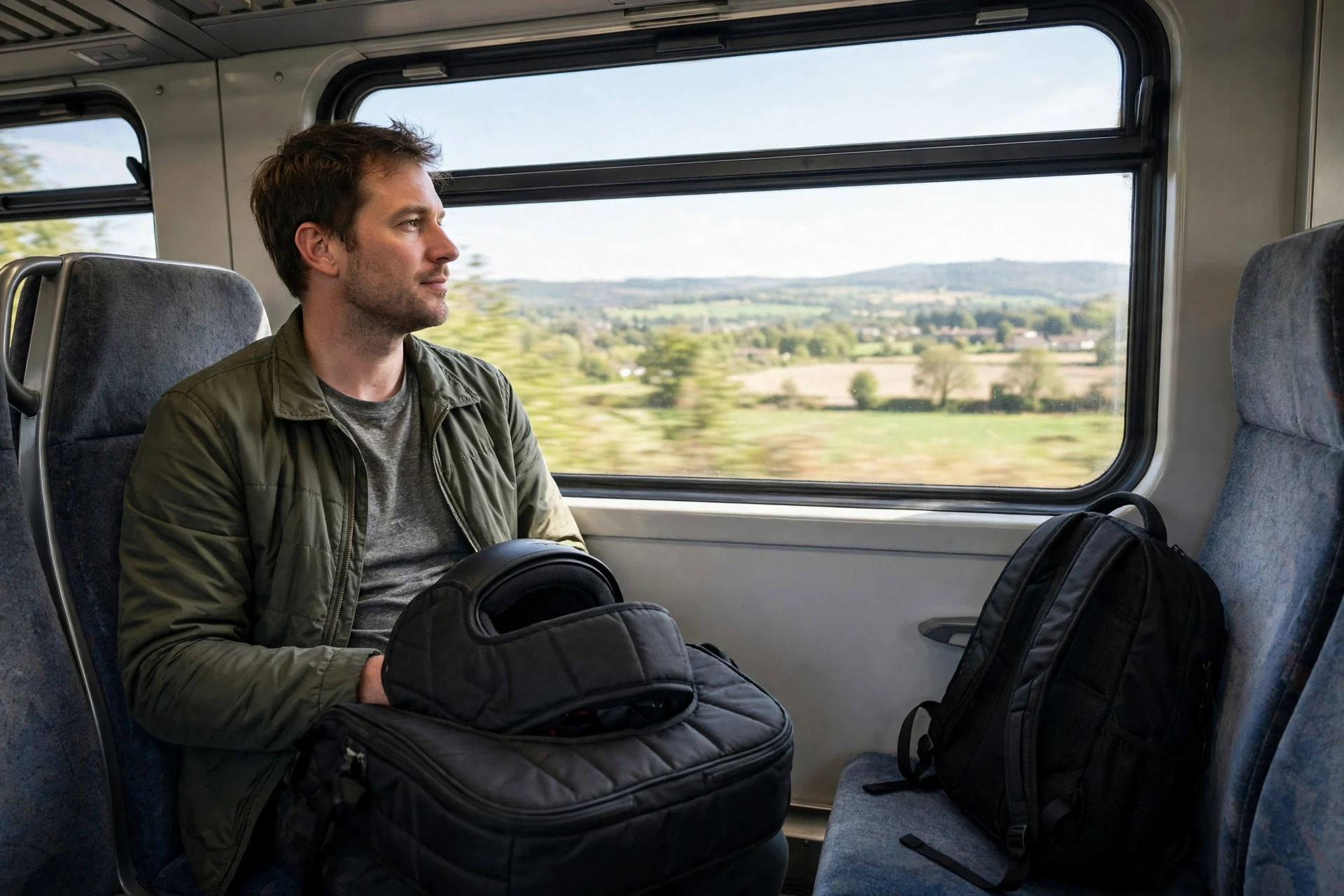
The easiest way to carry a helmet on a train is to put it in a helmet bag and keep it with you. A soft padded bag protects the shell from scratches, keeps the helmet clean, and gives you a handle to carry. You can set the bag on your lap, place it on the seat beside you if the train is quiet, or put it on the luggage rack above your head.
If you do not have a helmet bag, clipping the helmet to the outside of a backpack works well too. Most cycling and motorcycle backpacks have straps or a net for this. The helmet stays secure, your hands are free for tickets and doors, and you do not have to worry about setting it down on a dirty train floor.
Where Should You Put a Helmet on a Train?
Where you put a helmet on a train depends on how busy it is. On a quiet train, the seat beside you is a convenient spot, but on a busy train that seat may be needed by another passenger. Your lap is a good default: the helmet is safe, it is not in anyone’s way, and you can feel if it starts to slip.
The overhead luggage rack is another good option, especially on a longer journey. Place the helmet bag on the rack with the opening facing inwards, so it cannot roll out, and make sure it is not going to be crushed by someone else’s heavy bag. A helmet bag makes this much safer, because it protects the shell and stops it sliding around.
How Do You Carry a Helmet When Commuting by Train?
Commuting by train with a helmet is usually a daily routine, so it is worth finding a method that is quick and reliable. Many commuters ride a bicycle to the station, take the train, and then ride or walk to work, and the helmet has to come along for the whole journey. A backpack with a helmet clip is the most popular solution, because it keeps the helmet on your back through every part of the trip.
If you ride to the station, wear the helmet for the ride, then clip it to your pack before you get on the train. When you arrive, unclip it and put it back on for the ride to work. The whole routine takes seconds once you are used to it, and it keeps your hands free for the station barriers and the train doors.
What About Long-Distance Train Journeys?
On a long-distance train journey, a helmet needs to be stored safely for hours, not just minutes. The overhead rack or the luggage area at the end of the carriage is usually the best place, because it keeps the helmet out of your way for the whole trip. A padded helmet bag is essential here, because the helmet will be jostled by the movement of the train and by other passengers putting bags in and out.
On a very long journey, it is also worth taking the helmet out of its bag from time to time to let it air. A helmet that sits in a closed bag for hours in a warm carriage can start to smell, especially if it was damp from a ride before you boarded. A few minutes of air on the seat beside you, if the train is quiet, will freshen it up. If you want to understand the safety features inside your helmet, reading about what MIPS is for helmets is a useful way to pass the time on a long trip.
How Do You Keep a Helmet Clean on a Train?
Keeping a helmet clean on a train is mostly about avoiding dirty surfaces. Train seats, floors, and luggage racks are not the cleanest places, so a helmet bag is your best friend. It keeps dust and dirt off the shell and the liner, and it stops the helmet picking up smells from the carriage.
If you do set the helmet down without a bag, try to put it on a clean surface, such as a newspaper or a jacket, rather than directly on the seat or the floor. When you get home, wipe the shell with a soft cloth and check the vents for dust. If the liner has picked up a smell, leave the helmet open to air overnight.
It is also worth keeping the visor clean. A train journey can leave dust and fingerprints on a visor, so give it a wipe with a soft, clean cloth when you arrive. Never use a rough cloth or a harsh cleaner on a visor, because scratches can affect your vision. Mild soap and lukewarm water are enough for most cleaning, followed by air drying.
What Mistakes Should You Avoid on a Train?
The most common mistake is leaving a helmet behind on the train. It is easy to do when you are in a hurry to get off, especially if the helmet is on the overhead rack or the seat beside you. Make a habit of checking your seat and the rack before you stand up, and keep the helmet in a bag that is easy to grab as you leave.
Another mistake is putting a helmet in the aisle or in a walkway. It is a trip hazard for other passengers, and it is likely to be kicked or stepped on. Always keep the helmet on your lap, on a seat, or on a rack, never on the floor in the aisle.
Finally, do not hang a helmet from a hook or a handle inside the train if it can swing. Train movements can send a swinging helmet into a window or a seat, which can scratch the shell or damage the liner. A helmet that is stored securely in a bag, on your lap, or on a rack will arrive in good condition, and you will arrive without having annoyed your fellow passengers.
Can I put my helmet on the luggage rack on a train?
Yes, a helmet bag on the overhead rack is a good spot on a longer journey, as long as it is placed where it cannot roll out or be crushed by heavier bags.
Should I wear my helmet on the train?
No, there is no need to wear a helmet on a train. Take it off, put it in a bag or clip it to your backpack, and keep it on your lap or on the rack.
What if the train is crowded and there is nowhere to put my helmet?
Keep it on your lap in its bag, or clipped to your backpack on your back. Avoid the floor and the aisle, where it can be kicked or become a trip hazard.

Olivia
Writer at Helmet Today, covering helmet reviews, fit and riding safety.