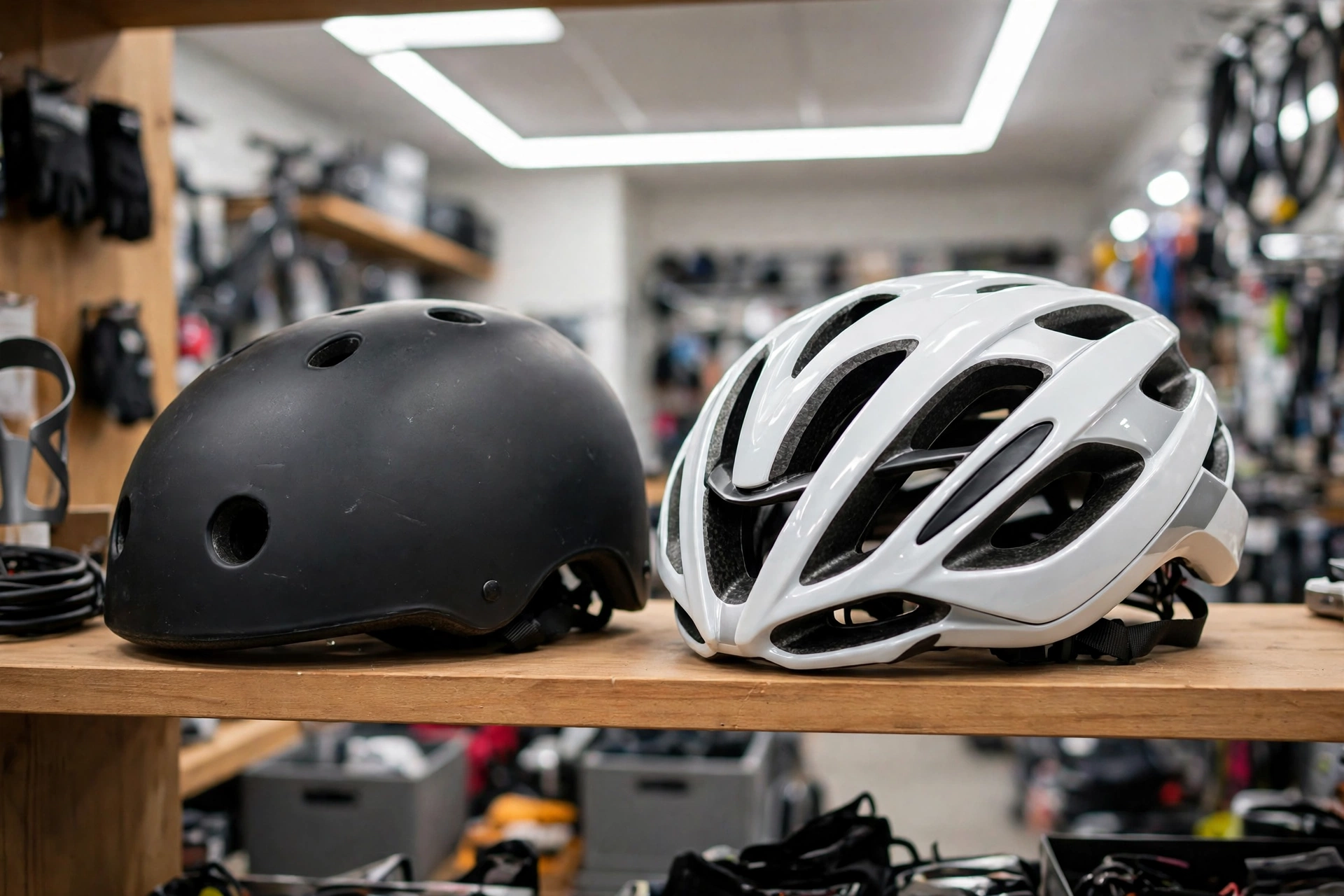
Cheap helmets do protect as well as expensive ones in general terms when they meet the same safety standard, because the standard sets a minimum level of protection that every helmet must pass. A helmet that passes the test is a safe helmet, whether it costs a little or a lot. The extra money for an expensive helmet usually buys comfort, ventilation, lighter weight, and a better fit, not a higher level of basic protection. That is good news for anyone on a budget: you do not need to spend a lot to protect your head, as long as you buy a genuine helmet that meets the right standard and fits you properly.
What does the price of a helmet actually buy?
The price of a helmet buys several things, and protection is only one of them. The largest part of the price often goes to comfort and weight. An expensive helmet is usually lighter, because it uses more costly materials and a more refined design. It often has better ventilation, with vents that are shaped to let air flow through without weakening the shell. It may have a softer, washable liner, a smoother adjustment dial, and a finish that looks and feels better. These things make the helmet more pleasant to wear, especially on a long ride, but they do not change the basic test it must pass.
Part of the price also goes to the brand, the marketing, and the research behind the helmet. A well-known brand may spend more on testing, on wind tunnel work, and on sponsoring professional riders. A cheaper helmet from a lesser-known maker may spend less on those things, but it still has to pass the same safety test to be sold legally. The test is the same for both, and a helmet that fails the test cannot be sold, no matter how cheap or how expensive it is.
Do cheap and expensive helmets pass the same tests?
Yes, cheap and expensive helmets sold in the same country must pass the same safety tests. In the United States, a bicycle helmet must meet the CPSC standard. In Europe, a cycling helmet must meet EN 1078. In Australia, the standard is AS/NZS 2063. These standards set out how the helmet is tested: it is dropped onto a hard surface from a set height, and the force that reaches the inside is measured. The helmet must keep that force below a set limit. The test is the same whether the helmet costs a little or a lot, and the helmet must pass to be sold.
The standards also cover other things, such as the strength of the straps, the coverage of the helmet, and the field of vision it allows. A helmet that fails any part of the test cannot be sold legally. This is why the standard matters more than the price: it is the guarantee that the helmet has been tested and has passed. When you buy a helmet, look for the standard mark inside the shell, and check that it matches the standard for your country and your activity.
Where do expensive helmets spend the extra money?
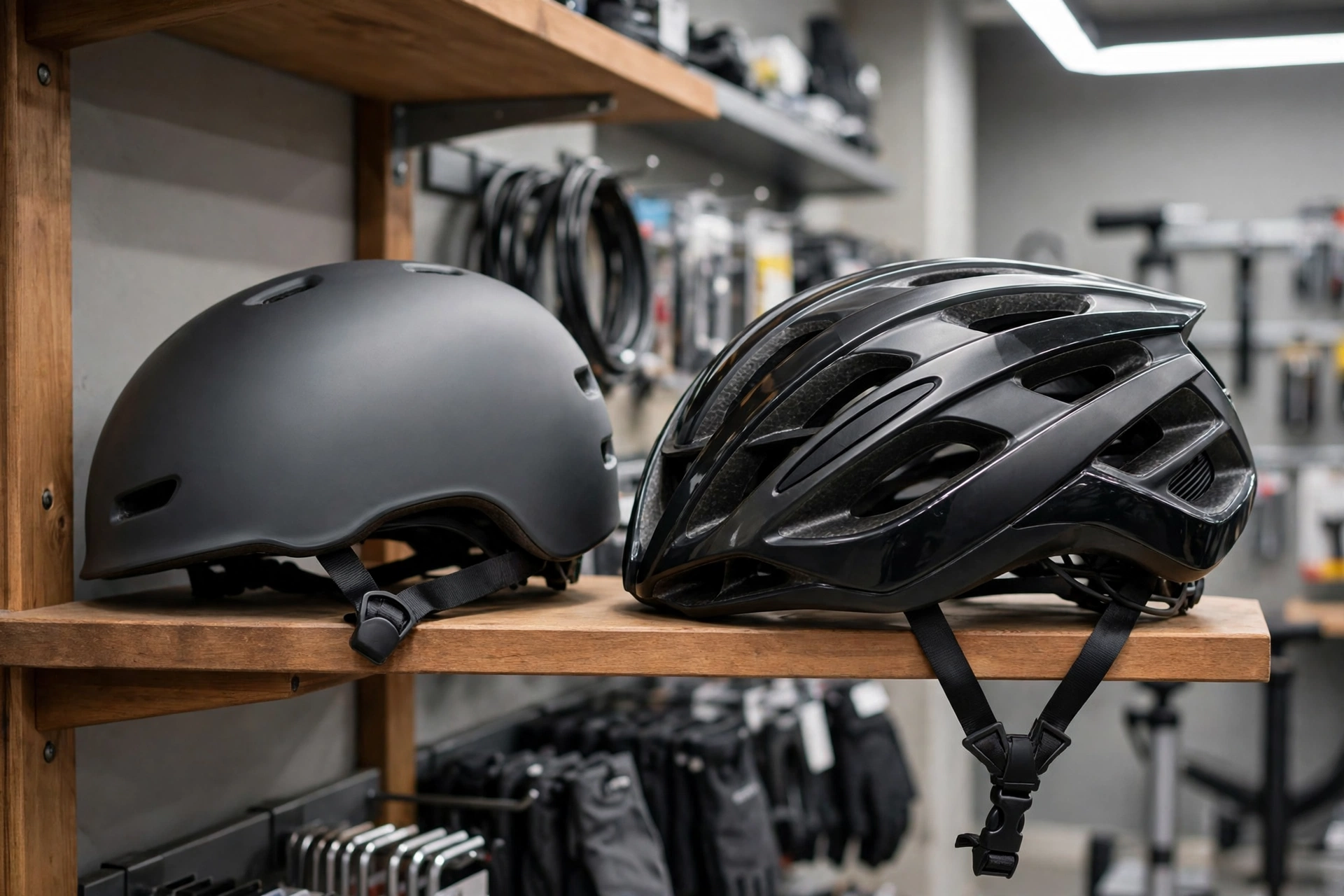
Expensive helmets spend the extra money on weight, ventilation, fit, and finish. A high-end helmet may use a lighter foam, a thinner shell, and a more complex internal structure to keep the weight down. It may have more vents, shaped to pull air through the helmet and over the head, which keeps the rider cooler on a climb. It may have a finer adjustment system, with a dial that can be turned with one hand and a cradle that fits the head more precisely. These are real benefits, and they matter to riders who spend hours in the saddle.
Expensive helmets may also include extra safety features. Some have a slip layer inside that lets the shell move slightly in an angled impact, reducing the twisting force on the head. A well-known example is MIPS, which is found in helmets at a range of prices, but is more common in mid-range and high-end models. Some helmets have extra coverage at the back of the head, or a reinforced shell that resists dents. These features can add protection, but they are not required by the standard, and a helmet without them can still pass the test.
When is a cheap helmet a good choice?
A cheap helmet is a good choice when it meets the right standard, fits you well, and comes from a genuine maker. A basic helmet from a known brand, sold by a reputable shop, is a safe and sensible buy. It will protect your head in a fall, it will be comfortable enough for most rides, and it will leave money for other kit. For a rider who cycles to work, rides with their children, or is buying a first helmet, a cheap helmet that fits well is a better choice than an expensive helmet that fits badly.
A cheap helmet is also a good choice when you need a spare. A family with several riders, a club that keeps loan helmets, or a rider who wants a second helmet for commuting will find that a cheap helmet does the job. The key is to check the fit and the standard, and to buy from a shop you trust. A helmet bought from a market stall or an unknown online seller may not be genuine, and it may not have been tested at all.
When is it worth paying more?
Paying more is worth it when you ride for long hours, in hot weather, or at high speed, and when comfort makes the difference between wearing a helmet and leaving it at home. A lighter helmet with better ventilation is more comfortable on a long ride, and a helmet that fits precisely is less likely to cause a headache or to slip. For a rider who spends hours in the saddle every week, the extra comfort of an expensive helmet is a real benefit, and it is worth paying for.
How do you spot a helmet that is too cheap to trust?
A helmet that is too cheap to trust is usually one that has no standard mark, no maker name, or no clear information about where it was made. A genuine helmet will have a label inside showing the standard it meets, the maker’s name, the size, and the date of manufacture. If the helmet has no label, or if the label looks printed on a sticker that can be peeled off, be suspicious. A helmet sold for a very low price by an unknown seller, with no packaging and no instructions, is a warning sign.
Is a cheap helmet safe?
Yes, in general terms, a cheap helmet that meets the right safety standard and fits properly is safe. The standard sets a minimum level of protection that every helmet must pass, whatever its price.
Why are some helmets so expensive?
Expensive helmets usually cost more because they are lighter, better ventilated, and more comfortable, and they may have extra features such as a slip layer. The extra cost buys comfort and refinement more than basic protection.
Should I buy the most expensive helmet I can afford?
Not necessarily. Buy the helmet that fits you best, meets the right standard, and that you will wear every time. If that helmet is cheap, it is a good buy.

Olivia
Writer at Helmet Today, covering helmet reviews, fit and riding safety.