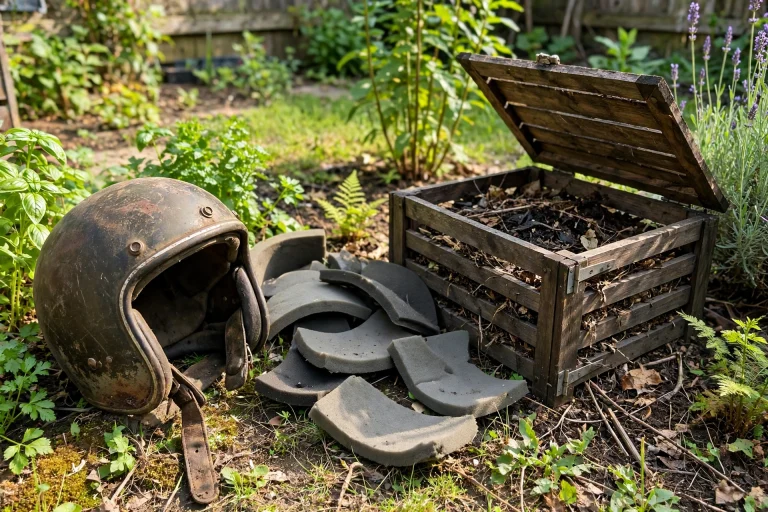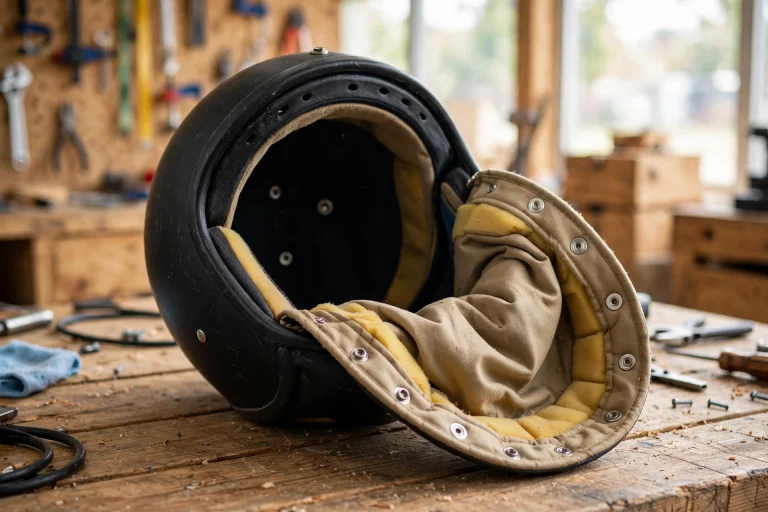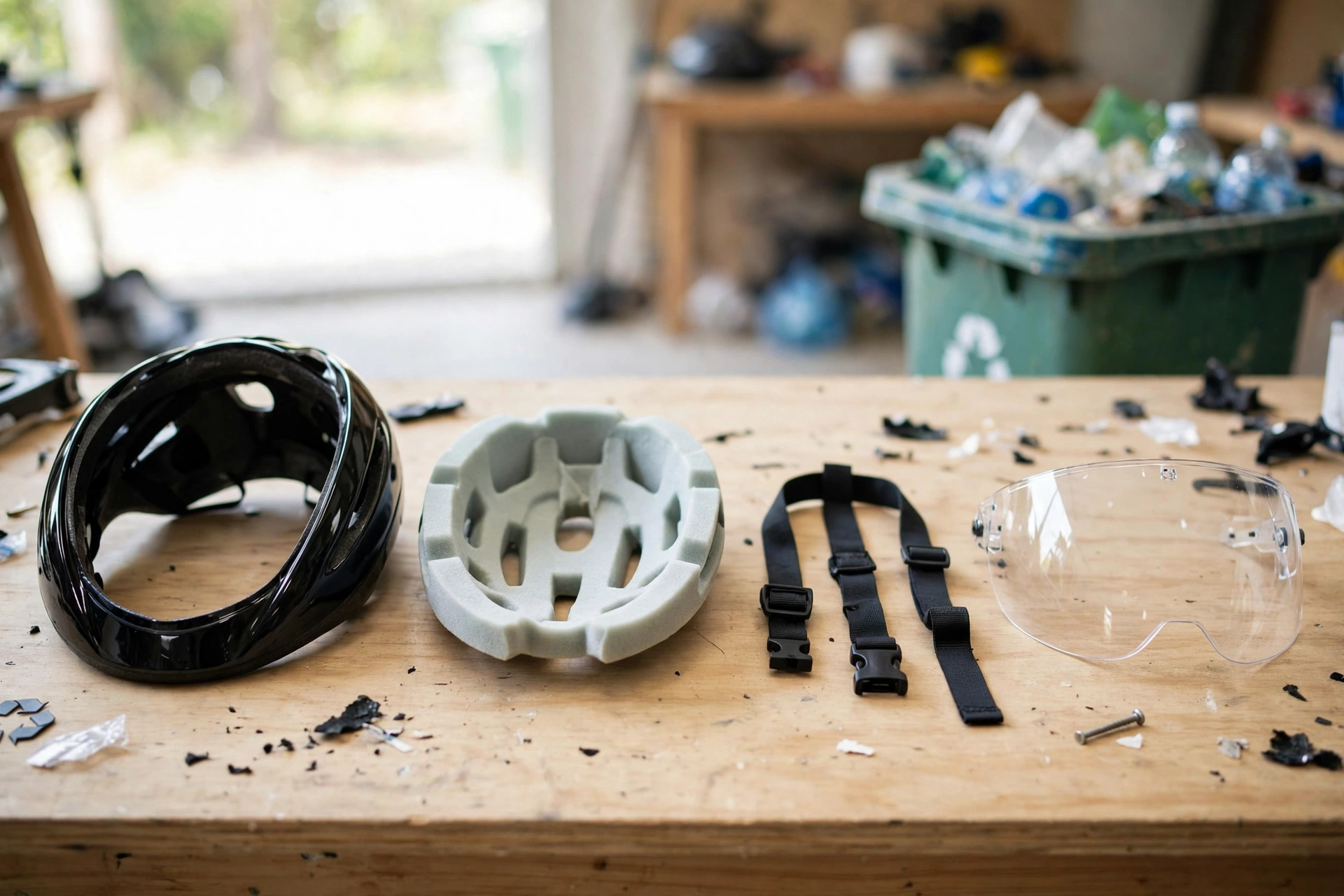
A circular helmet design is a helmet made to be reused, repaired, and recycled rather than thrown away — in general terms, it applies the idea of a circular economy to helmets, so that materials stay in use for as long as possible and as little as possible ends up as waste. Instead of the usual pattern of make, use, and throw away, a circular helmet is designed from the start with its whole life in mind, including what happens when it is worn out or damaged.
The idea matters because helmets are replaced regularly. A helmet that has been in a crash should be replaced, and even a helmet that has never crashed will wear out over time as its padding, straps, and shell age. That means a large number of helmets reach the end of their useful life every year, and most of them are difficult to recycle because they are made from several different materials glued and moulded together. A circular design tries to solve that problem at the design stage, before the helmet is even made.
What Does Circular Mean for a Helmet?
Circular means thinking about a helmet as part of a loop rather than a straight line. In a straight-line model, raw materials are made into a helmet, the helmet is used, and then it is thrown away. In a circular model, the helmet is designed so that its parts can be taken apart, its materials can be recovered, and its useful life can be stretched for as long as possible. The aim is to waste less material and to need fewer new raw materials for the next helmet.
For a helmet, this starts with the choice of materials. A circular design favours materials that can be recycled or that come from recycled sources, and it avoids mixing materials in ways that make them hard to separate later. It also favours designs where the shell, the liner, and the straps can be taken apart without special tools, so that each part can go to the right place at the end of the helmet’s life.
In general terms, circular design is not a single feature you can add to a helmet. It is a way of designing that runs through every decision, from the materials chosen to the way parts are joined together.
How Is a Circular Helmet Different From a Normal Helmet?
From the outside, a circular helmet may look much like a normal helmet, and it must meet the same safety standards as any other helmet. The differences are in the details of how it is put together. A normal helmet is often made with parts that are glued or moulded into a single unit, which makes it strong but also makes it hard to take apart. A circular helmet uses fastenings and joints that can be undone, so that the shell, the padding, and the straps can be separated.
The difference also shows up in how the helmet is sold and supported. A maker of a circular helmet may offer spare parts, such as replacement pads or straps, so that a worn part can be changed without replacing the whole helmet. They may also offer a way to return the helmet at the end of its life, so that it can be taken apart and its materials recovered. These services are part of the design, not an afterthought.
Can a Helmet Be Repaired Instead of Replaced?
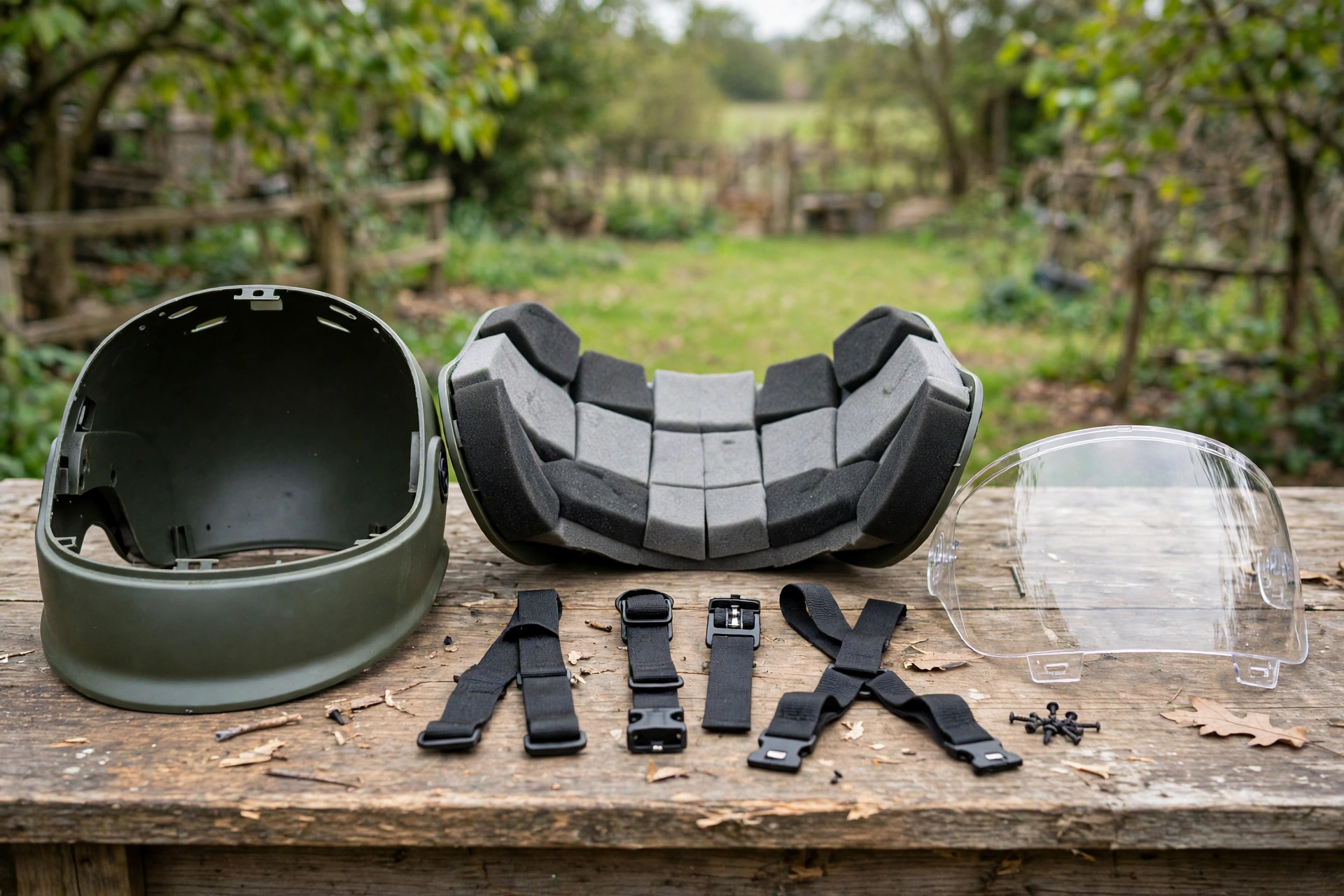
Some parts of a helmet can be repaired or replaced, and a circular design makes this easier. Padding and liners wear out faster than the shell, and they can usually be replaced with fresh ones. Straps can fray or lose their grip, and they can be changed. A visor can be scratched and swapped for a new one. These are all repairs that can extend the life of a helmet without affecting its safety, as long as they are done with the right parts.
What cannot be repaired is the core protective structure after a serious impact. If a helmet has been in a crash, or if the shell is cracked or the liner is crushed, the helmet should be replaced, not repaired. The protective foam inside a helmet works by deforming in a crash, and once it has done that it cannot be restored. In general terms, repair is for the parts that wear out with use, while replacement is for the parts that protect the head in a crash.
A circular design helps here by making the replaceable parts easy to reach and easy to change. If the pads can be removed and replaced in a few minutes, a rider is more likely to keep the helmet in good condition instead of putting up with a worn liner or buying a whole new helmet. If you want to understand how the protective parts of a helmet work, reading about what MIPS is for helmets explains one of the technologies used inside modern helmets.
What Happens to a Helmet at the End of Its Life?
At the end of its life, a normal helmet is usually thrown away, and because it is made from several materials joined together, very little of it can be recovered. A circular helmet is designed so that this ending is different. Its parts can be separated, and the materials can be sorted: the shell can go one way, the padding another, and the metal fittings another still. Each material then has a better chance of being used again.
Some makers run take-back schemes, where the rider returns the old helmet and the maker arranges for it to be taken apart and recycled. Others give guidance on how to take the helmet apart and where each part should go. In general terms, the end of a circular helmet’s life is planned in advance, rather than left to chance, and that planning is what makes recycling possible.
Is Circular Helmet Design the Future?
Circular helmet design is likely to become more common, because the pressures behind it are growing. Riders are more aware of waste, makers are under more pressure to reduce their environmental impact, and the rules around waste and recycling are getting stricter in many places. A helmet that is designed to last longer and to be recycled at the end of its life fits with all of those trends.
At the same time, safety will always come first. A circular helmet must protect the head just as well as a normal helmet, and no design change is worth making if it weakens that protection. The challenge for makers is to build a helmet that is both safe and circular — one that passes the same tests as any other helmet while being easier to repair, take apart, and recycle. In general terms, the makers who solve that challenge best will shape the future of helmet design.
Frequently Asked Questions
Q: What is a circular helmet design?
A: A circular helmet design is a helmet made to be reused, repaired, and recycled rather than thrown away. Its parts can be taken apart, its materials can be recovered, and worn parts like pads and straps can be replaced to extend its life.
Q: Can a damaged helmet be repaired?
A: Worn parts such as pads, straps, and visors can usually be replaced, but a helmet that has been in a crash or has a cracked shell or crushed liner should be replaced, not repaired, because its protective structure cannot be restored.
Q: How do I recycle an old helmet?
A: In general terms, check whether the maker offers a take-back or recycling scheme first. Otherwise, take the helmet apart if you can and sort the parts by material, and check local recycling guidance for each part, since facilities differ by area.

Olivia
Writer at Helmet Today, covering helmet reviews, fit and riding safety.