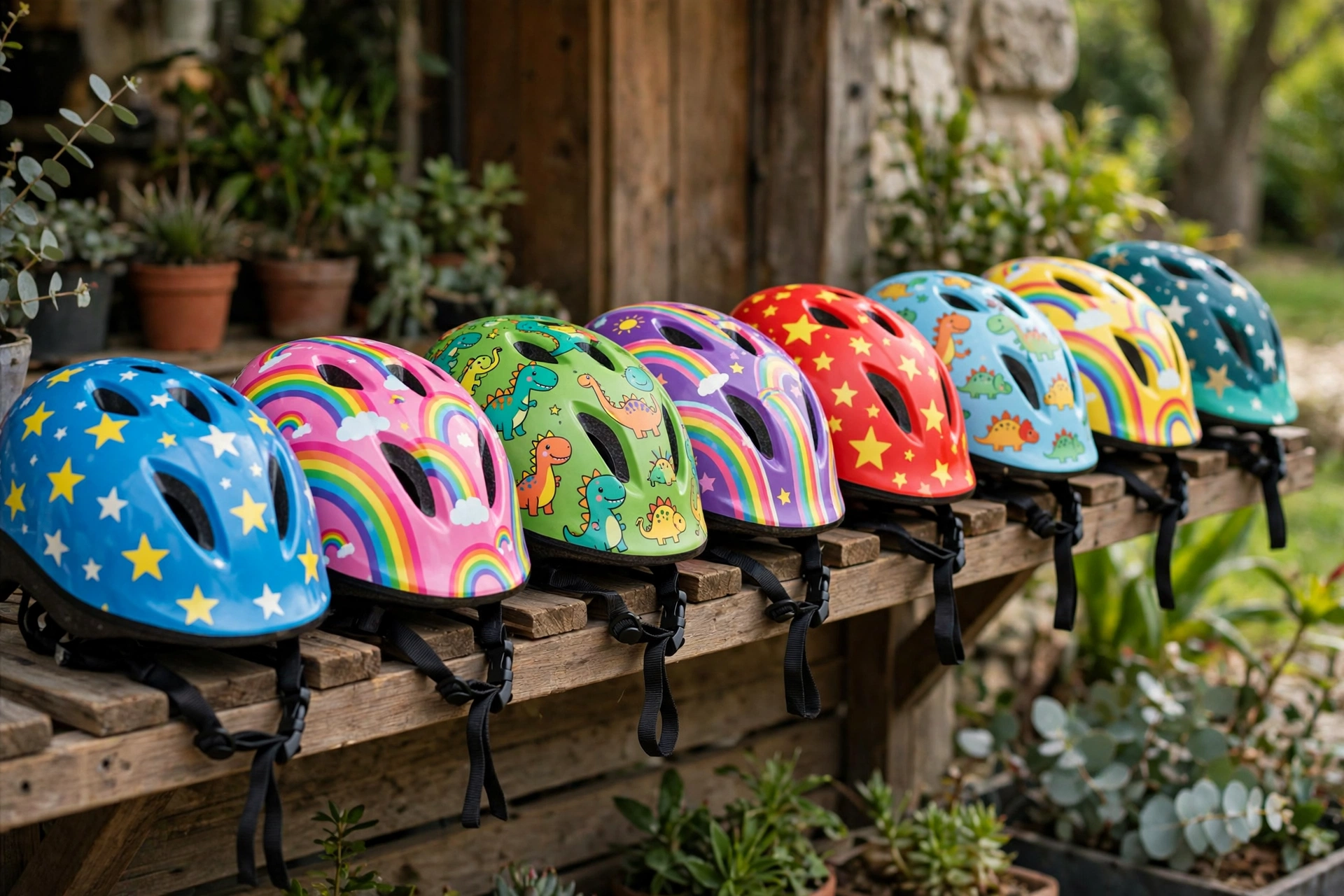
Yes — a colorful kids helmet can be every bit as safe as a plain one, because the paint, pattern, and colors on the shell do not decide safety at all. What decides safety is the certification label inside the helmet, in the US the CPSC sticker, which confirms the helmet passed the required impact tests. If a bright helmet carries that label and fits your child properly, it meets the same standard as any black or white helmet on the shelf.
Parents sometimes worry that a helmet covered in dinosaurs, glitter, or cartoon graphics is more toy than protection. That worry is understandable, but it aims at the wrong thing. This guide explains what actually makes a kids helmet safe, how to read the labels, why color can even help safety in traffic, and the few decoration-related traps that really do matter.
What Actually Decides Whether a Kids Helmet Is Safe?
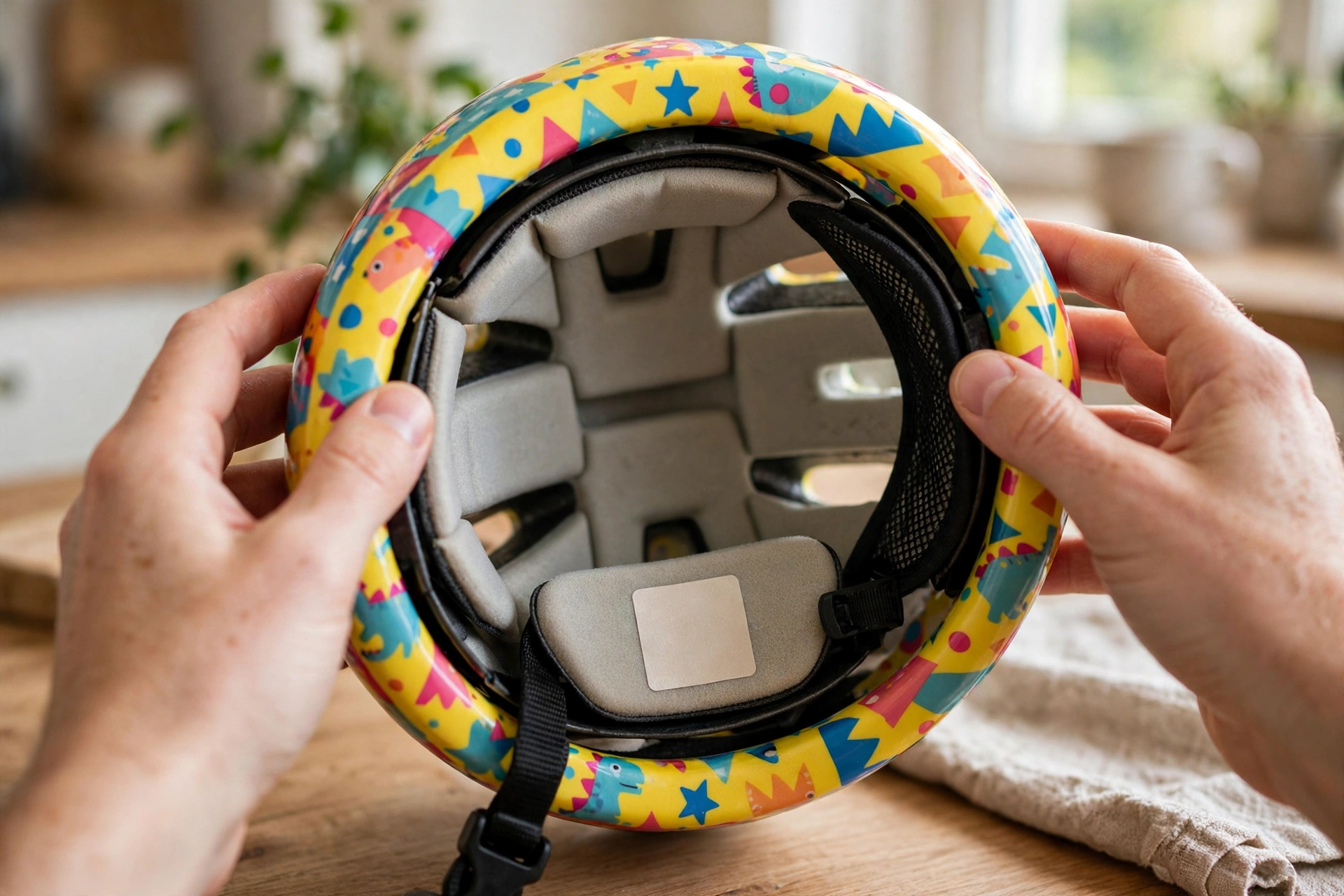
Safety comes from the helmet’s construction and certification, not its finish. A protective bike helmet combines a hard outer shell with an energy-absorbing foam liner, usually EPS foam, held on the head by a retention system of straps and a buckle. In a crash, the liner crushes in a controlled way to slow the head down. None of that changes because the shell is purple, patterned, or plain.
The proof is the certification. Bicycle helmets sold in the United States must meet the Consumer Product Safety Commission (CPSC) standard, and compliant helmets carry a CPSC label or sticker inside. Helmets sold in Europe generally carry a CE mark showing they meet the EN 1078 standard. These labels mean the design passed laboratory impact tests — the color on the outside plays no part in the testing.
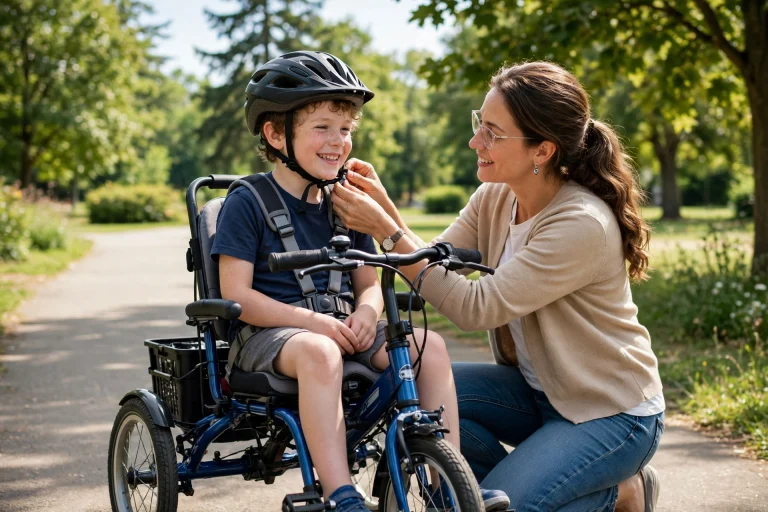
Fit is the other half of safety. A certified helmet that slides around, sits tilted, or has loose straps protects far less than it should. So when you shop, check two things in order: the certification label first, then a snug, level fit on your child’s head. The graphics are free to be as fun as your child wants.
How Do You Check a Colorful Helmet’s Certification Label?
Look inside the helmet. The CPSC label is usually a sticker on the foam liner or printed inside the shell, and it states that the helmet complies with the CPSC Safety Standard for Bicycle Helmets. The label area also typically shows the manufacturer name and the date the helmet was made. If you cannot find any certification label, do not buy the helmet, however cute it looks.
Be extra careful with novelty helmets and helmets sold as costumes or fashion accessories. Some decorative helmets sold online or in toy aisles are not certified bicycle helmets at all, even when they are shaped like one. The product description should clearly say the helmet is CPSC certified for bicycling; if it instead says “not for use as safety equipment” or lists the item as a toy, keep shopping.
Also confirm the helmet is certified for the activity your child will do. A bike helmet is tested for bicycling; skateboarding and some other sports have their own standards, and dual-certified helmets exist for kids who do both. Reading the label takes ten seconds and tells you more than the price tag or the artwork ever will.
Does Bright Color Help or Hurt Safety on the Road?
Color cannot weaken a certified helmet, and bright colors can actively help in a different way: visibility. A neon, white, or brightly patterned helmet makes a child’s head easier for drivers to spot, especially at dawn, dusk, and in dull weather. The head is one of the highest and most visible points on a small rider, so a vivid helmet works a little like a flag.
Reflective details help even more after dark. Many kids helmets include reflective stickers, straps, or logos from the factory. Those elements are part of the tested design, so they do not affect certification, and they catch headlights when your child rides near traffic in low light.
There is one honest limit: color is no substitute for lights, supervision, and safe riding places. A glowing helmet does not make a child visible from every angle, and it does nothing in an actual fall. Think of bright color as a small bonus layered on top of the real protections — certification, fit, and where and how your child rides.
Can Stickers, Paint, or Add-Ons Make a Helmet Unsafe?
This is where decoration genuinely can cause trouble. Adding your own stickers with strong adhesives, painting a shell with solvent-based paints, or drilling holes for accessories can damage some shell and foam materials. In general terms, manufacturers advise against modifying a helmet, and heavy modification can undermine the design the lab actually tested.
Factory-applied graphics are different. When a helmet leaves the factory with its colors and patterns, those finishes are part of the product that was certified. The same is true of small, soft accessories designed by the manufacturer for that helmet, such as snap-on covers or light mounts made by the brand.
Follow a simple rule: enjoy the design the helmet came with, use only accessories made for that model, and skip the DIY paint jobs and glue-on extras. If your child wants to personalize a helmet, let them choose the factory design they love — that is also the version most likely to get worn without a fight.
Why Is a Helmet Kids Love Wearing a Safer Helmet?
A helmet only works when it is on the child’s head, buckled, and worn on every ride. Anyone who has argued with a six-year-old at the driveway knows that compliance is a real safety feature. A child who picked the rocket-ship design is far more likely to wear it happily than a child handed a helmet they think looks babyish or boring.
So treat your child’s taste as part of the safety equation. Bring them to the fitting, let them choose among certified options in the right size, and check the fit yourself before paying. Bright colors also make it easier for you to spot your child quickly at a busy park or on a group ride, which is a modest supervision bonus.
Some kids helmets also offer extra comfort and protection features behind the fun graphics, such as extended rear coverage or rotational-impact liners; our guide to MIPS and how it works explains that technology in plain terms. The point to remember is that fun design and serious protection are not opposites — on good helmets, they come in the same package.
Frequently Asked Questions
Q: Are cheap colorful helmets from online marketplaces safe?
A: Cheap is not automatically unsafe, but unverified is a red flag. Check for a genuine CPSC label inside and buy from a seller who clearly states certification. If there is no label or the listing calls it a toy or costume, do not use it for riding.
Q: Does a glitter or matte finish change impact protection?
A: No. The finish is on the surface of the shell; protection comes from the shell structure and foam liner underneath, and certified helmets are tested as sold, finish included. Fit and certification are what matter.
Q: My child wants to put stickers on their helmet. Is that okay?
A: A few small, ordinary stickers are unlikely to matter, but strong adhesives and solvent-based products can damage some materials, and manufacturers generally advise against modifying helmets. The safest personalization is choosing a factory design your child loves.

Olivia
Writer at Helmet Today, covering helmet reviews, fit and riding safety.