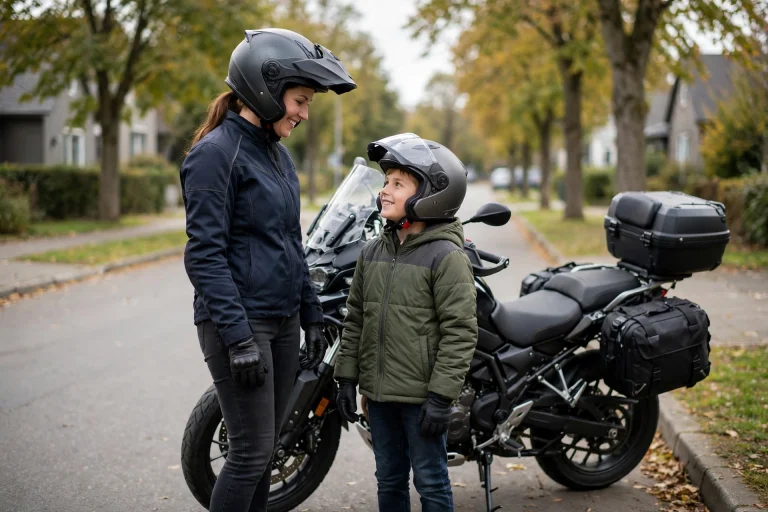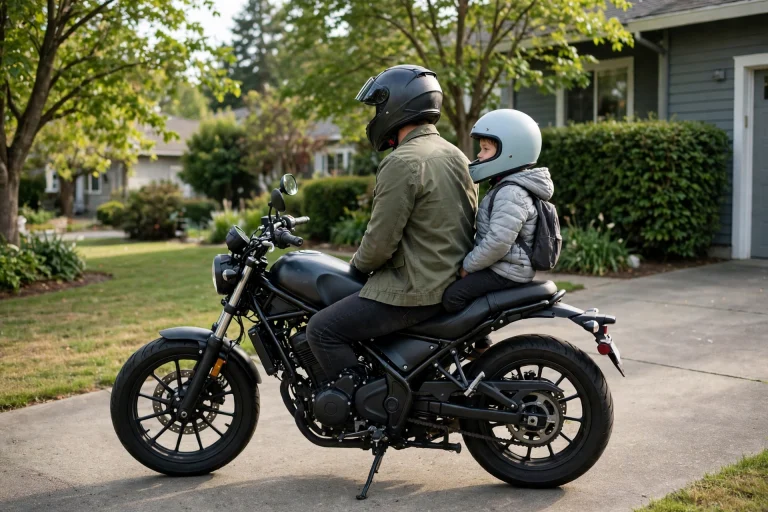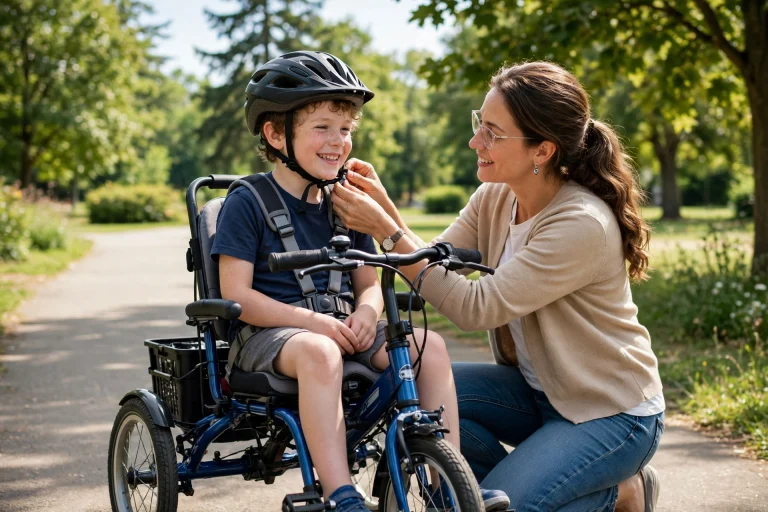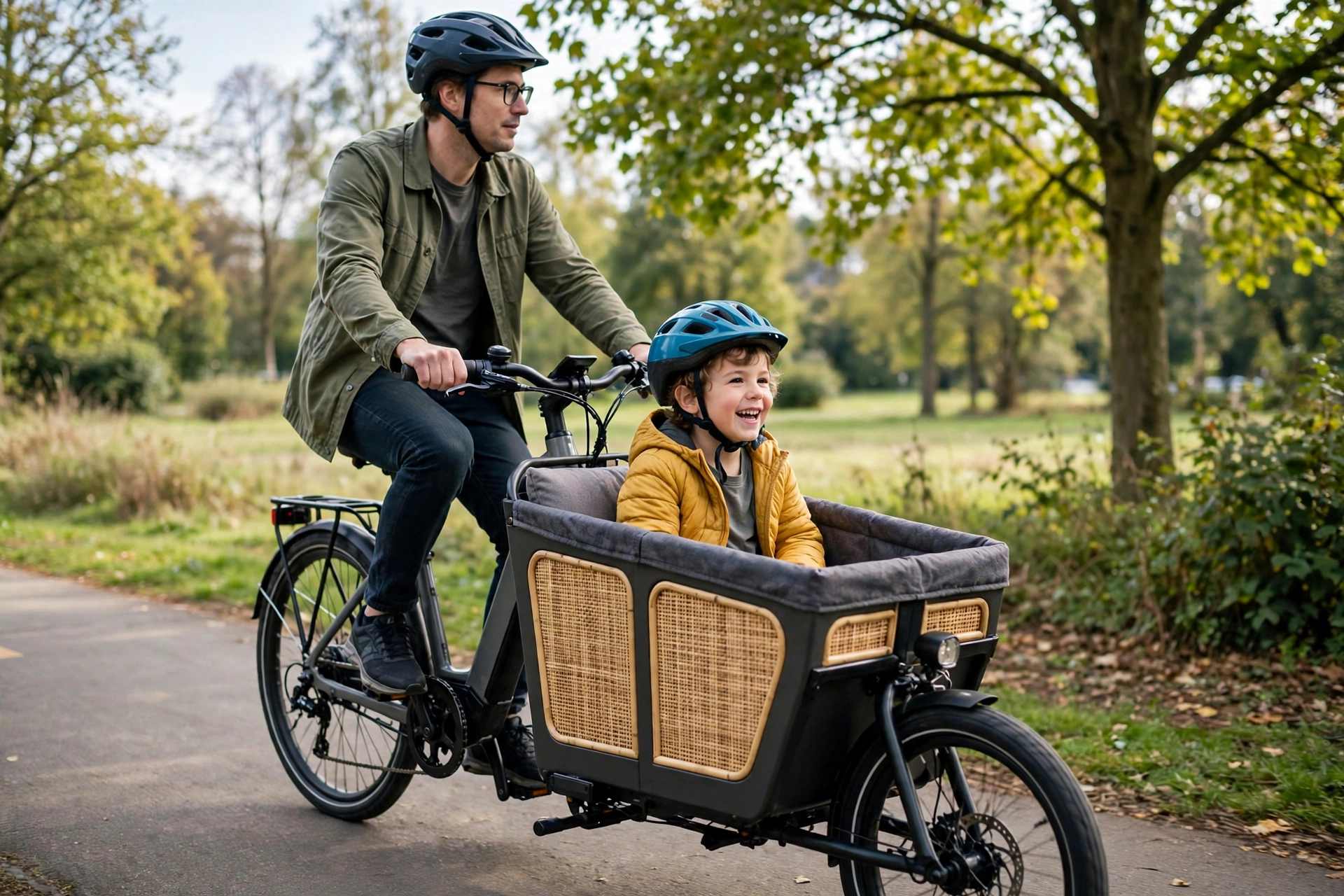
Rules for kids riding as passengers on e-bikes vary by state, but the general pattern is this: many states extend their bicycle helmet laws to e-bike passengers, many require helmets specifically on faster Class 3 e-bikes, and some set minimum ages or require a proper child seat. Wherever you live, a properly fitted certified helmet on your child passenger is the safe standard.
E-bikes have made family riding easier — hills flatten, distances shrink, and a child seat or cargo box suddenly feels practical. But passenger rules were written across decades of bicycle and e-bike law, so they differ from state to state. This guide explains the patterns to look for and how to check your own state’s rules.
Do Bicycle Helmet Laws Cover E-Bike Passengers?
In general terms, yes in many places. Most states with bicycle helmet laws define the requirement around riding a bicycle, and e-bikes that fall within the state’s class system are usually treated as bicycles under those laws. A child passenger often counts as a rider for helmet purposes.
The details differ. Some states set helmet ages for passengers specifically, and some address child passengers in separate provisions about seats, restraints, and minimum ages. A state may require a helmet for a child in a trailer or seat even in situations where an older child pedaling their own bike faces a different rule.
Because of this patchwork, do not assume your state’s bicycle law covers the e-bike case exactly. Read the e-bike section of your state’s vehicle code as well.
How Do E-Bike Classes Change the Helmet Rules?
Most states sort e-bikes into three classes by top assisted speed and throttle, and helmet duties often follow the class. In general terms, Class 1 and Class 2 e-bikes are commonly treated like regular bicycles, so the state’s standard bicycle helmet rule applies to riders and passengers.
Class 3 e-bikes, which assist to higher speeds, attract extra rules in many states. It is common for states to require helmets for all Class 3 riders regardless of age, to set a minimum age for operating a Class 3 bike, or to restrict carrying passengers on one. Carrying a child on a faster e-bike is exactly the situation lawmakers had in mind with those provisions.
Whatever the class, speed raises the stakes. Choosing a helmet with modern rotational protection adds a layer of safety for a passenger who has no control over the ride; our overview of what MIPS is and how it works explains the idea in plain language.
Are There Minimum Ages or Seat Rules for Child Passengers?
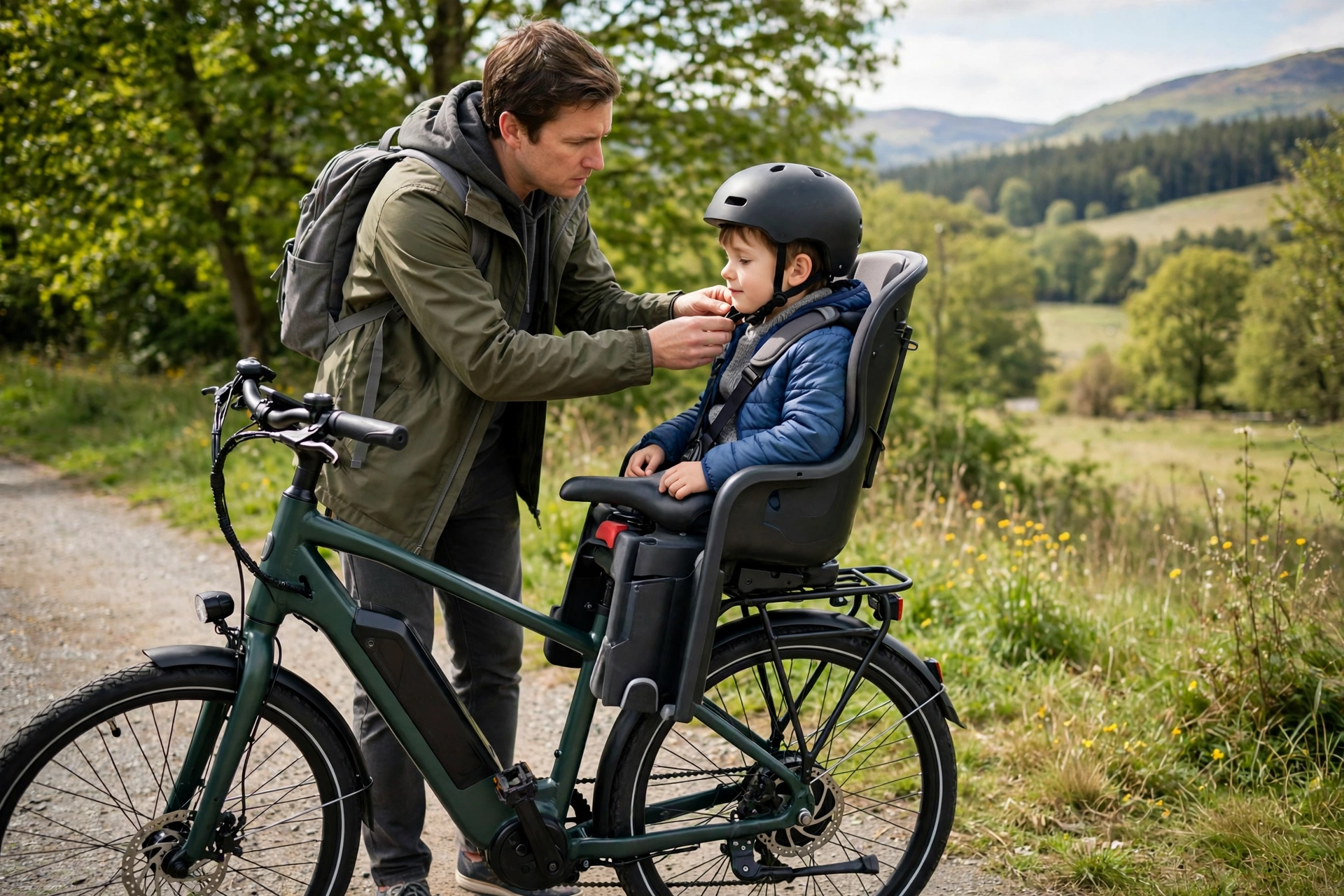
Many states regulate how a child may be carried, not just whether they wear a helmet. Common patterns include requiring a separate attached seat with restraints for young children, requiring the passenger to be able to sit upright and hold on, and setting minimum passenger ages in some jurisdictions.
Separate from the law, pediatric and manufacturer guidance matters. In general terms, babies under about 12 months are widely advised not to ride as bicycle passengers at all, because their necks are not yet strong enough for the jolts of riding, even in a helmet. Child seats and trailers also carry their own manufacturer age and weight limits, which function as hard rules for safe use.
Check both layers: your state’s passenger rules and your seat or trailer maker’s limits. The stricter of the two is your real limit.
Cargo e-bikes add their own questions. Children riding in a front box or on a longtail deck are passengers in every sense, and the same helmet thinking applies, even though the seating looks more like a bench than a bike seat. If your cargo bike’s manufacturer specifies helmets, harnesses, or age and weight limits for the box or deck, treat those as binding, and check whether your state counts cargo bike passengers under its bicycle passenger provisions.
How Can You Check the Exact Rules in Your State?
Start with your state legislature’s website or your state transportation department’s bicycle and e-bike pages, which usually summarize helmet ages, class definitions, and passenger rules in plain language. Search for your state’s name plus “electric bicycle” in the vehicle code to find the governing definitions, then look for the bicycle helmet section.
City and county rules can add requirements on top of state law in some places, so a quick check of your local ordinances is worthwhile if you mostly ride near home. Bike shops that sell family e-bikes are also a practical source — they field these questions daily and usually know the local position.
Rules also change as states update their e-bike laws, so re-check if you move, buy a faster e-bike, or hear that your state has revised its cycling laws.
What Should a Child Passenger’s Helmet Look Like?
Law aside, the helmet itself must fit the job. Choose a certified helmet sized to your child’s head today, fitted level and snug. For a child in a rear seat, a helmet with a flatter back profile sits more comfortably against the seat’s backrest and is less likely to push the child’s head forward.
Light weight matters for young passengers, whose necks tire faster. A heavy helmet on a small child encourages the head-lolling that makes rides miserable and can shift the helmet out of position.
Finally, make helmet-wearing automatic. The child wears it in the trailer, in the seat, and on their own bike — one rule, no negotiations. Replace the helmet after any crash and whenever it is outgrown. A helmet that your child helps choose, in a color they love, is far more likely to be worn without a fight on every ride.
Frequently Asked Questions
Q: Does my child need a helmet in a bike trailer behind an e-bike?
A: In many states, helmet laws cover passengers including trailer riders, and safety guidance recommends one regardless. A trailer’s roll cage helps, but a helmet protects against jolts and debris. Check your state rule and always use one.
Q: Can I carry a child on a Class 3 e-bike?
A: It depends on your state. Many states add helmet requirements, minimum operator ages, or passenger restrictions for Class 3 bikes. Check your state’s e-bike law before carrying a passenger on one.
Q: What age can a baby ride as a passenger on an e-bike?
A: Laws differ, but in general terms safety guidance advises waiting until about 12 months, when a baby can sit up strongly and support a helmet. Also follow your seat or trailer manufacturer’s age and weight limits.

Olivia
Writer at Helmet Today, covering helmet reviews, fit and riding safety.