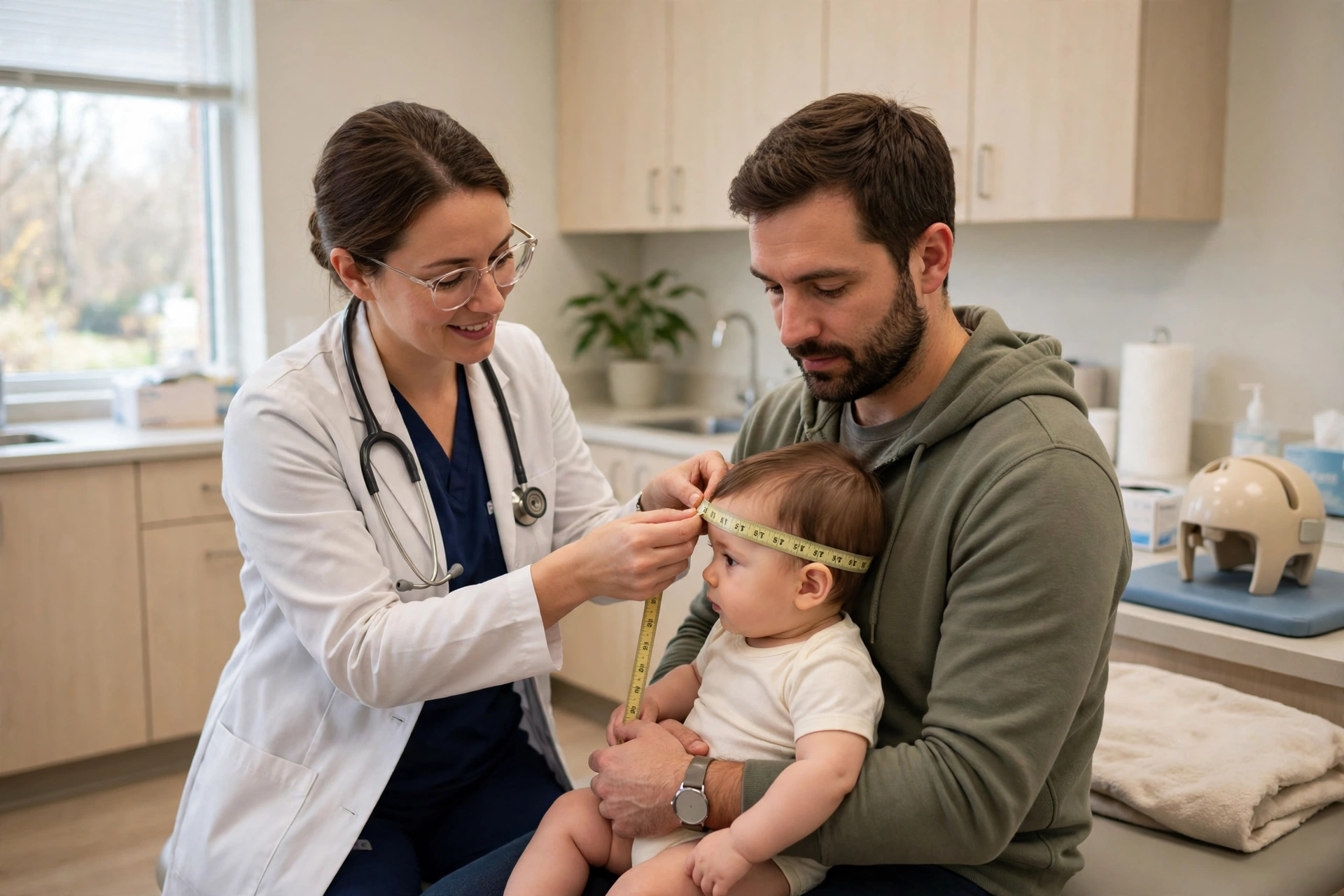
At a cranial helmet fitting appointment, a clinician measures and scans the baby’s head, checks the shape, and — at later visits — fits the custom helmet, adjusts it, and reviews progress. The first appointment is mostly assessment and discussion, while later appointments focus on fitting and fine-tuning. Knowing what happens at each stage helps parents feel prepared and makes the most of the time with the clinic.
This guide explains, in general terms, what happens at the first appointment, how the helmet is made to fit, what follow-up visits involve, and how parents can prepare. Clinics vary in their exact process, so this is a general picture rather than a promise of what any particular clinic will do. It is general information only, not medical advice for any individual child — always follow your own clinician’s advice.
What Happens at the First Appointment?
The first appointment usually starts with a conversation. The clinician will ask about the baby’s birth history, development, sleeping and resting positions, and when the head-shape difference was first noticed. They will also ask about tummy time, feeding, and any neck tightness or preference for turning one way, since these details help them understand why the head shape developed as it did.
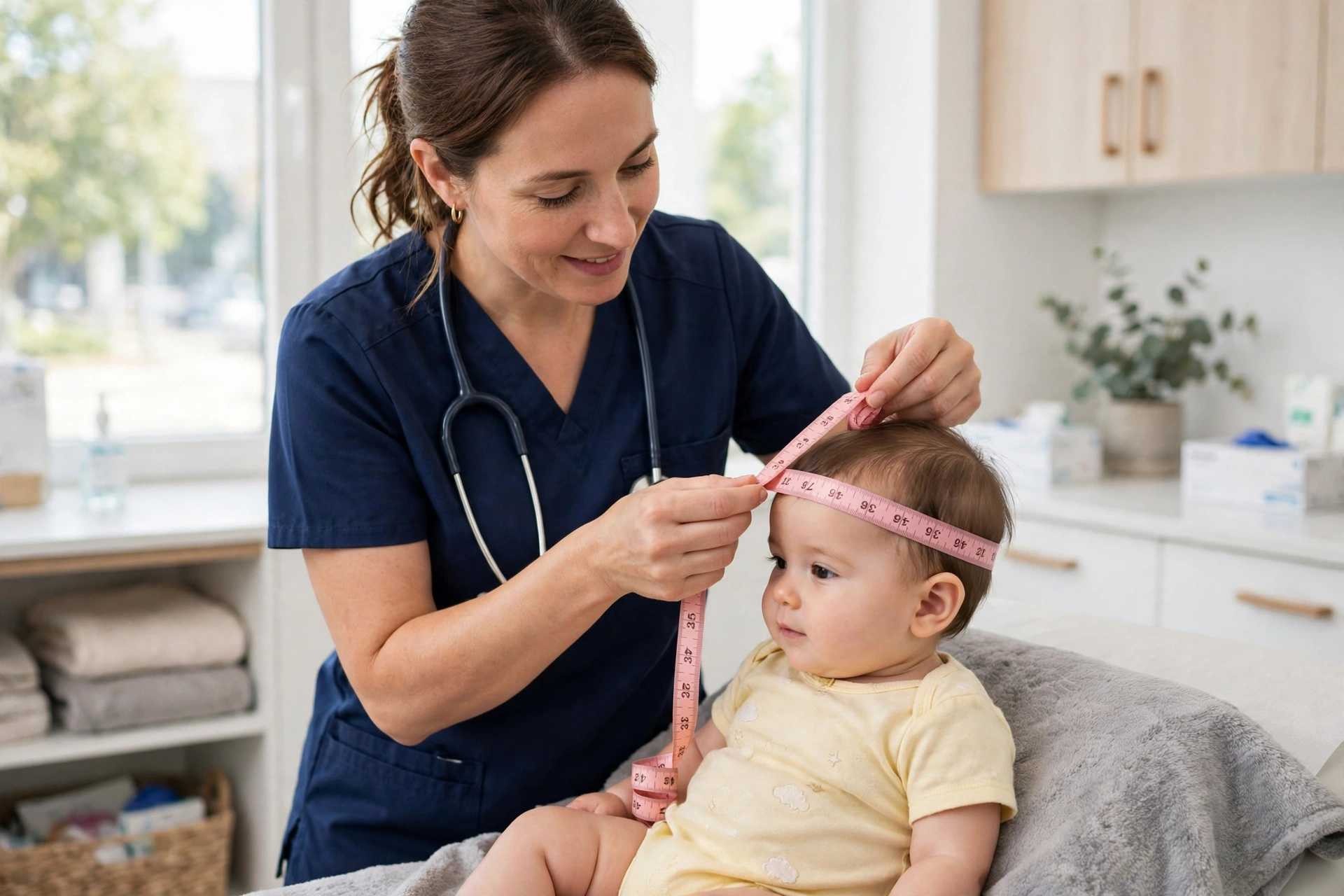
Next comes the examination. The clinician will look at the baby’s head from several angles, feel the skull and the soft spots, and measure the head’s length, width, and circumference. They may use a special measuring device or take a three-dimensional scan, which captures the head’s shape precisely without any discomfort. Some clinics take photographs for the record, with the parents’ permission, so progress can be compared later.
The appointment usually ends with a discussion of options. The clinician will explain what they found, whether a cranial helmet is recommended, what alternatives exist, and what the expected timeline looks like. Parents should leave understanding the next steps, the costs and practicalities, and how to contact the clinic with questions. If a helmet is recommended, the scan or measurements from this appointment are often what the helmet is made from, so accuracy at this stage matters.
How Is the Helmet Made to Fit?
Once the decision is made, the helmet is custom-made for the individual baby. The scan or mould taken at the assessment is used to build a helmet whose inner shape matches the baby’s head: snug where the head is fuller, with space where it is flatter. The outer shell is usually a hard, lightweight material, and the inner lining is foam that can be adjusted as the baby grows.
At the fitting appointment, the clinician places the helmet on the baby and checks the fit carefully. They look for even contact on the snug areas, clearance over the flatter areas, and a level position that does not slide over the eyes. They check the skin underneath for pressure, and they may mark the lining or make small adjustments on the spot. This is also when parents are shown how to put the helmet on and take it off, how to fasten it, and how to check the fit at home.
Parents are usually given a wearing schedule at this appointment: how many hours a day the helmet should be worn, when the daily break for cleaning and skin checks happens, and what to watch for in the first few days. The first week is an adjustment period, and the clinic will often schedule an early check to make sure the fit is settling well and the skin is coping. If you are learning about helmet features in general, reading about what MIPS is for helmets can help you understand a different helmet technology, though it is not related to cranial helmets.
What Happens at Follow-Up Visits?
Follow-up visits are where the helmet is adjusted as the baby grows. The clinician removes the helmet, checks the baby’s head shape and measurements, and examines the skin for any marks. They then adjust the lining — often by removing small amounts of foam from the areas where growth is wanted — so the helmet continues to guide growth in the right direction. These adjustments are small but important, and they are the reason regular follow-up matters.
Progress is reviewed at these visits too. The clinician compares current measurements with earlier ones and discusses how the shape is changing. Parents can ask about the remaining timeline, whether a second helmet might be needed, and when the course of treatment is likely to finish. In general terms, treatment ends when the head shape has improved to the target, or when growth has slowed to the point where further change is unlikely.
Follow-up visits are also the time to raise practical problems: a helmet that seems tight, a strap that is fraying, skin irritation, or difficulty keeping to the wearing schedule. Clinics expect these questions, and raising them early usually leads to a simple fix. Between visits, parents should contact the clinic promptly if they notice persistent redness, soreness, or a sudden change in fit, rather than waiting for the next appointment.
How Can Parents Prepare for Appointments?
Preparation is simple and makes appointments smoother. Dress the baby in clothes with a wide neckline, so the helmet goes on and off easily, and bring a spare outfit in case of spills. Bring a list of questions, since it is easy to forget them in the moment, and note anything you have observed at home — skin marks, fussiness, or changes in how the helmet fits — to mention to the clinician.
It also helps to bring something to comfort the baby, such as a favourite toy, a dummy, or a bottle, since appointments involve handling the baby’s head and trying on the helmet. Most babies settle quickly, but a familiar comfort item makes the visit easier for everyone. If another caregiver is involved in daily helmet care, bringing them along to at least one appointment means they hear the instructions first-hand.
Finally, keep a simple record between appointments: when the helmet is worn, any skin observations, and any questions that come up. A short note on a phone is enough. This record helps the clinician spot patterns and answer questions accurately, and it gives parents confidence that they are tracking progress rather than relying on memory alone.
Frequently Asked Questions
Q: How long does a cranial helmet fitting appointment take?
A: In general terms, a first assessment or fitting appointment takes well under an hour, though clinics vary. Follow-up visits are often shorter, since they focus on checking fit, adjusting the lining, and reviewing progress.
Q: How often are follow-up appointments?
A: It varies by clinic and by the baby’s stage of treatment, but follow-ups are typically every few weeks. Your clinic will set the schedule and explain when to contact them between visits.

Olivia
Writer at Helmet Today, covering helmet reviews, fit and riding safety.