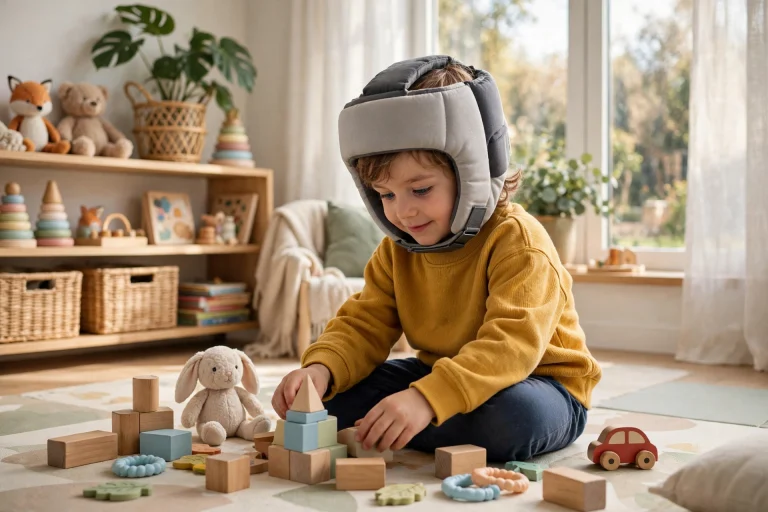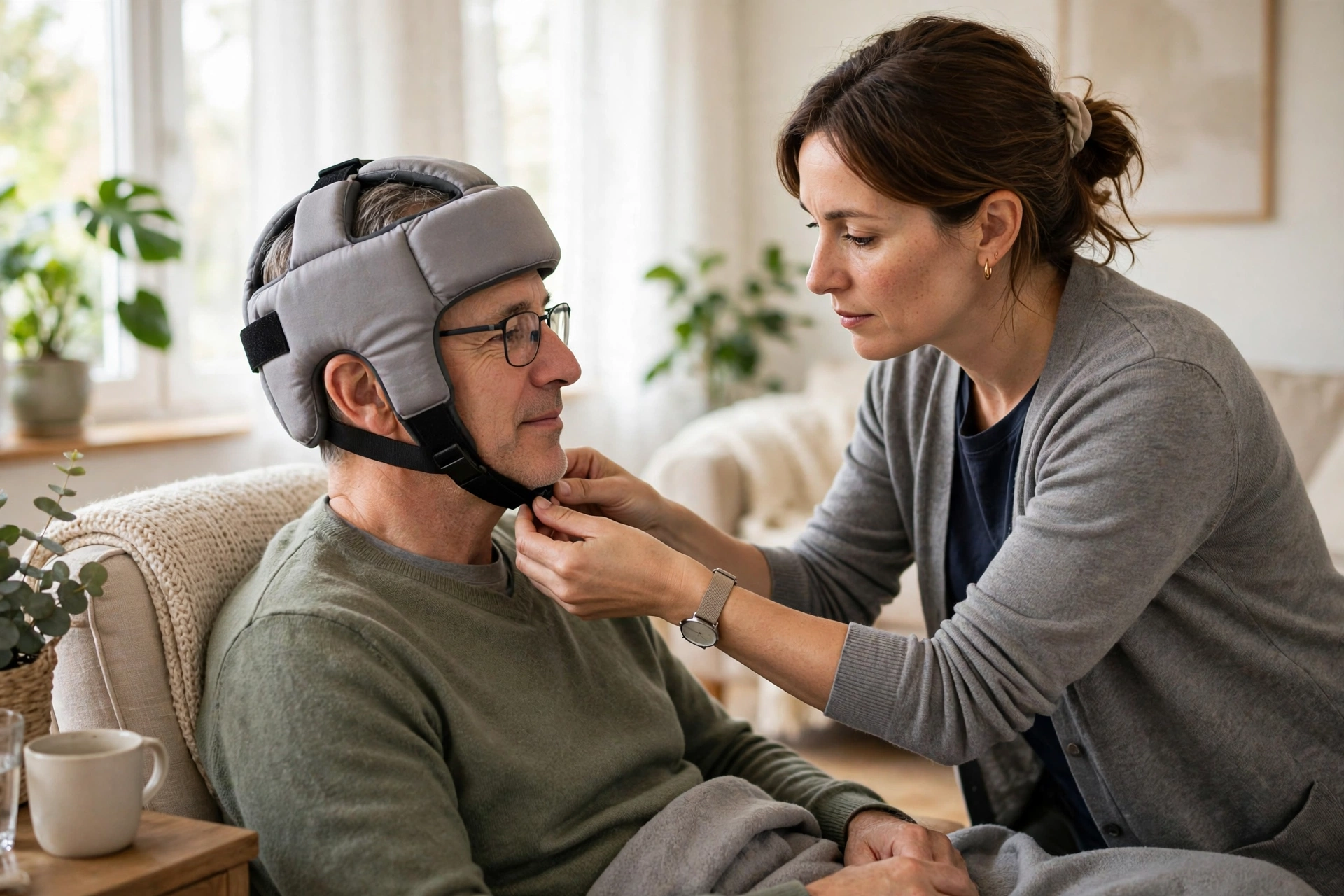
To fit a medical protective helmet, measure the head, choose the size that matches, then check that it sits level, feels snug without pressing, and stays put when the head moves. Fit is what turns a helmet from a piece of equipment into actual protection: a helmet that slips, rotates, or slides over the eyes in a fall gives little protection where it is needed, however good its design. Getting the fit right takes a few minutes and is worth doing carefully.
This guide explains, in general terms, why fit matters so much for medical protective helmets, how to measure and choose a size, a step-by-step fitting check, and what to do if the helmet slips or presses. It is general information only, not medical advice for any individual. Anyone fitted for a medical helmet should follow their own clinician’s or supplier’s guidance, which takes priority over general advice.
Why Does Fit Matter So Much?
A medical protective helmet works by staying over the parts of the head it is meant to protect during a fall. If it is too loose, it can shift on impact and leave the forehead, sides, or back of the head exposed at the moment protection is needed most. If it is too tight, it causes headaches, pressure marks, and discomfort, and the wearer is likely to take it off or wear it inconsistently — which protects no one at all.
Fit also affects the helmet’s ability to absorb impact. Soft foam works best when it is in even contact with the head, spreading force across a wide area. A helmet that sits tilted, or that only touches the head in a few spots, concentrates force rather than spreading it. That is why a level, snug fit matters more than the exact model chosen: a well-fitting basic helmet protects better than an expensive helmet worn loose.
There is a comfort dimension too. A medical helmet may be worn for many hours a day, so a fit that feels acceptable for a minute in a shop may feel very different after a full day. Pressure points that seem minor at first can become sore over hours, and a strap that feels fine when new may dig in as it is worn. Checking fit over time, not just at the first fitting, is part of using a medical helmet well.
How Do You Measure and Choose a Size?
Start with a flexible tape measure. Wrap it around the head at its widest point, usually just above the eyebrows and ears, keeping it level all the way around. Take the measurement twice to be sure, and note it in centimetres, since most makers size by circumference. If the wearer has thick hair, a hairstyle that adds bulk, or a head covering they will wear under the helmet, measure with that in place, because it changes the fit.
Match the measurement to the maker’s size chart, and if it falls between two sizes, the usual general advice is to try the larger size first and check the fit in person, since adjustable pads and straps can take up a little slack but cannot fix a helmet that is too small. Sizing varies between makers, so a medium from one maker may fit differently from a medium from another. A size label is a starting point, not a guarantee.
Where possible, try the helmet on before buying, ideally with the clinician or supplier who recommended it. If buying online, check the return policy first, so a helmet that does not fit can be exchanged. And remember that children grow and adults’ needs change, so a size that fits now may not fit in six months. Rechecking the measurement at regular intervals keeps the helmet fitting as it should.
Step by Step: Fitting Checks
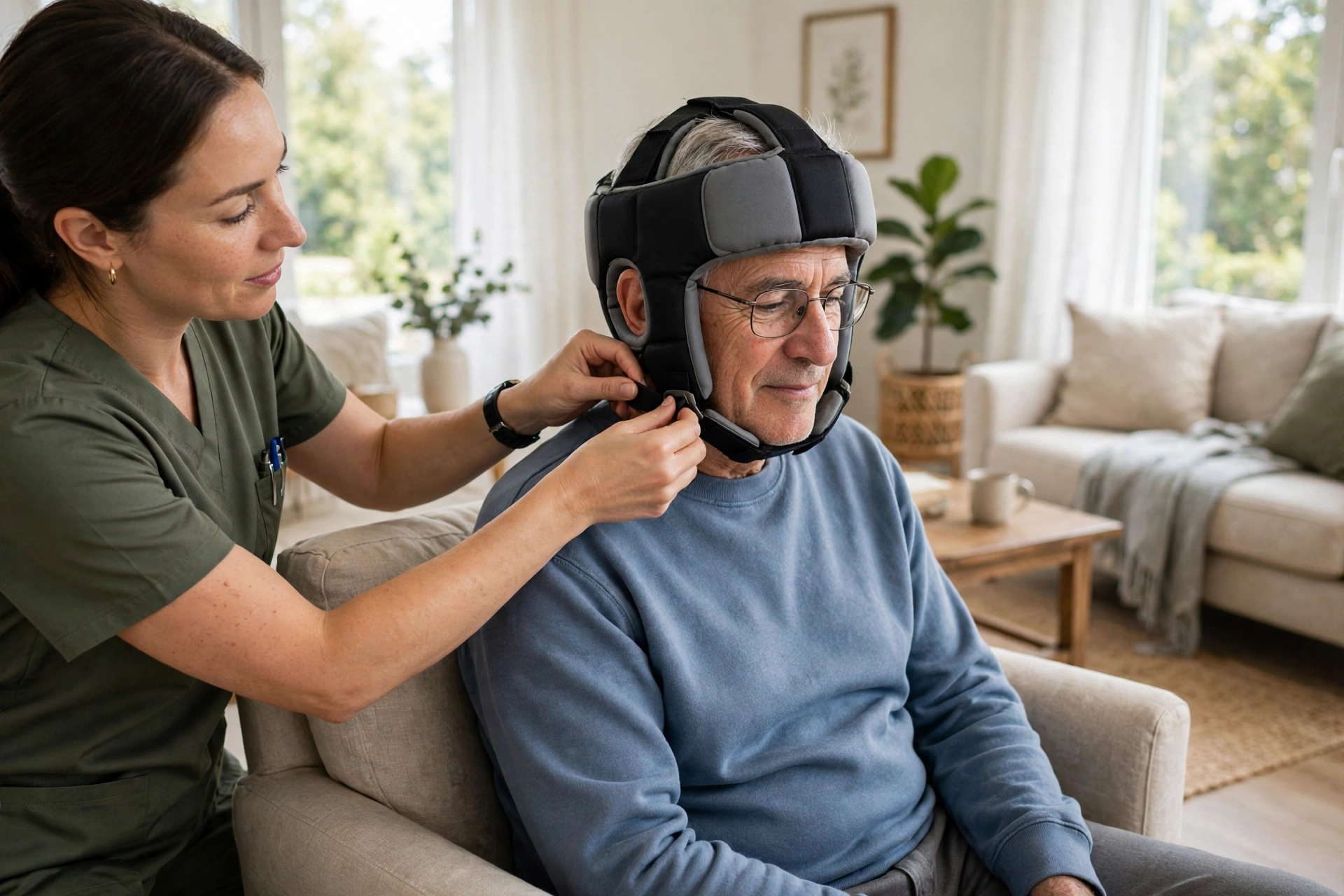
Put the helmet on and check its position first. It should sit level on the head, not tilted forward or back, covering the forehead without sliding down over the eyes, and covering the areas it is designed to protect. Look from the side and the front, or ask someone else to check, since it is hard to judge your own helmet’s position accurately.
Next, check snugness. The helmet should feel snug all around, with even contact and no gaps where a finger can easily slide underneath. Shake the head gently from side to side and forward and back: the helmet should move with the head, not slide independently over it. If it rocks or rotates easily, it is too loose, and the straps or pads need adjusting.
Then check the strap. Fasten it snugly under the chin — snug enough that the helmet stays put, but not so tight that it restricts jaw movement, speech, or swallowing. You should be able to fit roughly a finger between the strap and the chin, though the exact guidance varies by maker. Finally, check comfort over time: wear the helmet for a while and note any pressure points, sore spots, or areas of redness when it comes off. If you are learning about helmet features in general, reading about what MIPS is for helmets can help you understand a sports helmet technology that does not apply to soft medical helmets.
What If the Helmet Slips or Presses?
If the helmet slips forward over the eyes, it is usually too loose, too large, or sitting too low on the forehead. Try tightening the strap, adjusting any pads, and repositioning it level on the head. If it still slips, the size may be wrong, and a smaller size or a different model may be needed. Do not add extra padding inside a helmet unless the maker approves it, since improvised padding can change how the helmet performs.
If the helmet presses painfully in one spot, check whether a pad is folded, a strap is twisted, or the helmet is sitting unevenly. Sometimes a small repositioning fixes the problem. If a pressure point persists, or if redness lasts after the helmet is removed, stop and seek advice from the clinician or supplier rather than enduring it. Persistent pressure can damage skin, especially for people who wear a helmet for many hours a day or who have reduced sensation.
If the helmet fits well but the wearer still finds it uncomfortable, consider whether the model suits them. Different models distribute pressure differently, ventilate differently, and weigh different amounts. A change of model, rather than a change of size, sometimes solves a comfort problem that adjustments cannot. The goal is a helmet that fits well and is worn consistently, and finding that combination is worth a little trial and error.
Frequently Asked Questions
Q: How tight should a medical protective helmet feel?
A: Snug all around, without pressure points or pain. It should move with your head when you shake it gently, not slide independently, and the strap should be snug without restricting jaw movement or speech.
Q: Should I measure my head myself or get fitted professionally?
A: You can measure at home as a starting point, but a professional fitting is valuable where available, especially for children or for people who will wear a helmet for many hours a day. A clinician or supplier can check position, snugness, and comfort in person.
Q: How often should I recheck the fit?
A: In general terms, recheck fit whenever anything changes — a new haircut, weight change, growth in children, or a change of model — and at regular clinical appointments. Straps stretch and foam settles over time, so a fit check every few months is sensible.

Olivia
Writer at Helmet Today, covering helmet reviews, fit and riding safety.