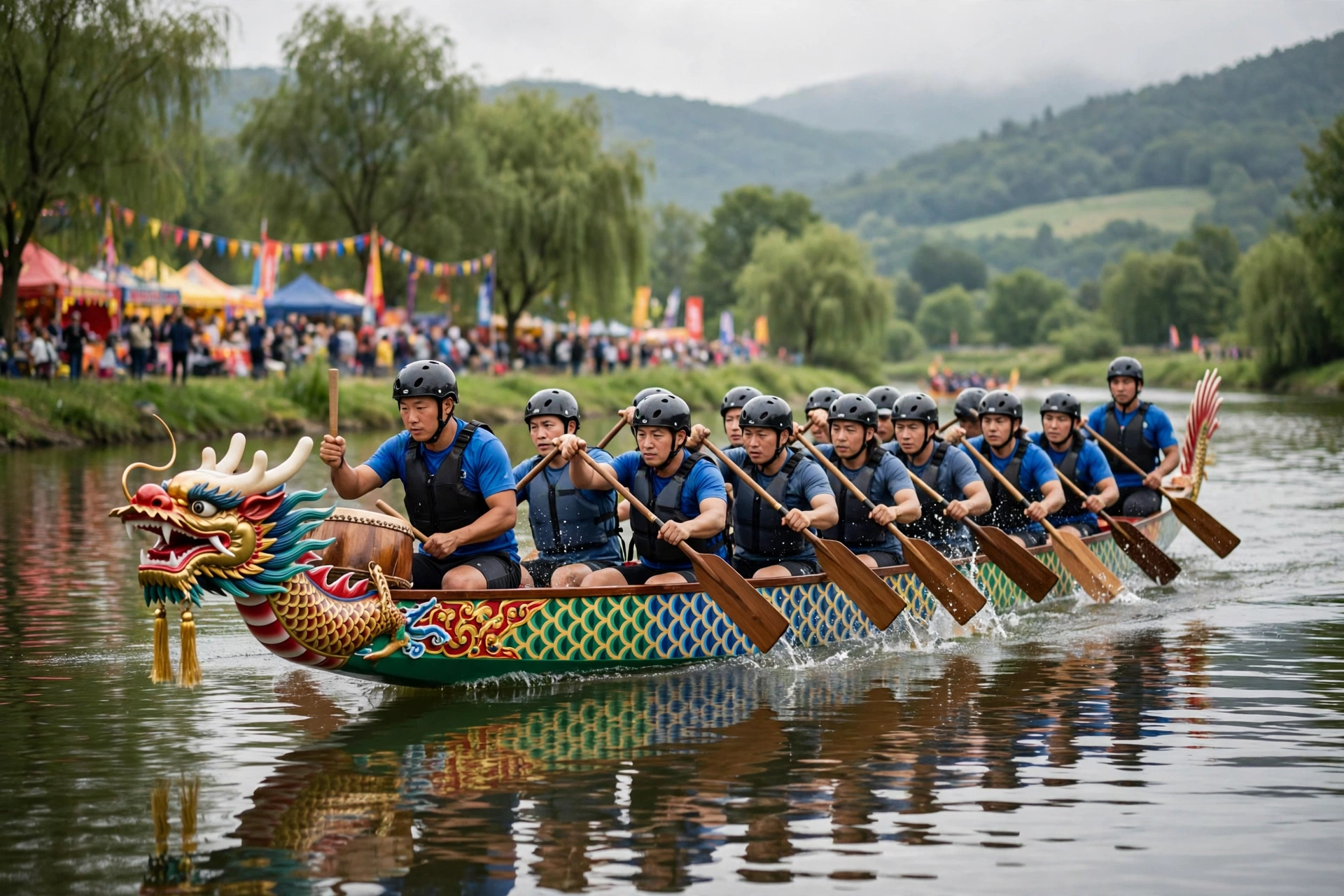
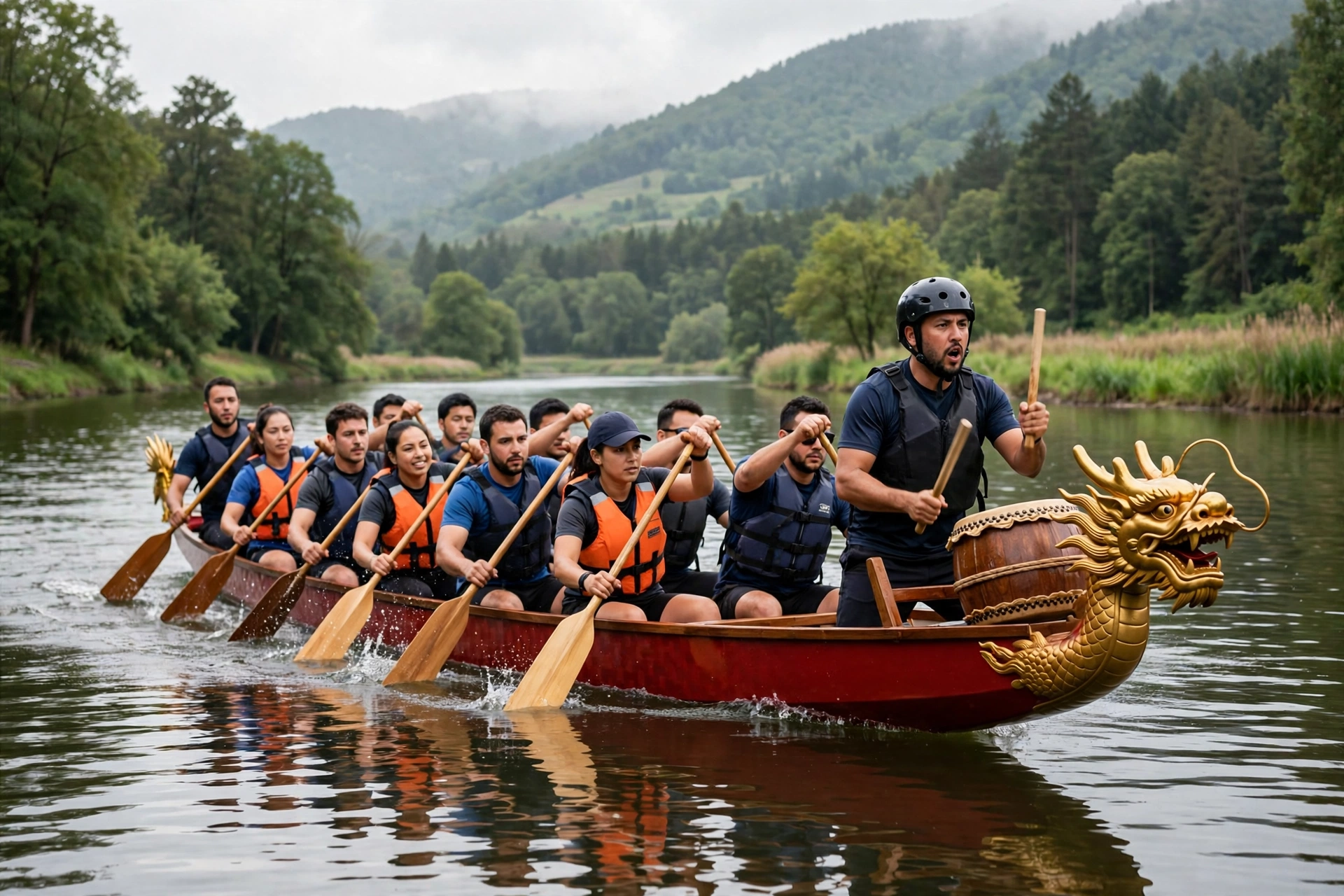
A dragon boat helmet is a lightweight water sports helmet worn by paddlers, drummers and steerers to protect the head from paddle strikes, collisions and falls on a crowded boat. Dragon boats carry up to twenty paddlers sitting close together, with paddles moving in rhythm inches from the next person’s head, so a stray paddle or a sudden jolt can cause a painful knock. A helmet made for water sports adds protection without getting in the way of paddling.
Dragon boat racing is a team sport with deep roots, and it has grown into a popular racing and festival activity around the world. Crews race over short, sharp distances, often in busy festival conditions with many boats on the water at once. This guide explains what a dragon boat helmet is, who wears one, what it should do, and how to choose one that fits a paddling crew.
What Is Dragon Boat Racing?
Dragon boat racing involves a long, narrow boat powered by a crew of paddlers sitting in pairs, with a drummer at the front beating time and a steer person at the back controlling direction. The boats are decorated with a dragon head at the bow and a tail at the stern for festivals, although plain racing boats are also common. Crews race over distances that are usually a few hundred metres, with the drummer setting the stroke rate and the steer person keeping the boat straight.
The sport is open to all ages and abilities, and many crews are mixed teams of friends, work colleagues or community groups. Races are short and intense, and the start is often the most chaotic part: twenty paddles hit the water at once, the boat surges forward, and everyone must stay in time. That closeness is part of the appeal, but it is also why head protection is worth thinking about.
Because the paddlers sit so close together, the paddles of the person behind can pass very near the head of the person in front. A helmet guards against exactly that kind of glancing contact.
Why Would Dragon Boat Paddlers Wear a Helmet?
The most common reason is protection from paddle strikes. Each paddler’s paddle is a solid piece of wood or carbon fibre, and the blade and shaft pass close to neighbouring heads on every stroke. A tired paddler at the end of a race can lose control of the paddle’s return path, and the person in front is the one at risk. A helmet spreads the force of a light strike and reduces the chance of a cut or bruise.
A second reason is the risk of collision between boats. Festival races often put several boats side by side in narrow lanes, and boats can drift together at the start or in a crosswind. When two hulls touch, the crews can be thrown sideways, and heads can strike the gunwale, another paddle or the drummer’s seat. A helmet is a simple guard for those moments.
There is also the risk of falling in. If a boat tips or a paddler loses balance while standing to change seats, the head can hit the side of the boat on the way into the water. A water sports helmet drains quickly, stays light when wet and keeps the head covered while the paddler gets clear.
What Kind of Helmet Suits Dragon Boat Paddling?
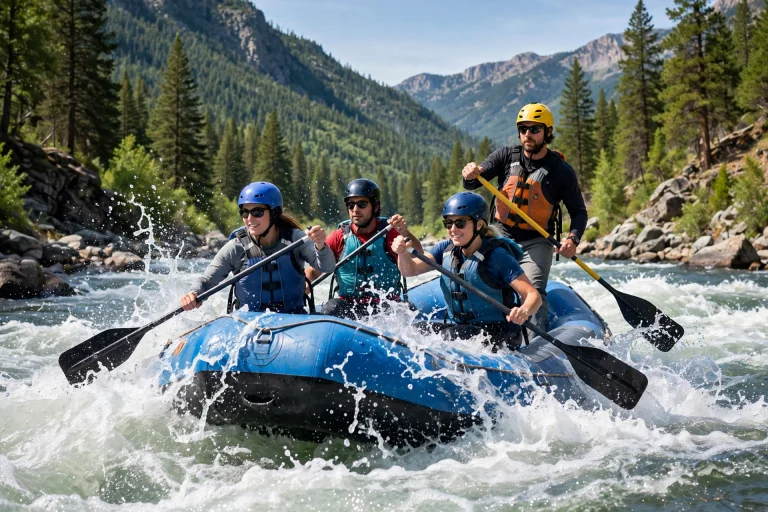
A dragon boat helmet should be a lightweight water sports helmet with good ventilation and quick drainage. Helmets designed for kayaking, canoeing or whitewater use are the usual choice, because they are built to get wet, dry fast and stay comfortable through a long session. A heavy helmet is a poor choice for paddling: it adds neck strain and can make a long festival day feel much harder than it needs to be.
Ventilation matters because dragon boat racing is hard physical work in warm weather, and a helmet with no airflow can become hot and sweaty quickly. Look for a design with vents that let air through but are placed so that water does not pour in with every stroke. The shell should be smooth and free of snag points, so it does not catch on paddle shafts or the drummer’s seat frame.
Ear coverage is worth considering too. The ears sit close to the paddles of the crew behind, and a helmet with ear pads or extended coverage protects them from knocks. At the same time, the drummer and steer person need to hear calls clearly, so the helmet should not muffle sound. If you are learning how helmets handle different kinds of impact, reading about what MIPS is for helmets can help you understand one of the technologies used in modern helmet design.
How Should a Dragon Boat Helmet Fit?
Fit decides whether the helmet actually protects the wearer. It should sit level on the head, covering the forehead to just above the eyebrows, and feel snug all round without pressing hard on one spot. When you shake your head gently, the helmet should move with your head rather than sliding on its own. If it wobbles, it is too loose; if it leaves a sore mark after a few minutes, it is too tight.
The chin strap should fasten securely and hold the helmet in place without choking. A loose strap lets the helmet shift forward over the eyes during a race, which is distracting and can block the view of the paddle. Check the strap before every outing, and replace it if the buckle slips or the webbing is worn.
Try the helmet on with the lifejacket you will wear, because the lifejacket collar can push the back of the helmet forward if the two do not sit well together. A good combination lets the helmet stay level, the lifejacket collar sit below the helmet rim, and the wearer turn the head freely to check the boat and the water. Test this on land before your first race.
Do All Dragon Boat Crews Wear Helmets?
No, helmet use varies widely between festivals, clubs and countries. Some event organisers ask all paddlers to wear helmets, especially for junior crews, beginners and races in rough or busy water. Others leave it to each crew to decide. In general terms, helmets are more common at large festivals where many boats share the water, and less common at small, calm practice sessions.
Junior crews and new paddlers are the most likely to be asked to wear helmets, because they are still learning paddle control and timing. Experienced crews may choose to wear them only when conditions call for it, such as a windy day or a crowded start line.
If your festival or club has a rule, follow it. If it does not, talk to your coach or crew captain about the conditions where a helmet makes sense. A helmet is a small piece of kit that costs little, and it is far easier to wear one than to wish you had after a knock from a paddle.
Frequently Asked Questions
Q: Do dragon boat paddlers have to wear helmets?
A: It depends on the event and the club. Some festivals and clubs require them, especially for juniors, while others leave it to each crew to decide.
Q: Will a helmet slow down a dragon boat crew?
A: In general terms, no. A lightweight water sports helmet adds very little weight and no real drag, so it should not affect the boat’s speed.
Q: Can a dragon boat paddler use a bike helmet instead?
A: In general terms, no. Bike helmets are not made to drain water or cope with being soaked, and they may be heavier and less comfortable on the water.

Olivia
Writer at Helmet Today, covering helmet reviews, fit and riding safety.