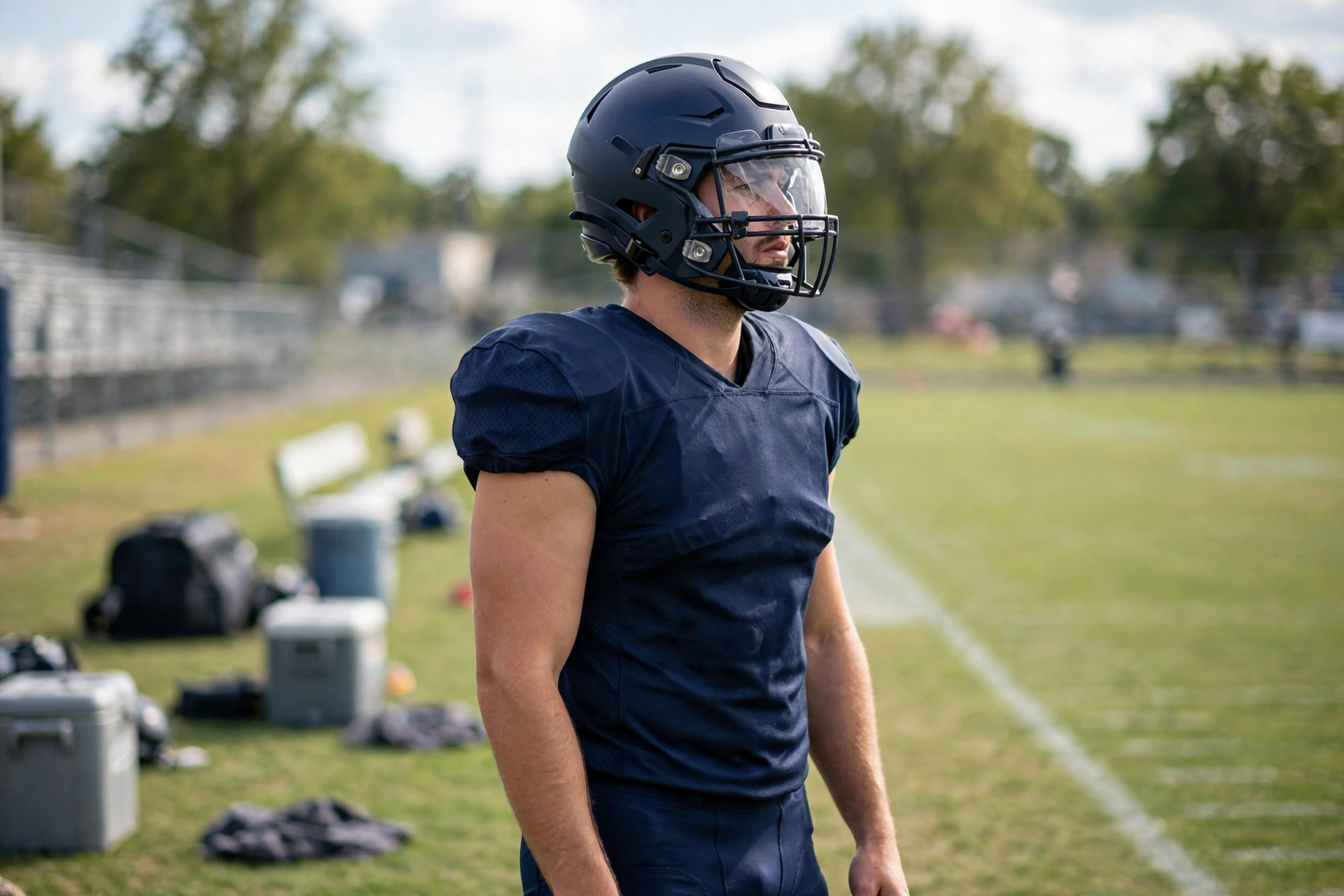
In most US school and college football, a dark or tinted visor is not allowed unless you have an approved medical exception. Clear visors are generally permitted in high school and college play, while professional rules are different. Because visor rules vary by level and league, always check your own rulebook or ask your coach before game day.
Why Football Restricts Tinted Visors
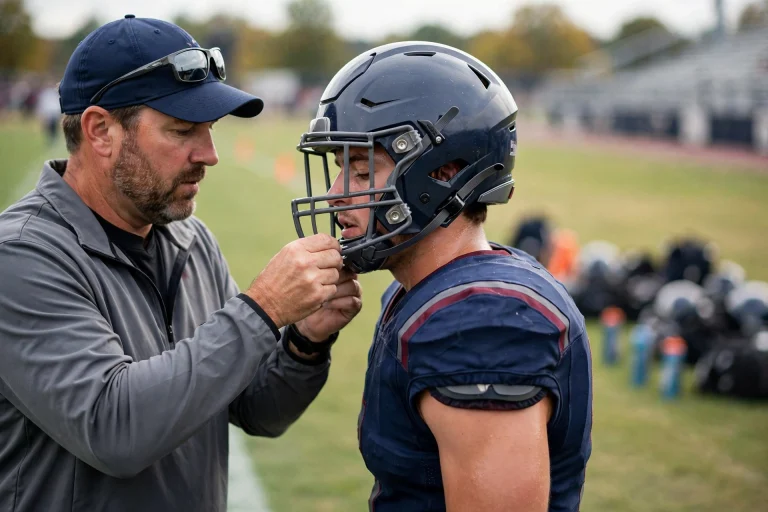
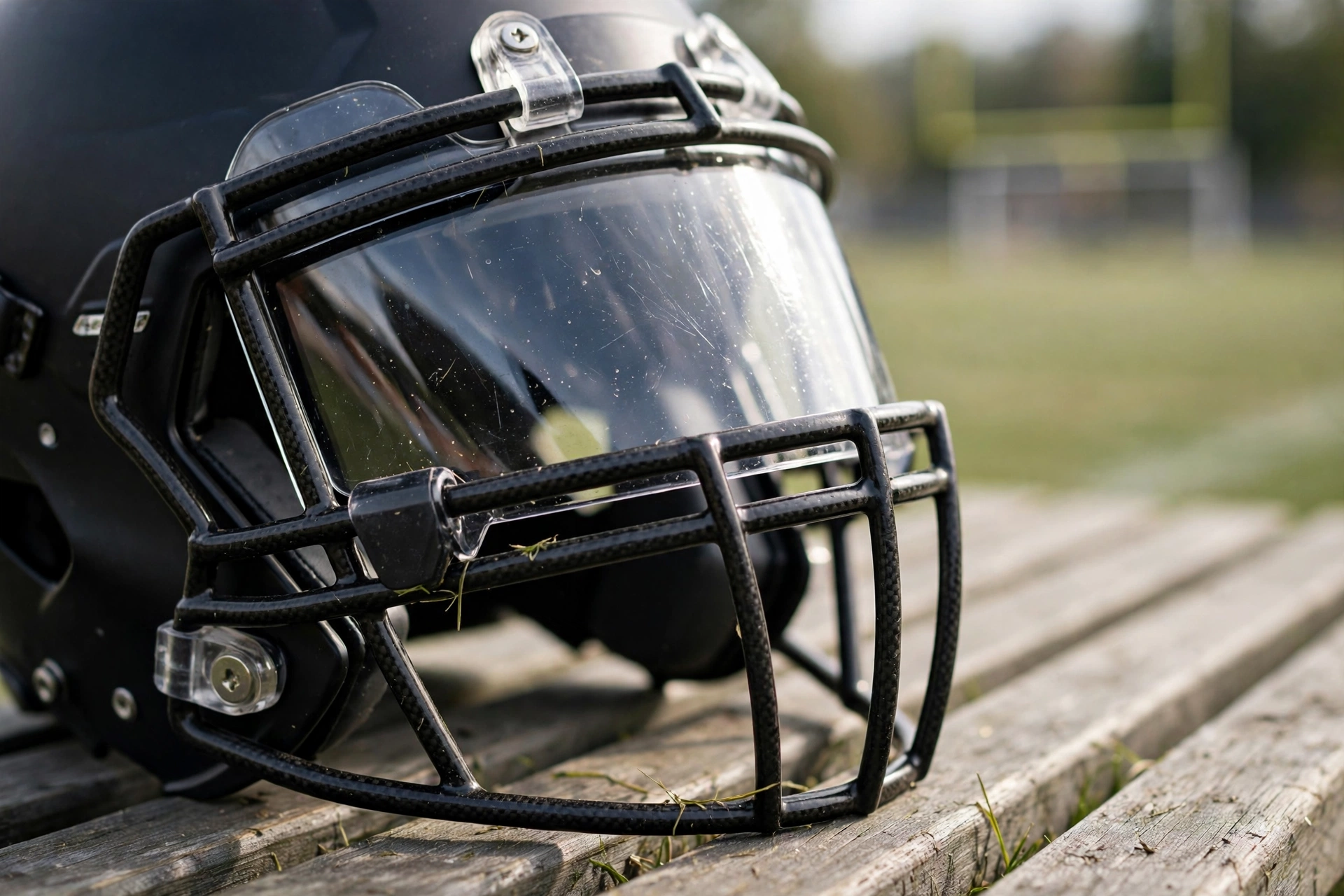
A football visor, sometimes called an eye shield, clips to the facemask and protects the eyes from fingers, dirt, and glare. The concern with tinted versions is not fashion, it is safety. When a player is hurt, athletic trainers and medical staff need to see the player’s eyes quickly to check for a concussion or other injury. A dark shield can hide the eyes and slow that first assessment at exactly the moment speed matters.
That is why governing bodies tend to allow clear shields freely but treat tint as an exception that needs a documented reason. Some players do have a genuine medical need, such as sensitivity to light after an eye condition or injury. The rules usually make room for those players, but through an approval process with medical paperwork, not simply by showing up with a tinted visor fitted to the helmet.
Officials also consider fairness and consistency. If tint rules were left to each player, enforcement would vary from game to game, and squads would not know what is legal until kickoff. A simple shared standard, clear yes, tint only with approval, is easy for referees to check during equipment inspections before a game.
The Rules in High School Football (NFHS)
Most US high school football is played under National Federation of State High School Associations rules, known as the NFHS. Under those rules, an eye shield attached to the facemask must be clear, meaning transparent and without tint, for it to be legal equipment. A tinted or colored visor is not permitted as standard equipment.
The exception is medical. A player who needs a tinted shield for a genuine medical reason may be able to use one with proper authorization, which typically involves documentation from an appropriate medical professional and approval through the school, association, or game officials as your state directs. The exact paperwork route differs by state, so a player in this position should start the conversation with the coach and athletic trainer well before the season, not the week of a game.
If you arrive at a game wearing a tinted visor without approval, expect officials to require its removal before you play. This is an equipment legality issue, not a judgment on you personally, and arguing it on the sideline rarely changes the outcome. Some youth leagues that do not play under NFHS rules set their own equipment policies, which is another reason to read your league’s own rulebook rather than assuming the standard you saw elsewhere applies to you.
The Rules in College Football (NCAA)
College football under the NCAA follows a similar approach. Eye shields must be clear for a player to use one in a game, and tinted visors are restricted. As with high school, there is a medical pathway: a player with a documented medical need can seek approval to wear a tinted shield, supported by medical evidence and handled through the institution and conference or officiating channels.
Players moving from high school to college sometimes assume the rules loosen because college football looks more like the professional game on television. In practice, the medical reasoning is the same at both levels. Trainers still need to see a player’s eyes after a heavy collision, and the rule exists to protect the player on the ground. Recruits who wear tint for medical reasons should raise it early with their college athletic training staff so any approval is in place before camp.
Practice and games are not always treated the same. What a coach tolerates at training does not make a visor legal on Saturday, when officials apply the rulebook. Train in the visor you are allowed to play in.
How the NFL and Other Leagues Differ
Professional football is where most players first see tinted visors in action, and it can give a misleading impression. The NFL has its own equipment rules and approval process, and players you see wearing darker shields on Sundays are operating under a professional framework that does not carry down to school or college fields. In some cases, pro players also need medical justification for certain shield tints, which tells you how seriously the eye-access concern is taken at every level.
Other leagues vary widely. Semi-pro, arena, flag, and overseas leagues may be more relaxed, may copy the NFHS or NCAA approach, or may ban visors entirely in some divisions. Gear culture matters to players, as lists of the most expensive football helmets show, but style never outranks your competition’s rulebook.
The safe habit is simple. Never copy equipment choices from a higher level of the game without checking yours. What is legal in a televised pro game may draw a flag, an equipment timeout, or a removal order in your Friday night or Saturday college game.
How to Choose and Fit a Legal Visor
If you want eye protection and glare help within the rules, a clear visor is the straightforward choice for school and college players. When shopping, look for a shield made for your facemask style, confirm it is described as clear and approved for play, and keep the packaging or product details in case an official or equipment manager asks. Players with medical needs should gather their documentation early and ask the athletic trainer what approval steps their association or conference requires.
- Decide whether you need a visor for protection, glare, or a medical reason.
- Check your level’s rulebook or ask your coach which shields are legal.
- Buy a clear visor unless you already hold written medical approval for tint.
- Fit it securely to the facemask with the supplied clips, with no sharp edges or loose movement.
- Have your equipment manager check the fit before your first game with it.
Fit matters beyond legality. A loose visor can rattle, fog, or shift into your line of sight, while one fitted well is barely noticeable. Clean it with a soft cloth and mild soap rather than abrasive cleaners, which can scratch clear plastic and cloud your view. Replace a visor that is cracked or badly scratched, because damaged eye protection is poor protection, and officials may remove faulty equipment anyway.
Frequently Asked Questions
Are tinted visors legal in high school football?
Generally no. Under NFHS rules used by most states, eye shields must be clear. A tinted visor is normally allowed only with an approved medical exception and the documentation your state association requires, so ask your coach and trainer before buying one.
Can college players wear dark visors?
NCAA rules also require eye shields to be clear, with tinted shields restricted to approved medical cases. A player with a genuine medical need should work through their school’s athletic training staff to seek approval before the season starts.
What happens if I wear an illegal visor in a game?
Officials will usually spot it in pregame checks or on the field and require you to remove the visor, or swap to a legal clear one, before you can play. It is an equipment fix rather than a personal foul in most cases, but do not expect to be allowed to keep it on.

Olivia
Writer at Helmet Today, covering helmet reviews, fit and riding safety.