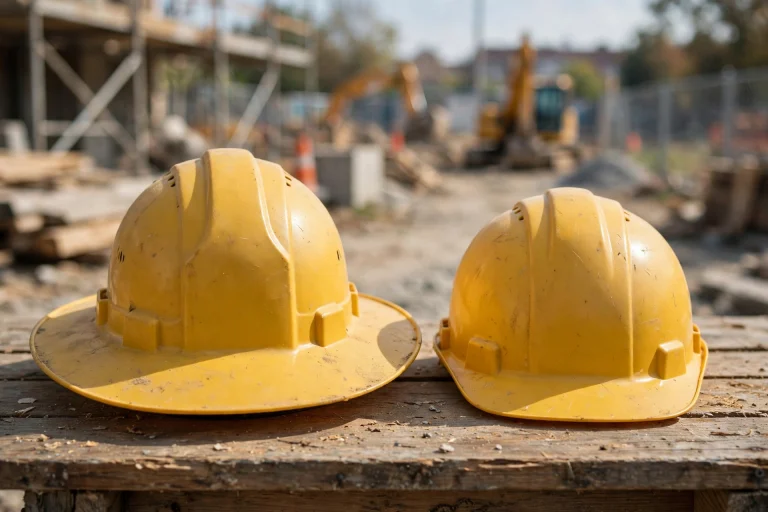
Hard hat rules on construction sites boil down to a few basics: wear a certified hard hat in every area the site designates, keep it in good condition and wear it unmodified and the right way round, replace it after a significant impact or when it ages out, and follow the site’s own policy where it goes further than the general rules — because in general terms the site’s rules are set by the employer, and they vary from site to site.
New starters often expect one universal rulebook. There is not one, but there is a common pattern that almost every site follows. This overview walks through it.
What Are the Basic Hard Hat Rules on Construction Sites?
The core rule is simple: where a site has assessed a risk of head injury — from falling objects, overhead work, moving loads, or bumping into structure — everyone in that area wears a hard hat, all the time, including visitors, delivery drivers who leave their cab, and anyone just passing through. “I was only there a minute” is not an exception on any site.
The hat must be real protective equipment: a certified hard hat matched to the hazards, which in general terms means the right type for the impacts expected and the right class where electrical hazards exist. A bump cap, a novelty helmet, or an unmarked shell does not satisfy a hard hat rule.
And it must be worn as designed: shell the right way round, suspension adjusted, brim doing its job. A hard hat carried under an arm, worn backwards for convenience, or balanced on top of a hood is treated as not worn — because protectively, it is not.
Who Decides the Rules on a Site?
In general terms, workplace safety law in most countries places the duty on the employer: assess the head-injury risks, provide suitable head protection where the risk cannot be removed another way, and make sure it is worn. Regulators set that framework and can inspect and enforce it, but they do not usually write a single rule for every site.
The detailed rules are written by the employer or the site operator: which zones are hard hat zones, which types and classes are required for which trades, what visitors are issued, and how the rules are enforced. That is why two sites in the same town can differ — one may allow bump caps in finished interiors, another may require hats everywhere inside the fence.
When you arrive on a new site, the induction is where the local rules live. Ask there rather than assuming the last site’s rules travel with you. If you supply your own hat, it may also need to meet the site’s stated standard, whatever its color or condition.

What Do the Rules Say About Condition and Replacement?
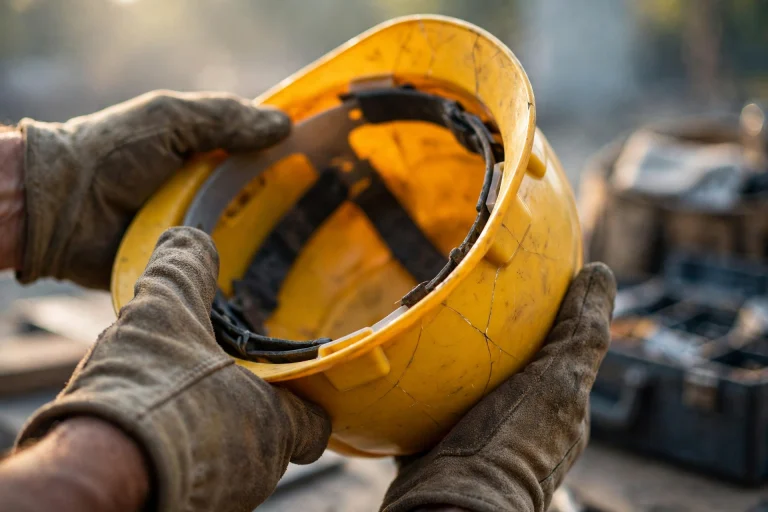
Every site’s rules rest on the same expectation: the hat must actually work. That means inspecting it — shell for cracks, dents, and deep scratches; suspension for stretched or frayed straps; the whole hat for chalkiness or brittleness from sun and age — and taking damaged hats out of service.
Replacement after impact is universal. A hard hat that has taken a significant blow, been struck by a falling object, or been crushed should be replaced even if it looks unmarked, because the shell and suspension may have spent their protective capacity invisibly. Protective gear manages impact energy once at full strength; the same principle is why sports helmets are retired after a crash even though systems like rotational-impact systems like MIPS absorbed the hit as designed.
Age counts too. In general terms, makers put service-life guidance on shells and suspensions, counted from first use and shortened by sun, heat, and chemicals. Sites that issue hats commonly record issue dates so hats are retired on schedule rather than on memory.
What Are the Rules on Modifying a Hard Hat?
The standing rule is: do not modify the shell. No drilling holes for accessories, no painting with solvent-based paints, no grinding or cutting. Holes and solvents weaken the shell and can quietly cancel both its impact performance and its electrical class.
Stickers and accessories sit in a grey area that each site handles its own way. In general terms, makers allow accessories they supply or approve — lamps, visors, hearing protection mounted as designed — and many sites permit a few stickers while discouraging coverings that hide the shell from inspection. If a sticker could mask a crack, expect the site to say no.
The same caution applies underneath the hat. Anything worn under it that changes the fit — thick caps, hoods, unauthorized liners — falls under the rules too, because the hat is certified as a system: shell plus suspension, sitting at a set distance from the head.
What Happens If You Do Not Follow the Rules?
The immediate consequence on most sites is simple and predictable: you will be stopped, told to put the hat on or fetch one, and repeated refusals generally lead to being removed from the site or from the job. Sites cannot let one person’s bare head become everyone else’s falling-object risk or their own liability.
Beyond the gate, the reasons employers enforce the rules are the serious ones: head injuries are among the most life-changing injuries in construction, and an employer who fails to provide or enforce protection faces regulatory action and liability after an incident, quite apart from the human cost. Workers injured while flouting clear rules can also find their position — with insurers and employers alike — much weaker.
The practical summary: learn the site’s rules at induction, wear a sound, certified hat the way it was designed, and replace it when it has done its job. The rules exist because the physics does not negotiate.
Frequently Asked Questions
Q: Do visitors and delivery drivers need hard hats on site?
A: In general terms, yes — anyone entering a designated hard hat area needs one, which is why sites keep loaner hats at the gate. Drivers who stay in the cab may be treated differently by some sites, but the moment you step out in the zone, the rule applies.
Q: Can a site require hard hats even where the law seems not to?
A: Yes. Site rules are set by the employer based on their risk assessment and commonly go further than the general legal minimum. Working on the site means following its rules, even in areas where you personally judge the risk low.
Q: Who pays for the hard hat — me or the employer?
A: In general terms, in many countries protective equipment required for the job must be provided by the employer. Arrangements vary, so check your employer’s policy — but cost should never be the reason a worker is on site without a certified hat.

Olivia
Writer at Helmet Today, covering helmet reviews, fit and riding safety.