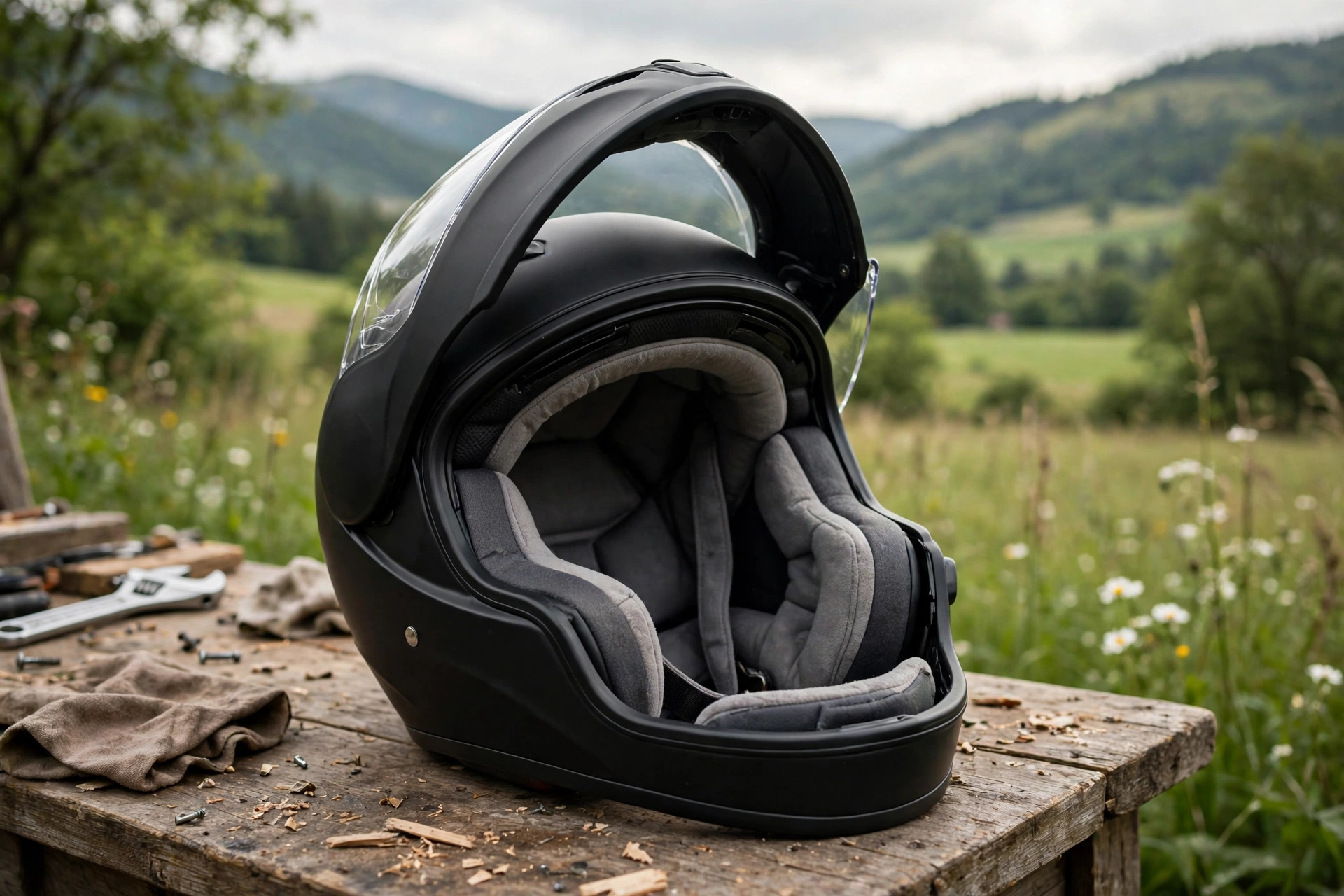
Aftermarket comfort pads are replacement interior pads made by companies other than your helmet maker, and they can improve fit, comfort, and freshness — as long as you choose pads made for your exact helmet model. The comfort pads are the soft foam and fabric pieces that sit against your head and cheeks inside a helmet. They wear out over time, and when they do, the helmet can feel loose, noisy, or uncomfortable. Aftermarket pads offer a way to refresh that fit or to fine-tune it, without buying a whole new helmet.
Many riders only think about comfort pads when their helmet starts to feel loose or smell stale, but the pads do more than keep the helmet comfortable. They help the helmet sit in the right position on your head, and a good fit is part of what makes a helmet protective. This guide explains what aftermarket comfort pads are, how they differ from the pads your helmet came with, and how to choose, fit, and care for them.
What Are Aftermarket Comfort Pads?
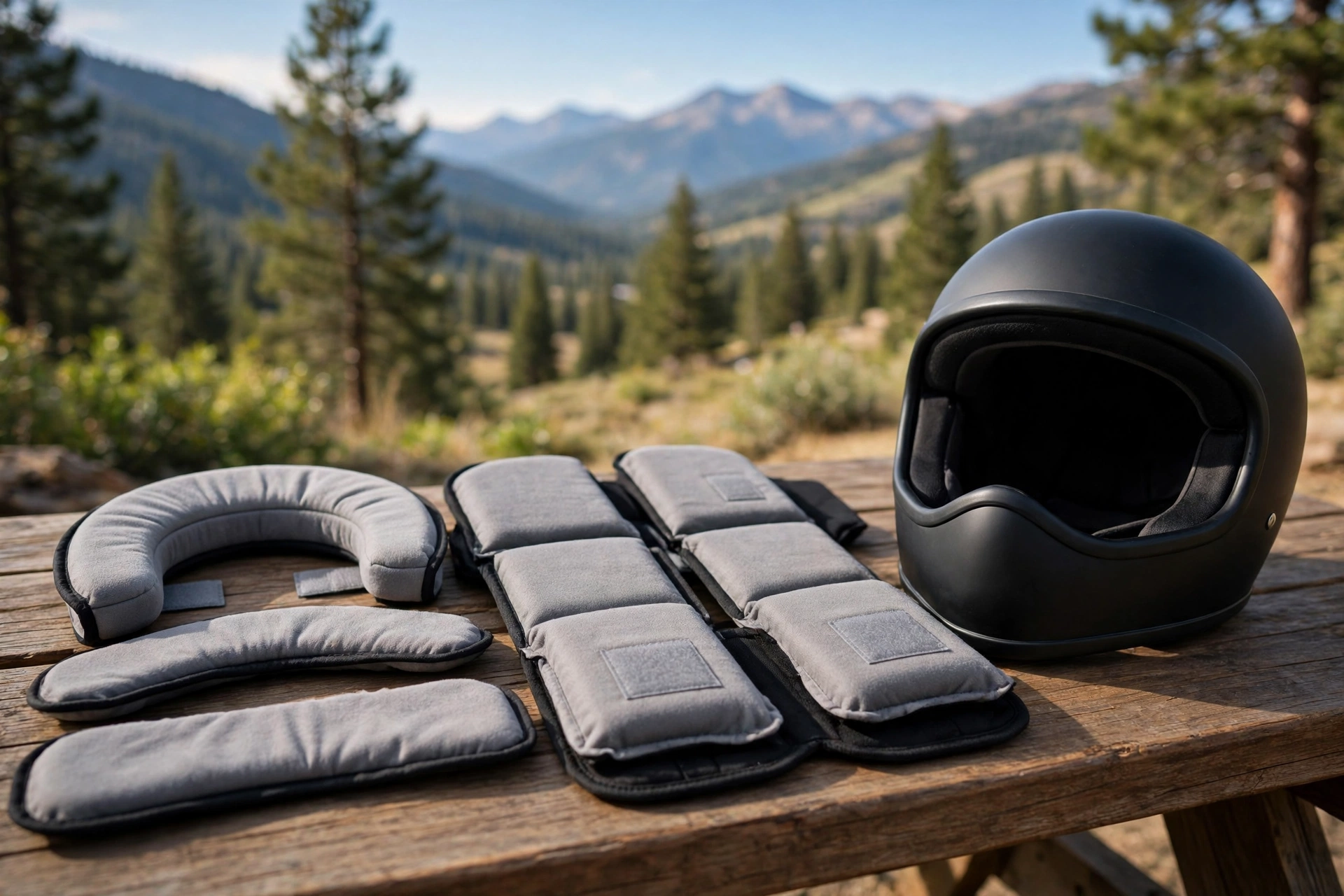
Aftermarket comfort pads are interior helmet pads made by third-party companies, rather than by the company that made your helmet. They replace the cheek pads, crown pad, and sometimes the neck roll or chin curtain that came with the helmet. They are made from similar materials — usually foam covered in soft fabric — but the foam density, the fabric, and the thickness can be different from the original pads.
Some aftermarket pads are designed as direct replacements, made to match the shape and fixings of a specific helmet model. Others are sold as universal pads, meant to fit a range of helmets, though in practice a pad made for your exact model will usually fit better. A few specialist makers offer pads in different thicknesses, so you can adjust how snugly the helmet fits.
How Do Aftermarket Comfort Pads Differ from Stock Pads?
The main difference is choice. Stock pads come in the thickness your helmet maker chose for the standard fit, and you can usually only buy the same thickness again. Aftermarket pads often come in several thicknesses, so you can pick a thicker pad if your helmet has loosened with use, or a thinner pad if the helmet feels too tight on your cheeks.
The materials can differ too. Some aftermarket pads use softer foam, cooler fabrics, or moisture-wicking covers that are designed to keep you drier on hot days. Others use firmer foam for riders who want a snugger, more stable fit. In general terms, the quality varies a lot between makers, so a cheap set of pads may feel worse than the originals, while a well-made set can feel better.
What Are the Benefits of Aftermarket Comfort Pads?
The biggest benefit is a better fit. Helmets loosen as the pads compress with use, and after a year or two a helmet that once fitted snugly can start to move around on your head. Thicker aftermarket cheek pads can restore that snug fit and stop the helmet from shifting at speed, which also reduces wind noise and improves comfort.
Fresh pads also improve hygiene. The pads absorb sweat and skin oils every time you ride, and even with regular washing they eventually wear out and start to smell. A new set of pads makes the whole helmet feel fresh again, and if the new pads are washable, you can keep them clean more easily.
Some riders also use aftermarket pads to solve a specific comfort problem. If the standard pads press on your temples or your cheeks, a thinner pad in that spot can relieve the pressure. If you wear glasses, pads with a little extra room around the ears can make the helmet more comfortable. If you are learning about how the inside of a helmet works and what keeps it protective, reading about what MIPS is for helmets can help you understand one of the technologies used in modern helmet design.
How Do You Choose the Right Aftermarket Comfort Pads?
Start with your helmet model. Check the label inside your helmet or the maker’s website for the exact model name and size, and look for pads listed for that model. Pads made for your model should match the fixings and the shape of the inside, while universal pads are a compromise and may not fit as well. If you cannot find pads for your exact model, it is better to buy stock pads from the helmet maker than to force a poor-fitting aftermarket set.
Next, think about thickness. If your helmet feels loose because the pads have compressed, choose pads that are slightly thicker than the originals. If the helmet feels tight, choose thinner pads. Some makers sell cheek pads and crown pads separately, so you can adjust one area without changing the other, which is useful if only your cheeks feel loose or only the crown feels tight.
Finally, check the materials and whether the pads are washable. Look for pads with removable, washable covers if you ride often, and choose fabrics that feel soft against your skin. Read reviews from riders with the same helmet model if you can, because their experience is the best guide to whether a particular set of pads fits well and lasts.
How Do You Fit and Care for Aftermarket Comfort Pads?
Remove the old pads first, noting how each one is fixed in place. Most pads are held by press studs, plastic clips, or hook-and-loop fasteners, and they usually pop out with a gentle pull. Take a photo of the inside of the helmet before you remove anything, so you can see where each pad goes when you refit the new ones.
Fit the new pads one at a time, starting with the crown pad and then the cheek pads. Line up the fixings carefully and press each one into place until it clicks or holds firmly. Once all the pads are in, put the helmet on and check the fit: it should feel snug all round without pressing painfully anywhere, and it should not move when you shake your head gently.
Care for the pads by washing them regularly, following the maker’s instructions. Most pads can be hand washed in lukewarm water with mild soap and left to air dry, and keeping them clean will make them last longer and keep the helmet smelling fresh. If a pad tears, loses its shape, or stops holding its fixings, replace it rather than riding with a pad that can shift inside the helmet.
Frequently Asked Questions
Q: Are aftermarket comfort pads safe to use?
A: In general terms, yes, as long as they are made for your exact helmet model and fit properly. Pads that are the wrong shape or thickness can affect how the helmet sits, so choose pads designed for your helmet and check the fit before you ride.
Q: Will thicker pads make my helmet fit better?
A: Thicker pads can help if your helmet has loosened as the old pads compressed. They restore a snug fit, but pads that are too thick can press uncomfortably, so change thickness in small steps.
Q: How often should I replace comfort pads?
A: Replace them when they feel loose, smell stale despite washing, or no longer hold their shape. For regular riders that may be every year or two, depending on use and how well the pads are cared for.

Olivia
Writer at Helmet Today, covering helmet reviews, fit and riding safety.