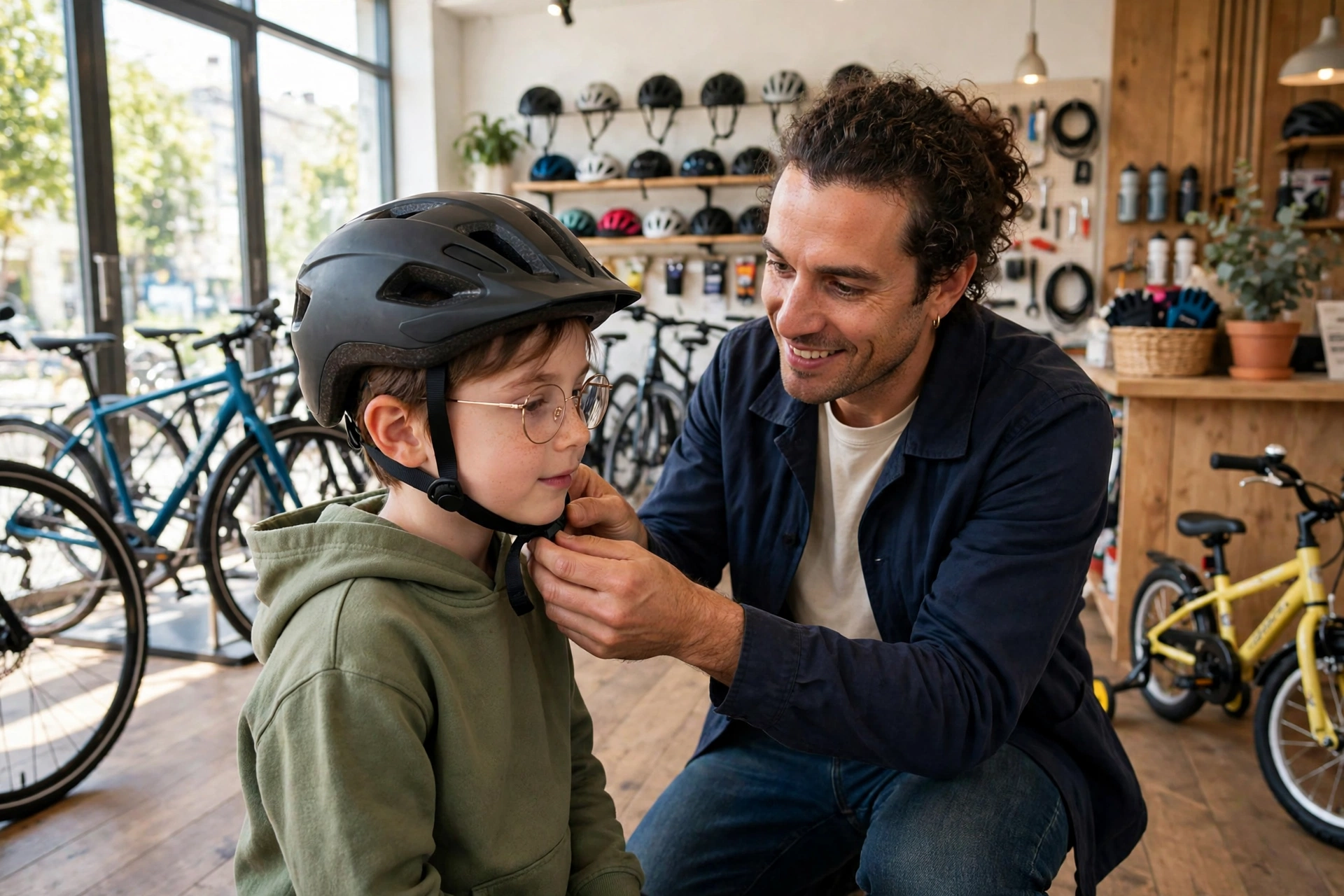
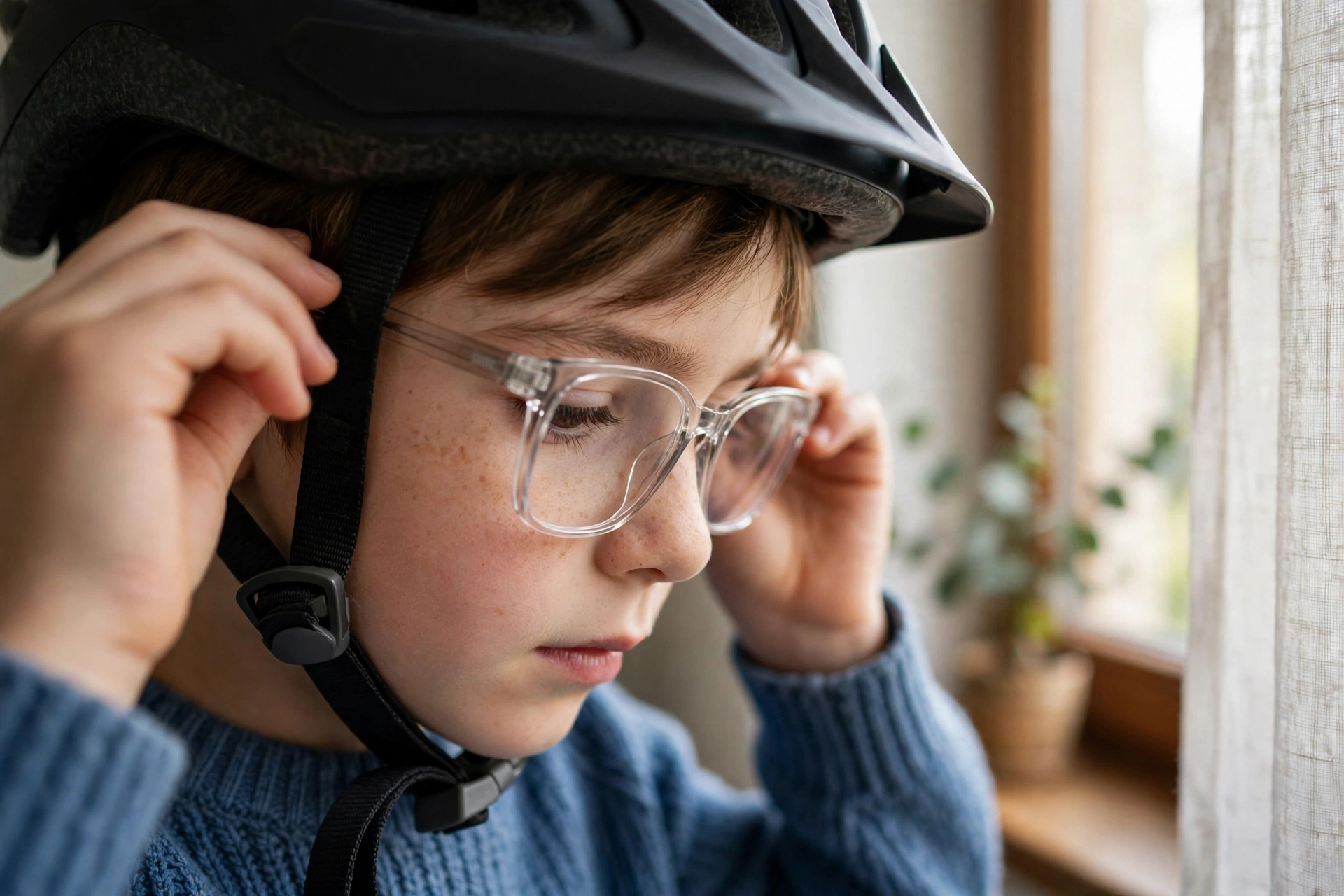
To choose a helmet for a child with glasses, pick a model with room around the temples, put the helmet on first and slide the glasses on afterward, and run the fit checks with the glasses in place — not without them. When the helmet presses the frames into your child’s temples or pushes the glasses crooked, the problem is usually the helmet’s internal shape or size, not the glasses themselves. A patient fitting session at the start saves daily battles later.
Glasses and helmets have to share a small space on your child’s head, and when they fight, the glasses usually lose — or your child quietly stops wanting to wear one or the other. The good news is that most kids who wear glasses can wear a standard certified kids’ helmet comfortably. It just takes a slightly more deliberate fitting process, which this guide walks through step by step.
Why Do Glasses Change How a Helmet Fits?
A helmet is fitted to the head, but glasses add hardware exactly where the helmet is snuggest: over the ears and along the temples. The arms of the frames pass through the same zone as the helmet’s lower edge, its side straps, and often its thickest padding. Add even a well-fitted frame and you have created two or three new potential pressure points.
That pressure matters for comfort first. Frames pressed into the temples or the tops of the ears can cause headaches and sore spots within minutes, and a child in discomfort will push the helmet up, tilt it back, or loosen the straps — all of which reduce how well the helmet can protect them.
It also matters for vision. If the helmet pushes the frames down the nose or tilts them, your child is no longer looking through the right part of the lens — which is why the two should always be fitted as a team.
Should Your Child Put Glasses on Before or After the Helmet?
Helmet first, glasses second is the routine that works for most kids. Put the helmet on, level and snug, fasten and adjust the straps, and then slide the glasses on, guiding the arms straight back over the straps to rest on the ears. This keeps the helmet’s fit exactly as you set it, instead of trapping the frames underneath and letting them lever the helmet out of position.
Wearing the arms over the straps has a second advantage: your child can take the glasses off for cleaning, or hand them to you at the park, without removing the helmet. It also means a fall is less likely to drive a trapped frame arm into the side of the head.
Practice the sequence at home until it is automatic, because a fiddly routine at the bike rack invites shortcuts. One honest note: some children and some frame styles genuinely work better the other way around, and a few helmets have channels designed to route straps differently. If your child’s optician or helmet fitter recommends the opposite for a specific setup, follow that advice — the test is comfort and stability, not dogma.
What Helmet Features Help Kids Who Wear Glasses?
Internal shape is the biggest factor. Helmets with a slightly roomier fit around the temples, or with thinner or removable padding at the sides, tend to coexist with frames more happily. If your child’s head measures between sizes, the larger size with its fit dial snugged down often gives the frames the room they need — as long as the helmet still passes the movement tests below.
Look for a dial-adjust fit system at the back. Being able to fine-tune snugness by millimeters lets you keep the helmet secure without cranking pressure onto the temples. Removable and repositionable pads help too: on some helmets a thick side pad can be swapped for a thinner one right where the frame arm sits.
Strap design matters as well. Flat straps with low-profile dividers sit closer to the head and leave the ear area less crowded than bulky twisted webbing. And while protection extras are not glasses-specific, features like the rotational liner described in our explainer on what MIPS is and how it works are worth considering in any helmet you buy. The non-negotiable remains certification: any bike helmet sold in the US should carry the CPSC sticker.
How Do You Check the Fit With Glasses On?
Start with the basic helmet fit: level on the head, front edge about one to two finger widths above the eyebrows, snug all around with no rocking when your child shakes their head. Then add the glasses and repeat everything — the shake test, the nod test, and a gentle push from the front and sides.
Now check the glasses themselves. They should sit straight, at the same height as usual, with the arms resting naturally rather than bent outward or pressed down. Ask your child specific questions: any pinching at the temples? Do the frames hurt on top of your ears? Can you see properly? Then wait. Ten minutes of wearing the helmet at home reveals pressure points that a thirty-second try-on hides, and it lets you watch whether your child starts fiddling — the surest sign something is wrong.
Also check the chin strap with glasses on, and have your child look up, down, and side to side as if checking traffic. The glasses should stay put through all of it, and the helmet should not creep. If the frames are the only problem, sometimes a simple optician adjustment — straightening or reshaping the arm bend behind the ear — fixes the whole conflict.
What If Your Child’s Glasses Keep Sliding or Hurting?
Work through the cheap fixes first. Have the frames professionally adjusted: arms that grip properly behind the ear slide far less under any helmet. Silicone grips or a sports strap on the glasses can help during rides. Reposition or swap helmet pads if the model allows it, and re-check the size — persistent temple pain often means the helmet’s shape is simply too narrow for that head plus frames.
If problems persist, try a different helmet model rather than a different size of the same one; internal shapes vary a lot between brands. Bring the glasses to the shop and treat it like fitting shoes — several candidates, worn for several minutes each.
For some kids, the cleanest long-term answer is eyewear made for sport: prescription sports goggles or wraparound frames designed to be worn under helmets sit flatter and stay put better than everyday glasses. Your child’s optician can advise whether that is appropriate for their prescription and activities. Never solve the problem by skipping the glasses or the helmet — your child needs both, working together.
Frequently Asked Questions
Q: Should helmet straps go over or under the glasses arms?
A: For most children, sliding the glasses on after the helmet, with the arms resting over the straps, works best. It keeps the helmet fit undisturbed and lets the glasses come off without removing the helmet. If a fitter advises otherwise for a specific frame and helmet combination, follow that advice.
Q: Can my child wear sports goggles instead of glasses with a helmet?
A: Often, yes. Prescription sports goggles and low-profile wraparound frames are designed to sit flatter against the head and are a popular solution for kids who ride a lot. Ask your child’s optician whether they suit your child’s prescription.
Q: How do I stop the helmet from pushing my child’s glasses down?
A: First check the helmet sits level and is not tilted back, which drives frames forward. Then have the glasses professionally adjusted so the arms grip behind the ears, fine-tune the helmet’s rear dial, and adjust or swap side pads if the model allows. If it still happens, try a helmet with a roomier internal shape.

Olivia
Writer at Helmet Today, covering helmet reviews, fit and riding safety.